
 |
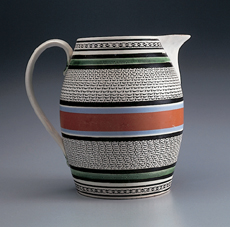
| Figure 50 Jug, British, ca. 1820. Pearlware. H. 7 3/4". (Collection of Donald Carpentier; photo, Gavin Ashworth.) A barrel-form jug, slip-banded with black slip-filled rouletted decoration. Rouletted decoration such as this illustrates the imprecise geometric patterns achieved by hand, as opposed to the regular patterns found on engine-turned wares. The use of the end cam seems to have diminished by the 1830s, but edge-cam work continued to the end of the nineteenth century. By the early nineteenth century the much simpler and less expensive dicing lathes were available as stock items. Cams were also available in standard sets, obvious from sherds found on various factory sites. The only known period engine-lathe cams are at the Wedgwood factory in Barlaston, Staffordshire. |