


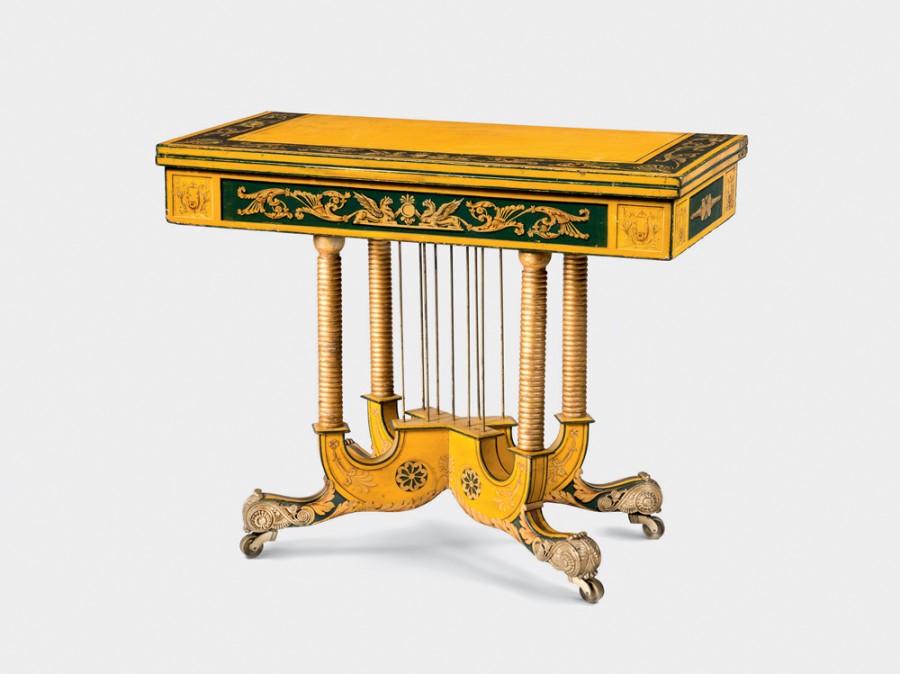
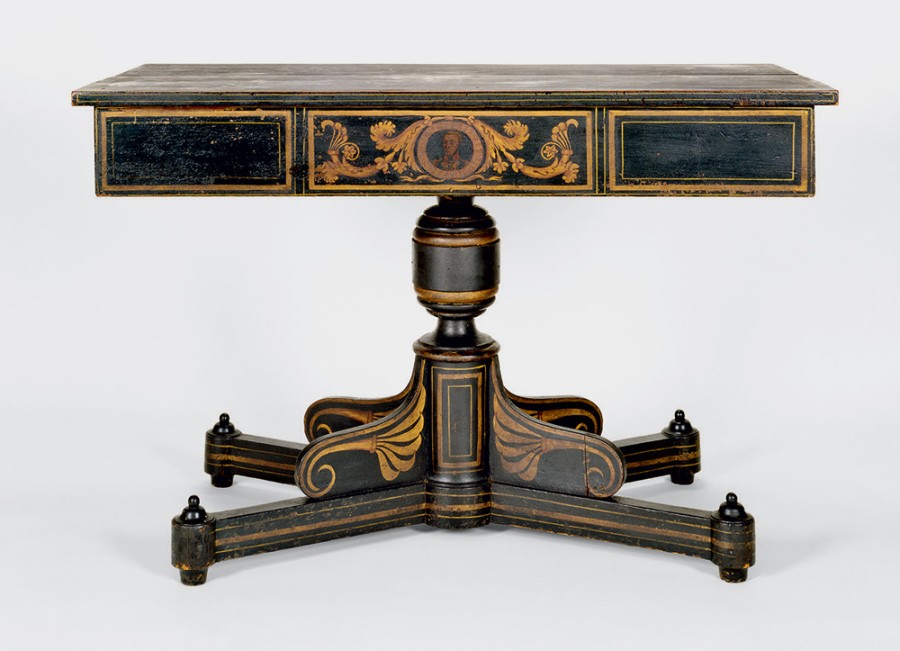
Card table, attributed to the shop of John and Hugh Finlay, Baltimore, Maryland, ca. 1815. Mahogany, tulip poplar, maple; painted and gilded decoration, baize, brass. H. 28 1/2", W. 36", D. 17 3/4". (Courtesy, Philadelphia Museum of Art, gift of the Stanley Weiss Collection in recognition of the scholarship of Alexandra Kirtley, Curator of American Decorative Arts, 2018; photo, Gavin Ashworth.)
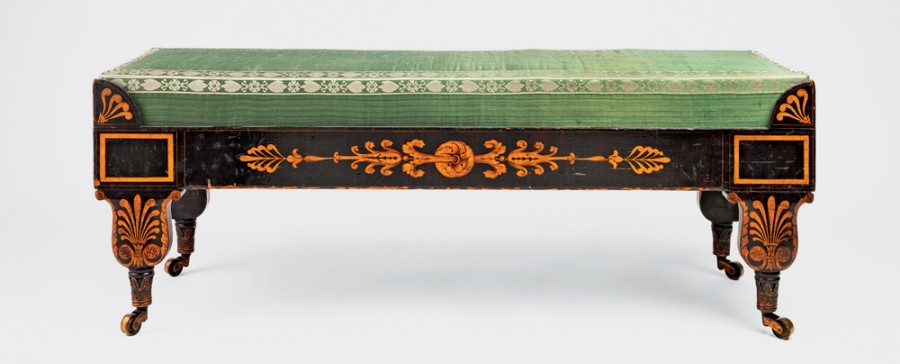
Recess seat, Hugh Finlay and Co., Baltimore, ca. 1825. Tulip poplar; gilt, metal, brass, paint. H. 16 1/4", W. 45", D. 14 1/8". (Courtesy, Winterthur Museum, Garden & Library, Bequest of Henry Francis du Pont.) This recess (or window) seat, one of a pair, is from the suite of furniture made for James Wilson.
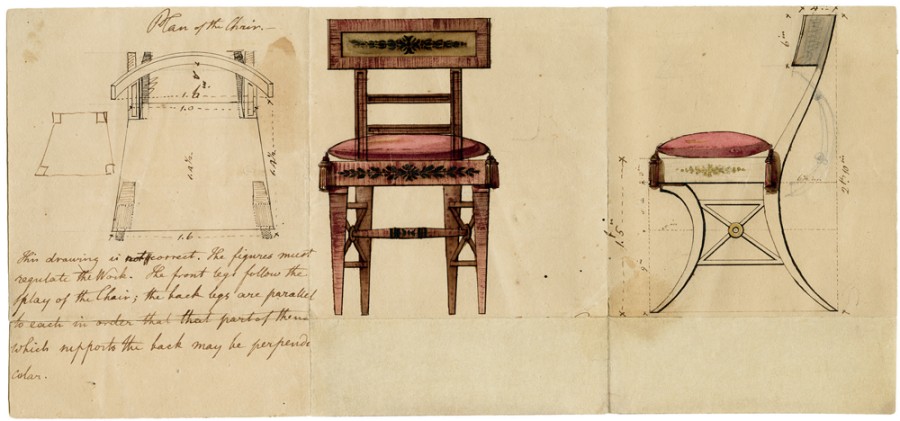
Benjamin Henry Latrobe, drawing for a chair for the President’s House, 1809. Watercolor on paper. (Courtesy, Maryland Center for History and Culture.)
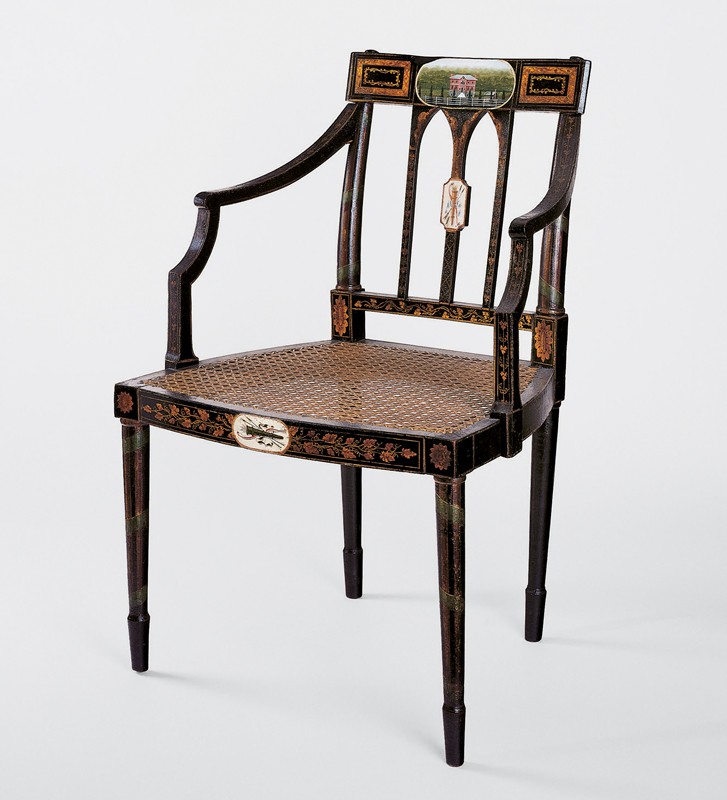
Armchair, attributed to the shop of John and Hugh Finlay, with crest rail medallion attributed to Francis Guy, Baltimore, 1803–1805. Maple and ash; painted and gilded decoration. H. 33 3/4", W. 21 5/8", D. 20 5/16". (Courtesy, Baltimore Museum of Art, gift of Lydia Howard de Roth and Nancy H. DeFord Venable in Memory of their Mother, Lydia Howard DeFord and Purchase Fund; photo, Gavin Ashworth.) This chair is from the “Morris” suite; its crest rail medallion depicts the St. Paul’s Charity School.
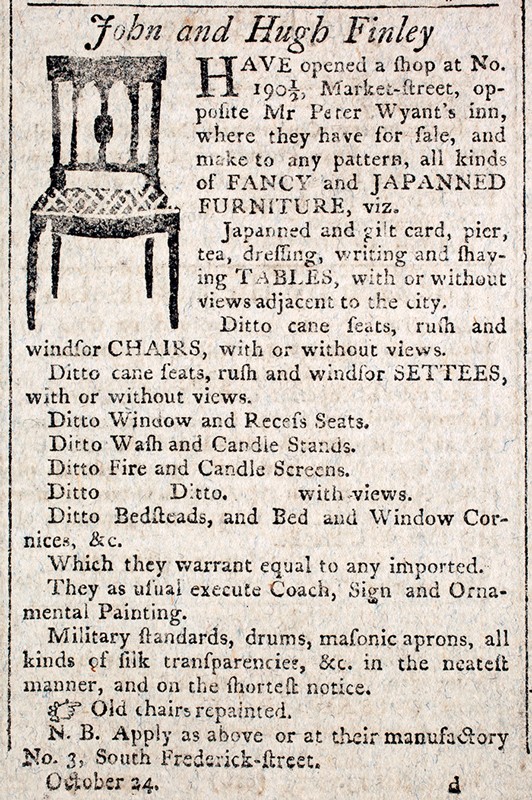
Advertisement by John and Hugh Finlay in the October 24, 1803, issue of the Federal Gazette & Baltimore Daily Advertiser. (Courtesy, Maryland Center for History and Culture.) This advertisement shows a chair of the form of those from the “Morris” suite illustrated in fig. 4. It indicates that from an early date the Finlays offered a wide variety of furniture forms and services.
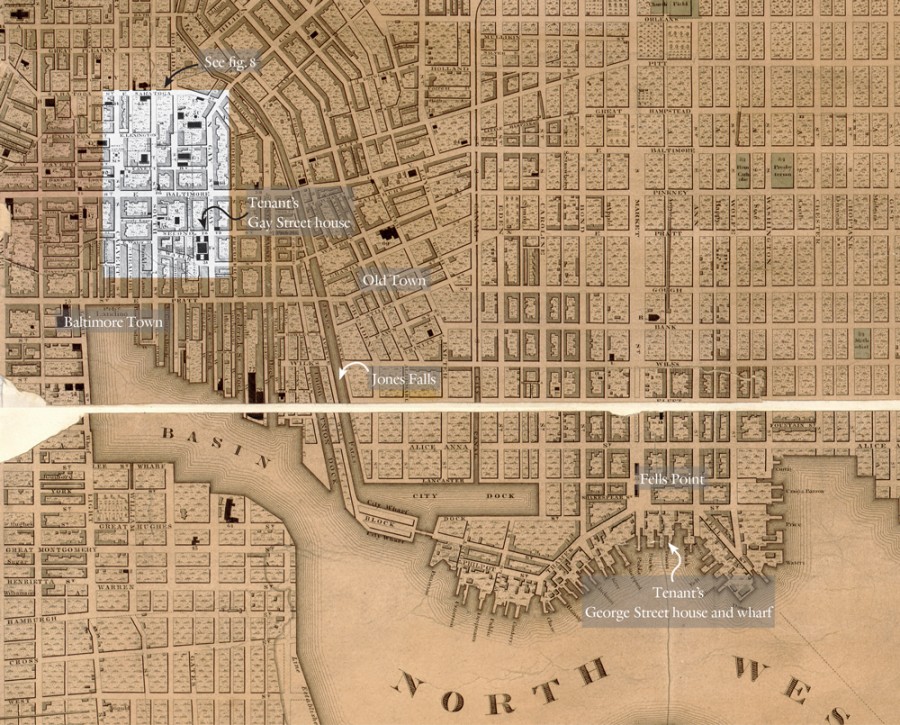
Detail of Thomas H. Poppleton’s This Plan of the City of Baltimore, Baltimore, 1822. (Courtesy, Geography and Map Division, Library of Congress.) This map shows the town’s three early areas: Baltimore Town, on the west side of the Jones Falls, and Old Town and Fells Point on the east side. See fig. 8 for detail of the Gay Street area.
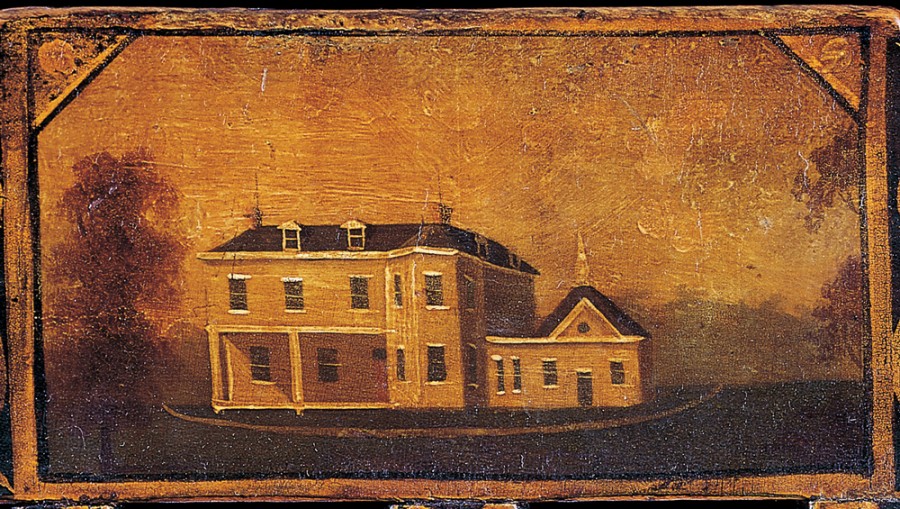
Detail of a side chair attributed to the shop of John and Hugh Finlay, with crest rail medallion attributed to Francis Guy, Baltimore, 1803–1806. Woods not recorded; painted and gilded decoration. H. 34 1/4", W. 17 1/2", D. 15 3/4". (Courtesy, Baltimore Museum of Art, Middendorf Foundation Fund; photo, Gavin Ashworth.) The house is Belmont, purchased by Thomas Tenant from Archibald Campbell in 1805. For an image of the chair, see Humphries, “Patronage, Provenance, and Perception,” in American Furniture (2003), p. 173, fig. 42.
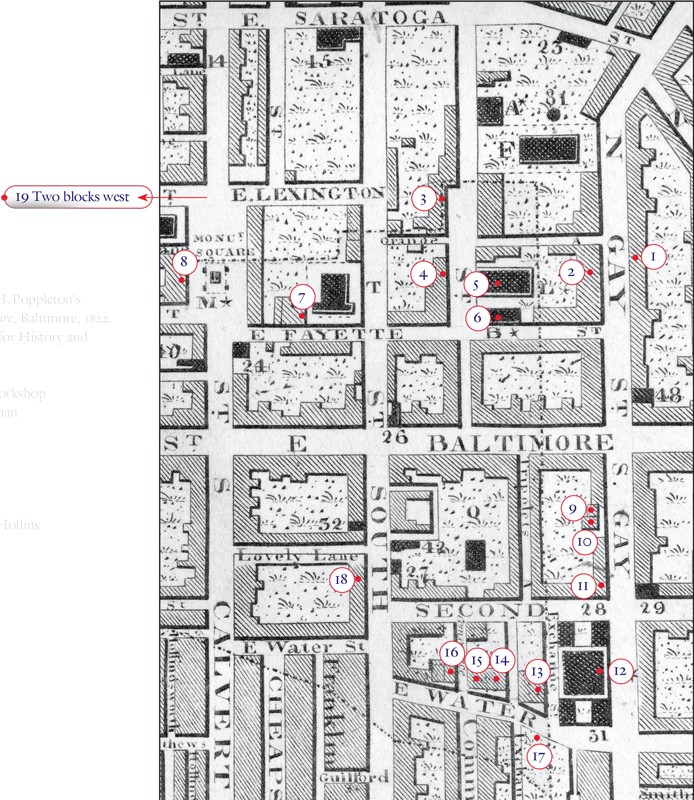
Detail of Thomas H. Poppleton’s This Plan of the City of Baltimore, Baltimore, 1822. (Courtesy, Maryland Center for History and Culture.)
1. John and Hugh Finlay Workshop
2. Sydney and Peggy Buchanan
3. James Wilson
4. Alexander Brown
5. Holliday Street Theatre
6. Assembly Rooms
7. Lemuel Taylor
8. James Buchanan & John Hollins
9. Roswell L. Colt
10. Robert Oliver
11. Thomas Tenant
12. Merchants Exchange
13. Cumberland Dugan
14. Samuel Smith
15. Robert Gilmor Sr.
16. John Donnell
17. Robert Gilmor Jr.
18. William Patterson
19. William Lorman
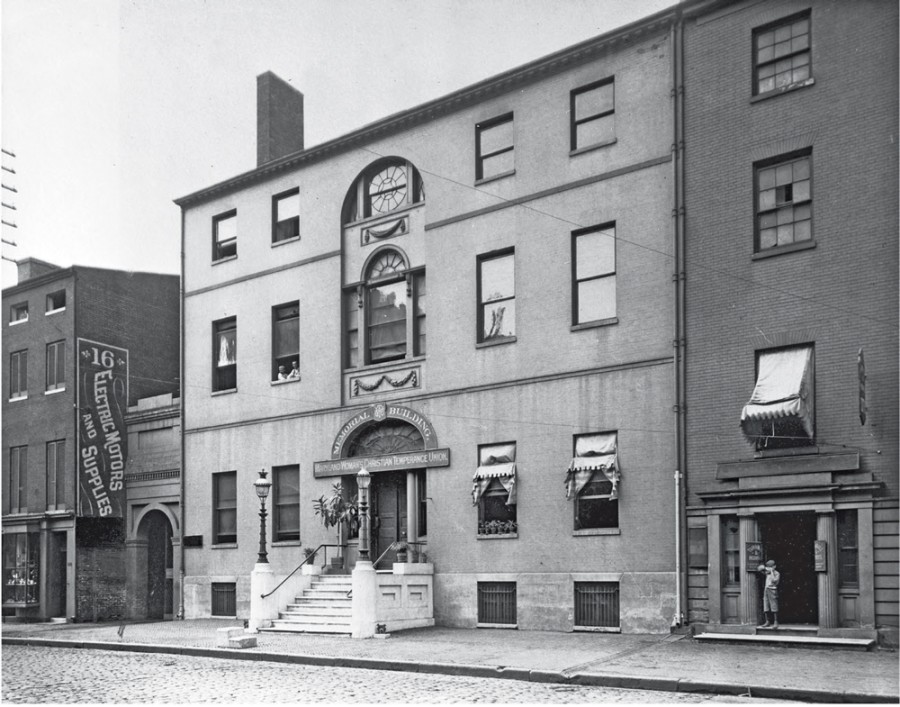
Robert Oliver’s mansion on Gay Street, Baltimore. Photograph, ca. 1900. (Courtesy, Maryland Center for History and Culture.) This photograph illustrates several features not present at the time the house was built in 1805–1807. The marble stoop probably dates from the 1830s or 1840s and likely replaced simple marble cascading steps with an iron railing. The original multi-pane windows have been replaced with large sheets of glass. To the right is a partial view of the house Oliver built next door for his daughter and her husband, Roswell Lyman Colt. Thomas Tenant’s house was several houses south of those depicted.
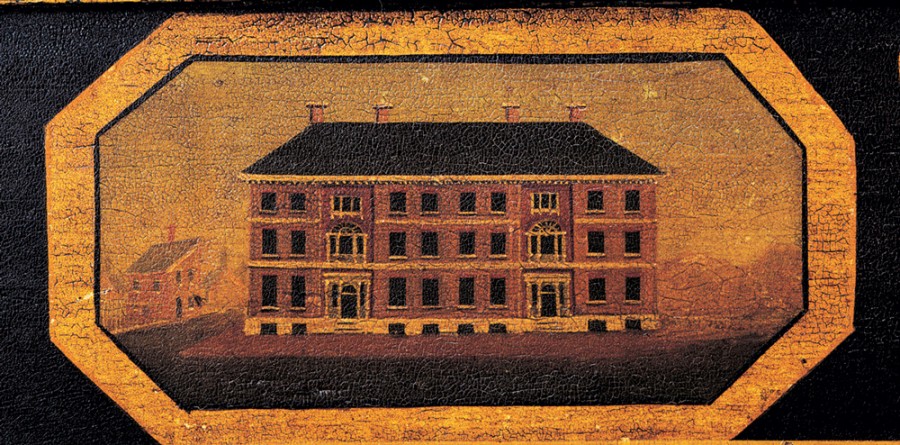
Detail of a card table attributed to the shop of John and Hugh Finlay, with skirt medallion attributed to Francis Guy, Baltimore, 1803–1806. Tulip poplar and pine with oak. H. 28 3/4", W. 38 5/8", D. 17 1/2". (Courtesy, Winterthur Museum, Library & Garden.) This medallion depicts the paired mansions built in 1799–1801 by James A. Buchanan (left) and John Hollins (right). The card table was part of a suite made for Buchanan’s sisters, Sydney and Peggy Buchanan, who lived on Gay Street. For an image of the table, see Humphries, “Patronage, Provenance, and Perception,” in American Furniture (2003), p. 162, fig. 32.
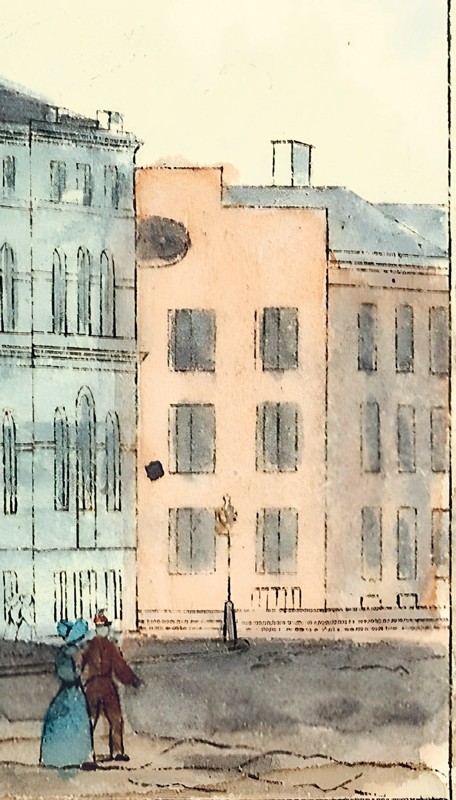
Detail of a plate illustrated opposite p. 95 in John H. B. Latrobe’s Picture of Baltimore (1832). (Courtesy, Johns Hopkins Digital Library/Wikimedia Commons.) The larger plate is a view of the Merchants Exchange looking north on Gay Street. As seen in the detail shown here, Thomas Tenant’s three-bay house on the northwest corner of Gay and Second (modern Water) Streets had windows on its south-facing facade.
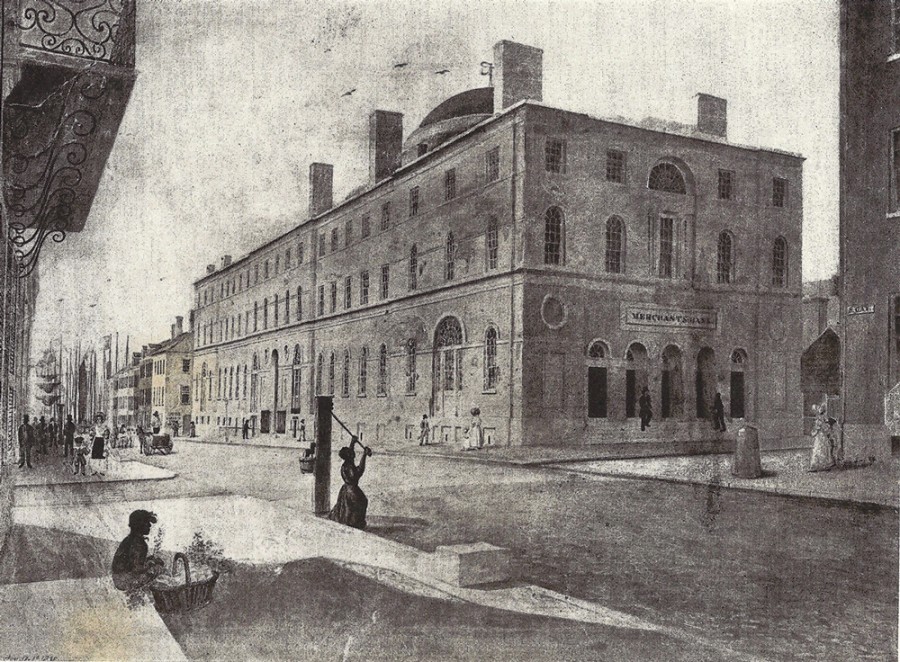
A view of the Merchants Exchange, ca. 1830s. Watercolor. Unlocated. Illustrated opposite p. 12 in The Savings Bank of Baltimore: One Hundred Years of Service 1818–1918 (1918). This view shows the Merchants Exchange as seen looking south on Gay Street towards Baltimore’s harbor. Second (modern Water) Street is in the foreground, and on the right is the corner of Thomas Tenant’s mansion. John H. B. Latrobe later described the area near this intersection as the “fashionable centre of the town.”
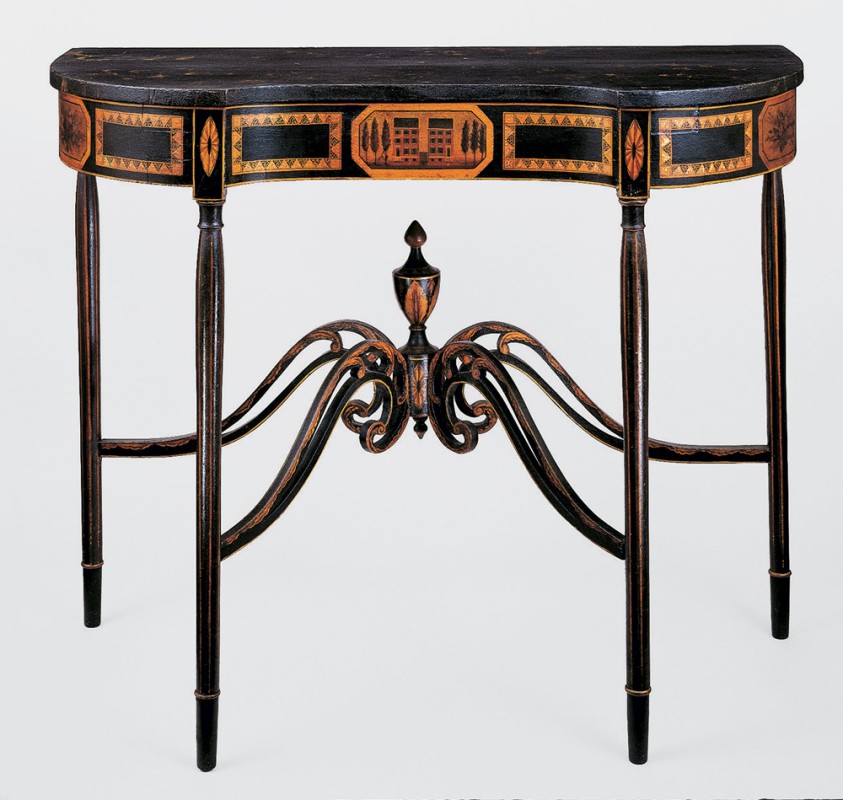
Pier table, attributed to the shop of John and Hugh Finlay, with skirt medallion attributed to Francis Guy, Baltimore, 1803–1806. Yellow pine, tulip poplar, maple; painted and gilded decoration. H. 35 7/8", W. 45 1/8", D. 20". (Courtesy, Baltimore Museum of Art, purchase with exchange funds from The George C. Jenkins Fund; photo, Gavin Ashworth.) This pier table was the centerpiece of a suite made for sisters Sydney and Peggy Buchanan, who lived on Gay Street.
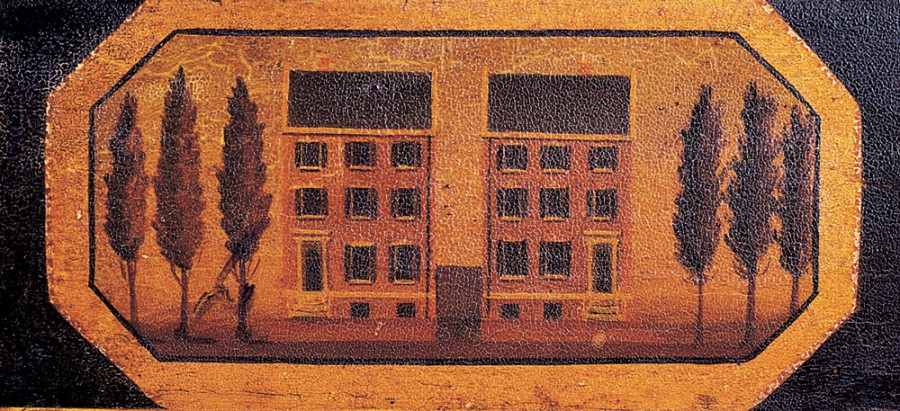
Detail of the table in fig. 13. (Photo, Gavin Ashworth.) The table’s decoration depicts the paired houses on Gay Street built for the Buchanan sisters. Sydney and Peggy Buchanan lived in the house on the right, and this pier table was, according to an inventory, located in the first floor front parlor. It was likely displayed between the two windows to the left of the door. Their sister Mary (Buchanan) Allison lived in the house on the left.
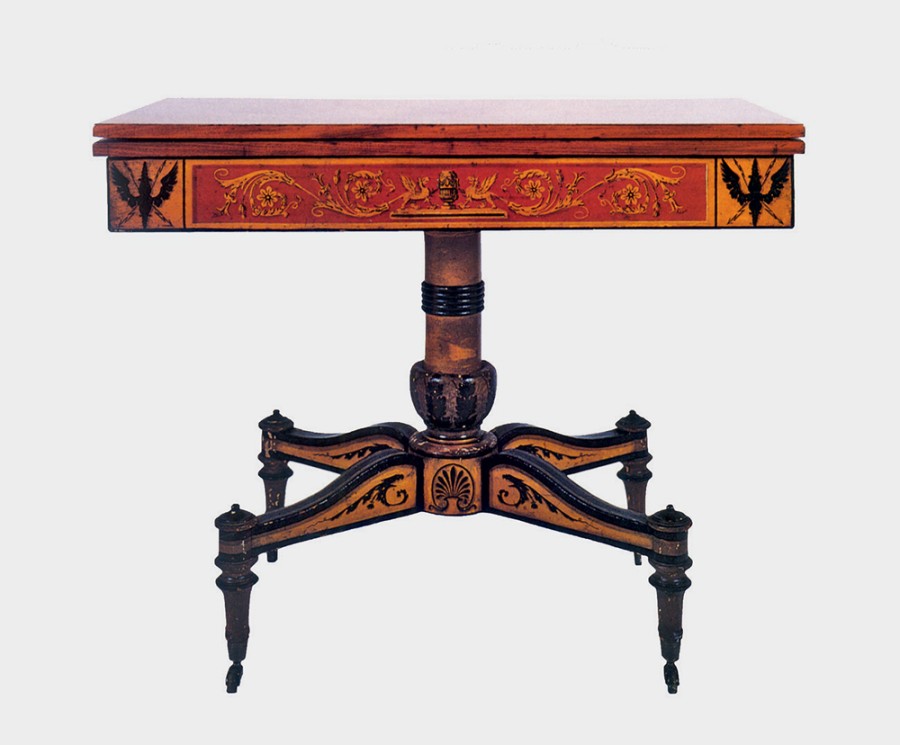
Card table, attributed to the shop of John and Hugh Finlay, Baltimore, ca. 1815. Mahogany, poplar, and other woods. H. 28 3/8", W. 36 1/8", D. 37 7/8" (open). (Private collection; photo, Antiques.) One of a pair, this table is part of the suite of furniture made for Alexander Brown.
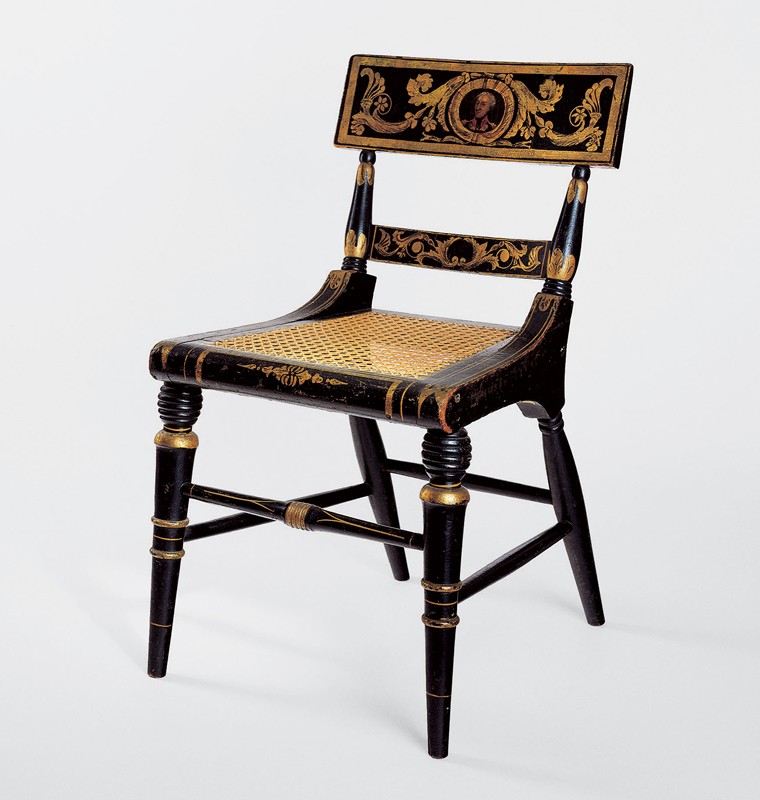
Side chair by John King, with miniature portrait of the marquis de Lafayette by Joseph Weisman, Baltimore, 1824. Unidentified wood; painted and gilded decoration. H. 30 1/2", W. 17 3/4", D. 15 3/8". (Courtesy, Baltimore Museum of Art, gift of Randolph Mordecai; photo, Gavin Ashworth.)
Pier table by Hugh Finlay and Co., with miniature portrait of the marquis de Lafayette by Joseph Weisman, Baltimore, 1824. Unidentified wood; painted decoration, and iron. H. 31 3/4", W. 49 1/8", D. 23 1/4". (Courtesy, Chrysler Museum of Art, Norfolk, Va., gift of Dr. and Mrs. C. Frederic Fluhmann.)

Rembrandt Peale, Robert Oliver, 1809. Oil on canvas. H. 30 1/8", W. 25 1/4". (Courtesy, Wadsworth Atheneum Museum of Art, Hartford, Conn., bequest of Miss Mary Wagstaff in memory of her mother, Amy Colt [Mrs. Cornelius DuBois Wagstaff]; photo, Allen Phillips/Wadsworth Atheneum.)
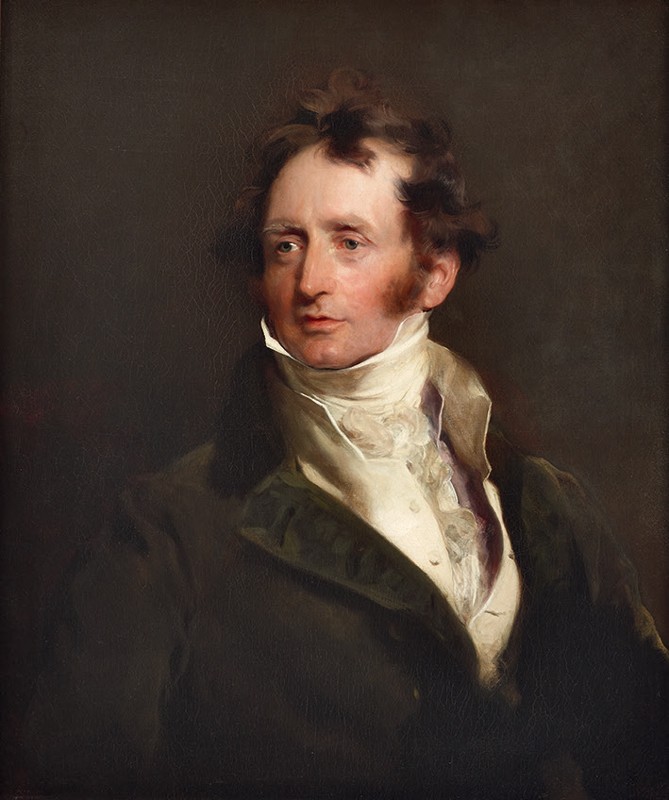
Sir Thomas Lawrence, Robert Gilmor Jr., 1818–1820. Oil on canvas. H. 30 5/8", W. 25 1/2". (Private collection; photo, Michael Bodycomb.)
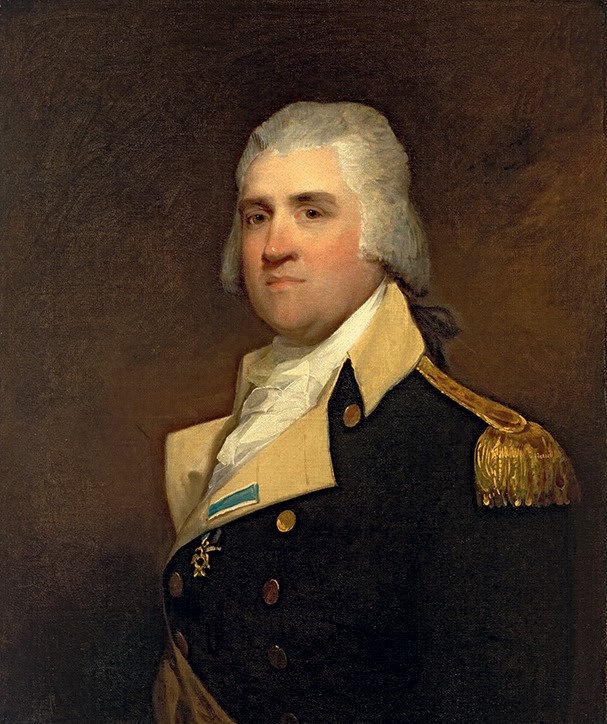
Gilbert Stuart, Samuel Smith, ca. 1800. Oil on canvas. H. 29 1/4", W. 24 3/8". (Courtesy, National Portrait Gallery, Smithsonian Institution, gift of Dr. and Mrs. B. Noland Carter in memory of the Misses Mary Coles Carter and Sally Randolph Carter.)
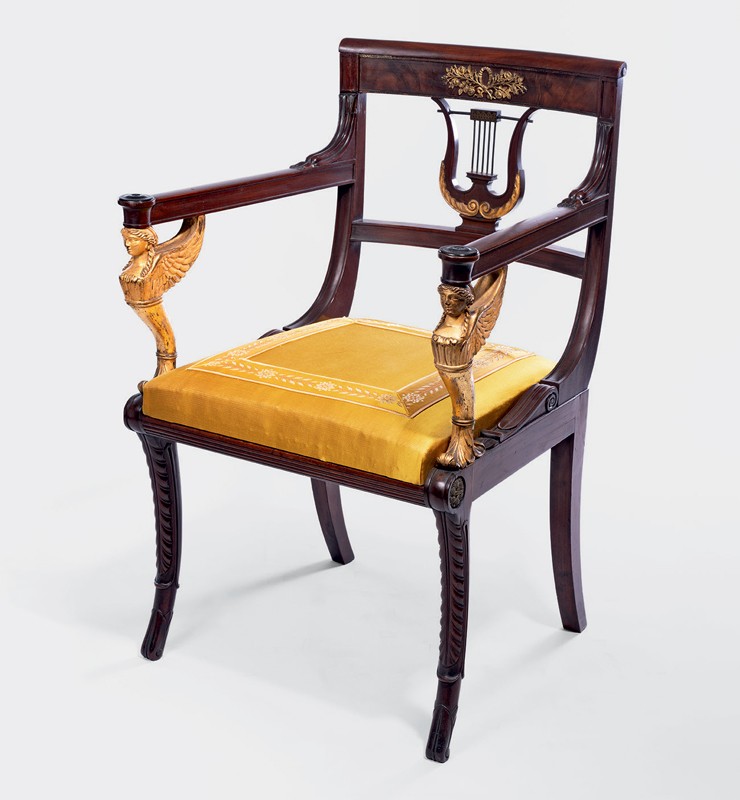
Armchair, attributed to Charles-Honoré Lannuier, New York, New York, ca. 1810–1819. Mahogany and maple. H. 35 1/2", W. 22", D. 20 1/2". (Courtesy, Maryland Center for History and Culture, bequest of J. B. Noel Wyatt.) New research suggests this chair and its suite, long thought to have been made for James Bosley, was first owned by Lemuel Taylor, with whom Thomas Tenant was in business.
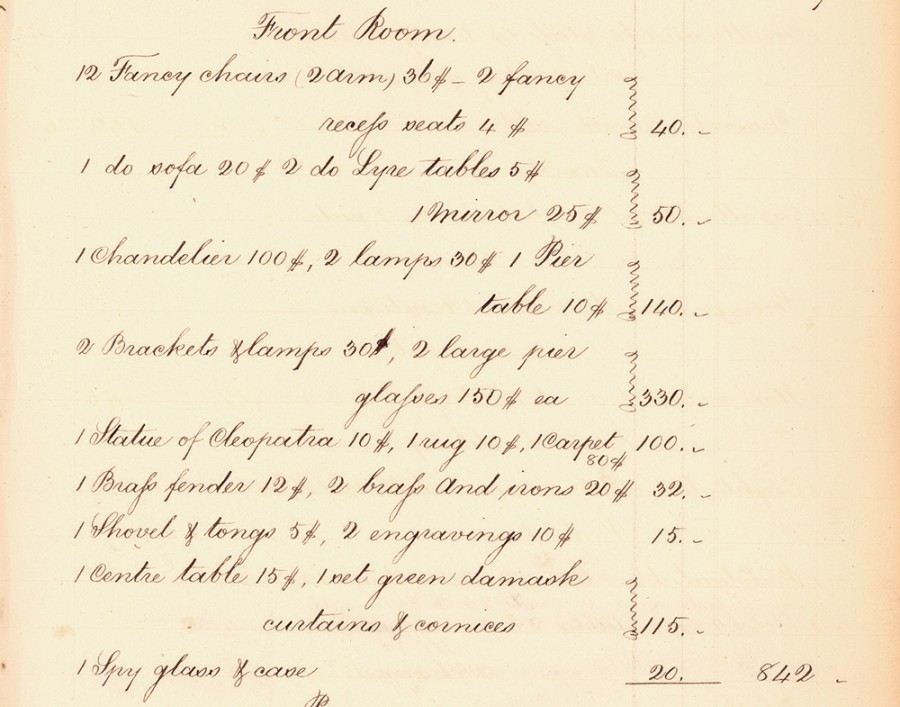
Detail of Thomas Tenant’s Inventory, February 3, 1836. (Courtesy, Maryland State Archives.) The illustrated portion records the furnishings of Thomas Tenant’s first-floor “Front Room” or parlor and begins with the painted suite. The “2 do [fancy] Lyre tables” are later described as card tables in Thomas Tenant’s Account of Sales, December 7, 1842 (see Appendix, cat. 12).
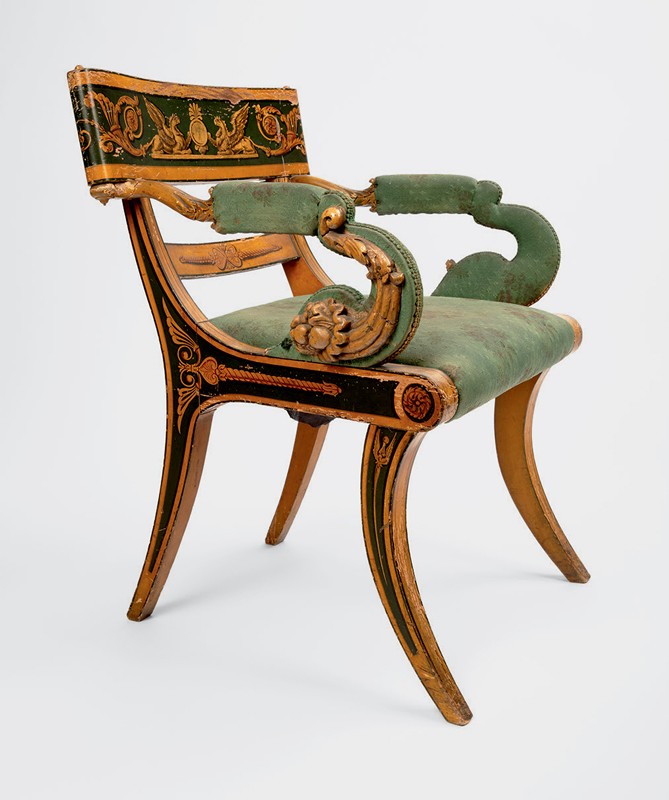
Armchair, attributed to the shop of John and Hugh Finlay, Baltimore, ca. 1815. Poplar, pine. H. 31 3/4", W. 21 3/4", D. 22 7/8". (Courtesy, Missouri Historical Society, Saint Louis, gift of Mrs. Charles Chambers Thatcher.)
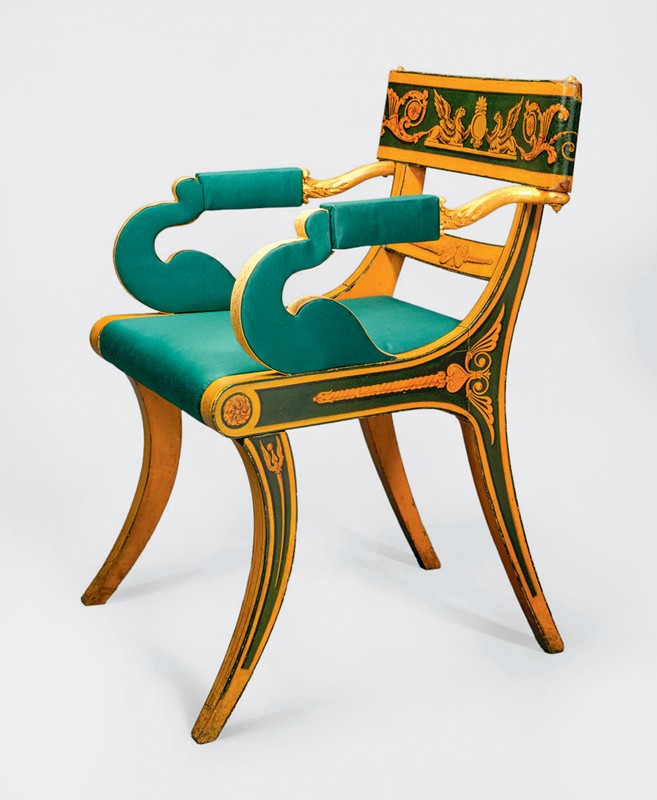
Armchair, attributed to the shop of John and Hugh Finlay, Baltimore, ca. 1815. Poplar, cherry, pine. H. 31 7/8", W. 21 3/4", D. 22 3/4". (Courtesy, Missouri Historical Society, Saint Louis, gift of Mrs. Charles Chambers Thatcher.) This chair was previously fitted with the applied cornucopia ornaments on the sides of the arm supports as seen on the chair in fig. 23. These were removed during conservation in the 1990s and are now stored separately (see Appendix, cat. 2).
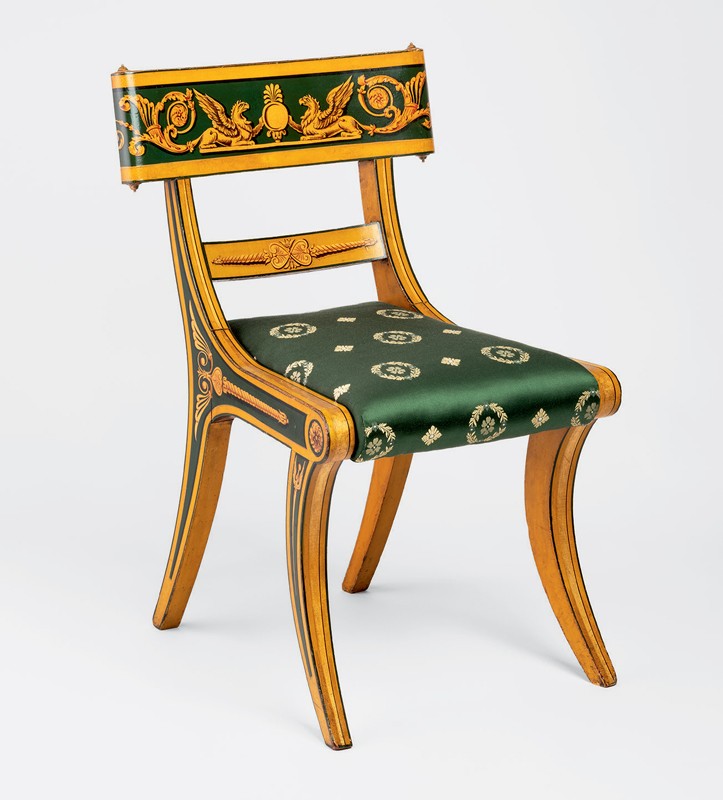
Side chair, attributed to the shop of John and Hugh Finlay, Baltimore, ca. 1815. Cherry, maple, tulip poplar, pine. H. 31 7/8", W. 20", D. 21 1/2". (Courtesy, Winterthur Museum, Garden & Library, Museum purchase with funds provided by the Special Fund for Collection Objects.)
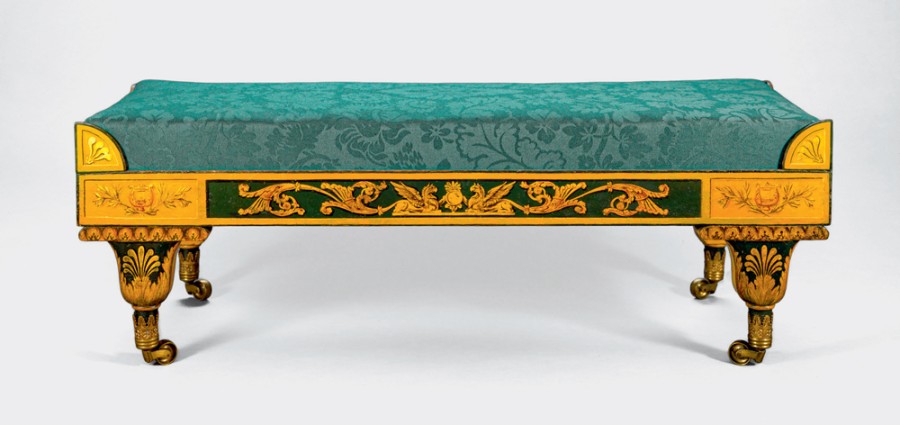
Recess seat, attributed to the shop of John and Hugh Finlay, Baltimore, ca. 1815. Pine, yellow poplar; painted and gilded decoration, brass, reproduction wool damask upholstery. H. 15 5/8", W. 46 1/16", D. 15 3/4". (Courtesy, Saint Louis Art Museum, funds given by the Decorative Arts Society.)
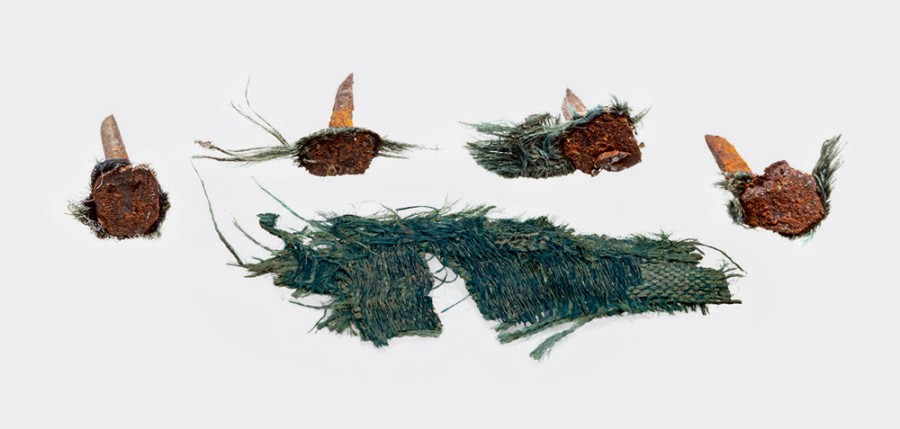
Fragment of original silk damask upholstery found in the armrest padding from the armchair in fig. 24, and tack heads with threads from similar fabric found on the recess seat illustrated in fig. 26
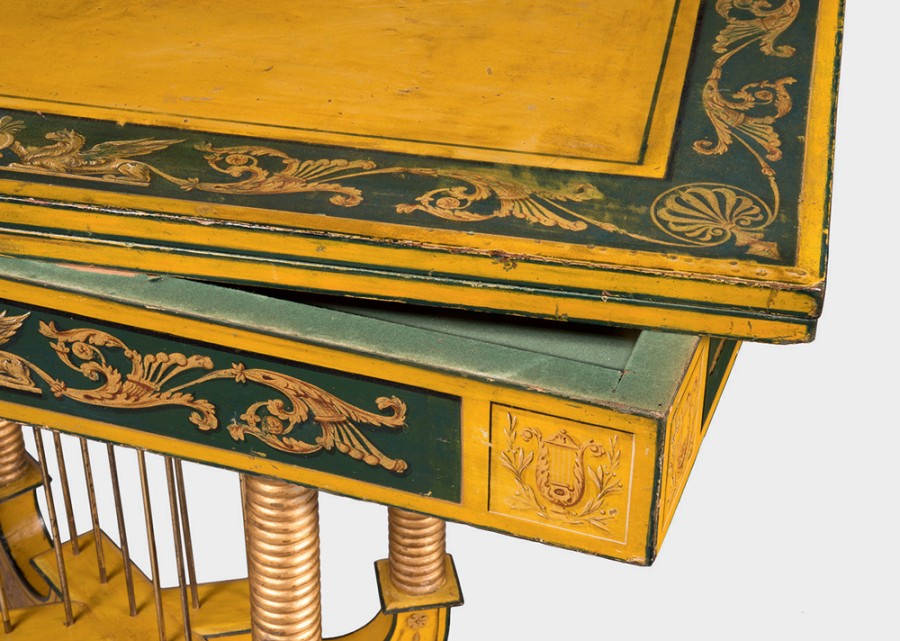
Detail of the card table in fig. 1. (Photo, Gavin Ashworth.)
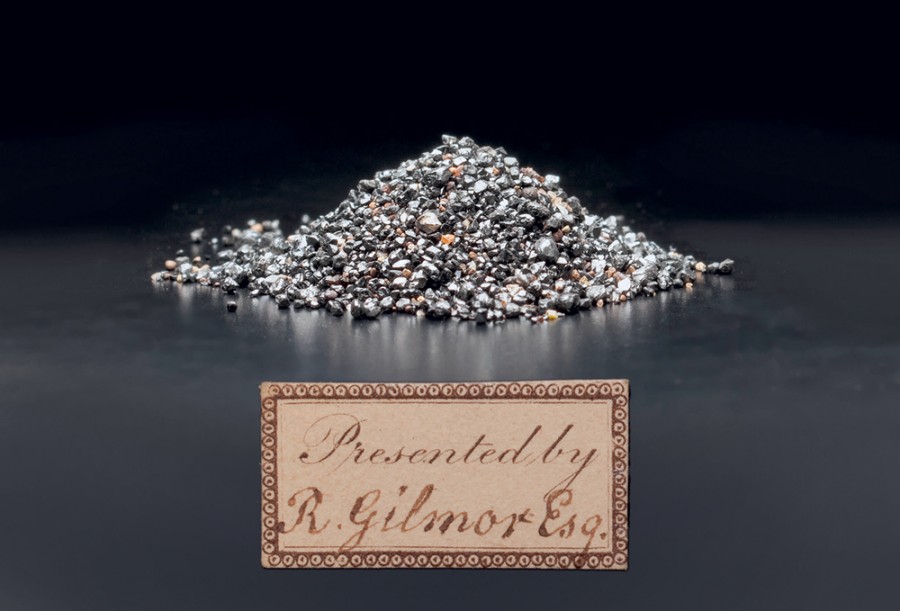
Sample of octahedral crystals and granular chromate of iron, presented by Robert Gilmor Jr. in 1818 to the British Museum. (Photo, copyright The Trustees of the Natural History Museum, London.) As noted in Gilmor’s annotation on a letter dated January 10, 1818, to him from Henry Ellis (1777–1869), principal librarian of the British Museum, the crystal examples were the first “that had ever been seen in Europe.” (Henry Ellis to Robert Gilmor Jr., series I, box 1, folder 59, Robert Gilmor Collection, MS. 3198, MCHC.)
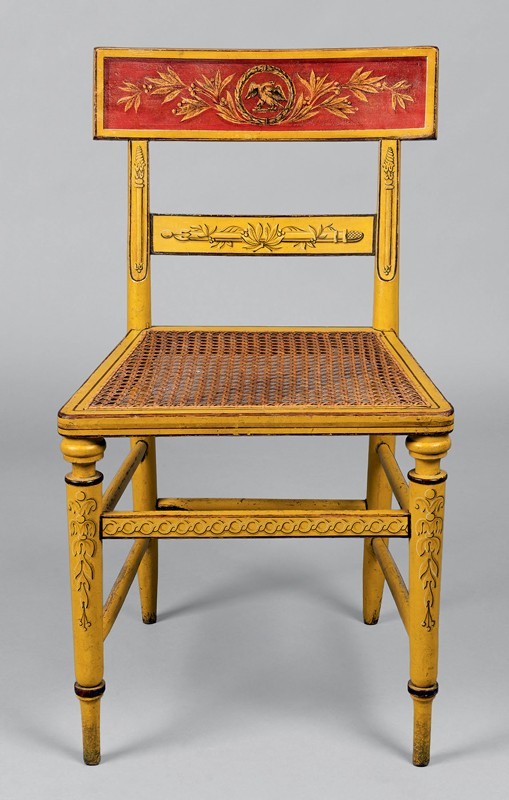
Side chair by John and Hugh Finlay, Baltimore, 1815. Tulip poplar, maple and black walnut. H. 31 5/8"; W. 18"; D. 20 1/4". (Courtesy, Colonial Williamsburg Foundation, Museum Purchase.) This chair is one from a documented set of twelve made for Richard Ragan of Hagerstown, Maryland.
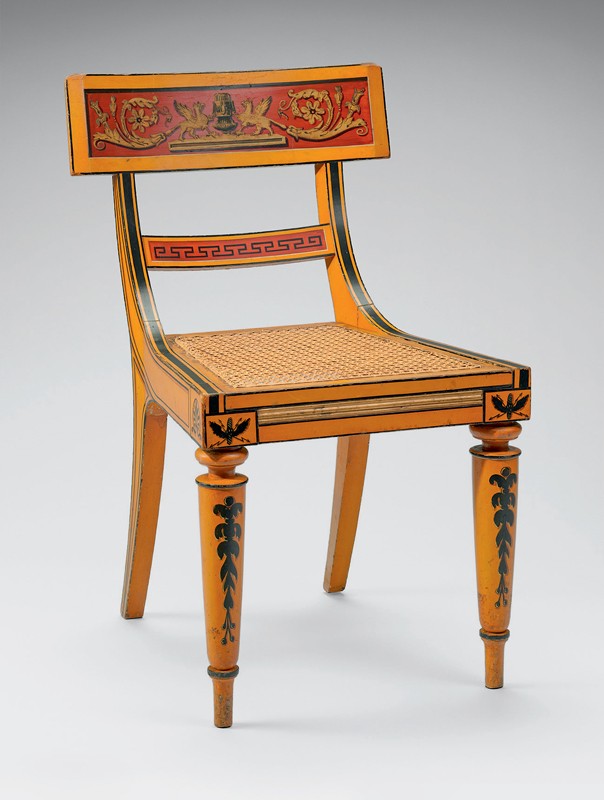
Side chair, attributed to the shop of John and Hugh Finlay, Baltimore, ca. 1815. Unidentified wood. H. 31 7/8", W. 20 1/8", D. 21". (Photo, copyright 2025 Museum of Fine Arts, Boston.) This chair is from the suite of furniture made for Alexander Brown.
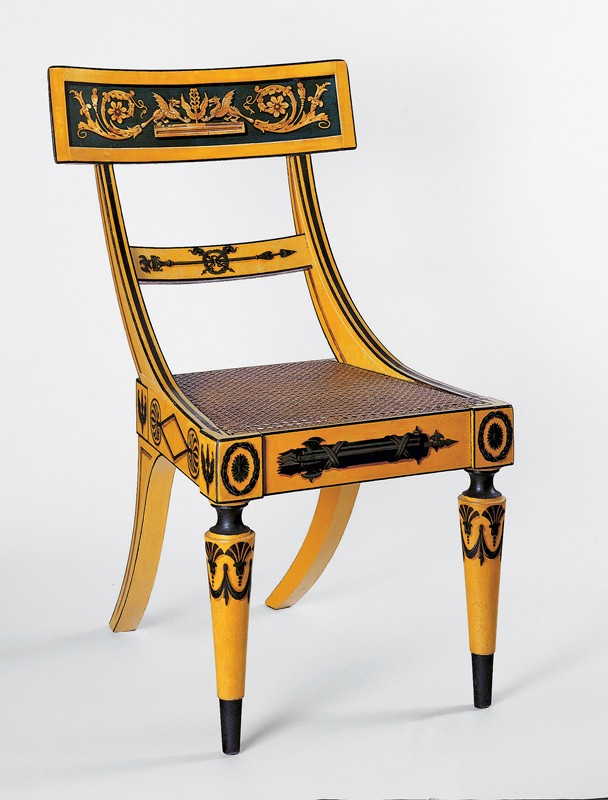
Side chair, attributed to the shop of John and Hugh Finlay, Baltimore, ca. 1815. Maple and cherry. H. 34", W. 20 1/2", D. 24 1/4". (Courtesy, Collection of Linda H. Kaufman; photo, Gavin Ashworth.) This chair is one of a set of eleven known chairs owned by the Abell family in the late nineteenth century.
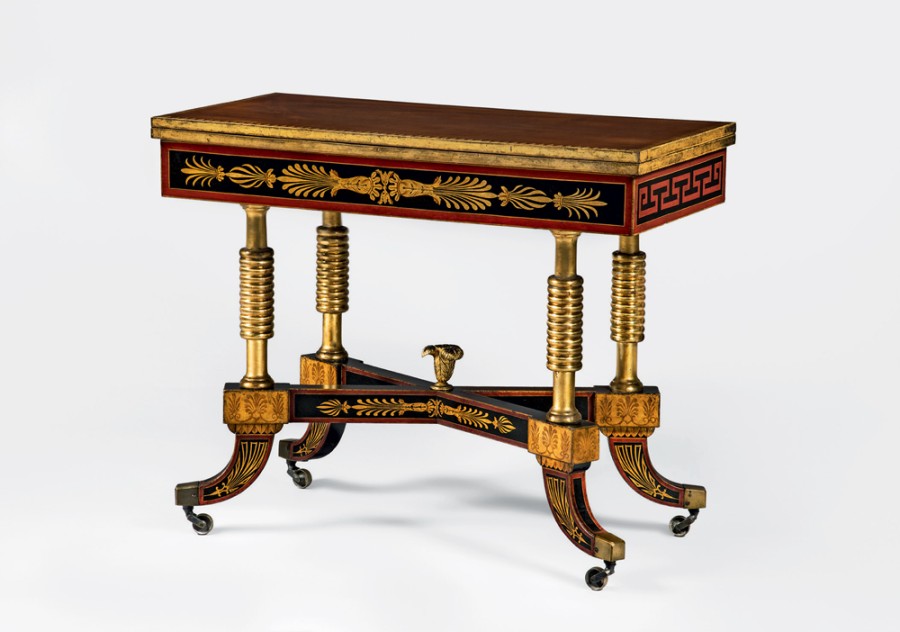
Card table designed by Benjamin Henry Latrobe, made by John Aitken, decorated by George Bridport, Philadelphia, Pennsylvania, 1808. Mahogany, tulip poplar, white pine; brass, gilded and painted decoration, iron, cotton velvet. H. 29 1/2", W. 36", D. 17 7/8". (Courtesy, Philadelphia Museum of Art, purchased with the gift [by exchange] of Mrs. Alex Simpson Jr., and A. Carson Simpson, and with funds contributed by Mr. and Mrs. Robert L. Raley and various donors.)
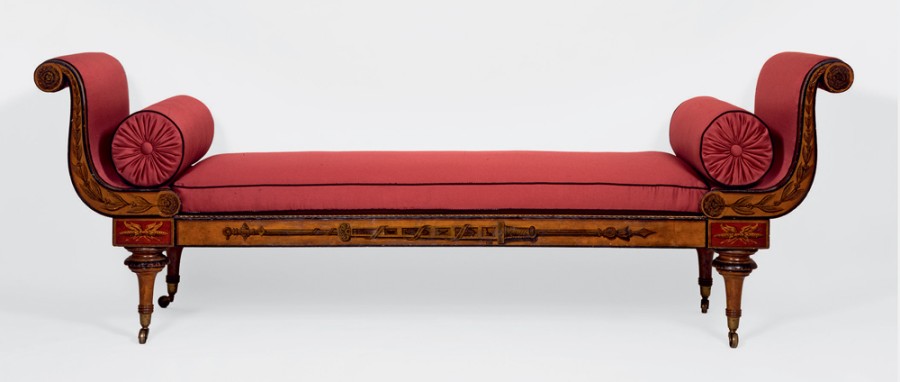
Sofa, the shop of John and Hugh Finlay, Baltimore, ca. 1815. Poplar, yellow pine, other unidentified woods. H. 36", L. 105 1/2", D. 26 5/8". (Courtesy, Maryland Center for History and Culture, gift of Benjamin H. Griswold IV and Jack S. Griswold.) This sofa is part of the suite made for Alexander Brown.
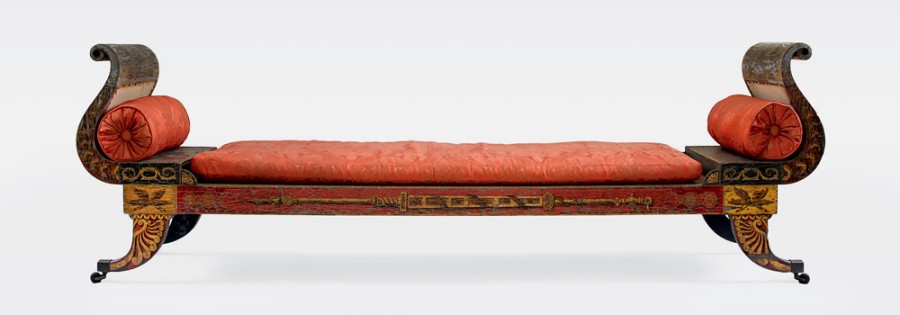
Sofa, attributed to the shop of John and Hugh Finlay, Baltimore, ca. 1815. Tulip poplar, maple; painted and gilded decoration, cane, brass. H. 33 1/4", L. 103 13/16“, D. 23 5/8". (Courtesy, Cay family.)

Detail of the front rail of the recess seat in fig. 26.
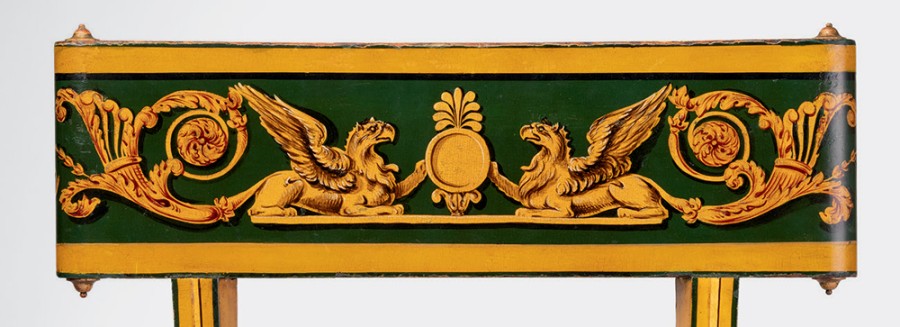
Detail of the crest rail of the side chair in Appendix, cat. 6.
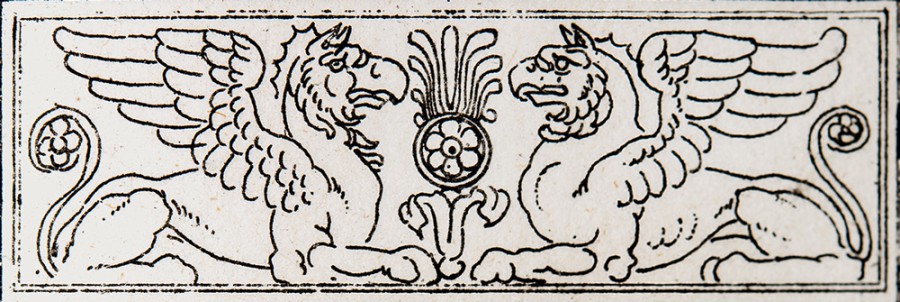
Detail of plate 32 from Charles Percier and Pierre Fontaine’s Recueil des décorations intérieures (Paris, 1812; reprint, 1827). (Courtesy, Winterthur Museum, Garden & Library.)
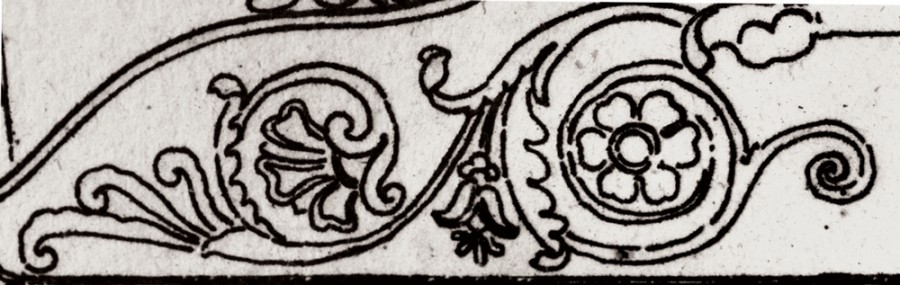
Detail of plate 25 from Charles Percier and Pierre Fontaine’s Recueil des décorations intérieures (Paris, 1812; reprint, 1827). (Courtesy, Winterthur Museum, Garden & Library.)
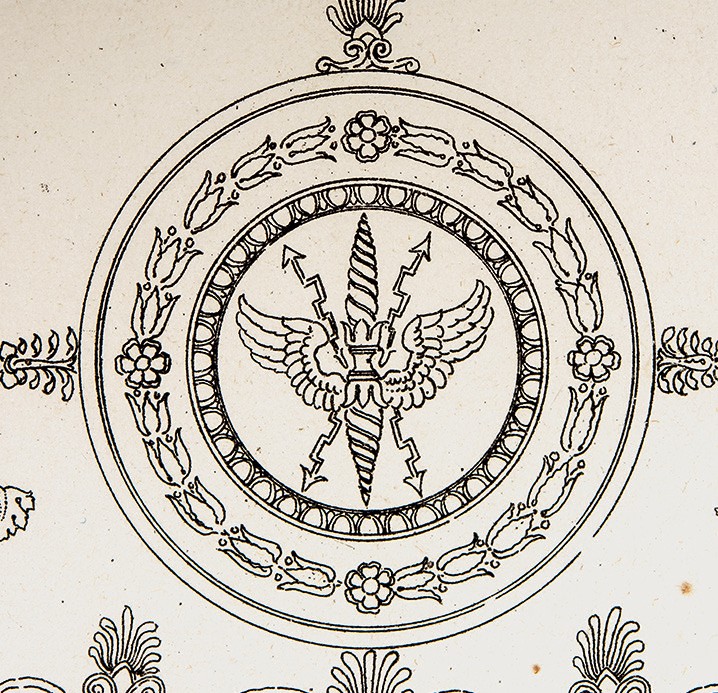
Detail of plate 33 from Charles Percier and Pierre Fontaine’s Recueil des décorations intérieures (Paris, 1812; reprint, 1827). (Courtesy, Winterthur Museum, Garden & Library.)
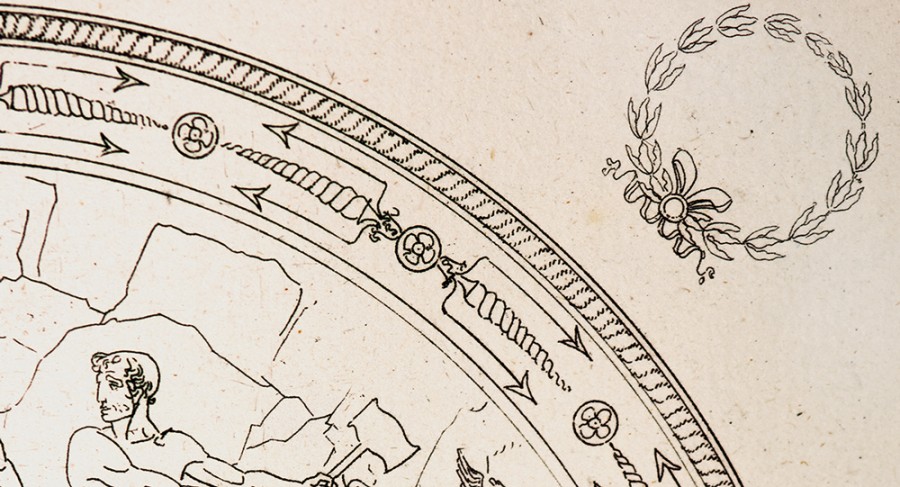
Detail of plate 9 from Charles Percier and Pierre Fontaine’s Recueil des décorations intérieures (Paris, 1812; reprint, 1827). (Courtesy, Winterthur Museum, Garden & Library.)
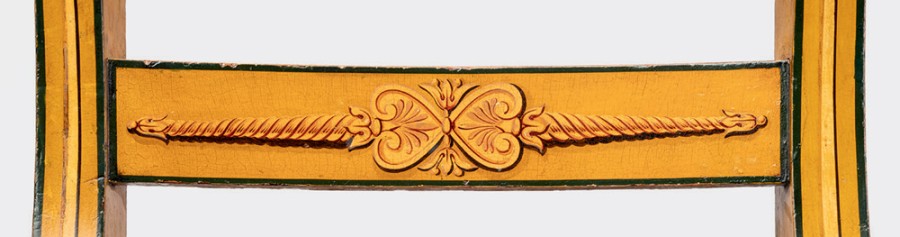
Detail of the stay rail of the side chair illustrated in Appendix, cat. 6.
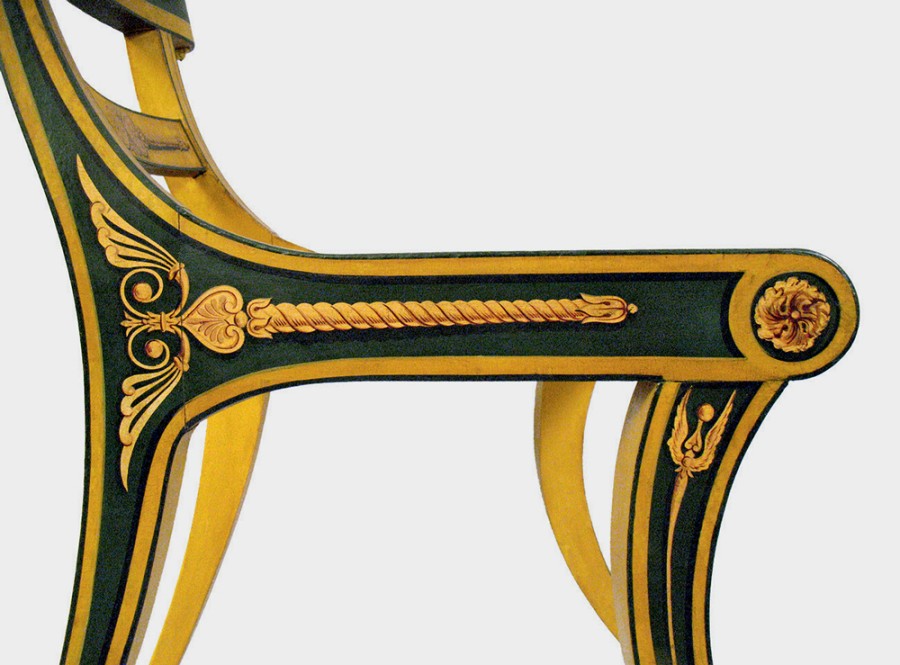
Detail of side view of the side chair illustrated in Appendix, cat. 7, with slip seat removed. (Photo, Art Conservation Services, Baltimore.)
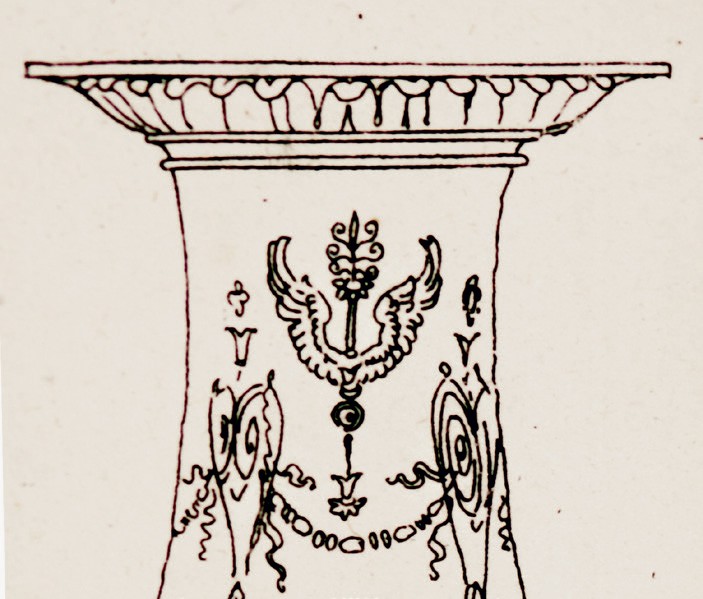
Detail of plate 4 from Charles Percier and Pierre Fontaine’s Recueil des décorations intérieures (Paris, 1812; reprint, 1827). (Courtesy, Winterthur Museum, Garden & Library.)
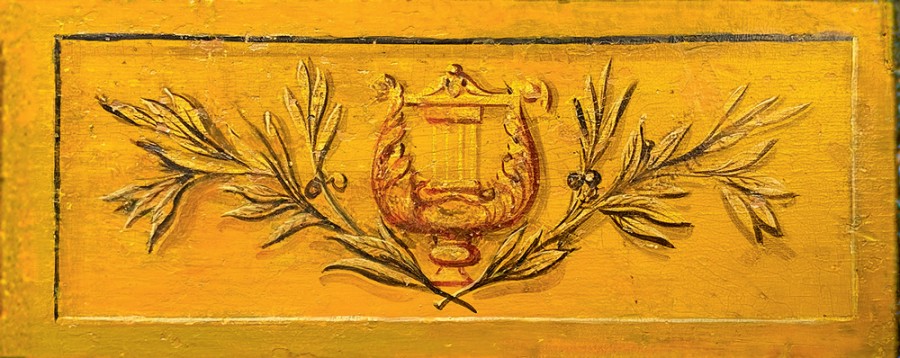
Detail of the front rail of the recess seat in fig. 26. (Photo, Martha H. Willoughby.)
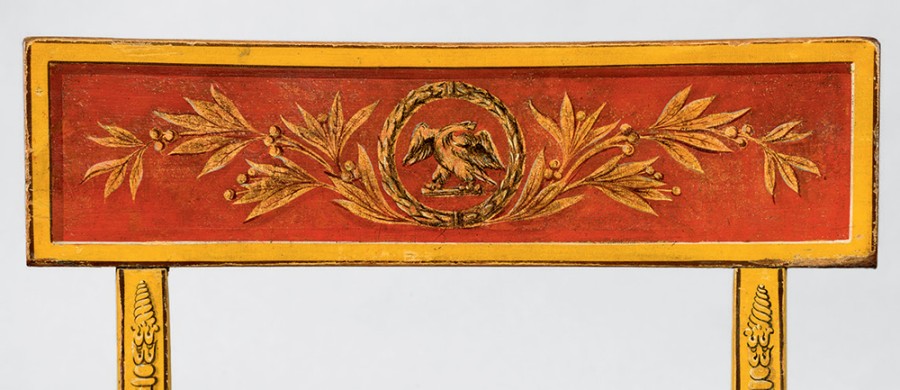
Detail of the crest of the side chair in fig. 30.
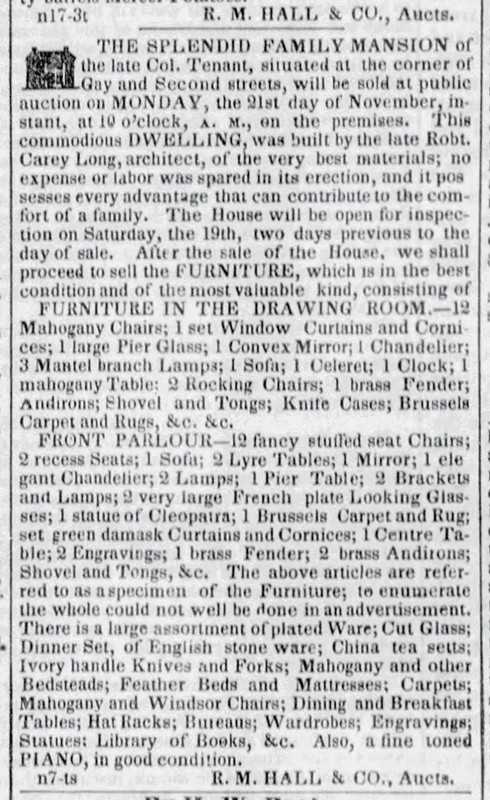
“The Splendid Family Mansion,” Sun (Baltimore), November 18, 1842. (© newspapers.com by ancestry.com.) This is the notice of the sale of Thomas Tenant’s house and furnishings after his widow died in 1842.