


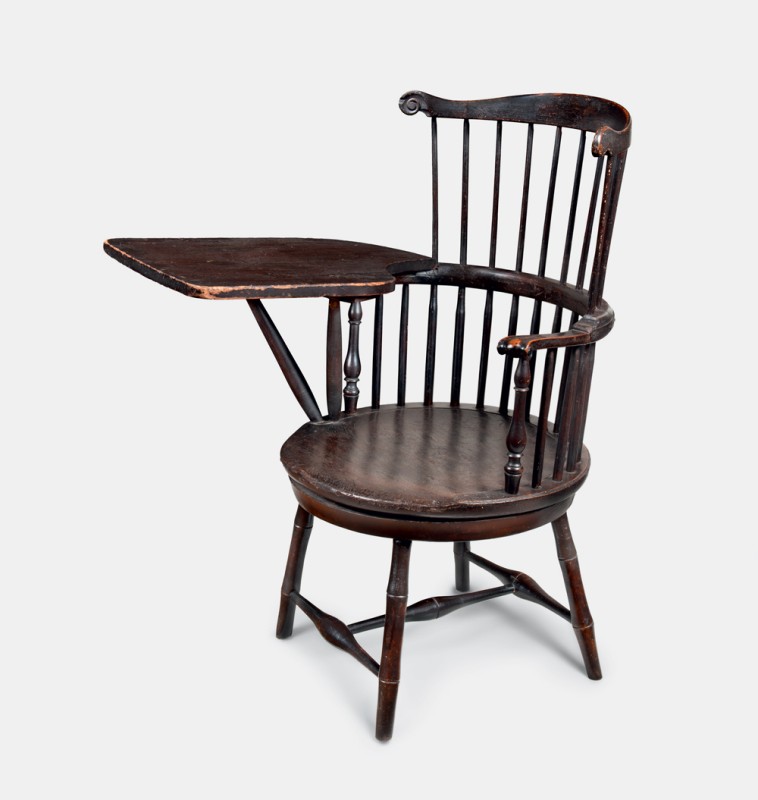
Thomas Jefferson’s rotating Windsor armchair. Courtesy, American Philosophical Society.
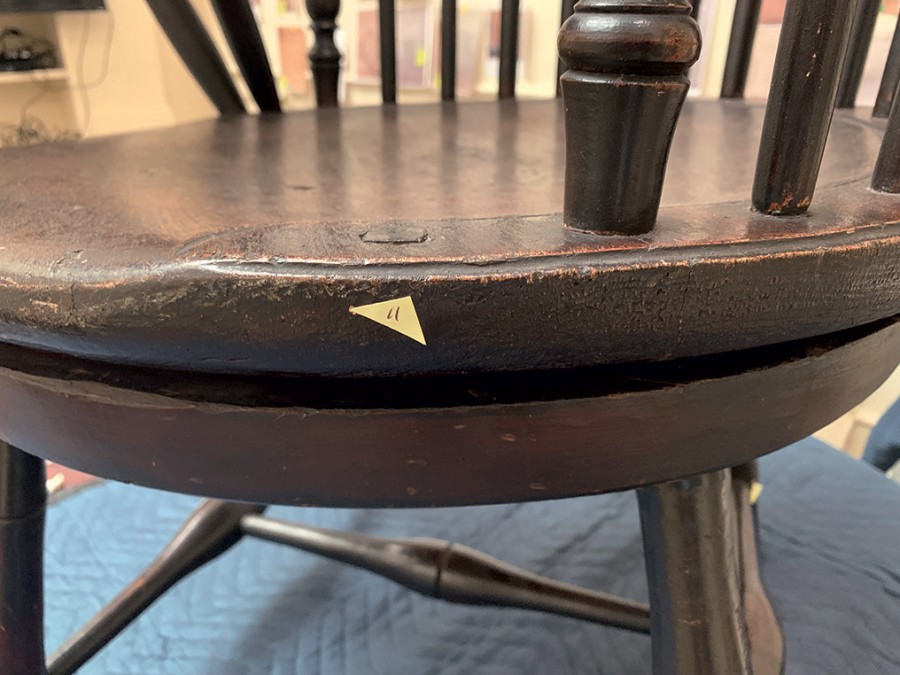
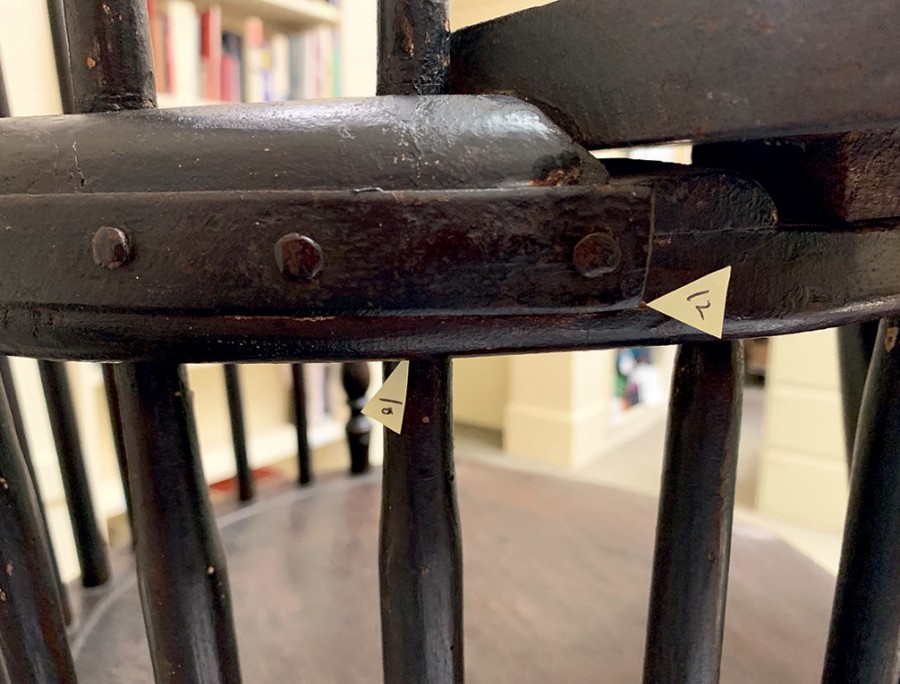
F24-10 and F24-12
F24-11
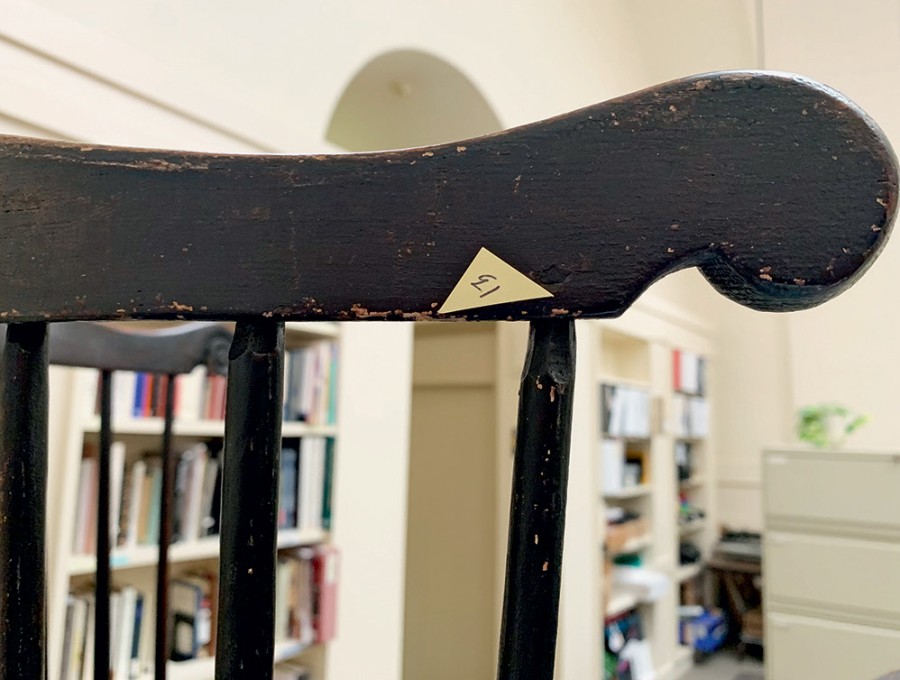
F24-13
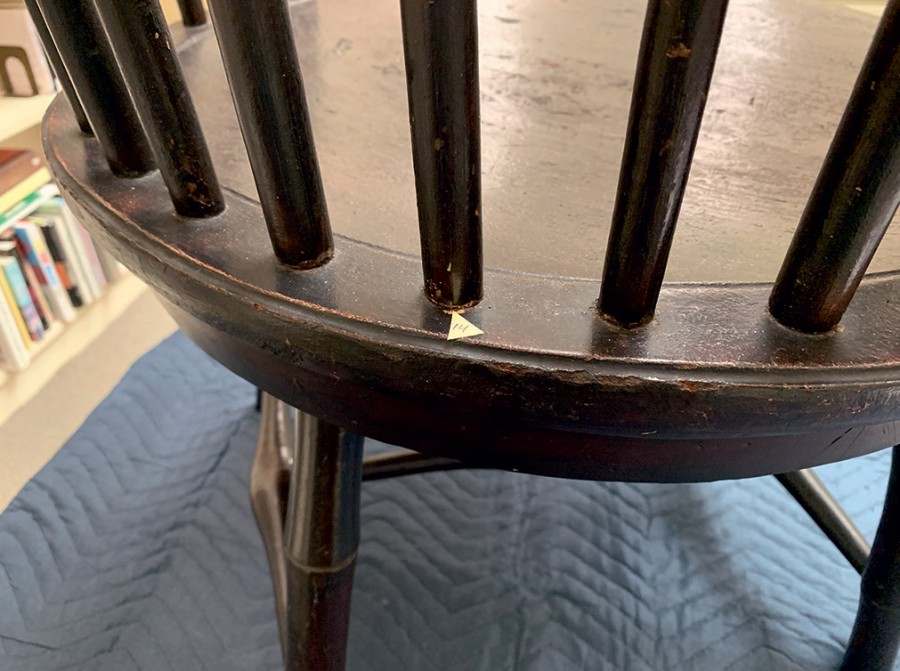
F24-14
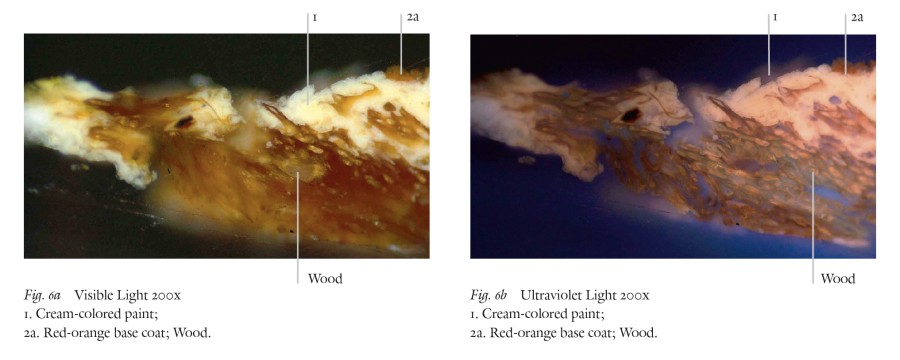
Figure 6a-b F24-11. Chair seat, PL side of seat near front, below incised line, near spot of bronze powder paint.
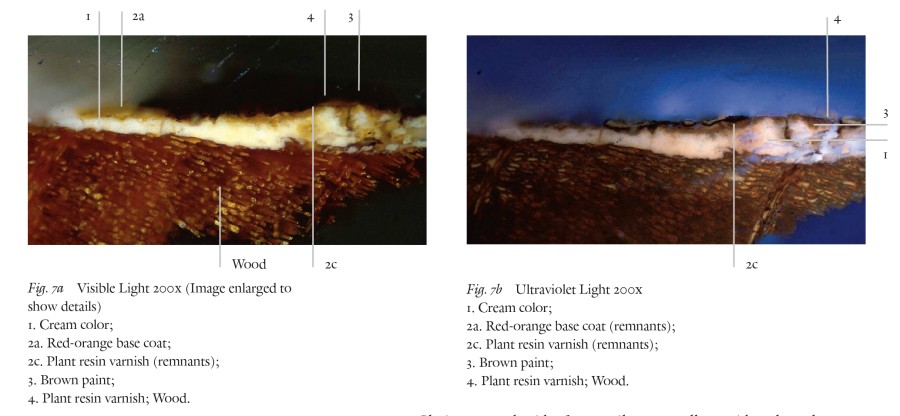
F24-12. Chair seat, side of PR arm, just in front of iron strap.
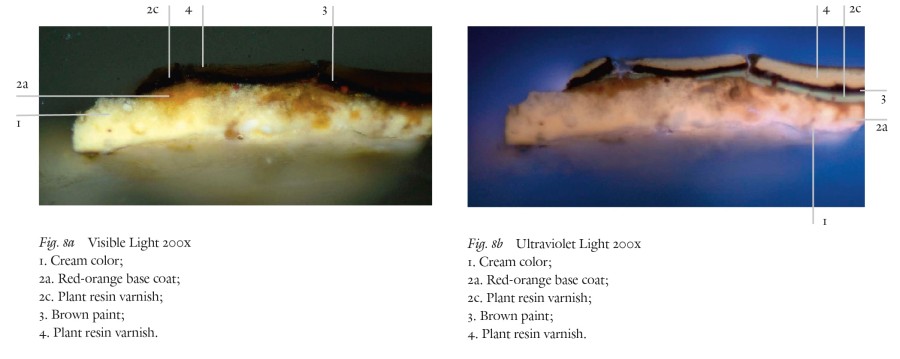
F24-13. Chair seat, underside of crest rail, near scroll, PR side at large loss area.
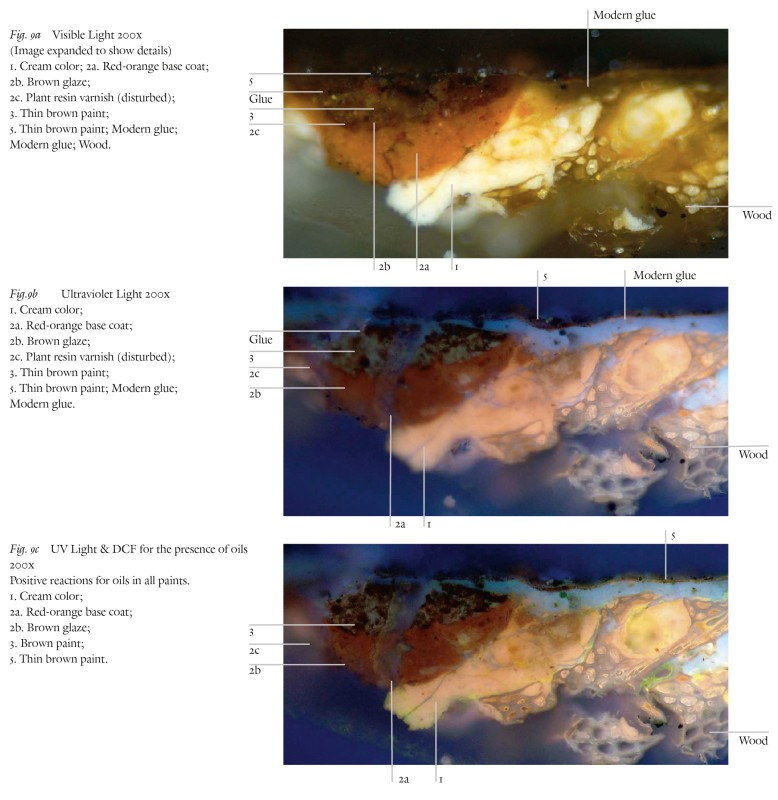
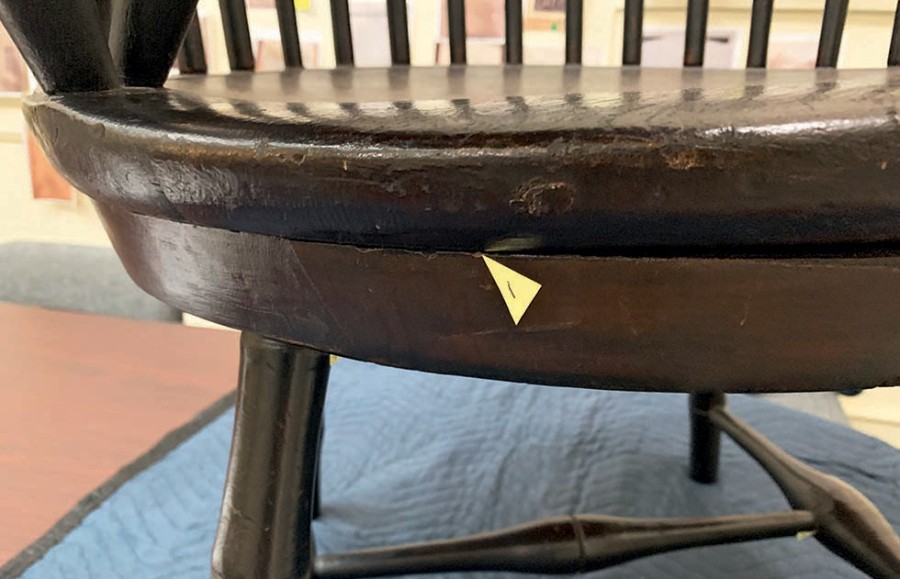
F24-14. Chair seat, top of seat, adjacent to spindle at rear.
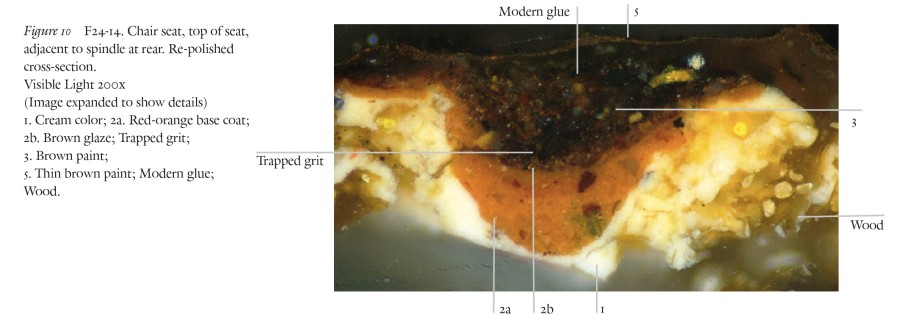
F24-14. Chair seat, top of seat, adjacent to spindle at rear. Re-polished cross‑section. Visible Light 200x (Image expanded to show details)
1. Cream color; 2a. Red-orange base coat;
2b. Brown glaze; Trapped grit;
3. Brown paint;
5. Thin brown paint; Modern glue;
Wood.
F24-1
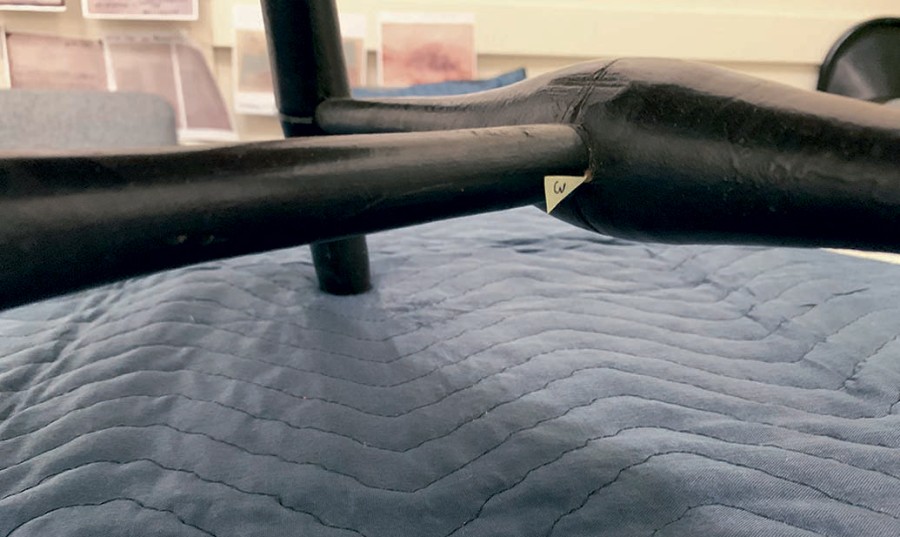
F24-2
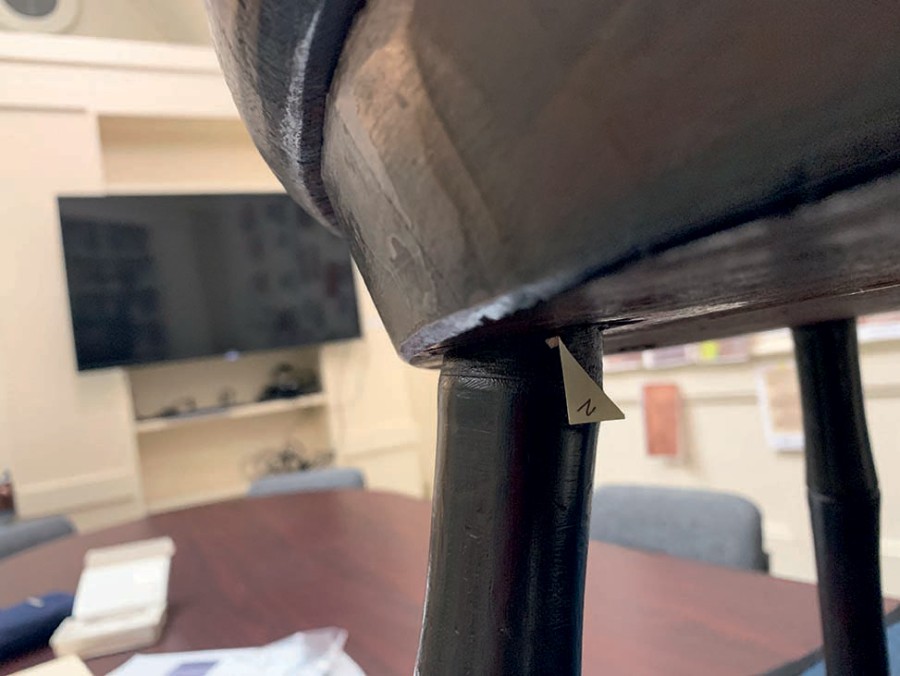
F24-3
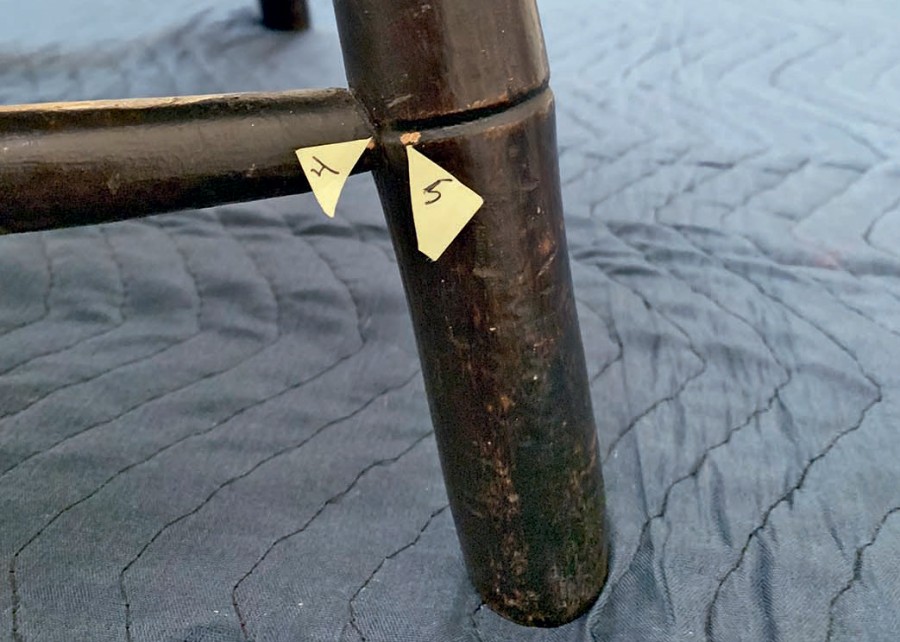
F24-14
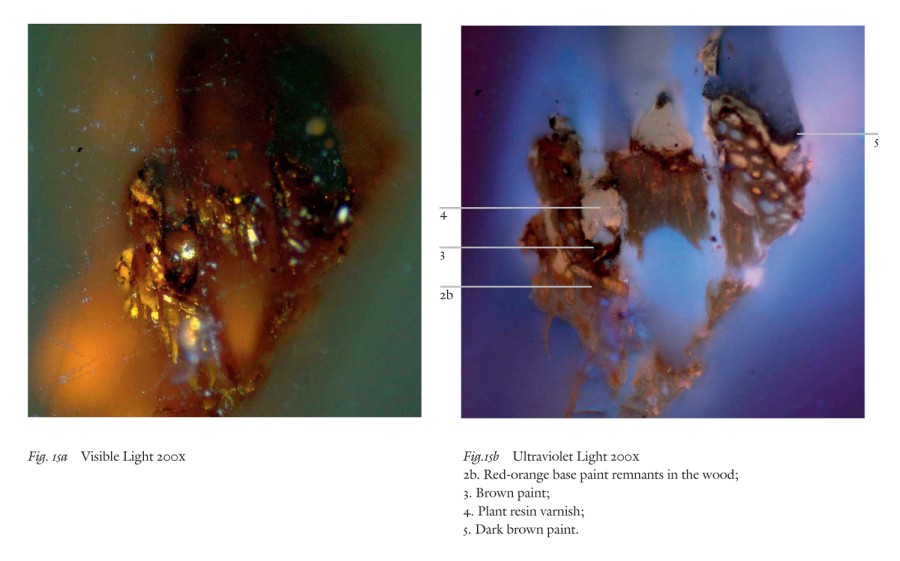
F24-1. Base, top edge of base for turned seat mechanism.
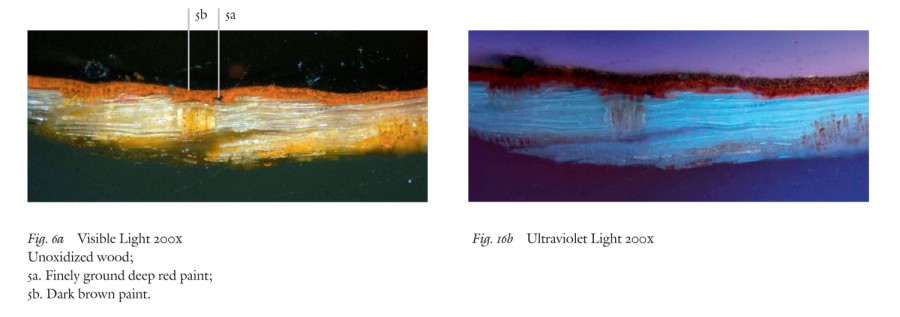
F24-2. Base, top edge, front Proper Left (PL) leg.
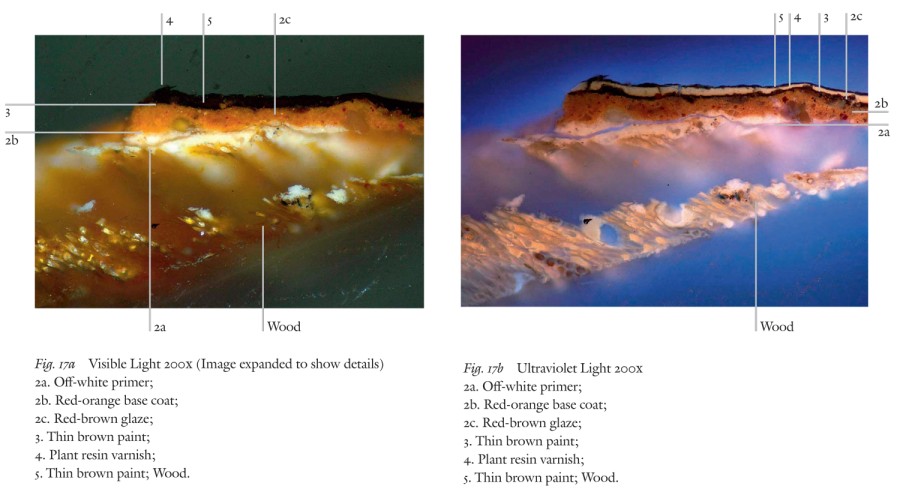
F24-3. Base, at join with central stretcher with PL side stretcher.
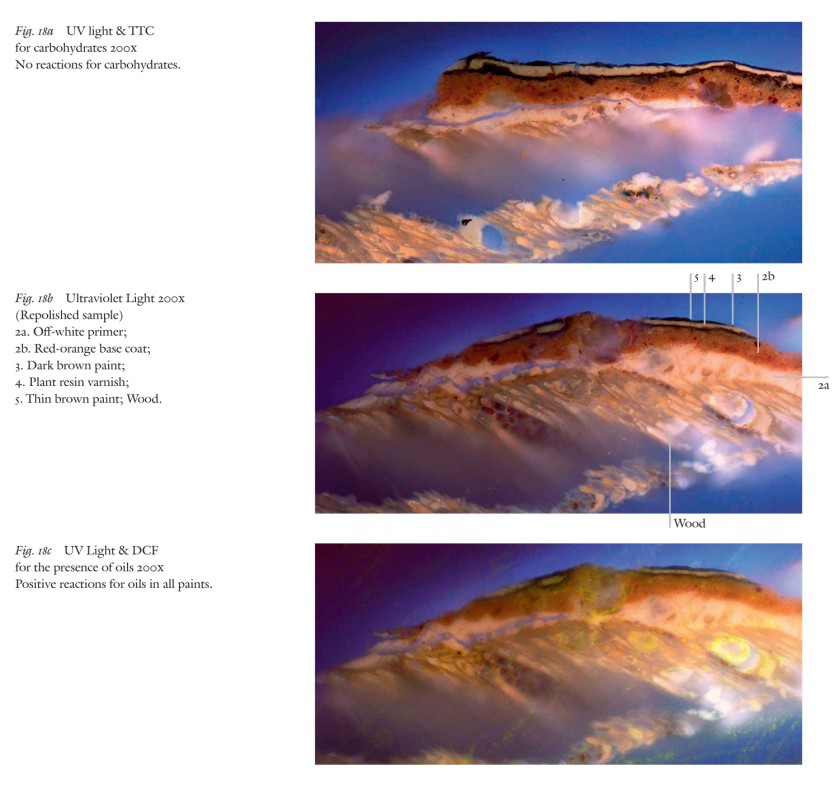
F24-3. Base, at join with central stretcher with PL side stretcher.
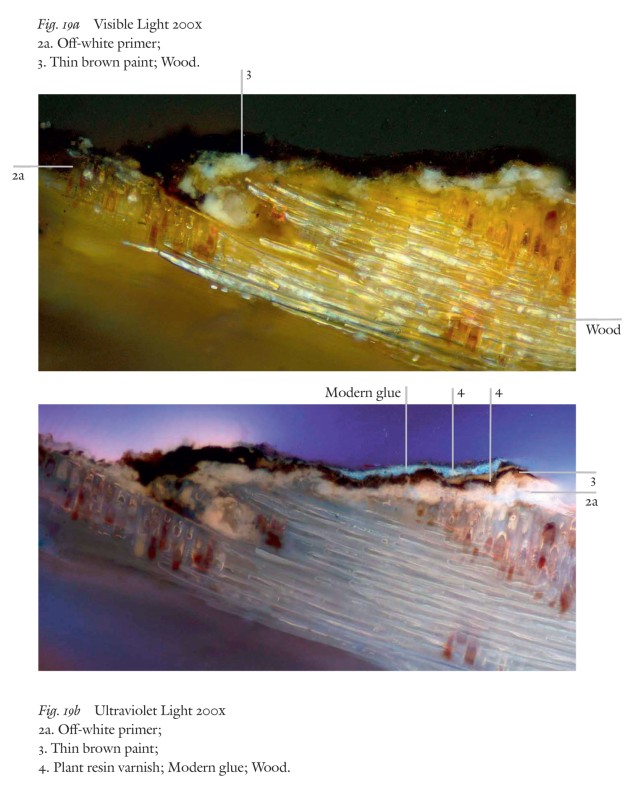
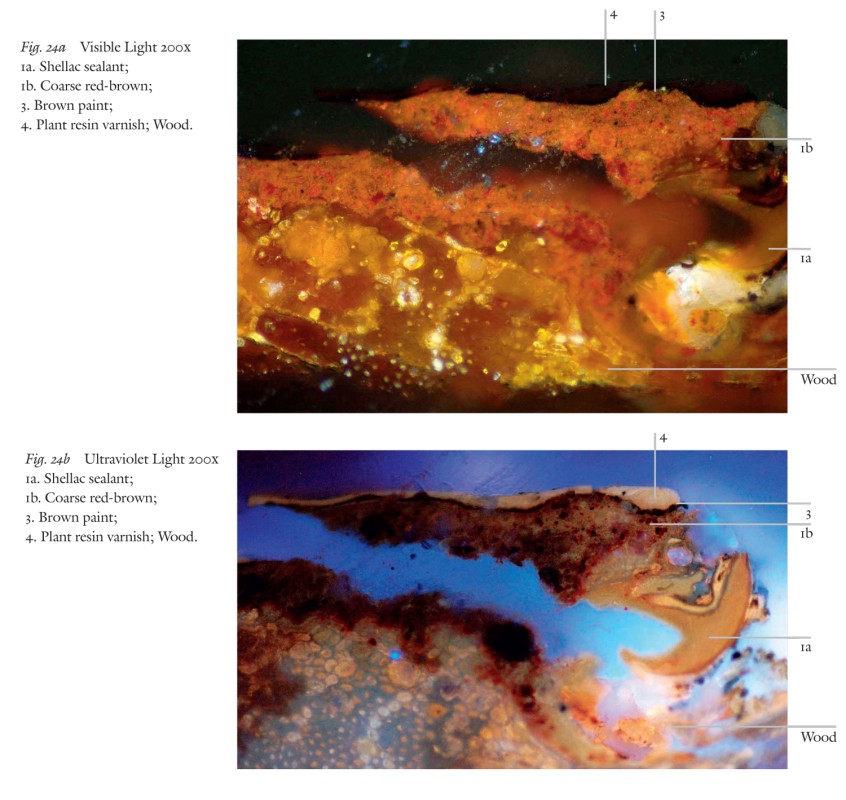
Visible Light 200x
2a. OV-white primer;
3. Thin brown paint; Wood.
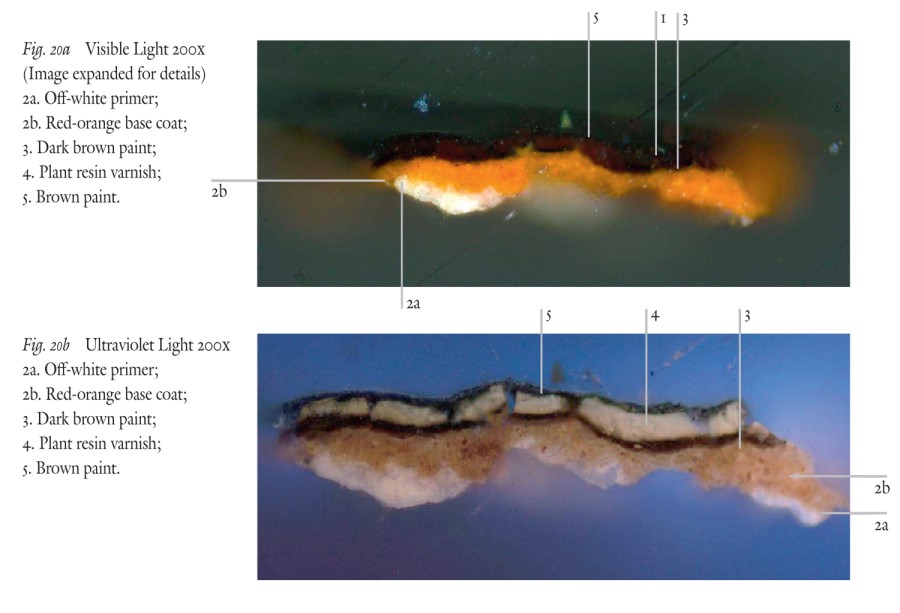
F24-5. Base, PL side leg, in bottom bamboo turning near join with stretcher.
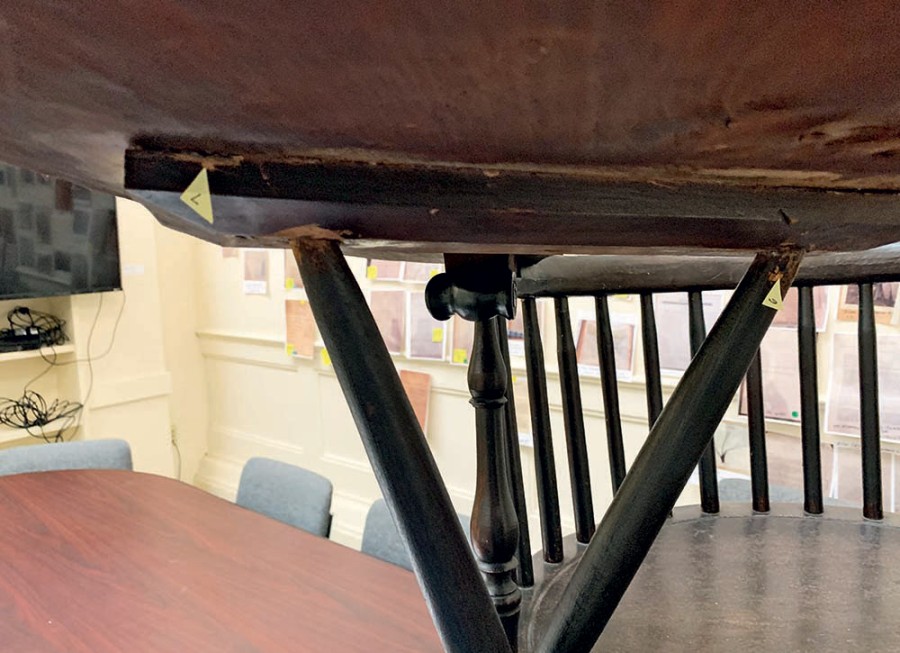
F24-6 and F24-7
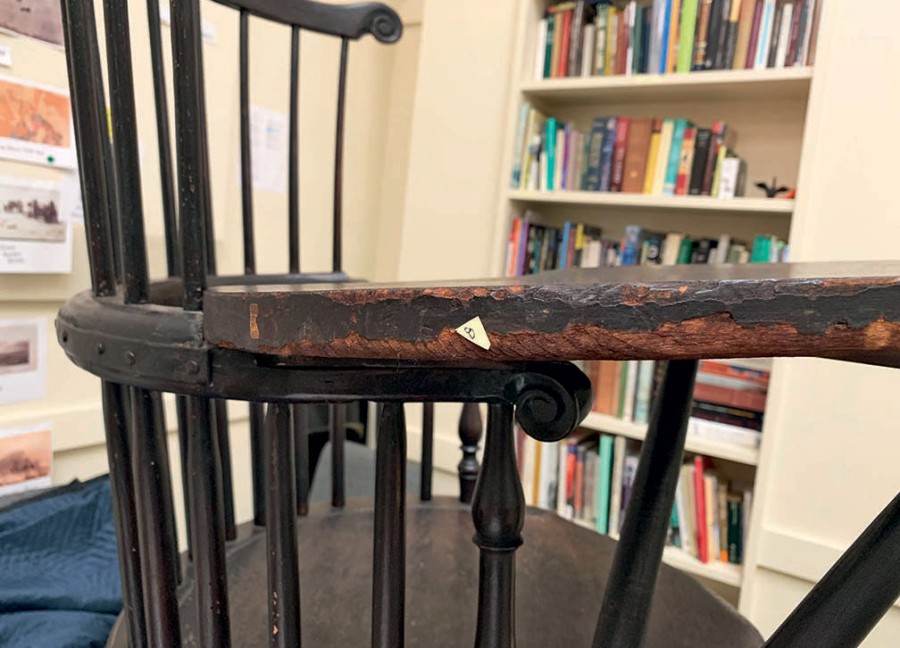
F24-8
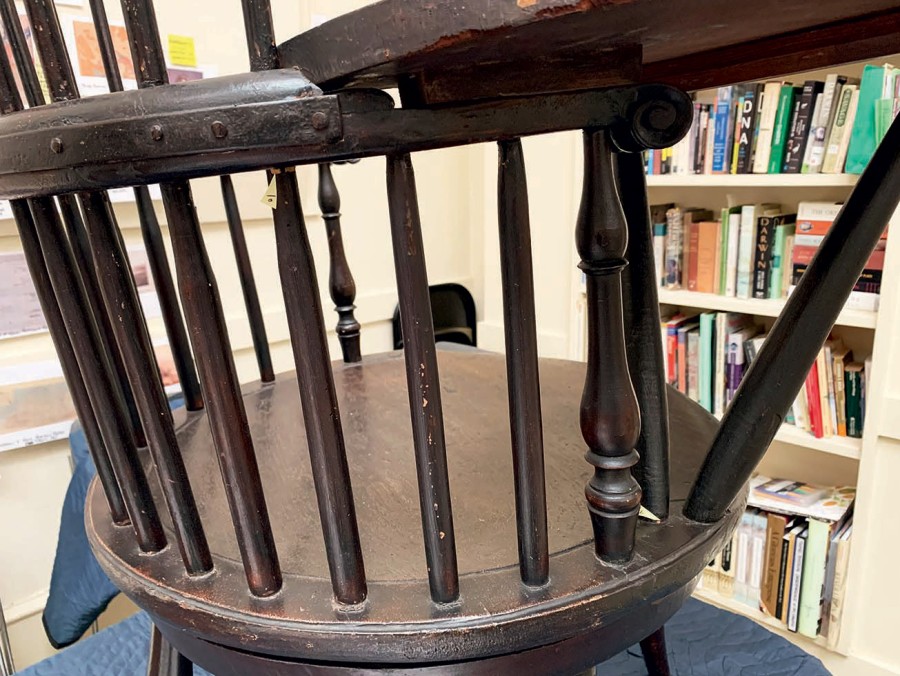
F24-9
F24-6. Desk, top edge of writing surface support at large losses.
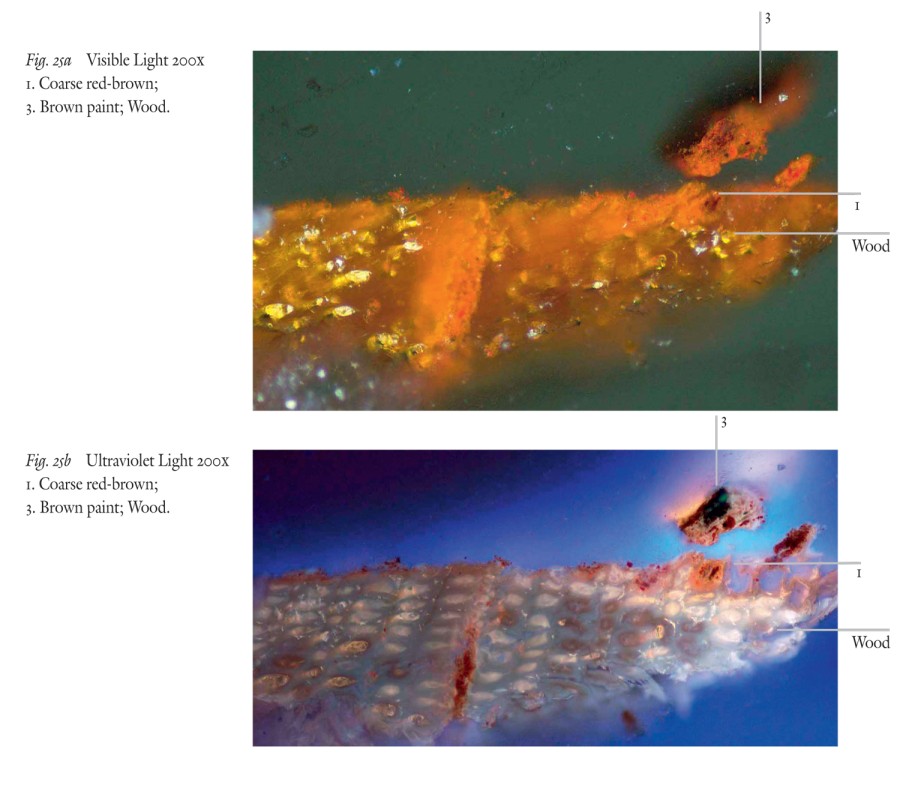
F24-7. Desk, rectangular block below writing surface, front edge at top where there are considerable losses.
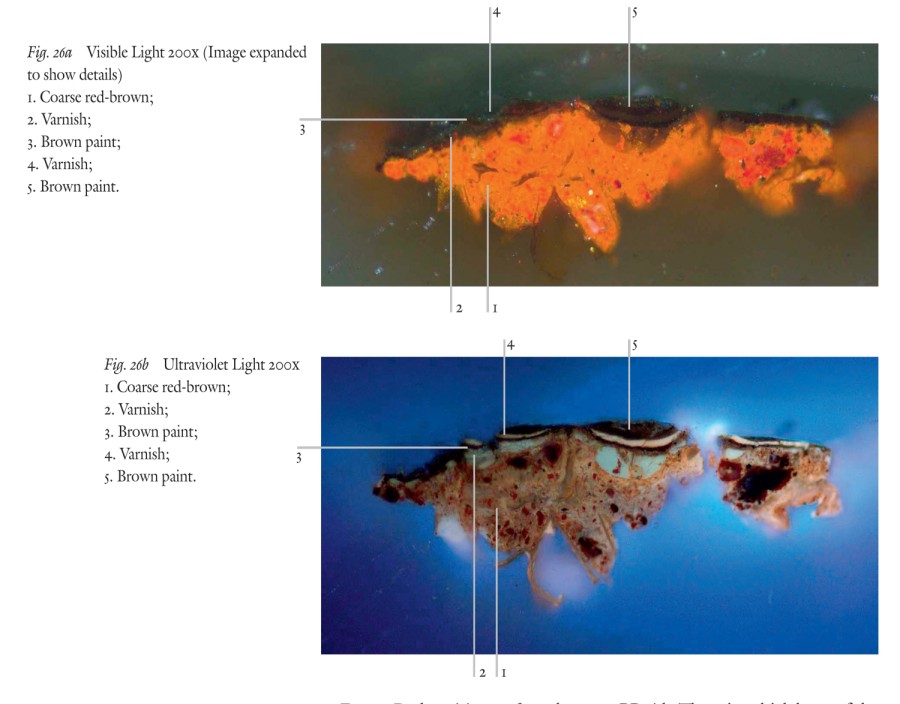
F24-8. Desk, writing surface edge, near PR side.
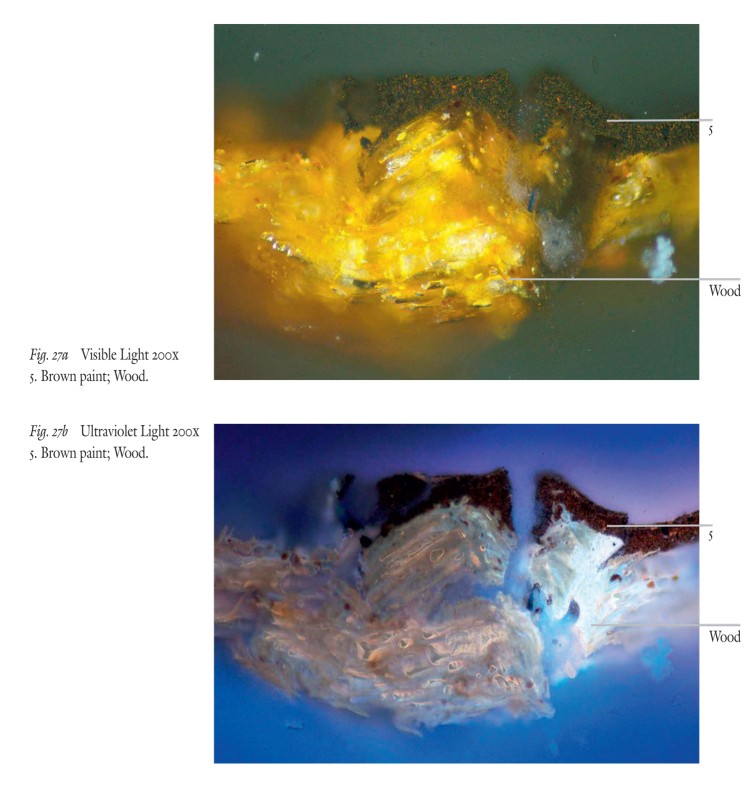
F24-9. Desk, base of PL writing surface support.
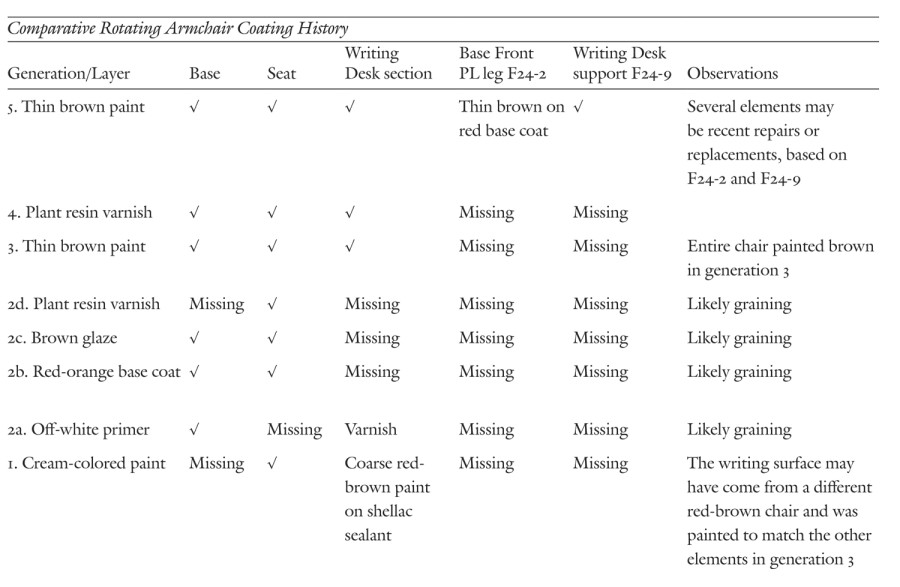
Comparative paint history table. This shows how the comparative paint histories on different elements can be aligned.