


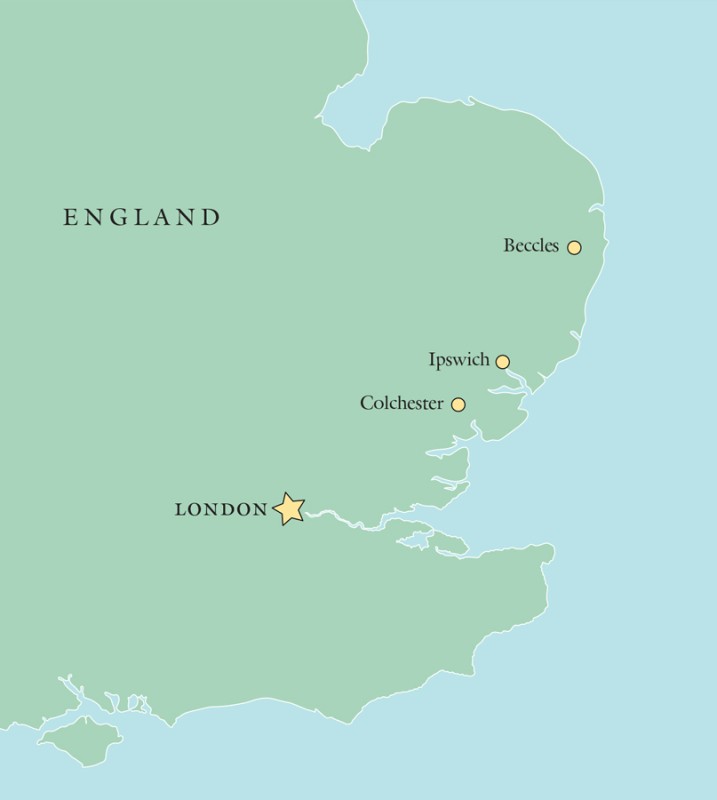
Map of South East England showing Beccles, Colchester, Ipswich, and London, the known locations of Francis Trumble prior to 1740.
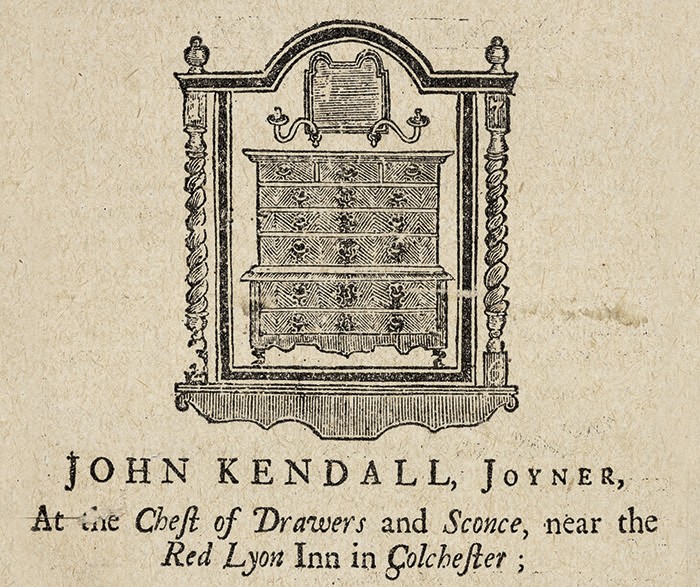
Trade card of John Kendall, cabinetmaker, 1726. Illustrated in Essex County Standard, August 1, 1931. (© Trustees of the British Museum.)
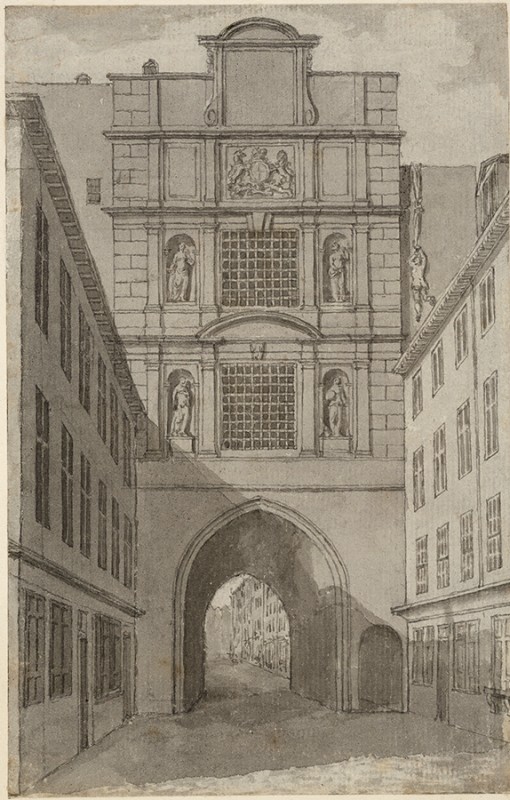
Samuel Wale (1721-1786), John Sheppard Escaping from Newgate, undated. Pen, gray ink, and gray wash on paper. 6" x 4". (© Trustees of the British Museum.)
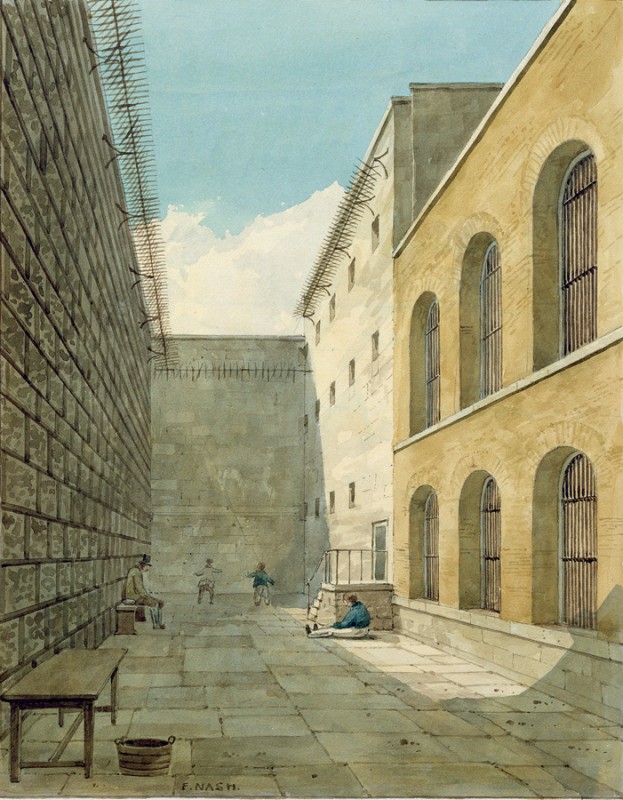
Frederick Nash, The Press Yard, Newgate Prison, ca. 1840. Watercolor on paper. (© London Metropolitan Archives / Bridgeman Images.)
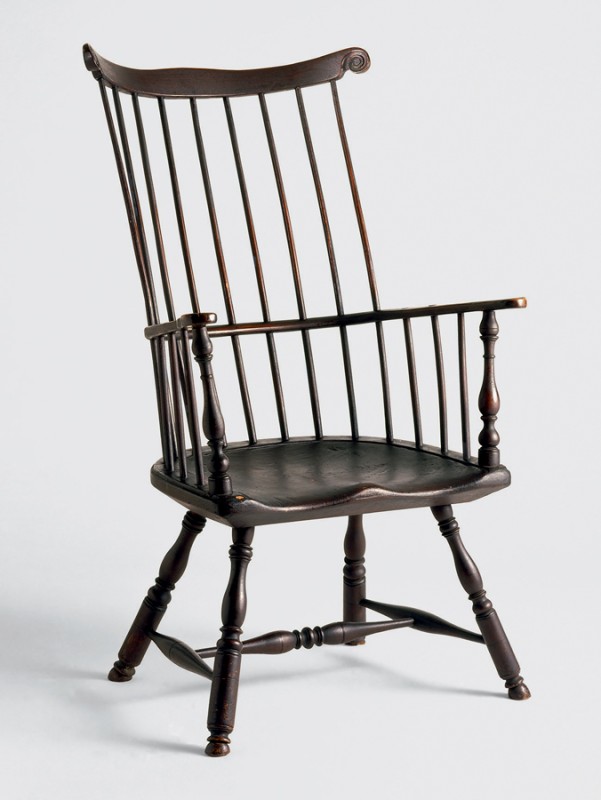
High-back Windsor armchair, attributed to Francis Trumble, Philadelphia, 1755–1762. Yellow poplar (seat) with maple, oak, and hickory (microanalysis). H. 44 7/8", W. (arms) 26 3/4", D. (seat) 16 3/4". (Courtesy, Winterthur Museum.)
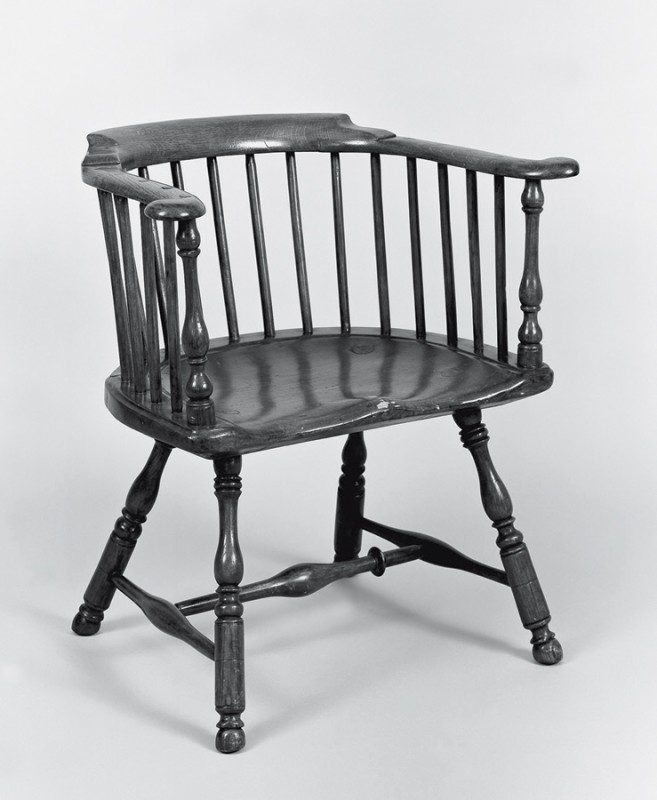
Low-back Windsor armchair, possibly by Francis Trumble, Philadelphia, 1760–1770. Yellow poplar, ash, white oak, soft maple, and hickory (replaced right stretcher, beech). H. 28 3/8", W. 27", D. 21 3/4". (Courtesy, Bayou Bend Collection, gift of Miss Ima Hogg.)
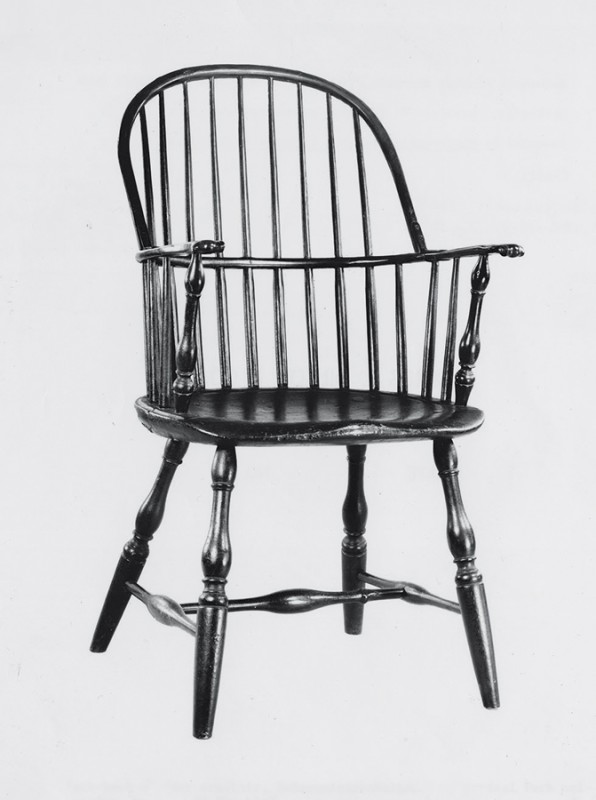
Sack-back Windsor armchair, branded by Francis Trumble, 1770–1785. Tulip, soft maple, walnut, hickory, and oak (microanalysis). H. 37 13/16", W. 21 1/16“, D. 15 15/16". (Courtesy, Independence National Historical Park.)
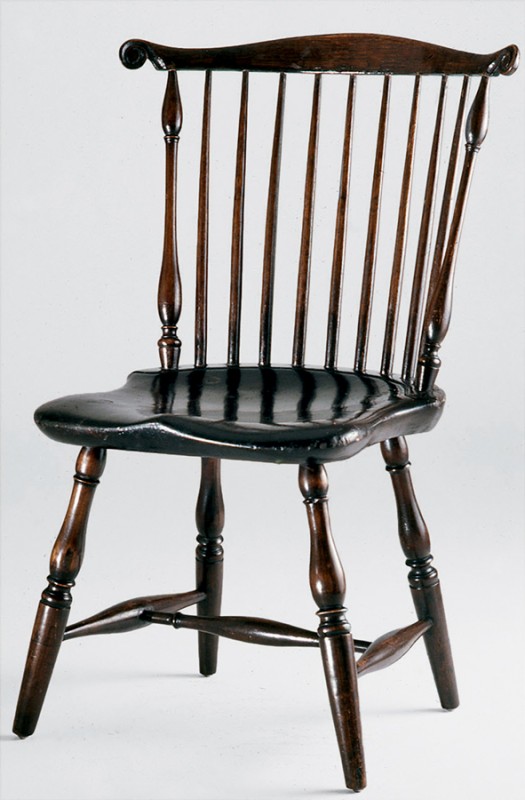
Fan-back Windsor side chair, branded by Francis Trumble, Philadelphia, ca. 1778–1785. Yellow poplar, maple, black walnut, oak, and hickory (microanalysis). H. 35 3/4", W. 23 1/2", D. 19 1/4". (Courtesy, Winterthur Museum.)
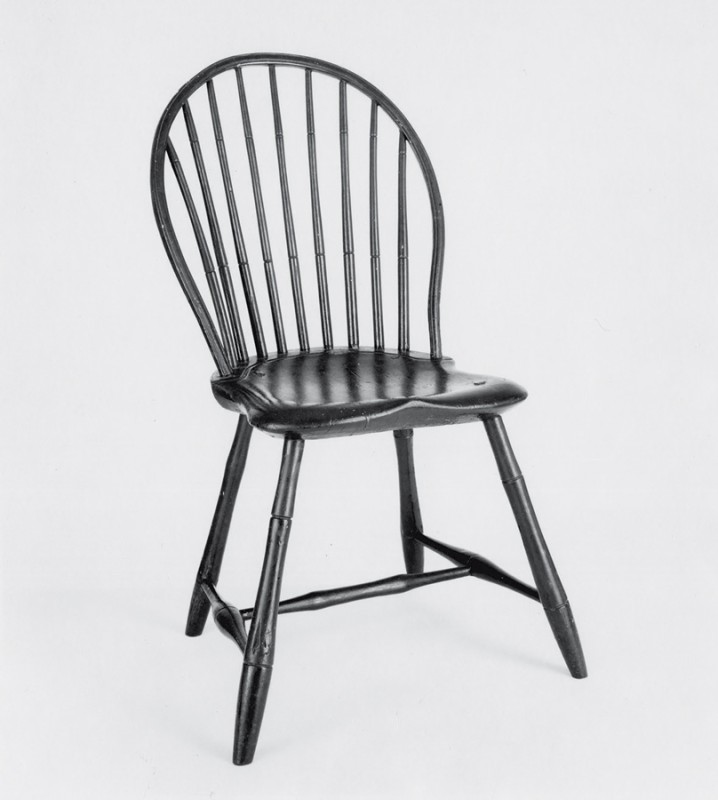
Bow-back Windsor side chair, branded by Francis Trumble, 1788–1795. Tulip, soft maple, white oak, and hickory (microanalysis). H. 35 9/16", W. 16 1/2", D. 16 9/16". (Courtesy, Independence National Historical Park.)
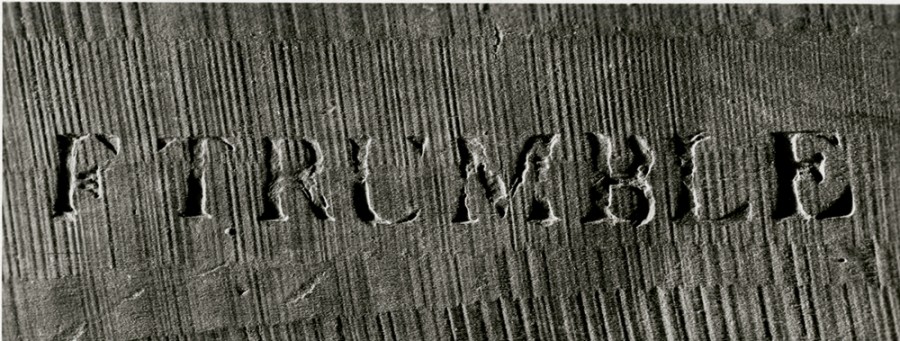
Detail of brand on underside of seat of chair in fig. 9. (Courtesy, Independence National Historical Park.)
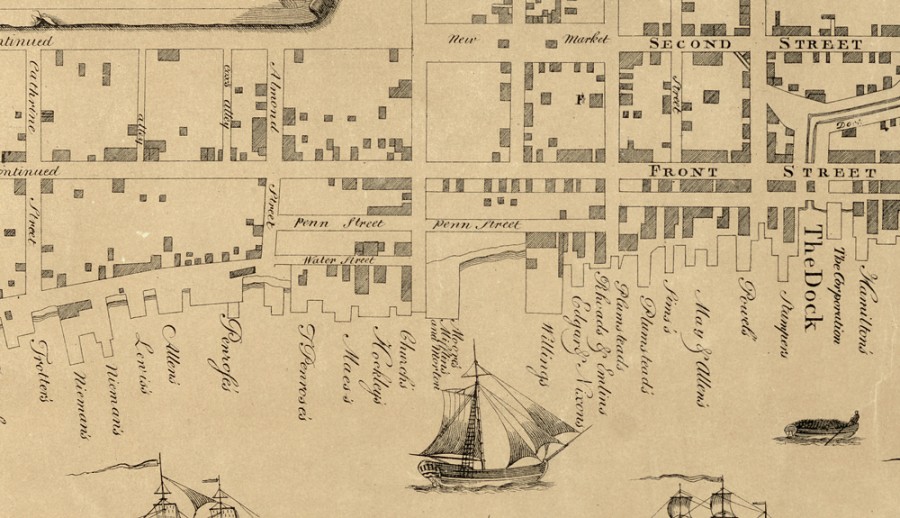
Detail of Nicholas Scull’s Plan of the Improved Part of the City of Philadelphia, 1762; reprint, 1858. The circles indicate the locations of Francis Trumble’s shops and residences. (Courtesy, Historical Society of Pennsylvania.)
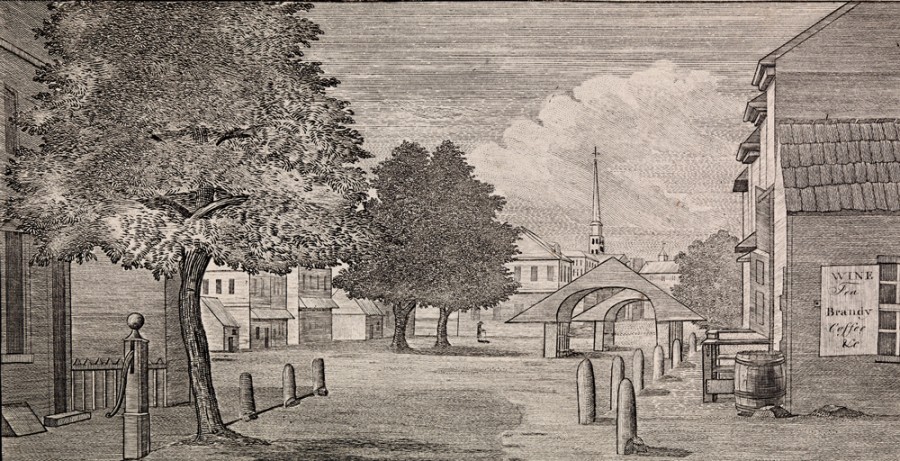
James Thackara, A View of the New Market, Philadelphia, 1787. Engraving on white wove paper, 3 7/16" x 6 5/8". (Courtesy, Pennsylvania Academy of the Fine Arts, Philadelphia, acc. no. 1876.9.481s.)
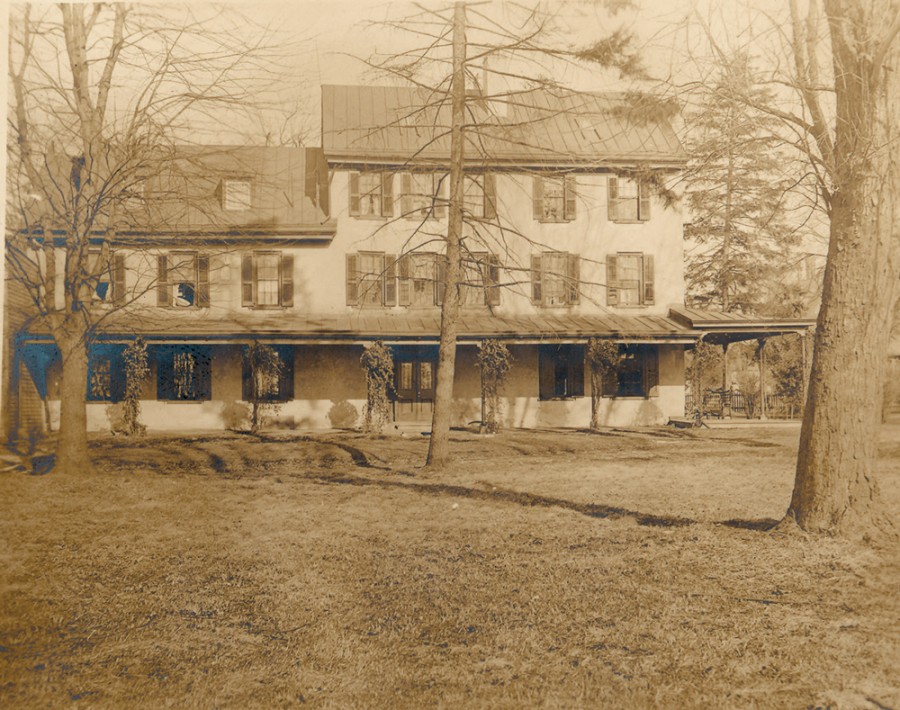
Buck Tavern, Moyamensing, Pennsylvania. Photograph, 1907. (Courtesy, Athenaeum of Philadelphia.)
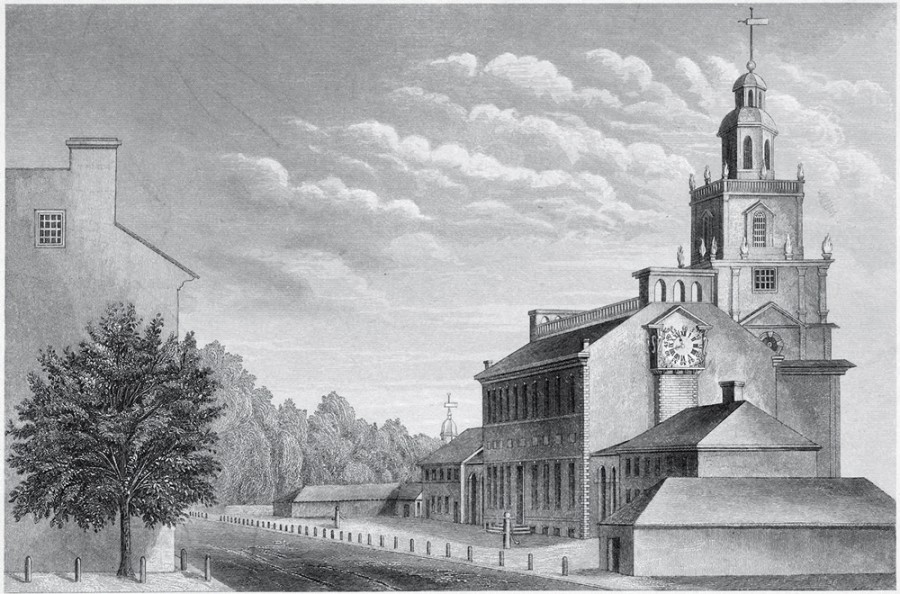
Illman Brothers after Charles Willson Peale, The State House in Philadelphia, 1778, 1876. Engraving on paper. 7 1/2" x 9". (Courtesy, Gilcrease Museum, Tulsa, Oklahoma.)
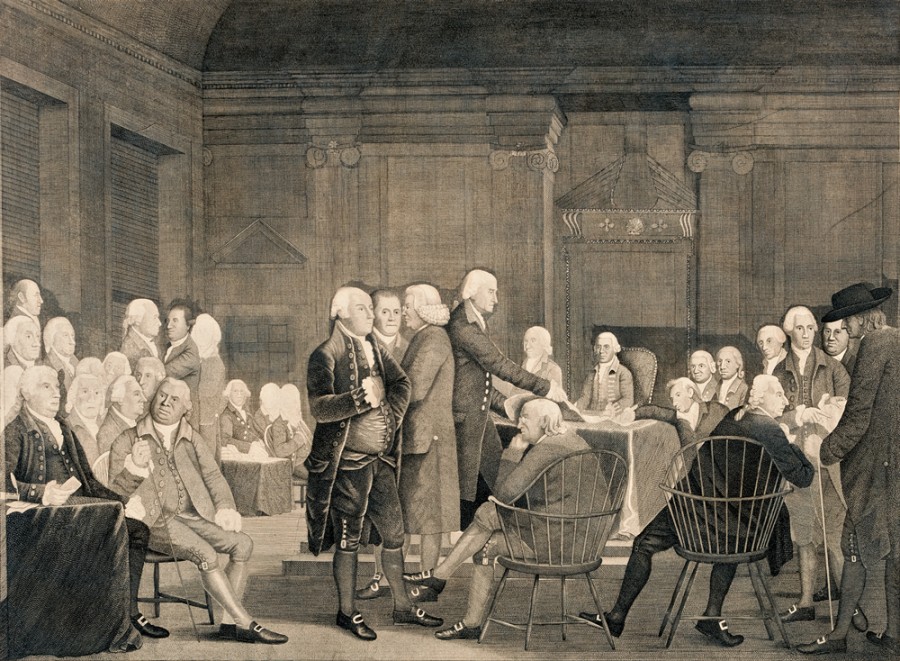
Edward Savage after Robert Edge Pine, Congress Voting Independence, 1906. Stipple and line engraving from unfinished plate. 18 7/8" x 25 11/16". (Courtesy, Reynolda House Museum of American Art, affiliated with Wake Forest University, gift of Barbara B. Millhouse.)
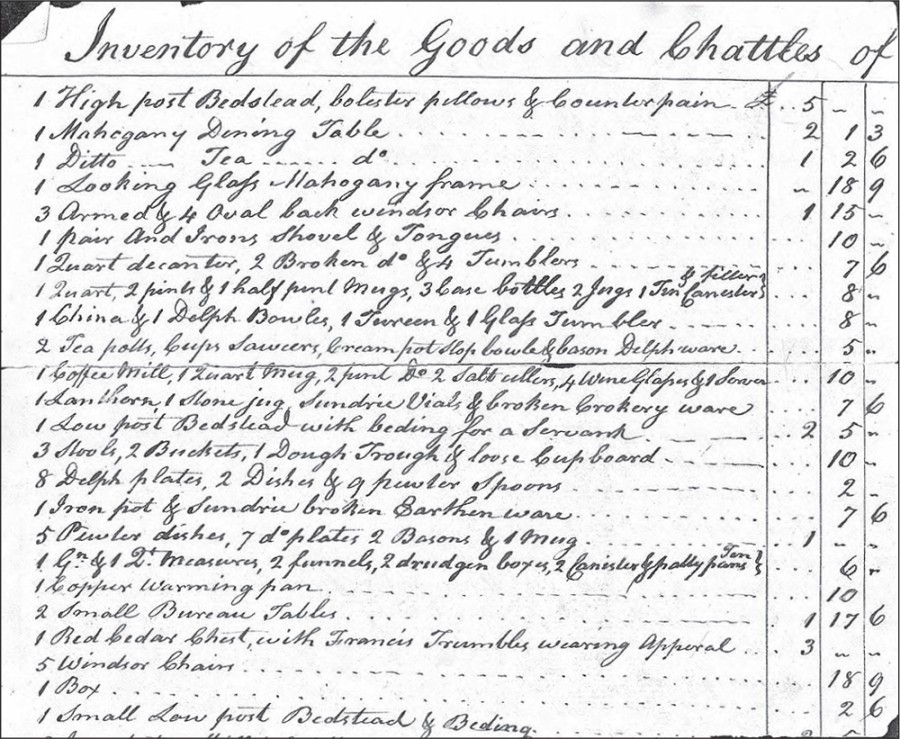
“Inventory of the Goods and Chattles of the Estate of Francis Trumble deceased,” p. 1 (fragment). Pennsylvania, U.S., Wills and Probate Records, 1683–1993, Ancestry.com.
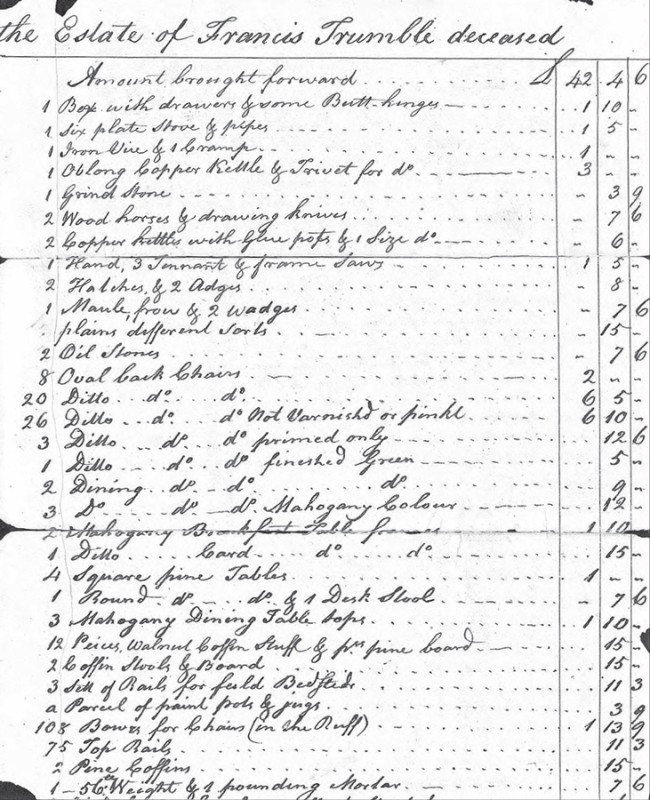
“Inventory of the Goods and Chattles of the Estate of Francis Trumble deceased,” p. 2 (fragment). Pennsylvania, U.S., Wills and Probate Records, 1683–1993, Ancestry.com.