


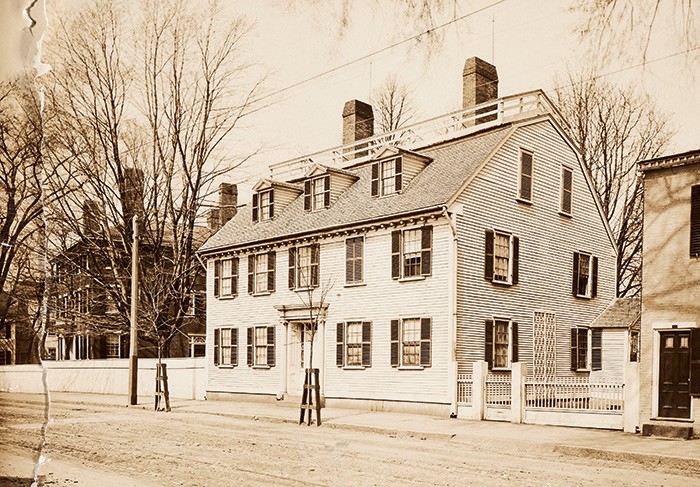
The Ropes Mansion, 318 Essex Street, Salem, Massachusetts. Unknown photographer, ca. 1890. (Courtesy, Phillips Library, Peabody Essex Museum [Ropes Papers, box 21, folder 2].) This photograph shows the site of Mark Pitman’s cabinetmaking shop on the left side of the house with the board fence erected in the 1850s.
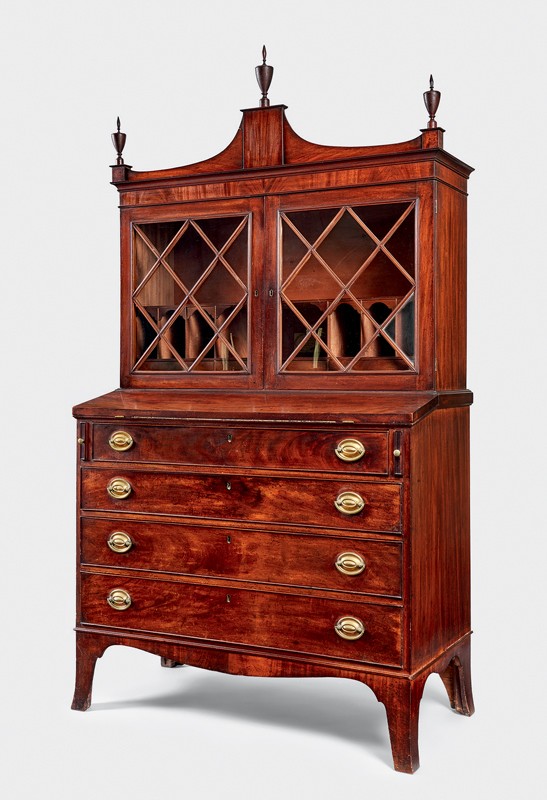
Desk and bookcase, labeled by Mark Pitman (1779–1855), Salem, Massachusetts, 1807–1812. Mahogany, pine, glass. H. 67 1/2", W. 41 7/8", D. 20 1/2". (Courtesy, Peabody Essex Museum, given in honor of Dean Lahikainen and in memory of Anna Sterns by Anna Thurber, 2018.31.1AB; photo, Michael E. Myers.)
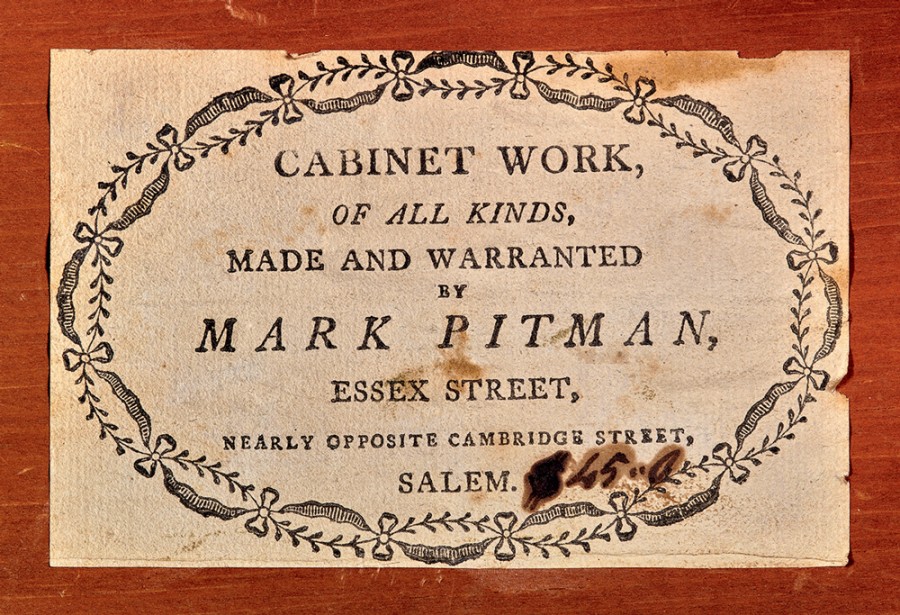
Detail of the printed label of Mark Pitman inside the desk and bookcase in fig. 2. (Photo, Michael E. Myers.)
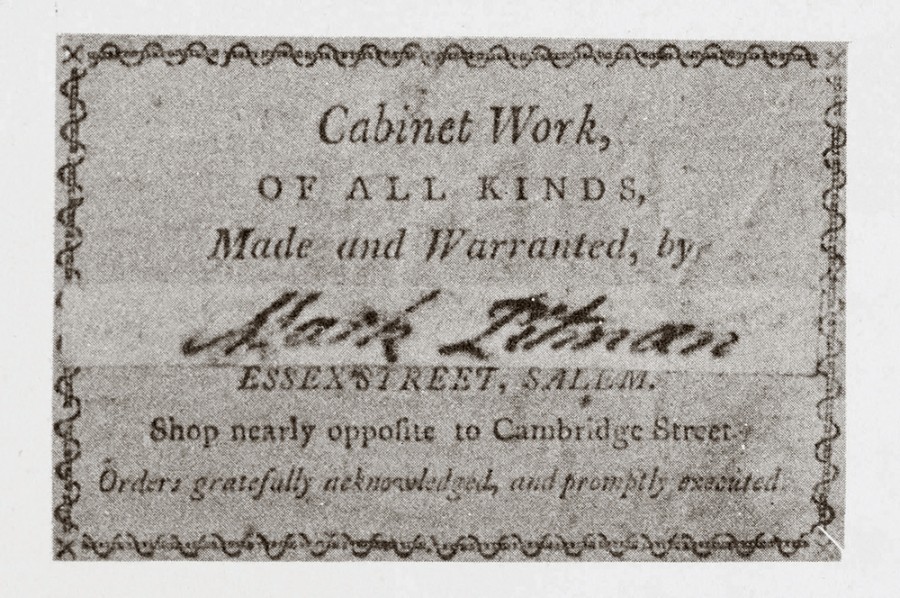
Printed label with Mark Pitman’s handwritten signature pasted over the name of Josiah Caldwell. (Location unknown; photo, Phillips Library, Peabody Essex Museum.) Illustration from Dean A. Fales, Essex County Furniture: Documented Treasures from Local Collections, 1660–1860 (Salem, Mass.: Essex Institute, 1965), pl. 33.
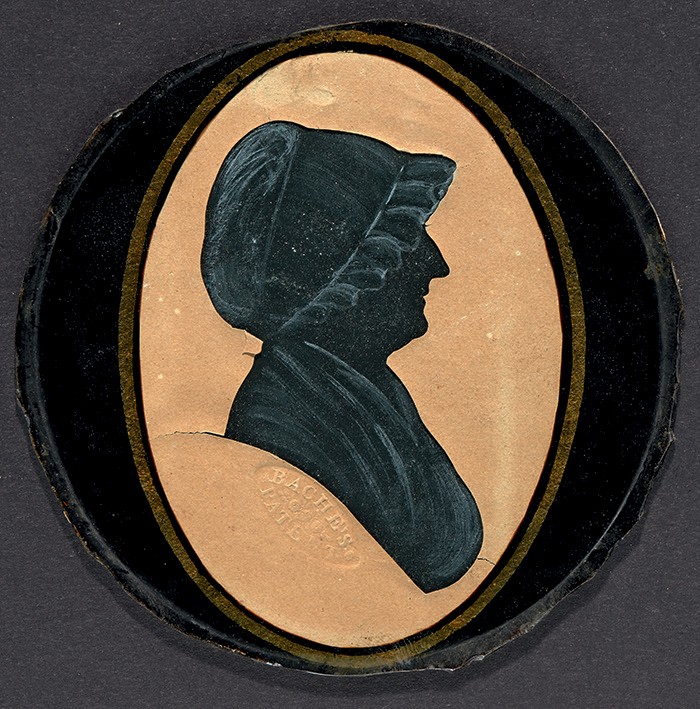
William Bache (1771–1845), Silhouette of Elizabeth (Cleveland) Ropes (1757–1831), stamped “Bache’s Patent,” 1805. Cut paper and chalk. H. 5 3/8". (Courtesy, Peabody Essex Museum, gift of the Trustees of the Ropes Memorial, 1989, R905.1.)
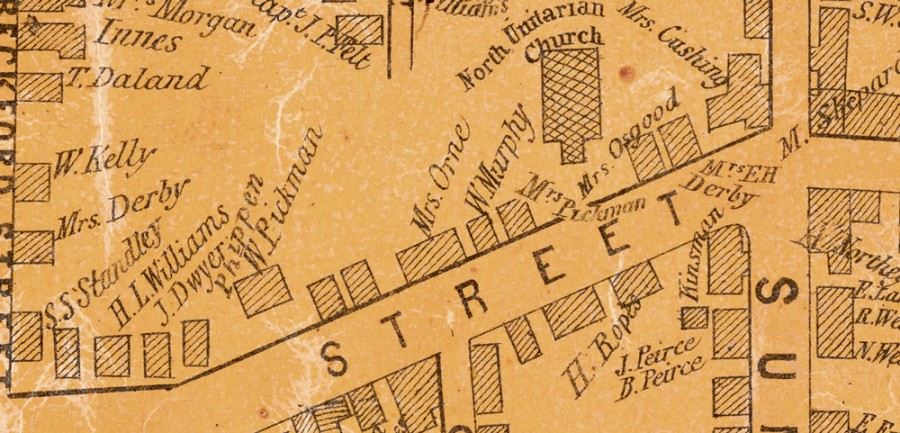
Detail of Henry McIntyre, A Map of the City of Salem, Mass. (Philadelphia, 1851). (Courtesy, Phillips Library, Peabody Essex Museum.) The map shows the two shop buildings at 324 Essex Street next to the Ropes Mansion, marked “Mrs. Orne.”
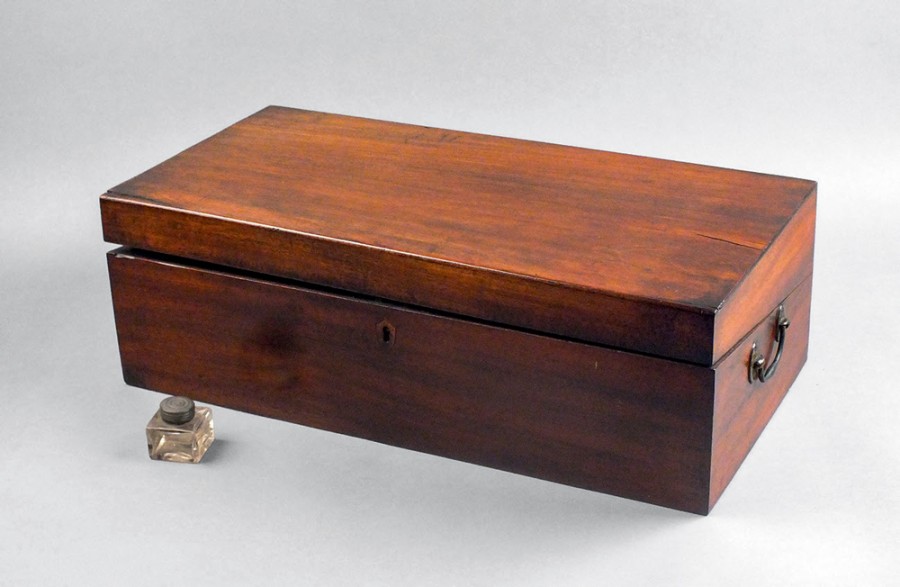
Traveling desk by Mark Pitman, 1812. Mahogany, pine, glass, baize, brass, metal. H. 6 1/2", W. 20", D. 10". (Courtesy, Peabody Essex Museum, gift of the Trustees of the Ropes Memorial, 1989, R1129.)
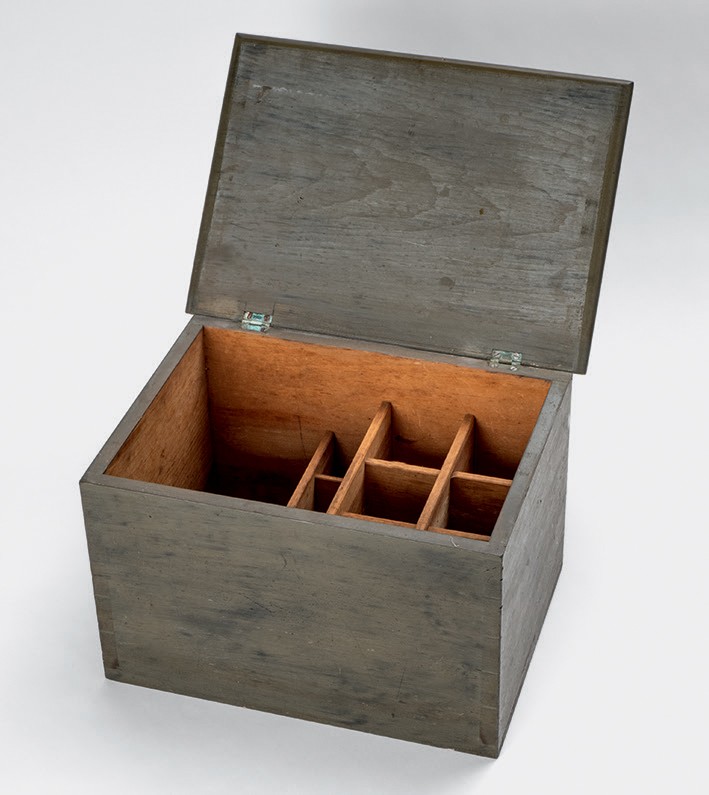
Medicine chest by Mark Pitman, ca. 1807–1830. Painted pine, metal. H. 8 1/4", W. 13", D. 9 1/4". (Courtesy, Peabody Essex Museum, gift of the Trustees of the Ropes Memorial, 1989, R1290; photo, Dennis Helmar.)
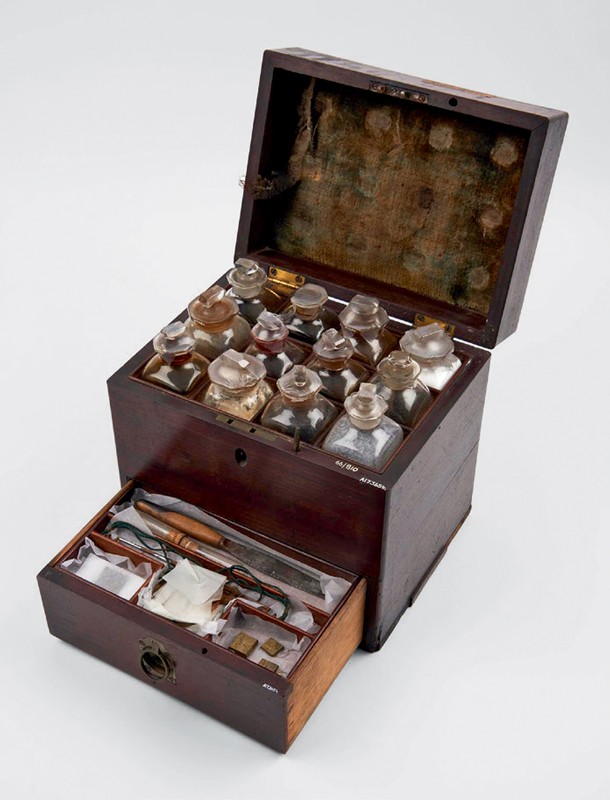
Medicine chest containing sixteen glass bottles (ten labeled) with mixing and measuring equipment, British, 1820–1850. Mahogany, glass, brass, velvet. (Courtesy, Science Museum Group, Sir Henry Wellcome’s Museum Collection, A173654, © The Board of Trustees of the Science Museum.)
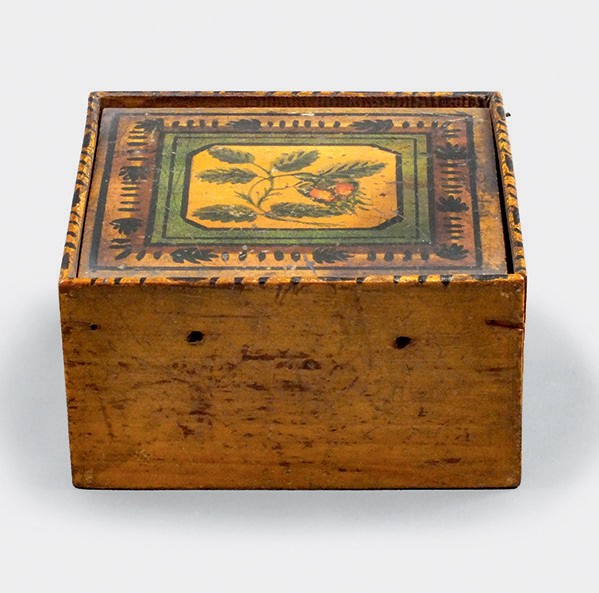
Sewing box, attributed to Mark Pitman, ca. 1807–1836, with painted decoration possibly by Sally (Ropes) Orne (1795–1876) or Elizabth Ropes Orne (1818–1842). Maple or birch, pine, paper. H. 1 7/8", W. 3 1/2", D. 3 1/2". (Courtesy, Peabody Essex Museum, gift of the Trustees of the Ropes Memorial, 1989, R1250.)
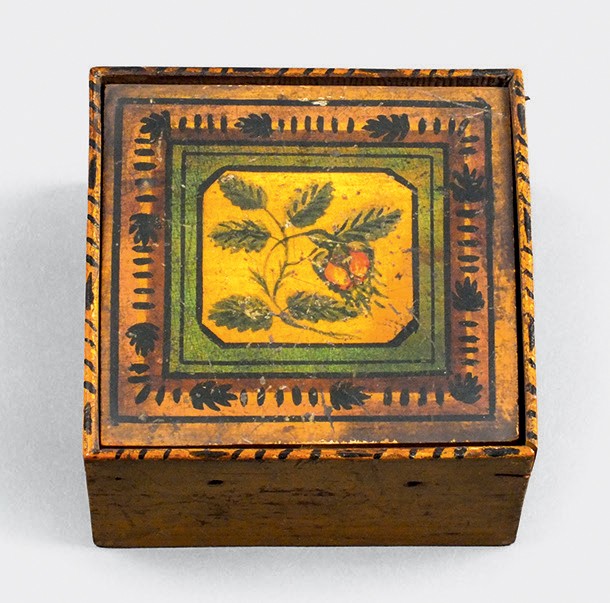
Detail of the painted decoration on the top of the box in fig. 10.
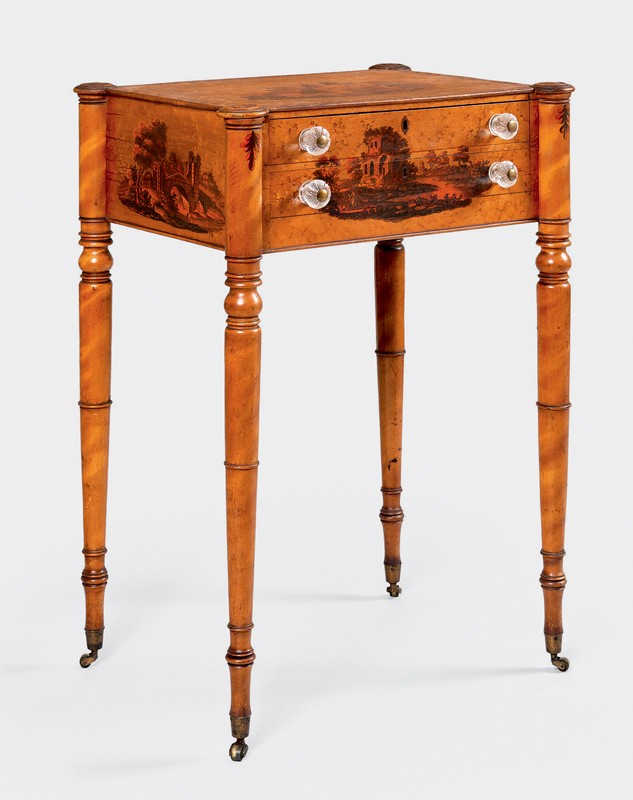
Work table by Mark Pitman, 1810–1825, with painted decoration attributed to Elizabeth Ropes Orne (1818–1842), possibly in association with James A. Cleveland (1811–1868), 1830s. Bird’s-eye maple, mahogany, glass, brass. H. 30", W. 21 3/4", D. 16 1/2". (Courtesy, Peabody Essex Museum, gift of the Trustees of the Ropes Memorial, 1989, R1119; photo, Michael E. Myers.)
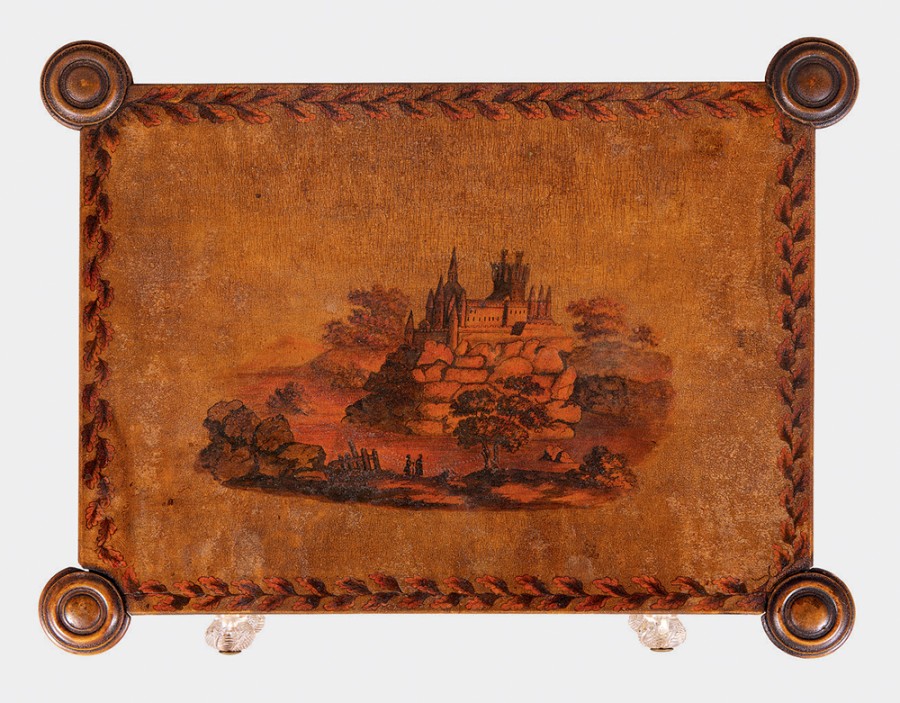
Detail of the painted decoration on the top of the table in fig. 12. (Photo, Michael E. Myers.)
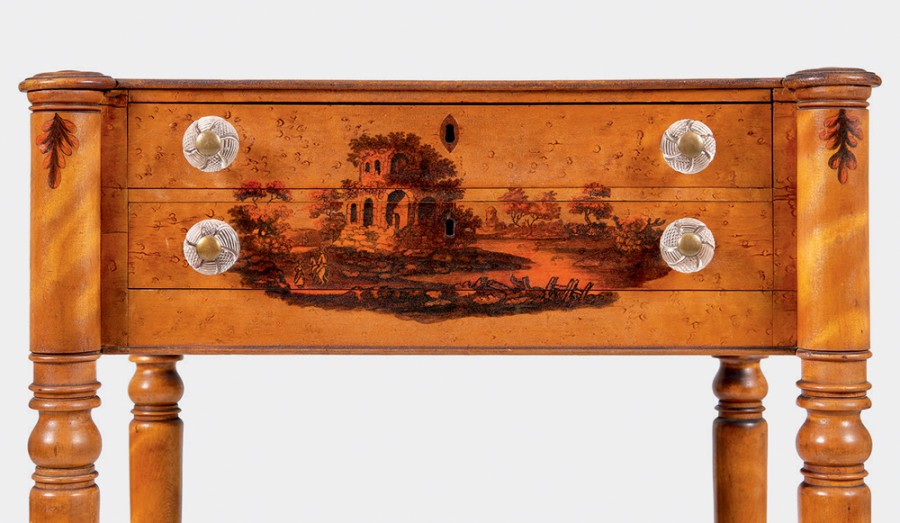
Detail of the painted decoration on the front of the table in fig. 12. (Photo, Michael E. Myers.)
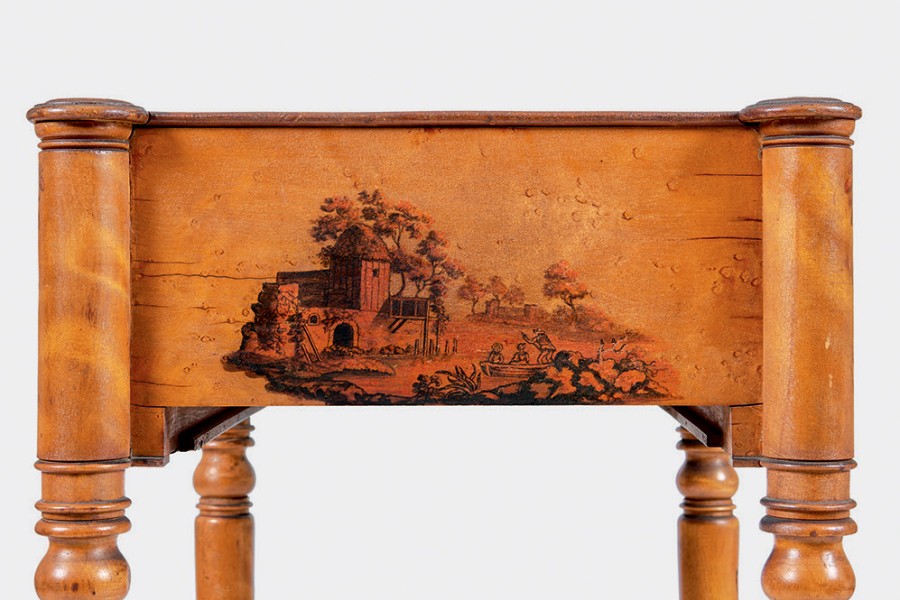
Detail of the painted decoration on the right side of the table in fig. 12. (Photo, Michael E. Myers.)
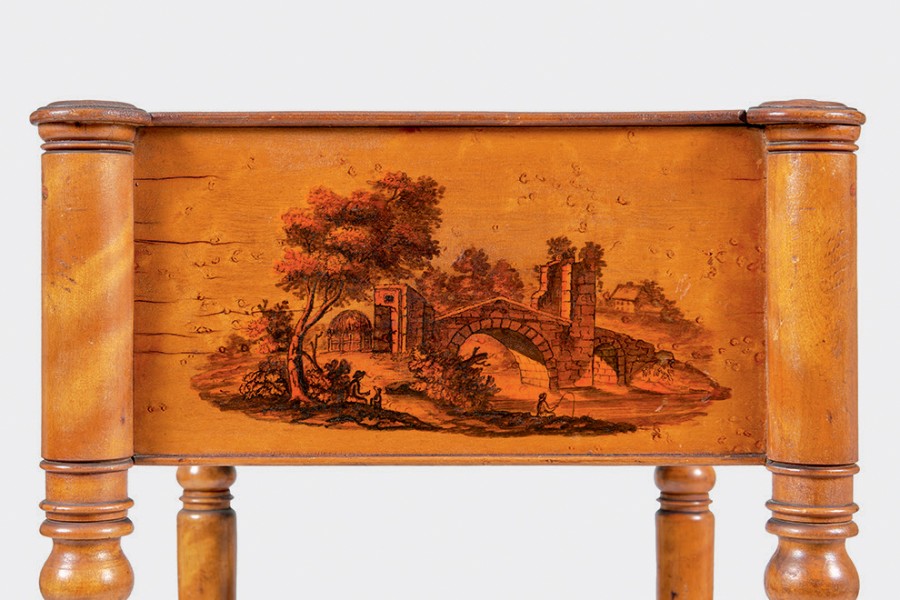
Detail of the painted decoration on the left side of the table in fig. 12. (Photo, Michael E. Myers.)
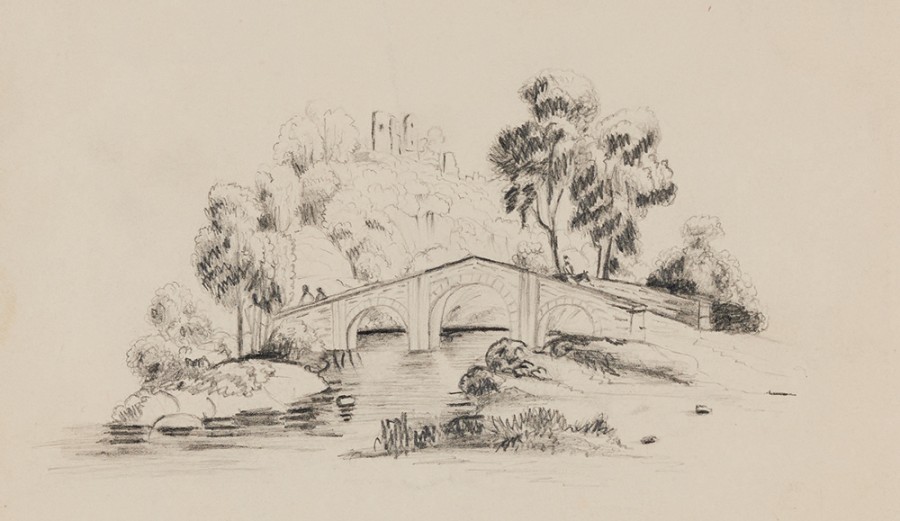
Elizabeth Ropes Orne, Sketch of a bridge, 1830s. Graphite on paper. H. 3 1/4", W. 5 3/4" (approx.). (Courtesy, Phillips Library, Peabody Essex Museum [Ropes Papers, box 10, folder 4].)
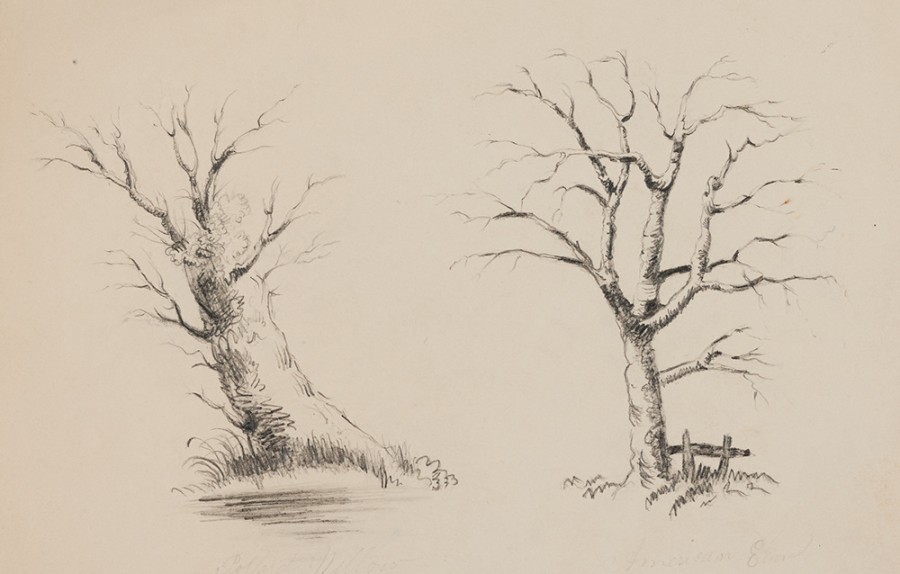
Detail of a sketch by James A. Cleveland, 1830s. Graphite on paper. H. 4 1/2", W. 7 3/4" (approx.). (Courtesy, Phillips Library, Peabody Essex Museum [Ropes Papers, box 10, folder 4].)
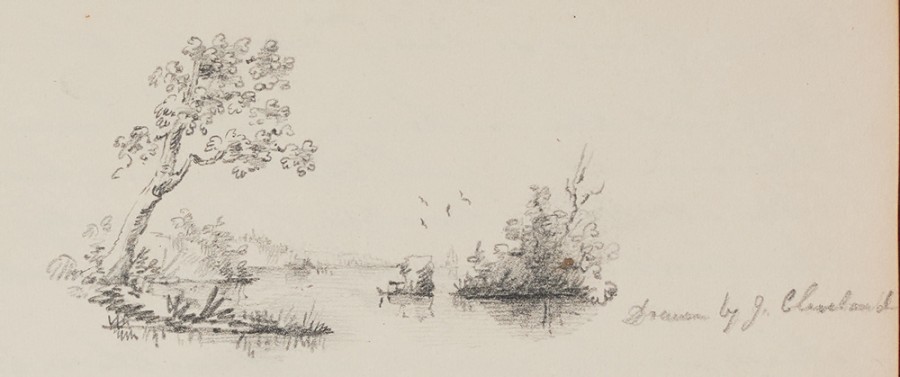
Sketch by James A. Cleveland in Elizabeth Ropes Orne’s autograph book, 1839. Graphite on paper. H. 2 1/4", W. 5 1/2" (approx.). (Courtesy, Phillips Library, Peabody Essex Museum [Ropes Papers, box 10, folder 10].) The inscription reads: “Drawn by J. Cleveland.”
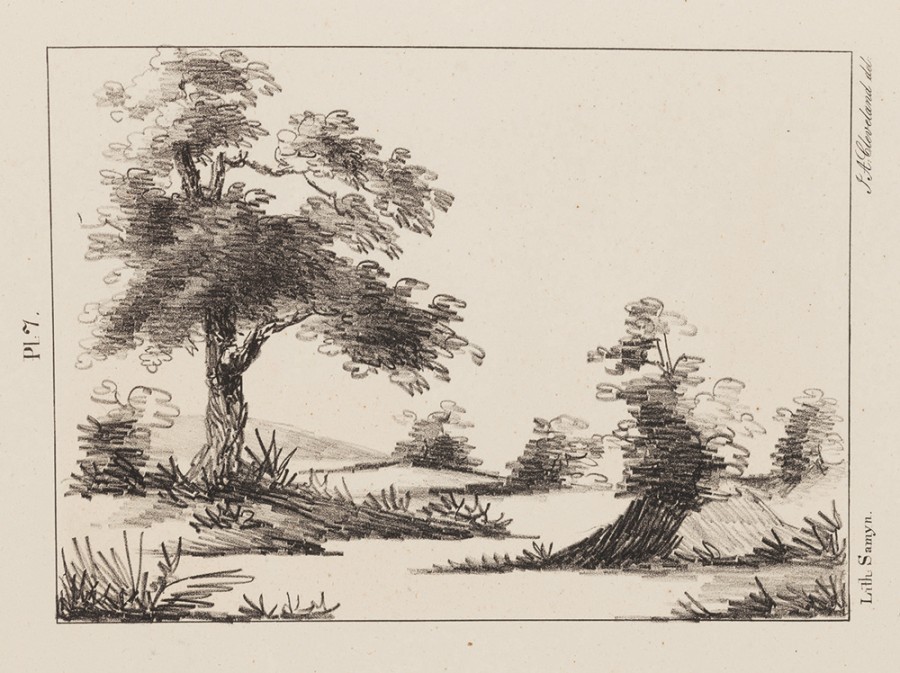
Sketch shown on plate 7 in James Arthur Cleveland’s The Elements of Landscape Drawing (Cincinnati, 1839). Lithograph on paper. H. 9 1/2", W. 12". (Courtesy, The Metropolitan Museum of Art, Harris Brisbane Dick Fund, 1954, 54.524.76; photo, Art Resource NY.)
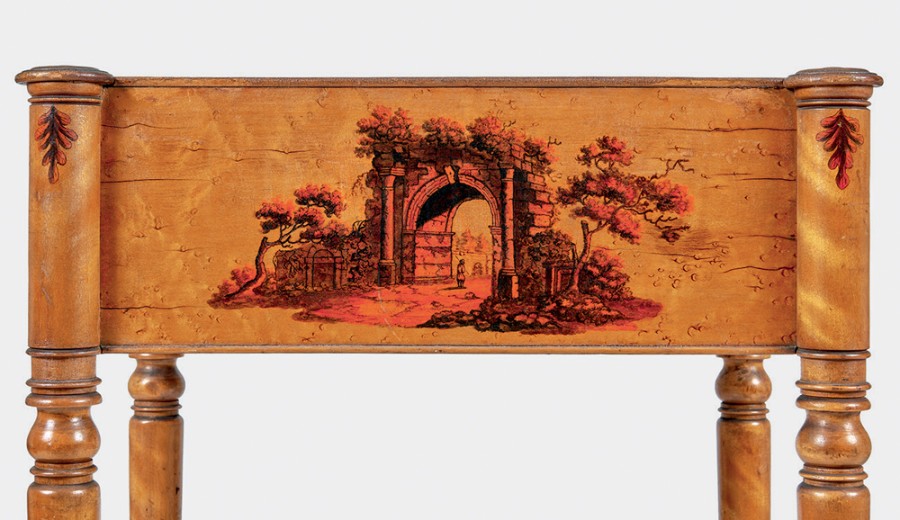
Detail of the painted decoration on the back of the table in fig. 12. (Photo, Michael E. Myers.)
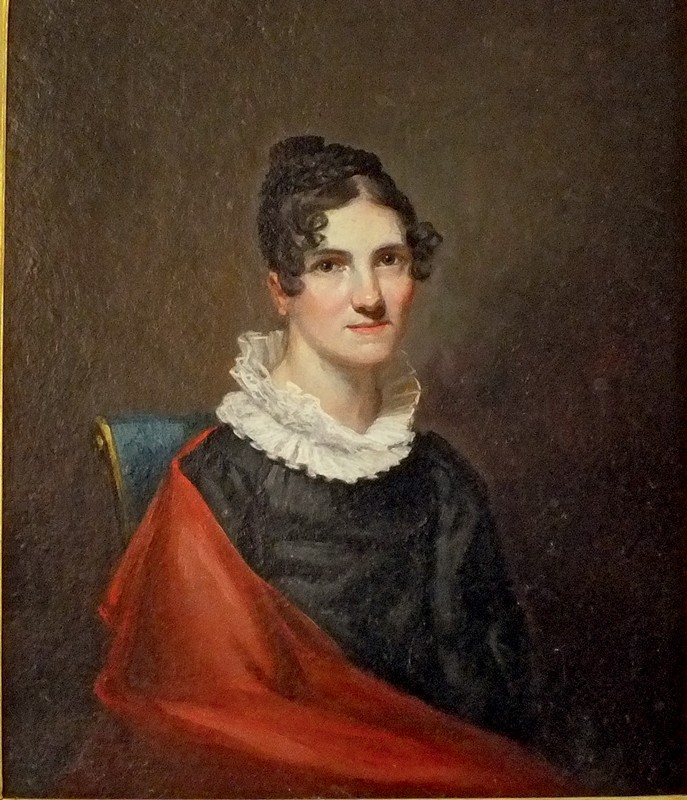
Samuel Finley Breese Morse(1791–1872), Mrs. Joseph Orne (Sarah “Sally” Ropes), 1817. Oil on board. H. 15 1/2", W. 13 1/4". (Courtesy, Peabody Essex Museum, gift of the Trustees of the Ropes Memorial, 1989, R744.)
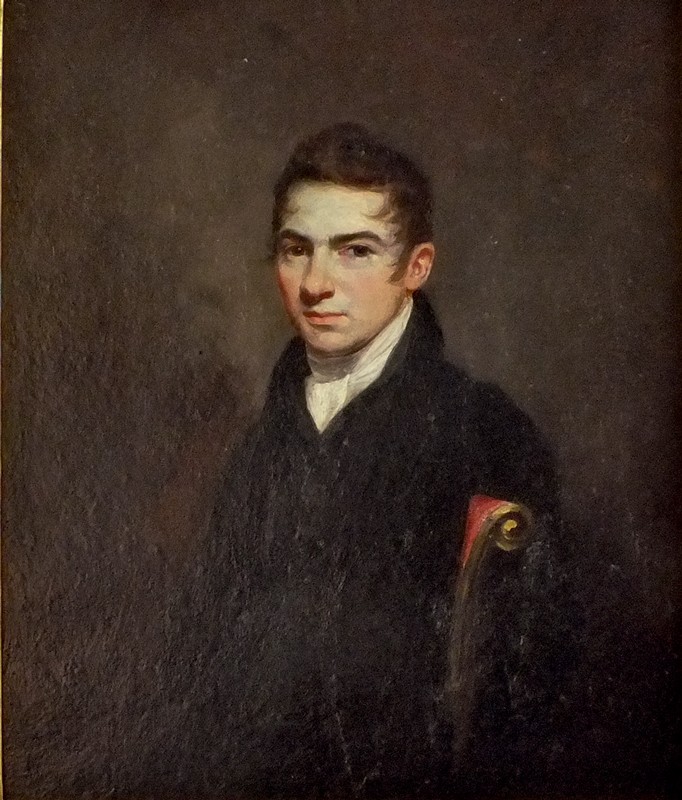
Samuel Finley Breese Morse(1791–1872), Joseph Orne, 1817. Oil on board. H. 15 1/2", W. 13 1/2". (Courtesy, Peabody Essex Museum, gift of the Trustees of the Ropes Memorial, 1989, R745.)
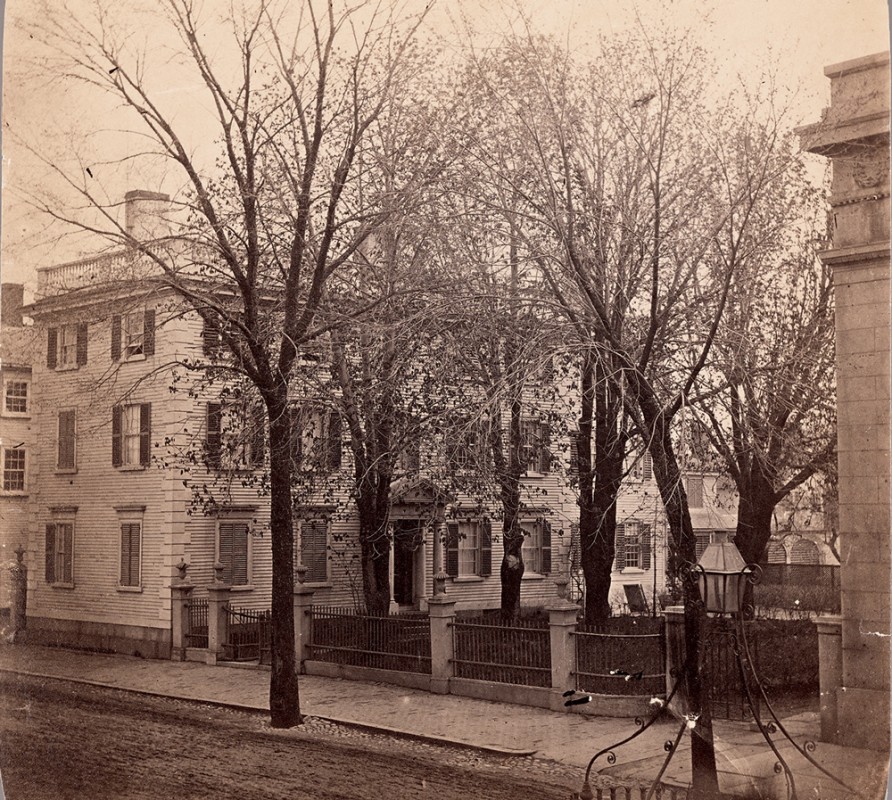
Detail of a photograph of the Capt. William Orne House, Washington Street, Salem, Massachusetts, attributed to Daniel A. Clifford, ca. 1855. (Courtesy, Phillips Library, Peabody Essex Museum.) The house was designed by Samuel McIntire (1757–1811) in 1795 and was the home of Sally and Joseph Orne from 1817 to 1819.
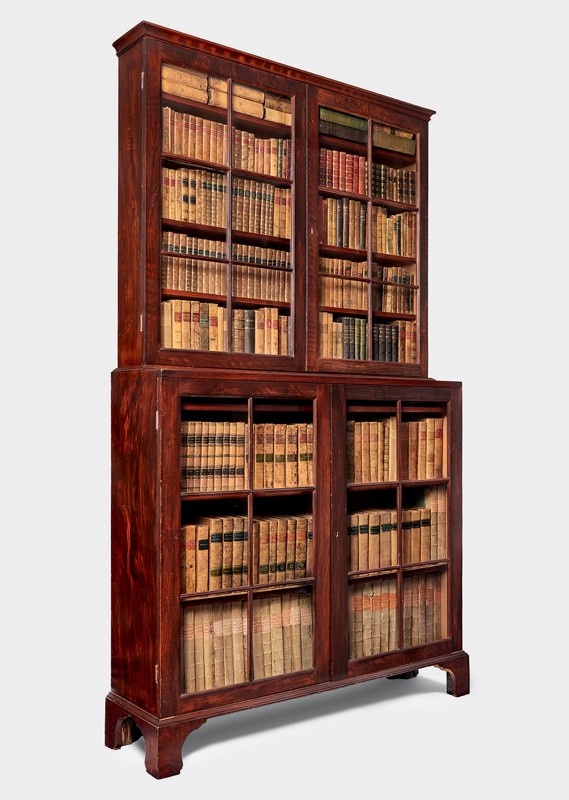
Set of bookcases by Mark Pitman, 1816. Pine (grain-painted to simulate mahogany or rosewood), glass, metal. H. 89 1/2", W. 50 1/4", D. 14". (Courtesy, Peabody Essex Museum, gift of the Trustees of the Ropes Memorial, 1989, R1075; photo, Michael E. Myers.)
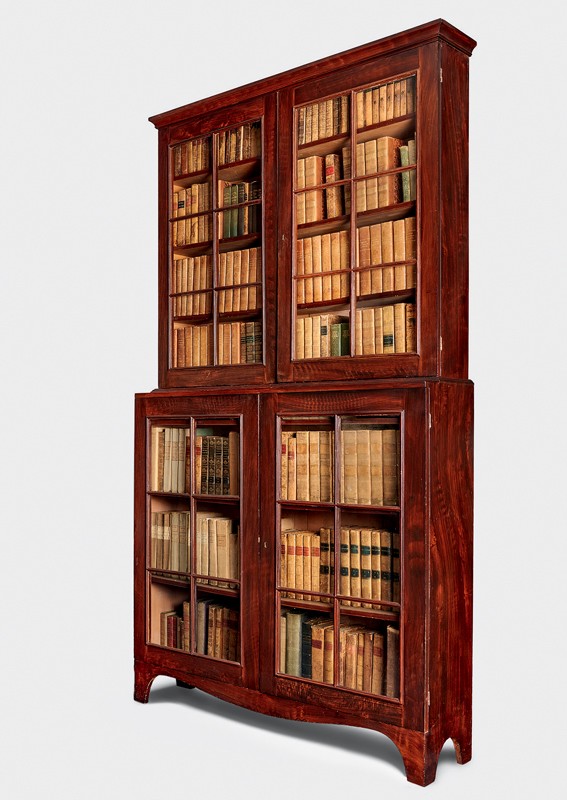
Set of bookcases by Mark Pitman, 1818–1830s. Pine (grain-painted to simulate mahogany or rosewood), glass, metal. H. 89", W. 50", D. 12". (Courtesy, Peabody Essex Museum, gift of the Trustees of the Ropes Memorial, 1989, R1076; photo, Michael E. Myers.)
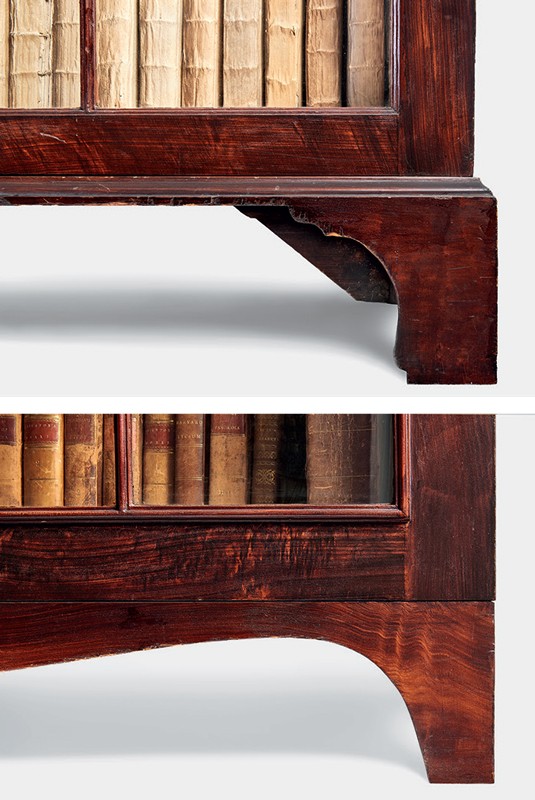
Detail of the bracket foot, base molding, and stiles and rails on the glass door on the bookcase in fig. 25 (above); detail of the shaped skirt and bracket foot on the bookcase in fig. 26 (below). (Photos, Michael E. Myers.)
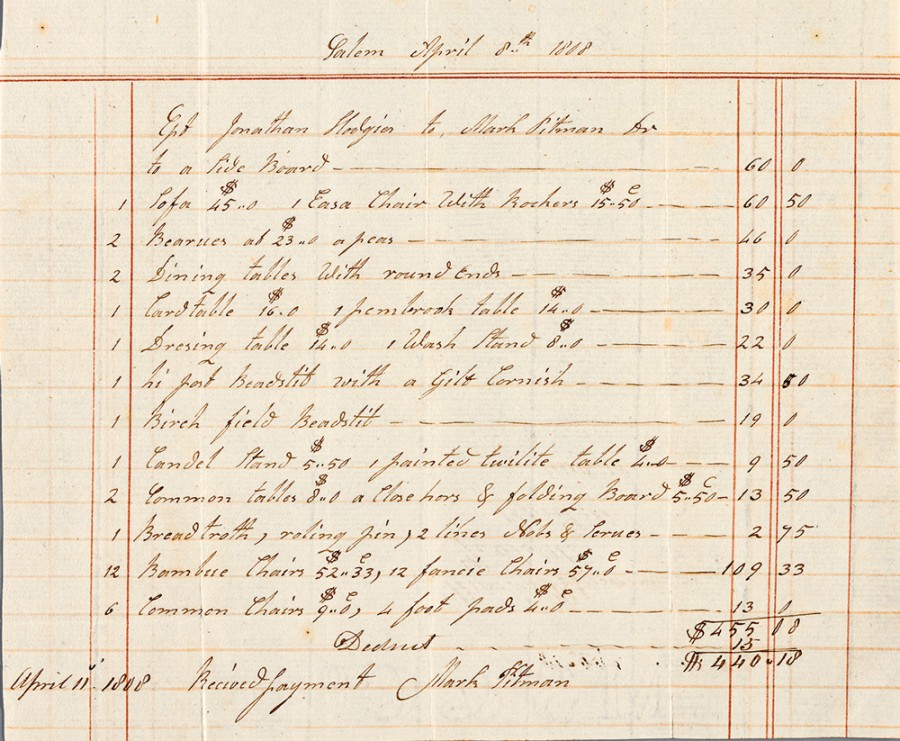
Receipt for Capt. Jonathan Hodges from Mark Pitman, April 8, 1808, for furniture supplied for the marriage of his daughter, Elizabeth H. Hodges, to George Cleveland of Salem. (Courtesy, Phillips Library, Peabody Essex Museum [Hodges Family Papers, box 22, folder 17].)
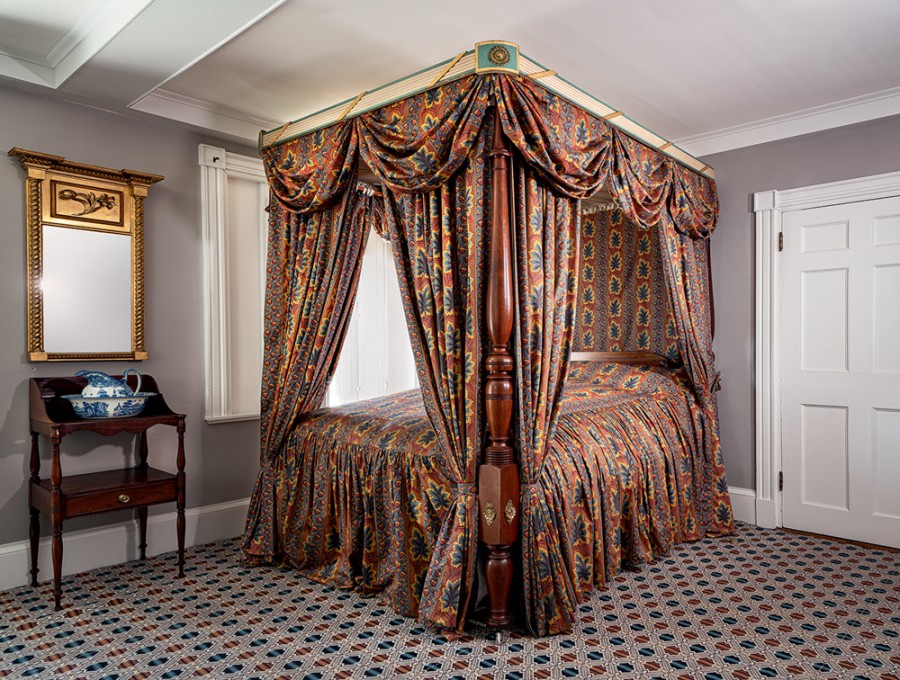
Bedstead with painted cornice by Mark Pitman, 1816–1817. Mahogany, maple, painted pine, brass, metal, with canvas, rope, and reproduction chintz. H. 90 7/8", W. 60 1/4", D. 78 3/4". (Courtesy, Peabody Essex Museum, gift of the Trustees of the Ropes Memorial, 1989, R1104; photo, Dennis Helmar.) The bedstead was made for the wedding of Joseph and Sally (Ropes) Orne. The hangings were added in 2015 using a reproduction of the original chintz fabric (see fig. 33).
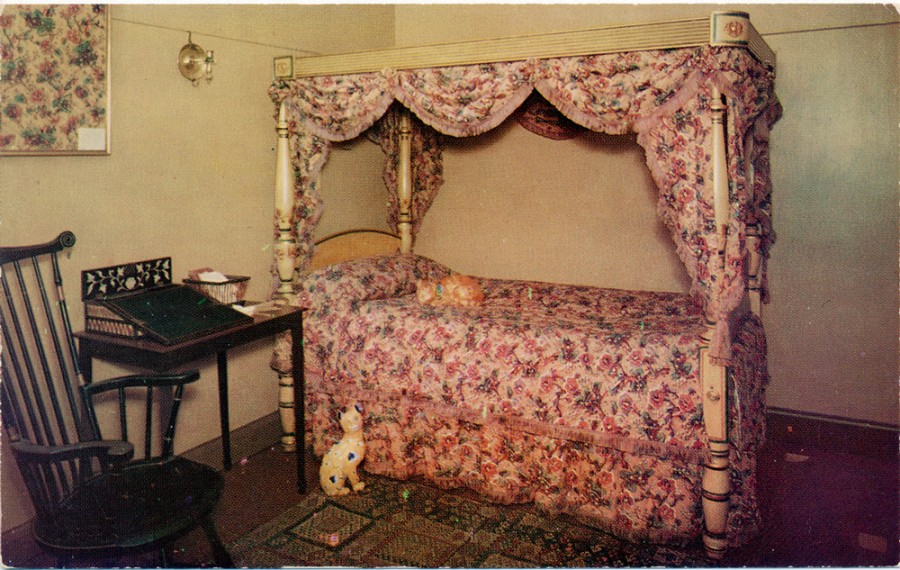
Postcard, 1950s. Printed paper. H. 3 1/2", W. 5". (Collection of the author.) This image of the Peabody Museum of Salem’s 1950s recreation of the bedroom on Cleopatra’s Barge shows the painted bedstead commissioned for the yacht by George Crowninshield. The hangings are a reproduction of the original chintz fabric used on the bed in 1816.
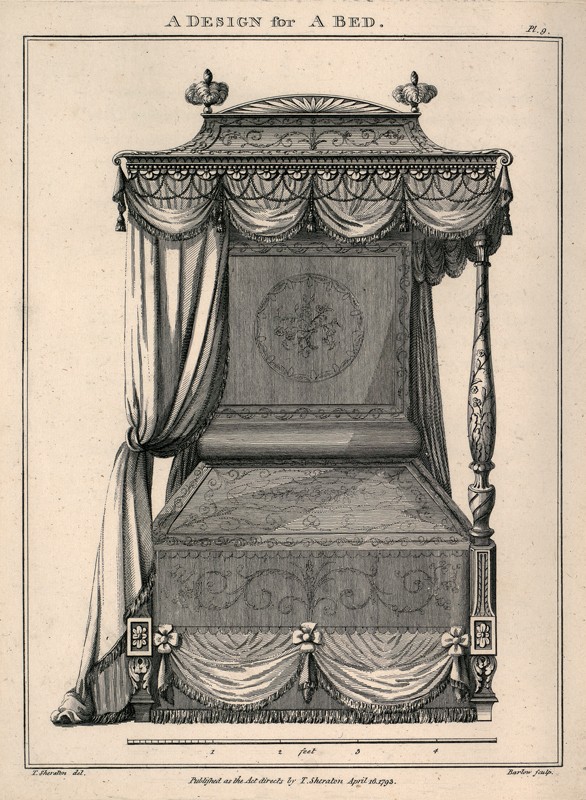
“A design for a bed,” shown on plate 9 of Thomas Sheraton’s The Cabinet-Maker and Upholsterer’s Drawing-Book (London, 1793). (Courtesy, Yale Center for British Art, Friends of British Art.)
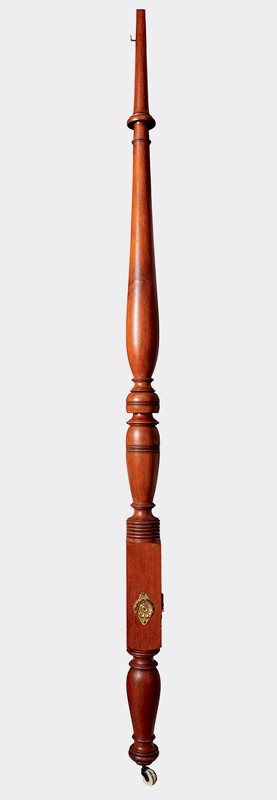
Detail of the right front post of the bed in fig. 29. (Photo, Michael E. Myers.)
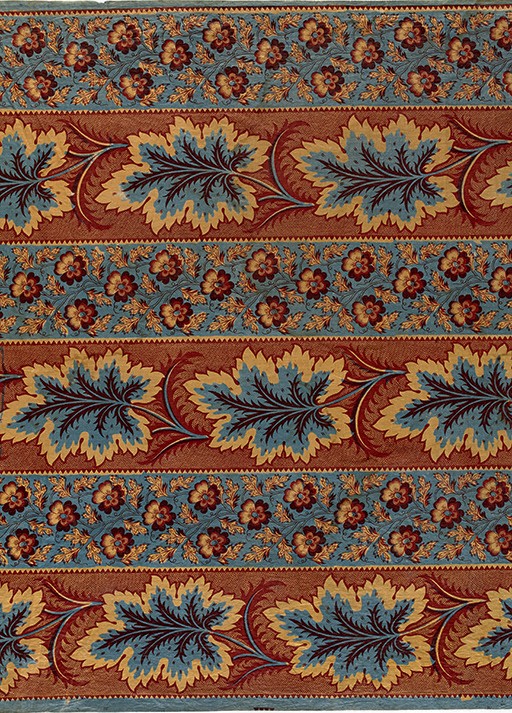
Detail of a piece of the original English glazed cotton chintz used for bed hangings on the bed in fig. 29. (Peabody Essex Museum, gift of the Trustees of the Ropes Memorial, 1989, R1934; photo, Walter Silver.)
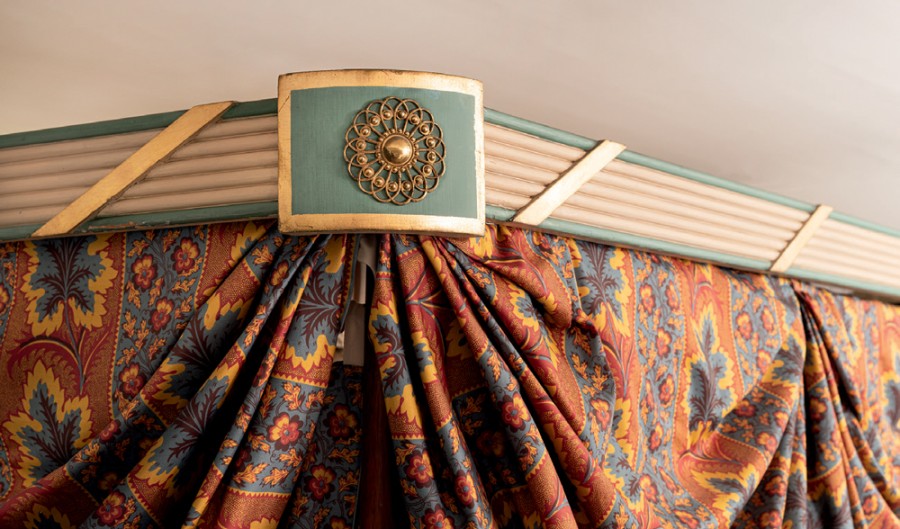
Detail of the painted cornice with gilded medallion on the bedstead in fig. 29. (Photo, Dennis Helmar.)
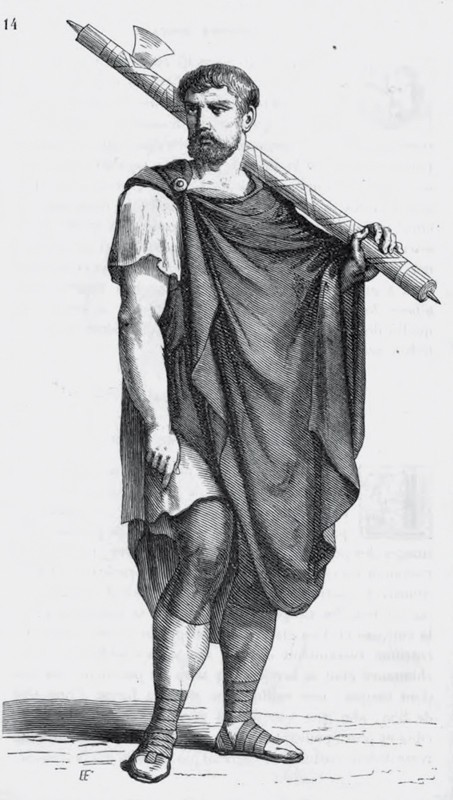
A Roman carrying a fasces (wooden rods bound with straps around an ax head), an ancient symbol of united strength and power, from Cesare Vicellio and Ambroise Firmin-Didot’s Costumes anciens et modernes = Habiti antichi et moderni di tutto il mundo (Paris, 1860), pl. 4. (Courtesy, Indiana University; photo, HathiTrust Digital Library.)
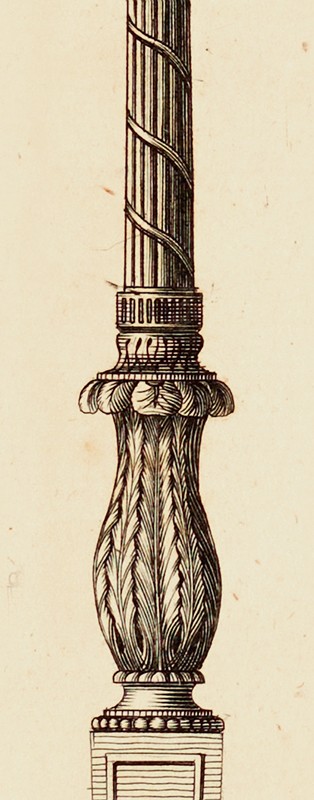
Design for a “Bed Pillar” (detail) shown on plate 106 of George Hepplewhite’s The Cabinet-Maker and Upholsterer’s Guide (London, 1794). (Courtesy, Phillips Library, Peabody Essex Museum.) The upper reeded column is entwined with faux straps in imitation of a Roman fasces.
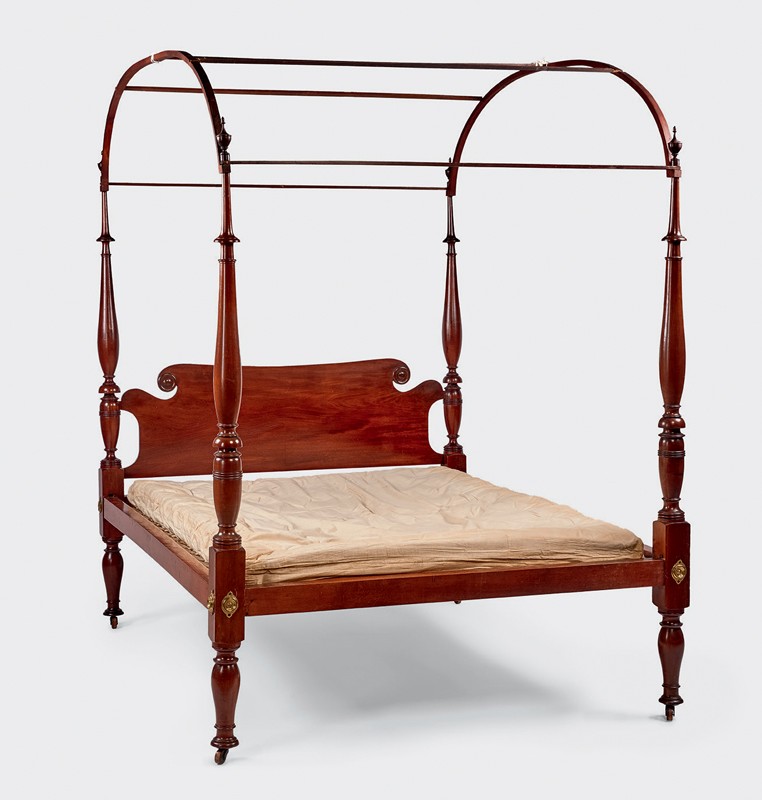
Field bedstead by Mark Pitman, 1817–1825. Mahogany, maple, pine, canvas, rope, brass, metal. H. 85", W. 59 1/4", D. 79". (Courtesy, Peabody Essex Museum, gift of the Trustees of the Ropes Memorial, 1989, R1078; photo, Kathy Tarantola.)
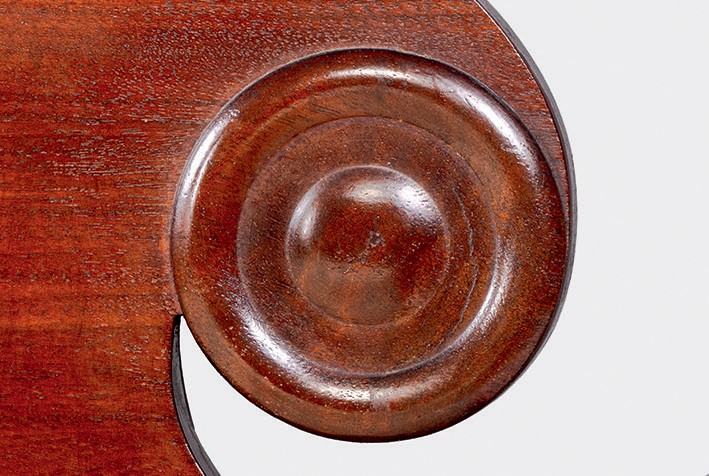
Detail of the circular mahogany disc applied to the scroll on the headboard of the bedstead in fig. 37. (Photo, Kathy Tarantola.)
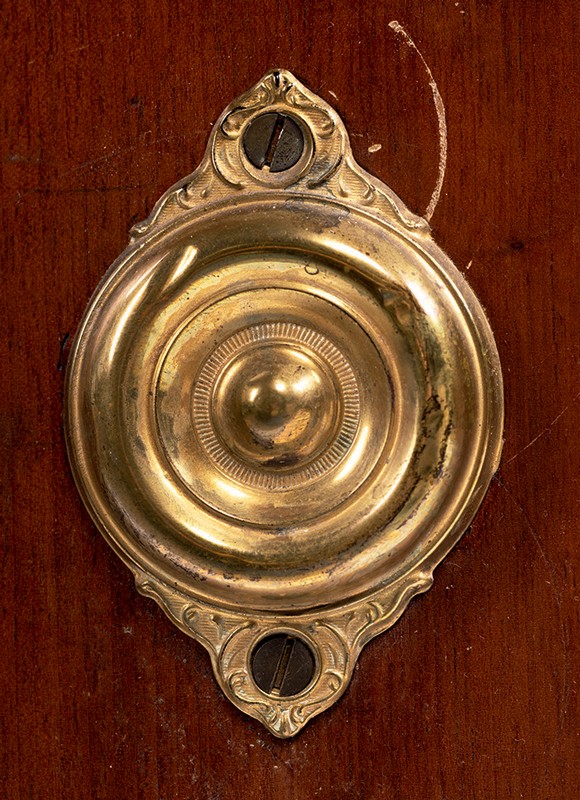
Detail of the pressed brass cap covering the metal bolt used to secure the front post to the side rail of the bedstead in fig. 37. (Photo, Kathy Tarantola.)
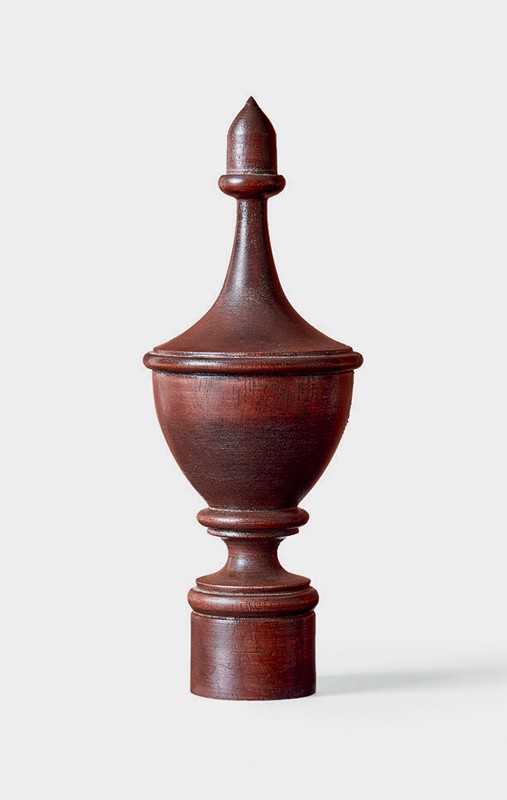
Detail of the turned urn finial on the tester of the bedstead in fig. 37. (Photo, Michael E. Myers.)
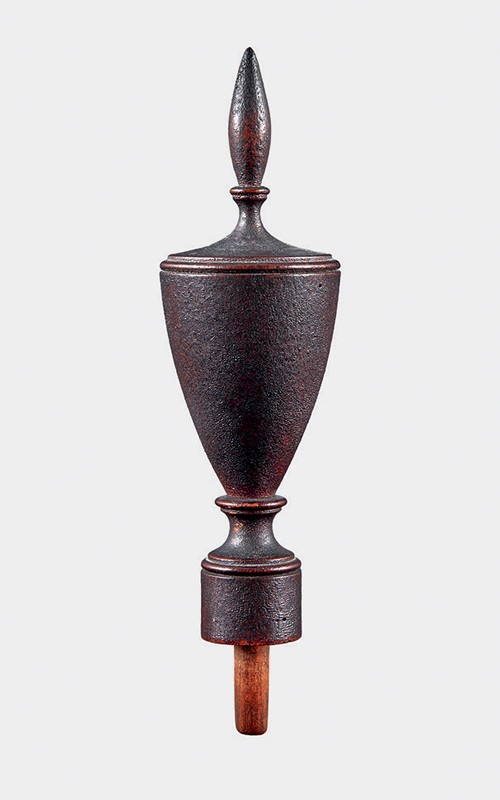
Detail of the turned urn finial on the cornice of the desk and bookcase in fig. 2. (Photo, Michael E. Myers.)
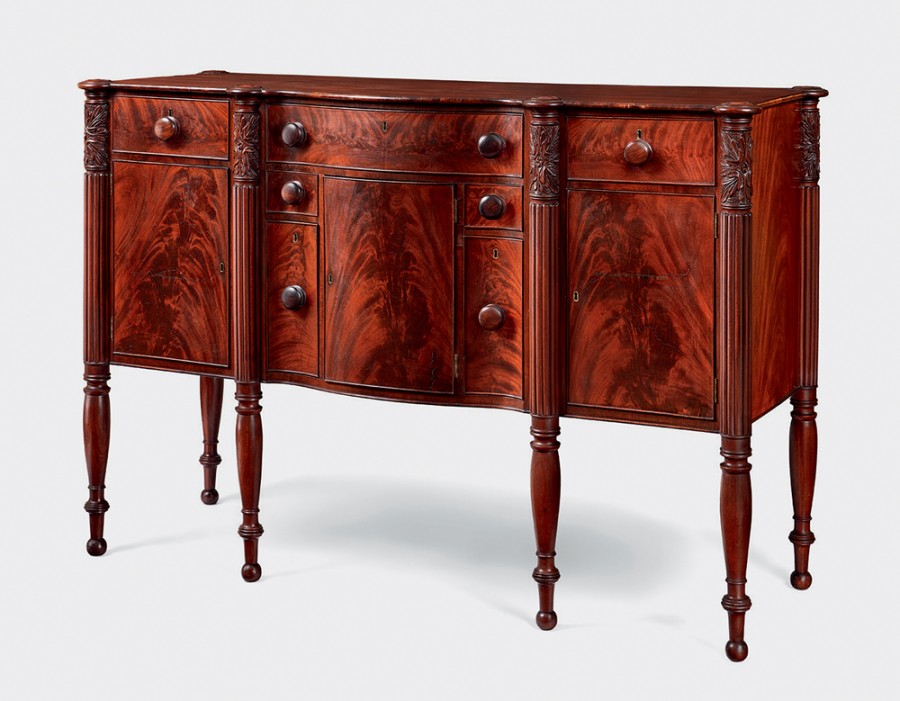
Sideboard by Mark Pitman, 1817–1818. Mahogany, mahogany veneer, pine, metal. H. 42", W. 61 1/4", D. 22". (Courtesy, Peabody Essex Museum, gift of the Trustees of the Ropes Memorial, 1989, R1063; photo, Michael E. Myers.)
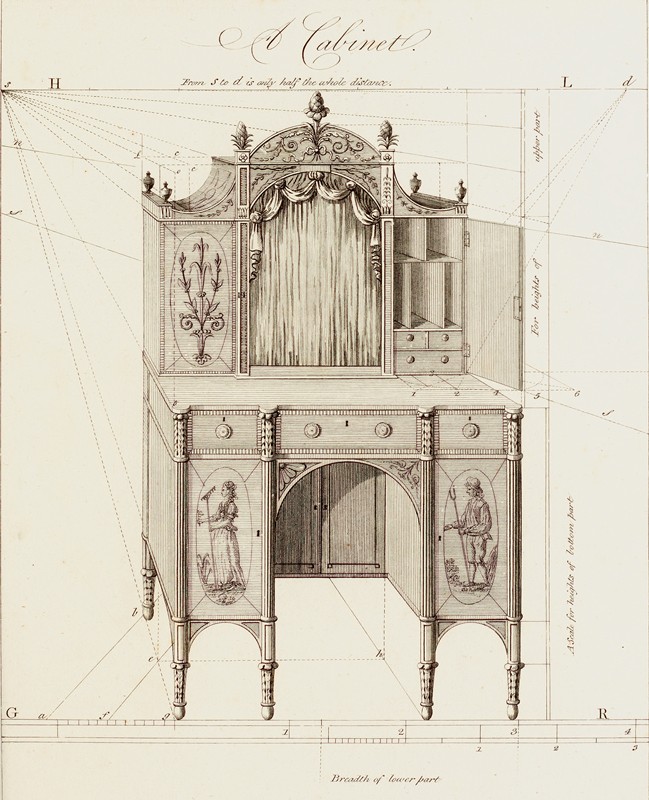
Design for “A Cabinet,” shown on plate 48 of Thomas Sheraton’s The Cabinet-Maker and Upholsterer’s Drawing-Book (London, 1793). (Courtesy, Phillips Library, Peabody Essex Museum.) The lower section is similar in form to the sideboard in fig. 42.
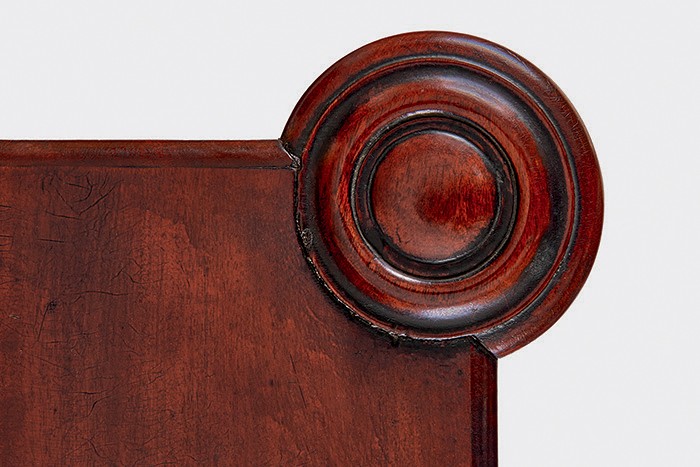
Detail of an ovolo cap on the top of one of the engaged columns on the sideboard in fig. 42. (Photo, Michael E. Myers.)
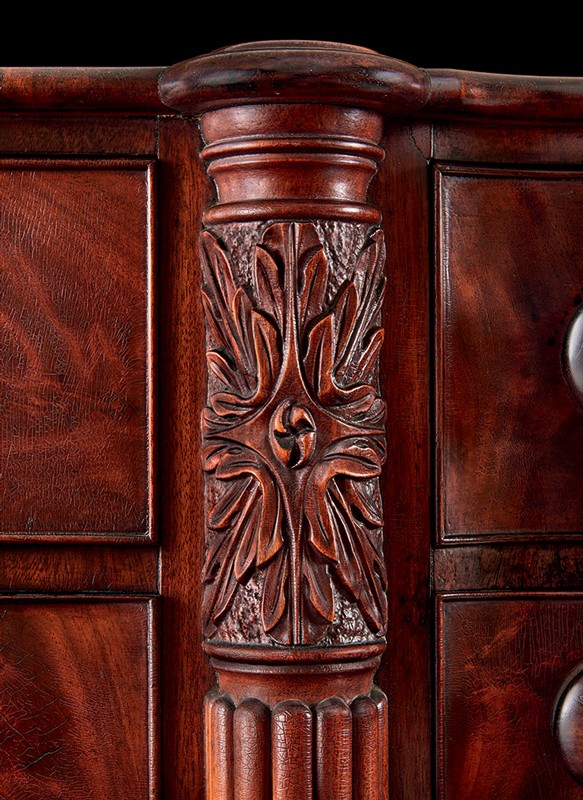
Detail of the carved floral motif on one of the engaged columns on the sideboard in fig. 42. (Photo, Michael E. Myers.)
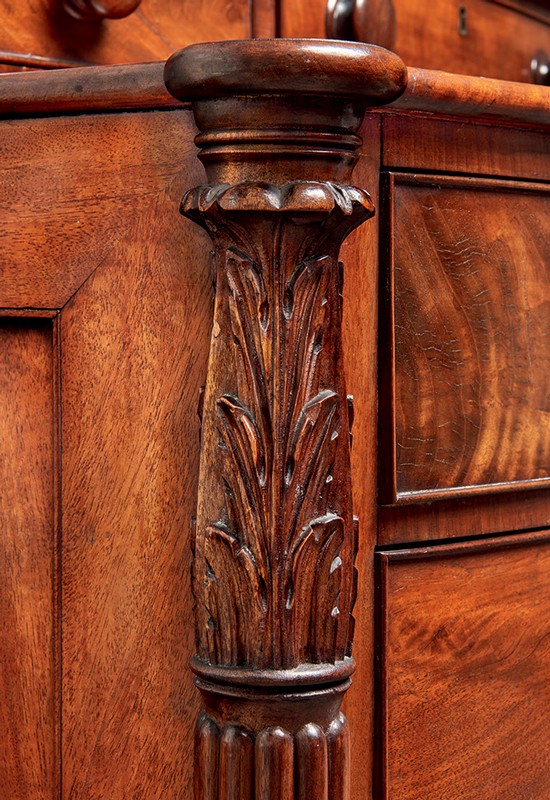
Detail of the acanthus-leaf carving on one of the engaged columns on the dressing chest in fig. 50. (Photo, Michael E. Myers.)
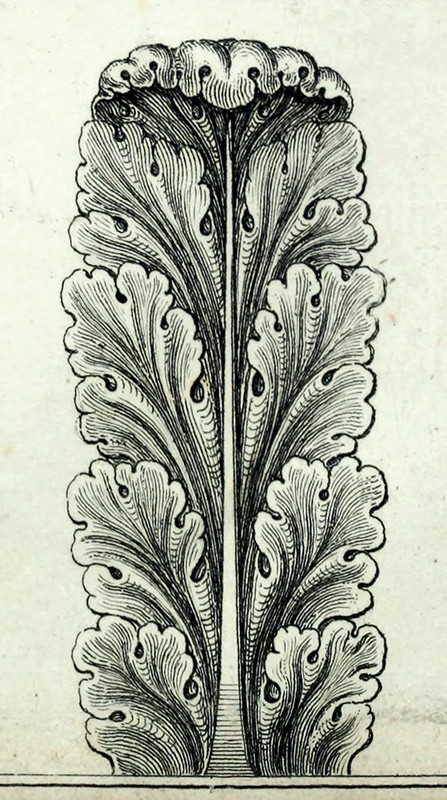
Detail of a design for “Ornament for a Tablet and Various Leaves,” shown on plate 11 of Thomas Sheraton’s The Cabinet-Maker and Upholsterer’s Drawing-Book (London, 1793). (Courtesy, Getty Research Institute; photo, HathiTrust Digital Library.)
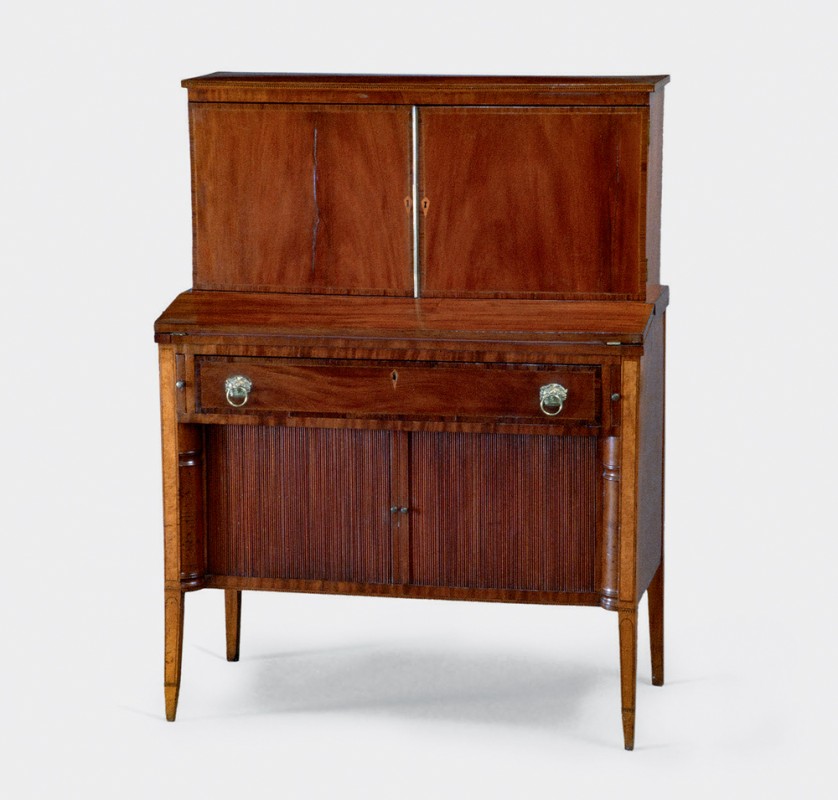
Secretary with tambour doors labeled by Mark Pitman, 1800–1810. Mahogany, birds-eye maple, Eastern white pine, oak, brass, bed ticking. H. 52 1/4", W. 38 1/4", D. 19". (Courtesy, Hood Museum of Art, Dartmouth College, purchased through a bequest from Lulu C. and Robert L. Coller, Class of 1923, F.984.19.)
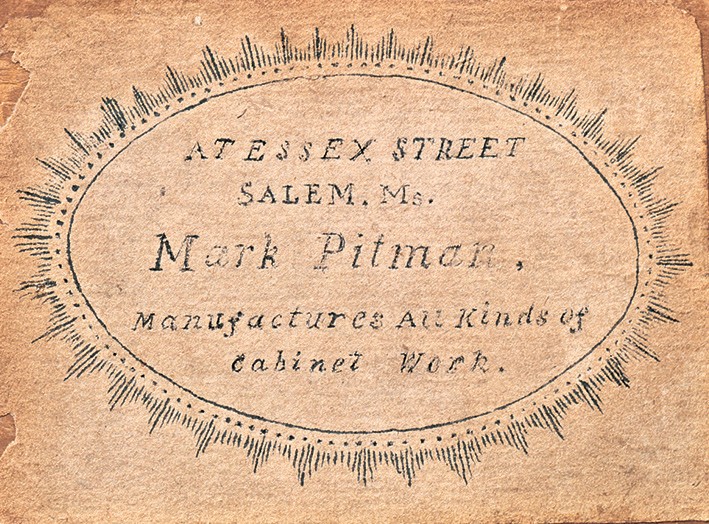
Detail of the label on the secretary in fig. 48.
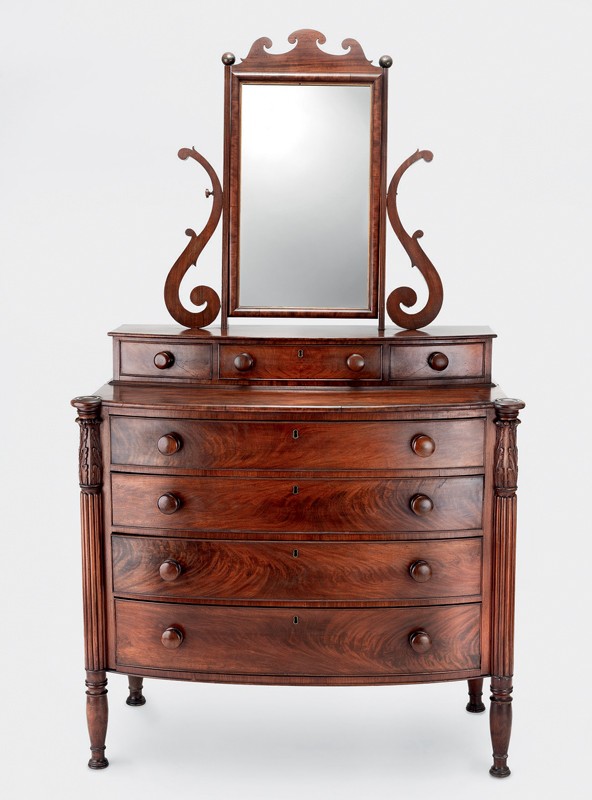
Dressing chest with attached looking glass by Mark Pitman, 1817–1818. Mahogany, mahogany veneer, pine, mirror glass, painted brass. H. 71", W. 44", D. 22 1/2". (Courtesy, Peabody Essex Museum, gift of the Trustees of the Ropes Memorial, 1989, R1112.AB; photo, Dennis Helmar.)
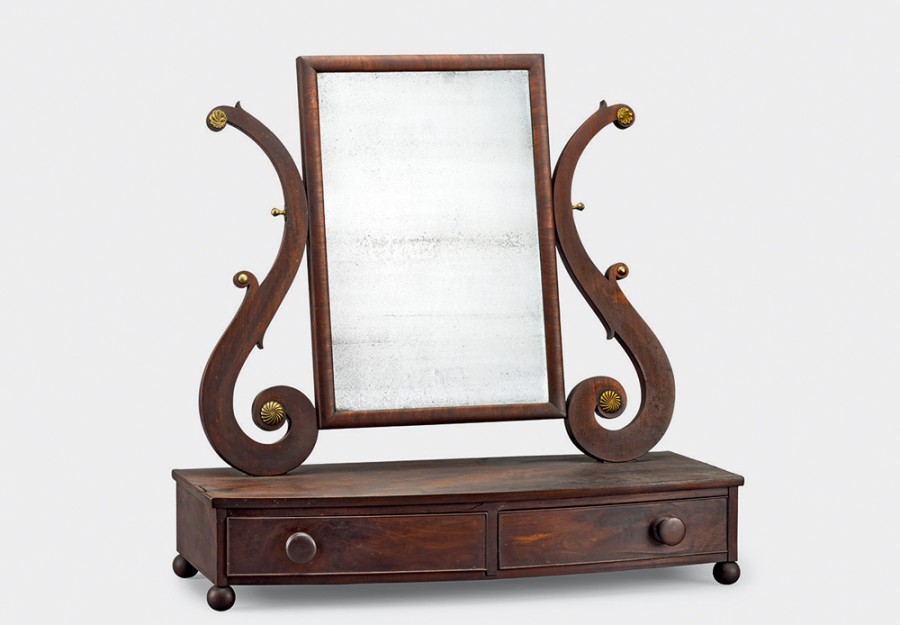
Dressing glass by William Hook (1777–1867), Salem, Massachusetts, 1818. Mahogany, mahogany veneer, white pine, mirror glass, metal, brass. H. 27", W. 27 1/2", D. 11 1/2". (Courtesy, Peabody Essex Museum, gift of the estate of George Rea Curwen, 1900, 4134.83; photo, Kathy Tarantola.) This dressing glass was made for use on top of a bow front chest of drawers, also in the Peabody Essex Museum’s collection (4134.82).
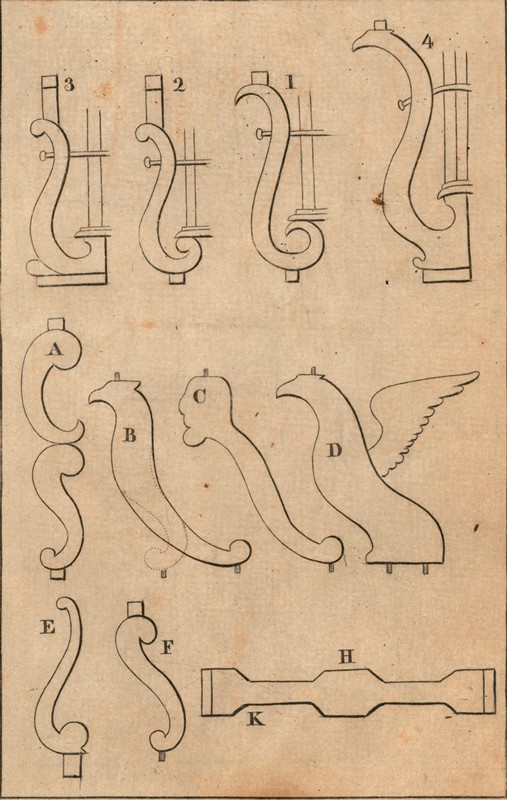
Designs for brackets shown on plate 5 of the New-York Society of Cabinet Makers’ The New-York Book of Prices for Manufacturing Cabinet and Chair Work (New York, 1817). (Courtesy, The Metropolitan Museum of Art, Harris Brisbane Dick Fund, 1939.) Several of the illustrated designs are in imitation of the ancient lyre and similar to the brackets on the dressing glasses in figs. 50 and 51.
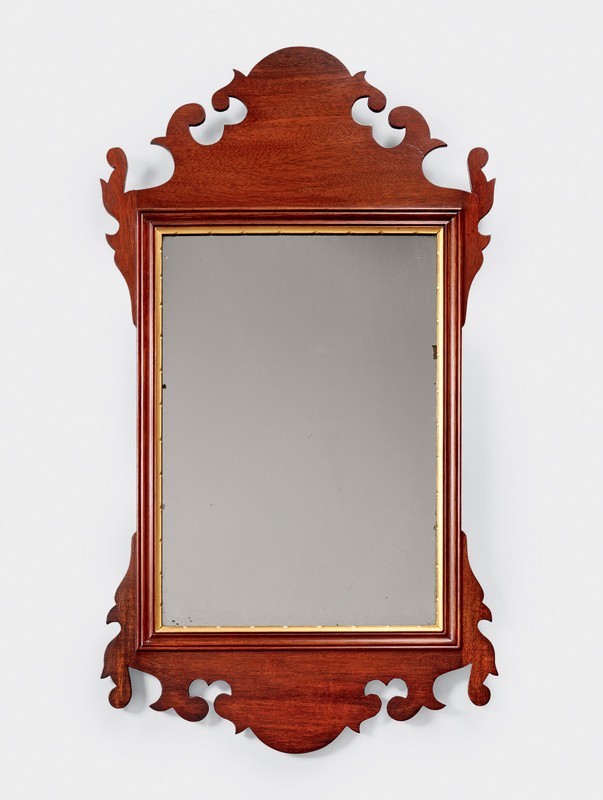
Looking glass, Boston or Salem, possibly by Mark Pitman, 1800–1820. Mahogany, pine, mirror glass. H. 17 7/8", W. 31 3/8". (Courtesy, Peabody Essex Museum, gift of the Trustees of the Ropes Memorial, 1989, R1116; photo, Michael E. Myers.)
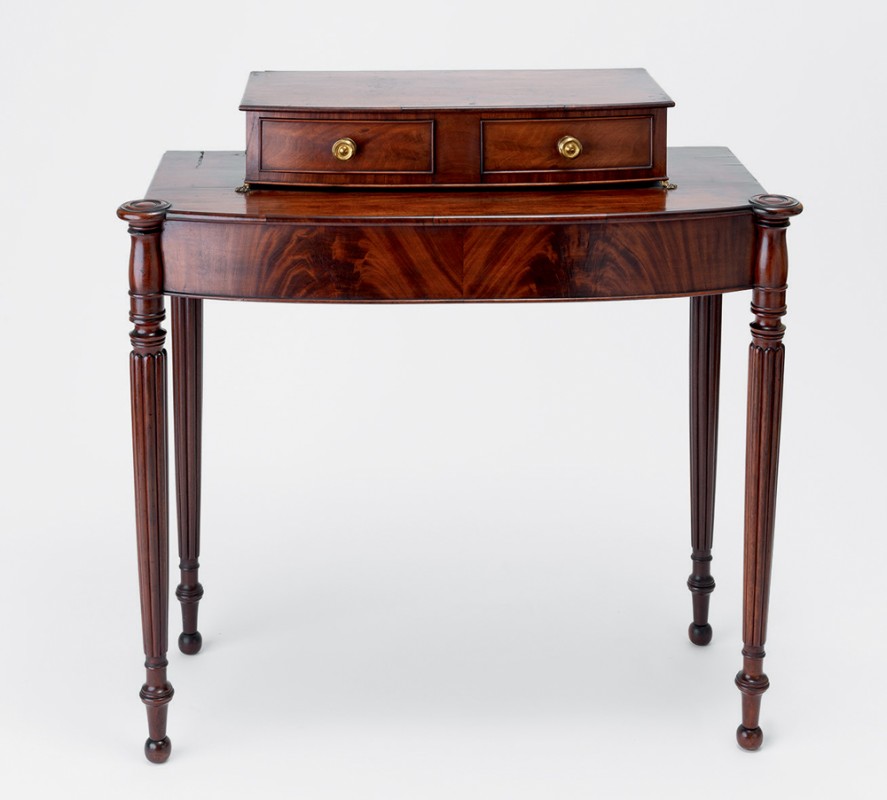
Dressing table by Mark Pitman, 1817–1818. Mahogany, mahogany veneer, pine, brass. H. 38", W. 39", D. 17". (Courtesy, Peabody Essex Museum, gift of the Trustees of the Ropes Memorial, 1989, R1111.AB; photo, Dennis Helmar.) The chalk inscription “Bottom” in Pitman’s handwriting is on the underside of the drawer unit.
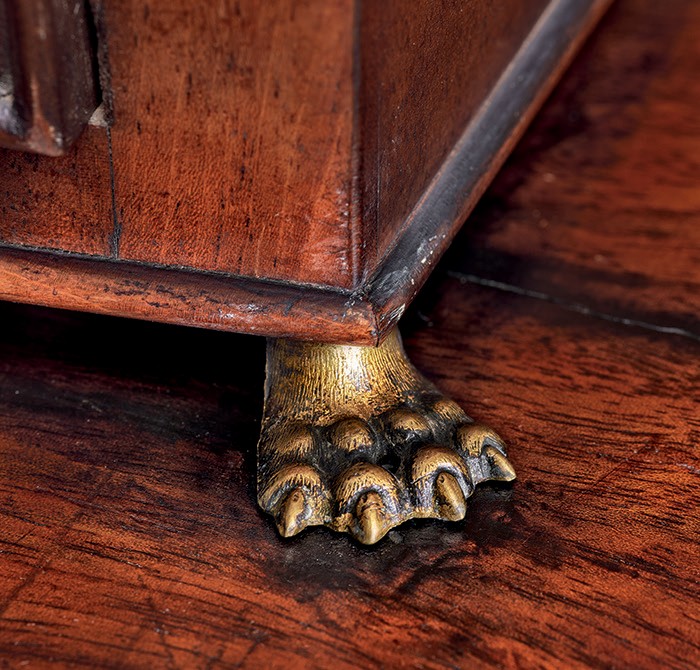
Detail of a pressed brass foot imitating a lion paw on the drawer unit on the dressing table in fig. 54. (Photo, Michael E. Myers.)
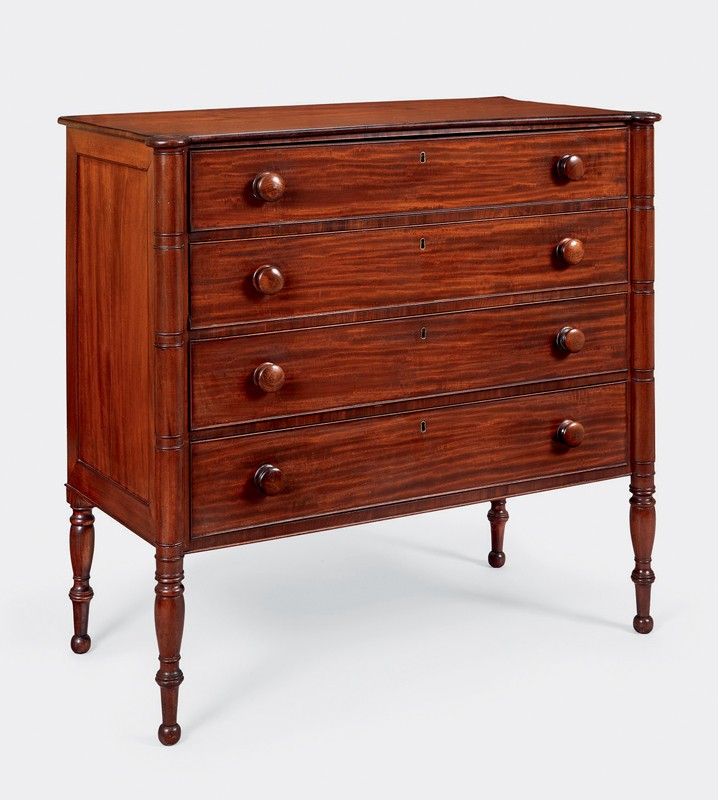
Chest of drawers by Mark Pitman, 1817–1818. Mahogany, mahogany veneer, pine. H. 41", W. 43", D. 21 3/4". (Courtesy, Peabody Essex Museum, gift of the Trustees of the Ropes Memorial, 1989, R1082; photo, Michael E. Myers.)
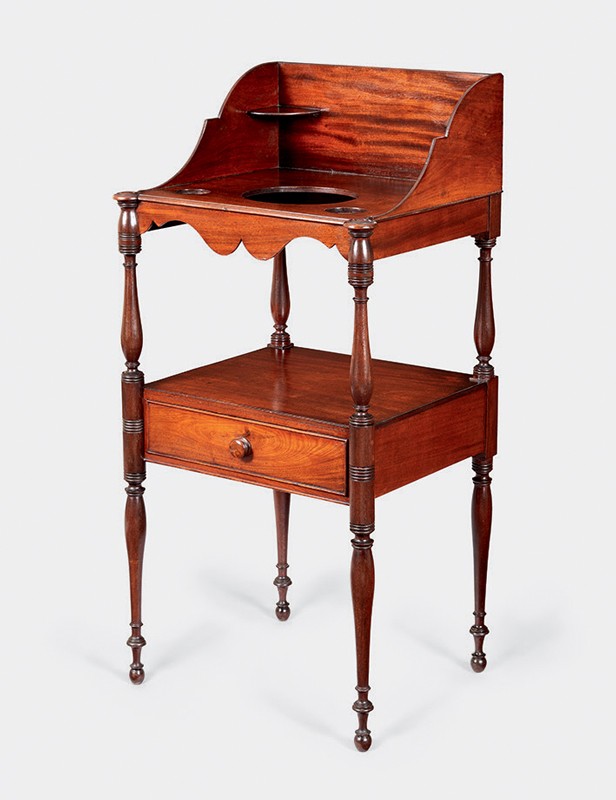
Washstand by Mark Pitman, 1817–1818. Mahogany, mahogany veneer, pine. H. 39 1/2", W. 19 1/2", D. 16 1/2". (Courtesy, Peabody Essex Museum, gift of the Trustees of the Ropes Memorial, 1989, R1081; photo, Michael E. Myers.)
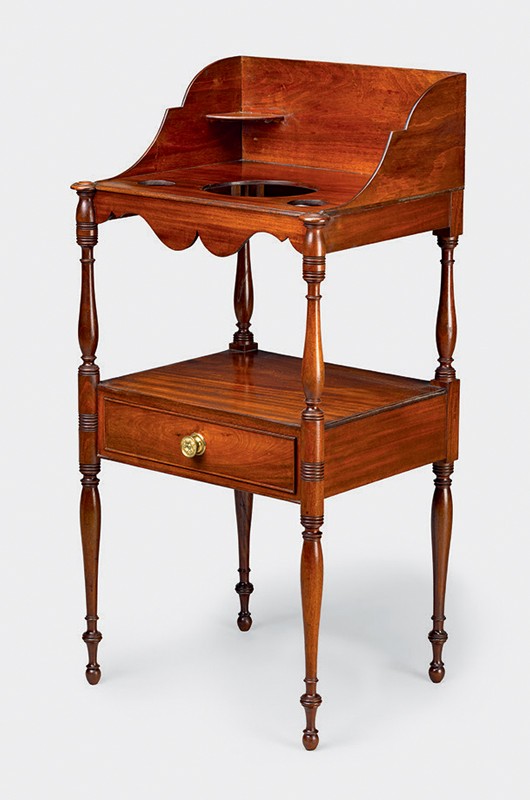
Washstand by Mark Pitman, 1817–1818. Mahogany, mahogany veneer, pine, brass. H. 39 1/2", W. 19 1/2", D. 16 1/2". (Courtesy, Peabody Essex Museum, gift of the Trustees of the Ropes Memorial, 1989, R1125; photo, Kathy Tarantola.)
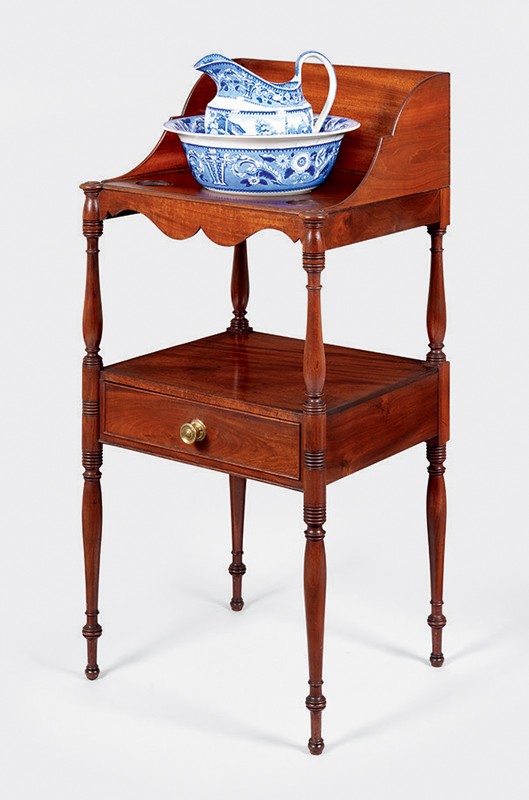
Washstand by Mark Pitman, 1817–1825. Mahogany, mahogany veneer, pine, brass. H. 39 3/4", W. 19 1/2", D. 16 3/4". (Courtesy, Peabody Essex Museum, gift of the Trustees of the Ropes Memorial, 1989, R1105, washstand and R361.AB, ewer and basin; photo, Michael E. Myers.) Shown with an ewer and basin, English transfer-printed pottery, ca. 1817. The wash set is one of four purchased by the Ornes in 1818 and used with their washstands.
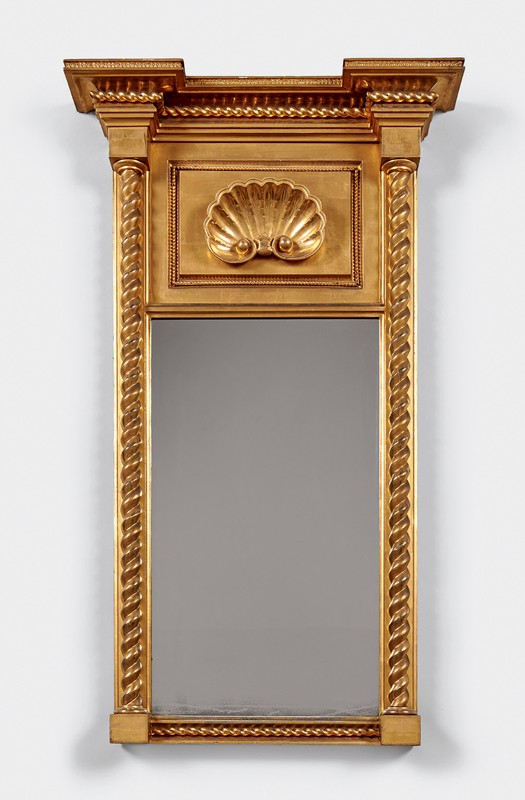
Looking glass with a shell ornament, Boston or Salem, Massachusetts, ca. 1817. Gilded wood, pine, mirror glass. H. 38 1/4", W. 22 3/4". (Courtesy, Peabody Essex Museum, gift of the Trustees of the Ropes Memorial, 1989, R1083; photo, Michael E. Myers.) The Ornes purchased the mirror in 1817 to hang above one of their washstands.
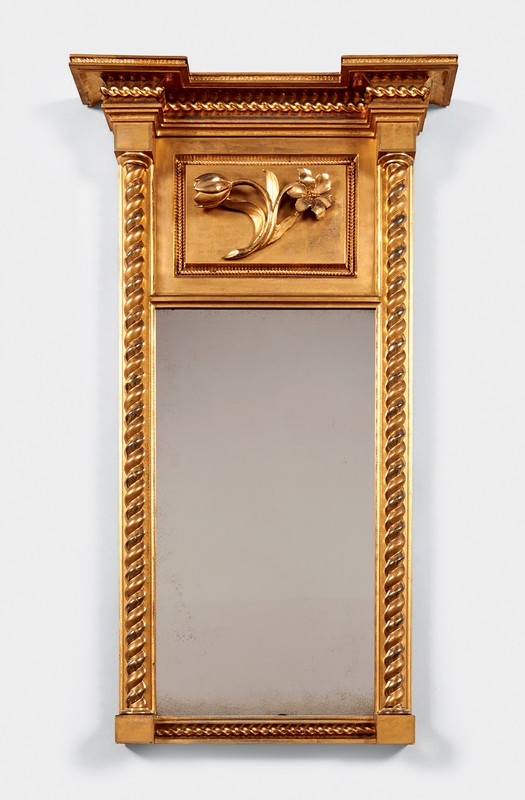
Looking glass with floral ornaments, Boston or Salem, Massachusetts, ca. 1817. Gilded wood, pine, mirror glass. H. 39 1/2", W. 22 1/4". (Courtesy, Peabody Essex Museum, gift of the Trustees of the Ropes Memorial, 1989, R1106; photo, Michael E. Myers.) The Ornes purchased the mirror in 1817 to hang above one of their washstands.
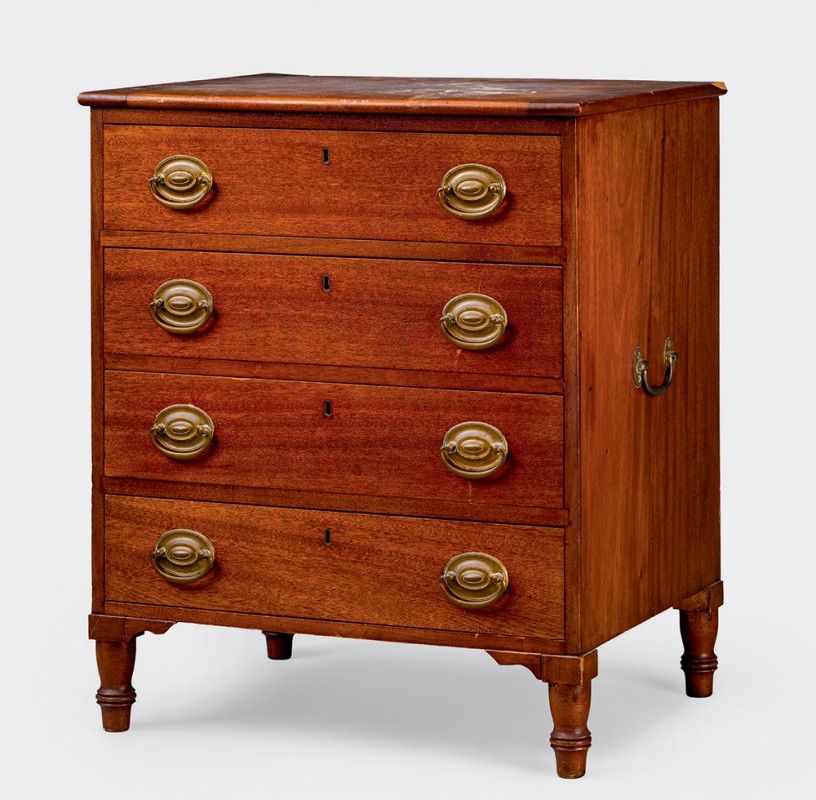
Night table by Mark Pitman,1817–1818; altered into a four-drawer display chest, ca. 1900. Mahogany, pine, brass. H. 29 1/2", W. 25", D. 18 3/4". (Courtesy, Peabody Essex Museum, FIC2019.7.1; photo, Kathy Tarantola.)
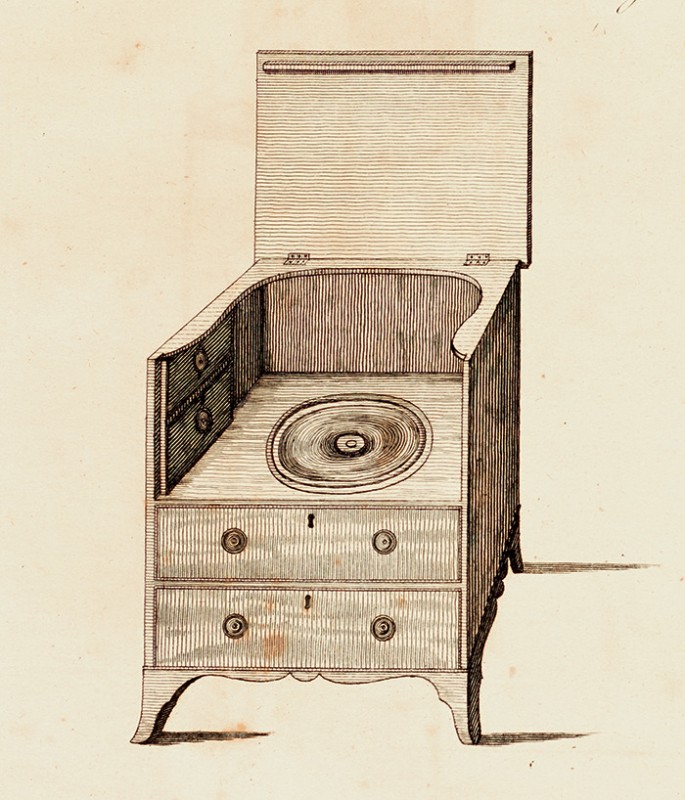
Design for a night table (detail), shown on plate 82 of the third edition of George Hepplewhite’s The Cabinet-Maker and Upholsterer’s Guide (London, 1794). (Courtesy, Phillips Library, Peabody Essex Museum.)
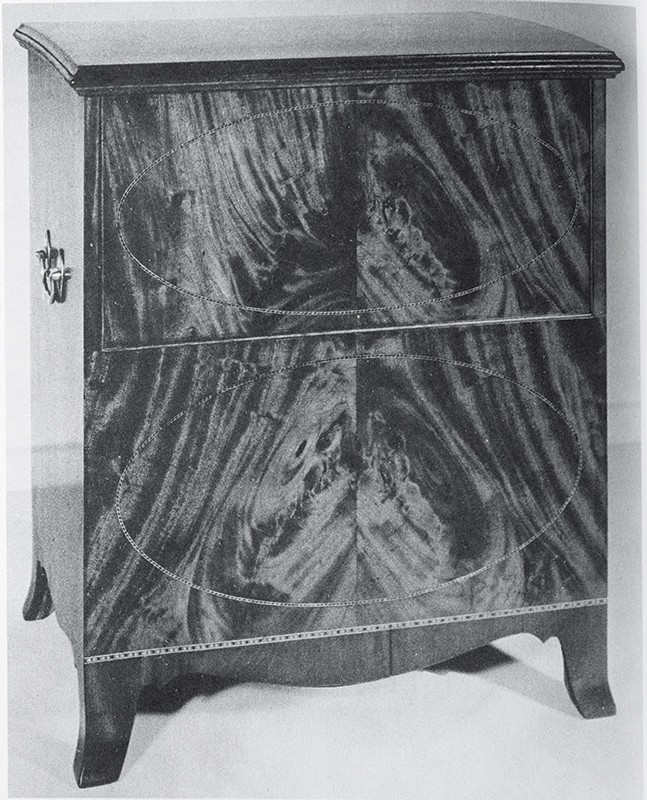
Commode or night table by Elijah Sanderson (1751–1825), Salem, Massachusetts, ca. 1800. Mahogany, mahogany veneer, white pine, brass. H. 29 1/2", W. 25 3/4", D. 19". (Private collection; photo, Phillips Library, Peabody Essex Museum.) Illustrated in Dean A. Fales Jr.’s Essex County Furniture: Documented Treasures from Local Collections, 1660–1860 (Salem, Mass.: Essex Institute, 1965), pl. 37.
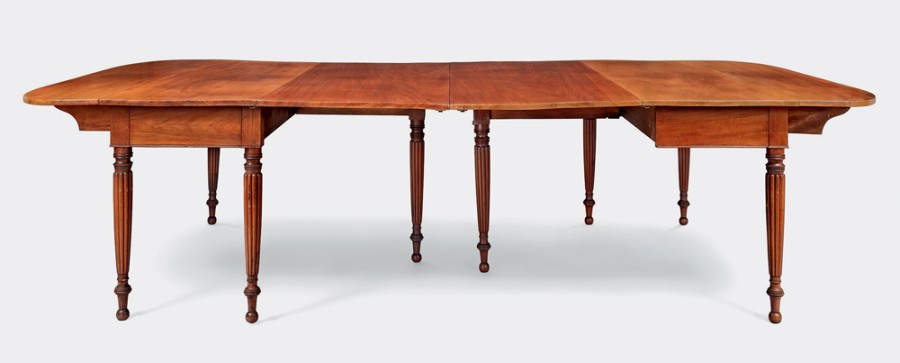
Two-section dining table by Mark Pitman, 1817–1818. Mahogany, mahogany veneer, pine, metal. Each section, H. 28 1/2", W. 54", L. 56" (fully open) (total table length 112"). (Courtesy, Peabody Essex Museum, gift of the Trustees of the Ropes Memorial, 1989, R1070; photo, Michael E. Myers.)
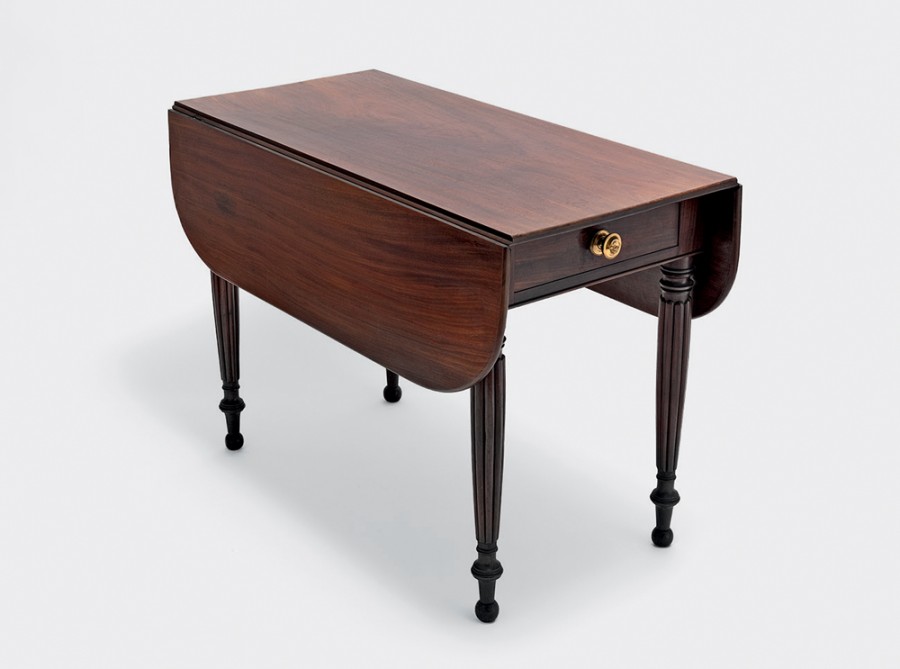
Pembroke table by Mark Pitman, 1817–1818. Mahogany, mahogany veneer, pine, brass, metal. H. 28 1/2", W. 42", D. 31". (Courtesy, Peabody Essex Museum, gift of the Trustees of the Ropes Memorial, 1989, R1068; photo, Dennis Helmar.)
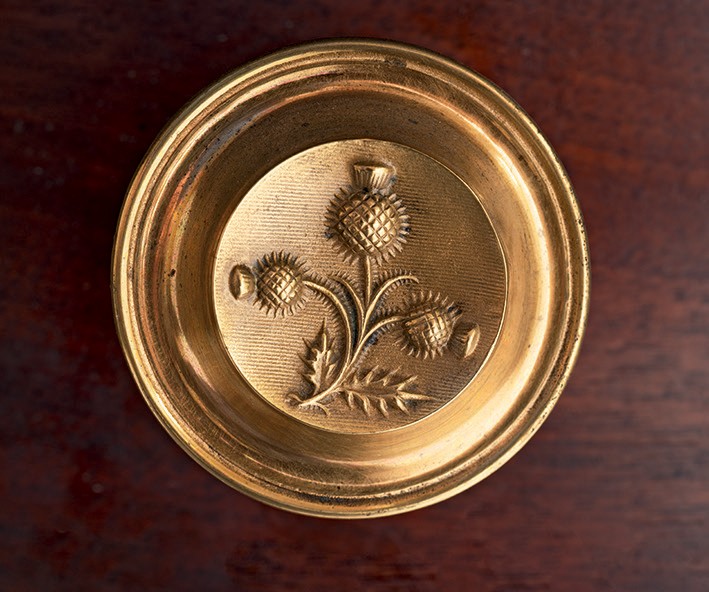
Detail of the brass pull with thistle motif on the drawer of the table in fig. 66. (Photo, Dennis Helmar.)
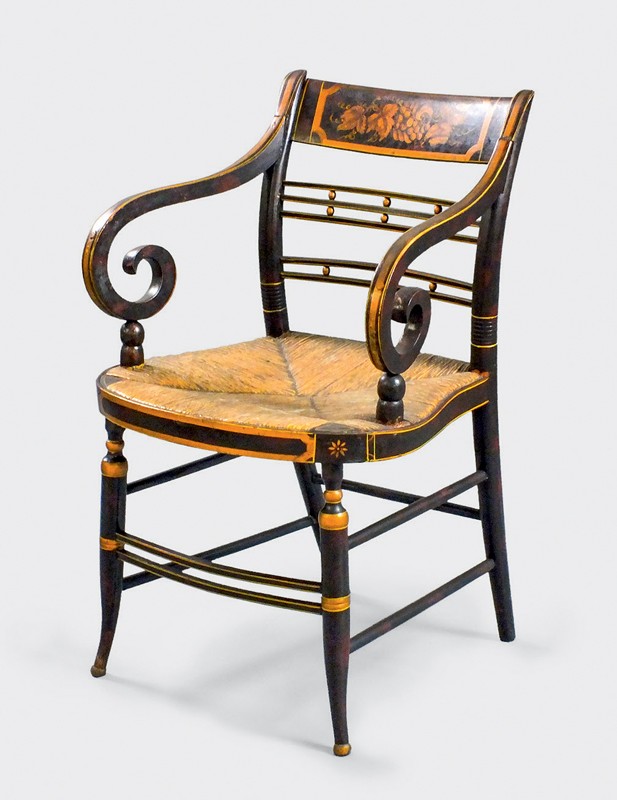
Armchair, probably New York City, ca. 1817. Multiple woods, rush, and paint. H. 32 1/2", W. 20". (Courtesy, Peabody Essex Museum; gift of the Trustees of the Ropes Memorial, 1989, R1069.2.) This armchair was from a set purchased by Sally and Joseph Orne about 1817 to be used with the dining table in fig. 65. Two armchairs and four side chairs survive in the collection from what was likely a larger set.
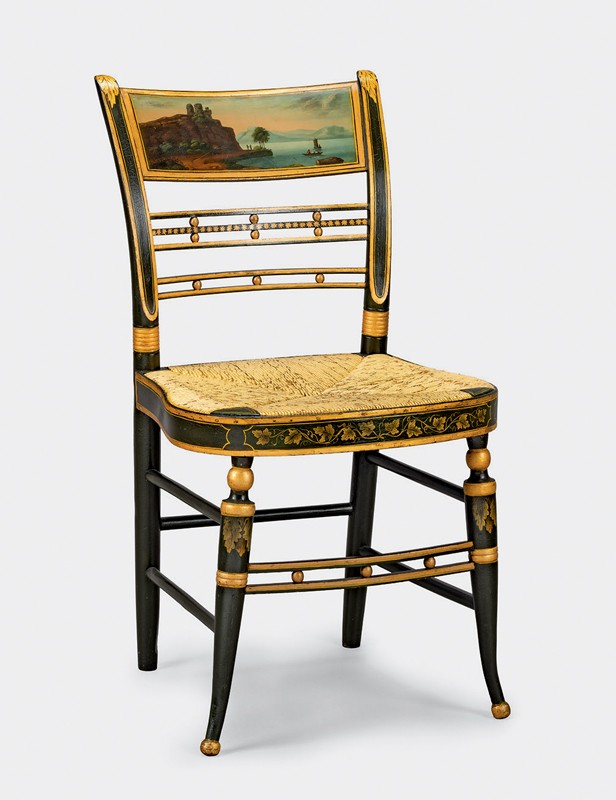
“Landscape” painted side chair, probably New York City, 1816. Multiple woods, rush and paint. H. 33 1/4", W. 18", D. 16". (Courtesy, Peabody Essex Museum, gift of Arthur R. Sharp, Jr. and Mary Silsbee Sharp, 1972, M8541; photo, Kathy Tarantola.) This side chair was from a set used for dining on George Crowninshield’s yacht Cleopatra’s Barge.
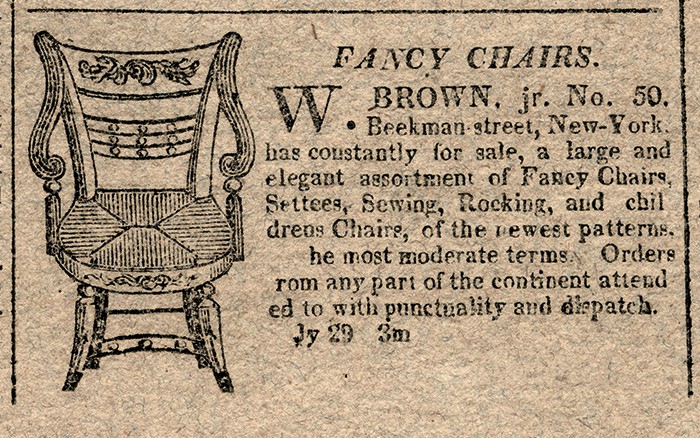
William Brown Jr.’s advertisement for “FANCY CHAIRS” in the Mercantile Advertiser (New York, N.Y.), February 15, 1816. (Courtesy, New-York Historical Society.)
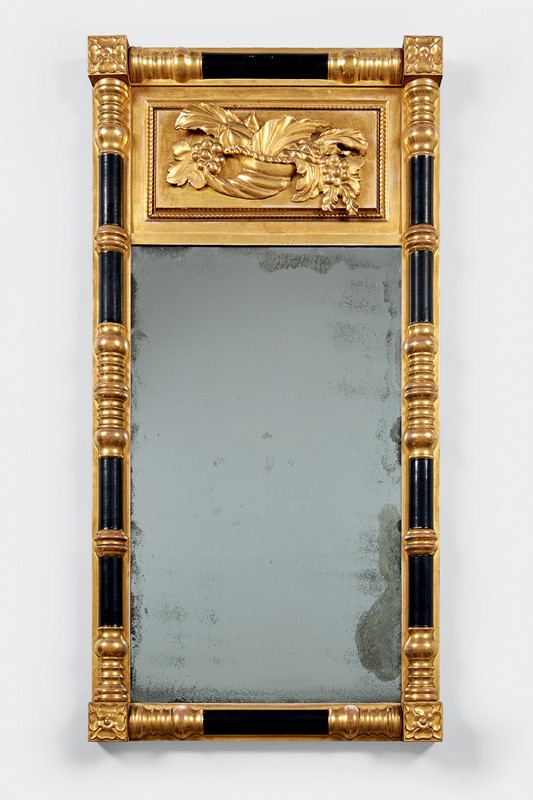
Pier glass with a cornucopia and grapes motif, Salem or Boston, Massachusetts, 1817. Gilded and ebonized wood, mirror glass. H. 45", W. 22", D. 2 1/2". (Courtesy, Peabody Essex Museum, gift of the Trustees of the Ropes Memorial, 1989, R1066; photo, Michael E. Myers.) This looking glass was purchased by the Ornes in 1817 for their dining room to coordinate with the painted black and gold chair in fig. 68.
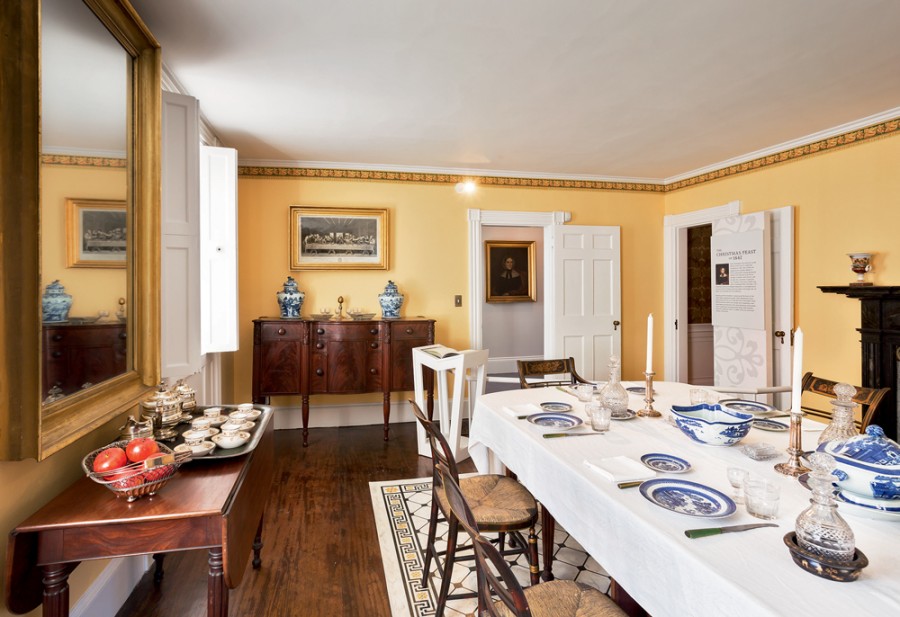
The Pitman dining furniture and other table accessories owned by Sally and Joseph Orne, installed in 2015 in the dining room that had been remodeled in 1835–1836 in the Ropes Mansion. (Courtesy, Peabody Essex Museum; photo, Kathy Tarantola.)
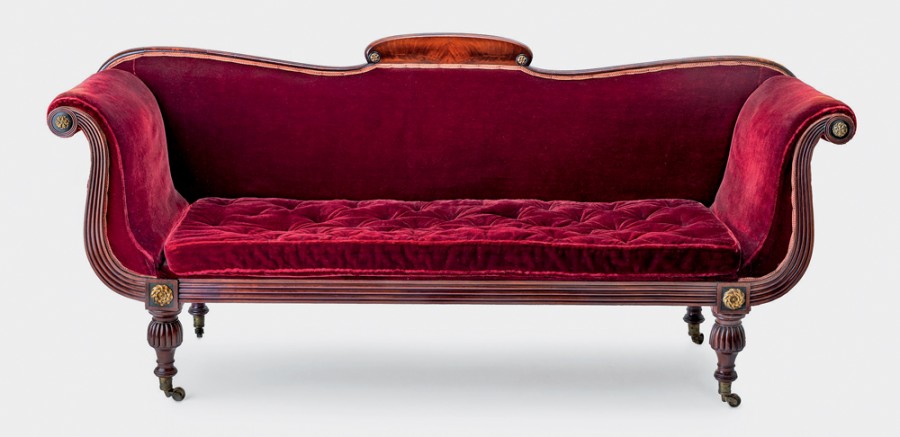
Grecian style sofa by Mark Pitman, 1817–1818. Mahogany, maple, pine, brass, with red wool upholstery from the 1890s. H. 38", W. 84 1/4", D. 24 1/4". (Courtesy, Peabody Essex Museum, gift of the Trustees of the Ropes Memorial, 1989, R1048; photo, Dennis Helmar.)
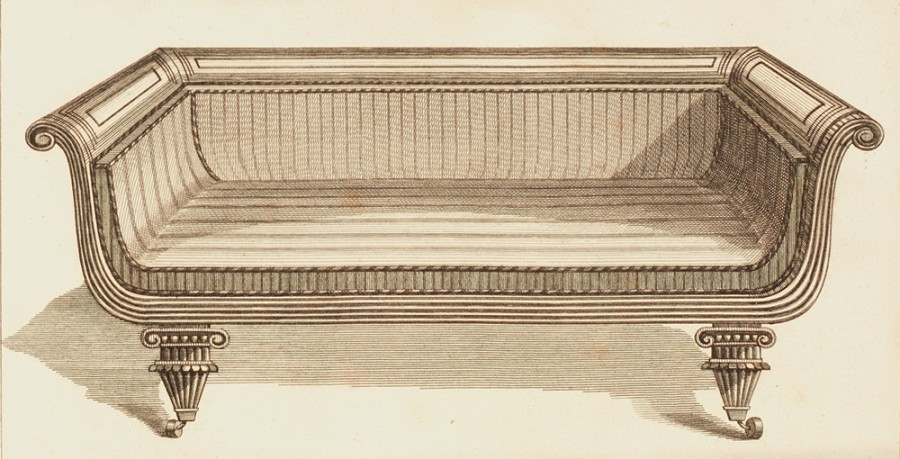
Design for a “Grecian Sofa,” shown on plate 73 of Thomas Sheraton’s The Cabinet Dictionary (London, 1803). (Courtesy, Phillips Library, Peabody Essex Museum.)
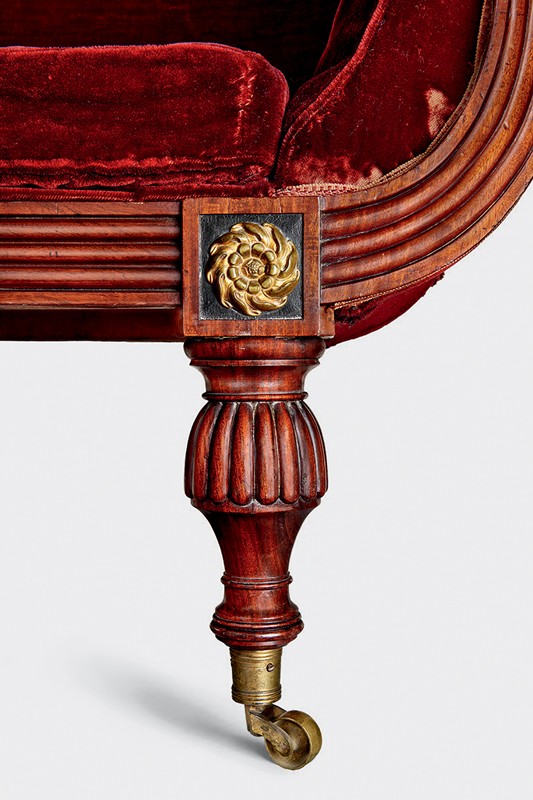
Detail of a front leg of the sofa in fig. 73. (Photo, Michael E. Myers.)
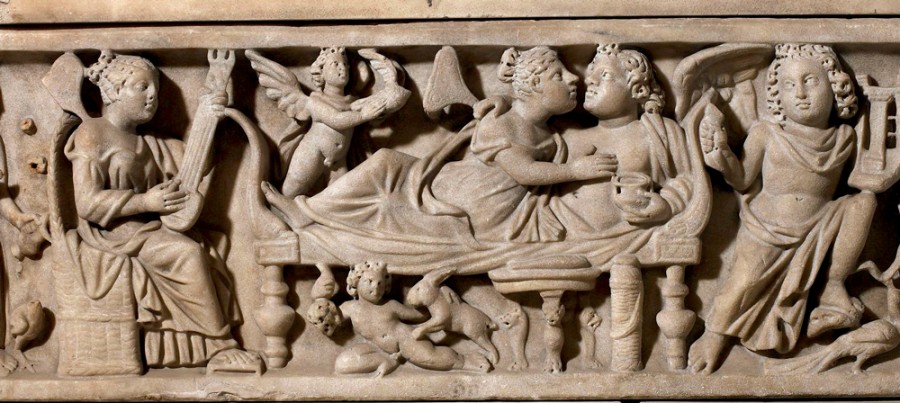
Detail of child’s sarcophagus depicting the marriage feast of Cupid and Psyche, Roman, 3rd century CE. Proconnesian marble. (Courtesy and © The Trustees of the British Museum.) The couple are seated on a sofa similar in form to the sofas in figs. 73 and 77.
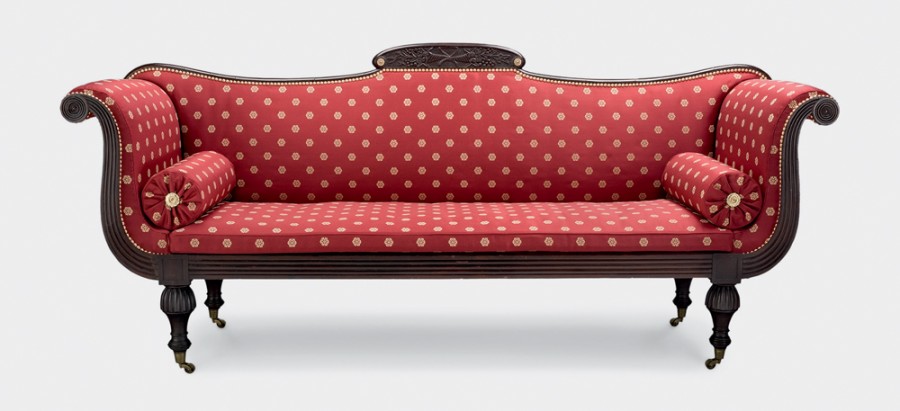
Grecian style sofa by Mark Pitman, carving attributed to Samuel Field McIntire (1780–1819), ca. 1815. Mahogany, maple, with modern upholstery. H. 37 1/2", W. 85", D. 24 1/2". (Courtesy, Peabody Essex Museum, gift of Mrs. Robert Johnston, 1984, 136133; photo, Dennis Helmar.) The sofa was made for the family of Jonathan Peele Saunders (1785–1844).
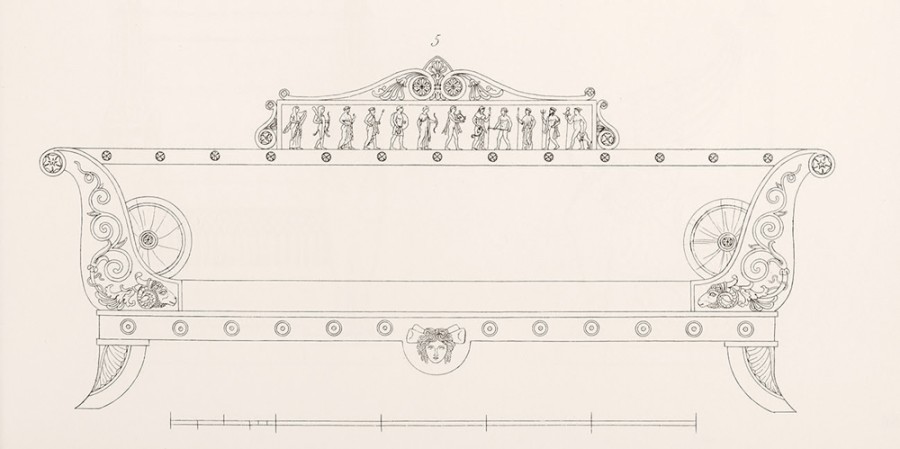
Design for a settee (detail), shown on plate 18 of Thomas Hope’s Household Furniture and Interior Decoration (London, 1807). (Courtesy, Phillips Library, Peabody Essex Museum.)
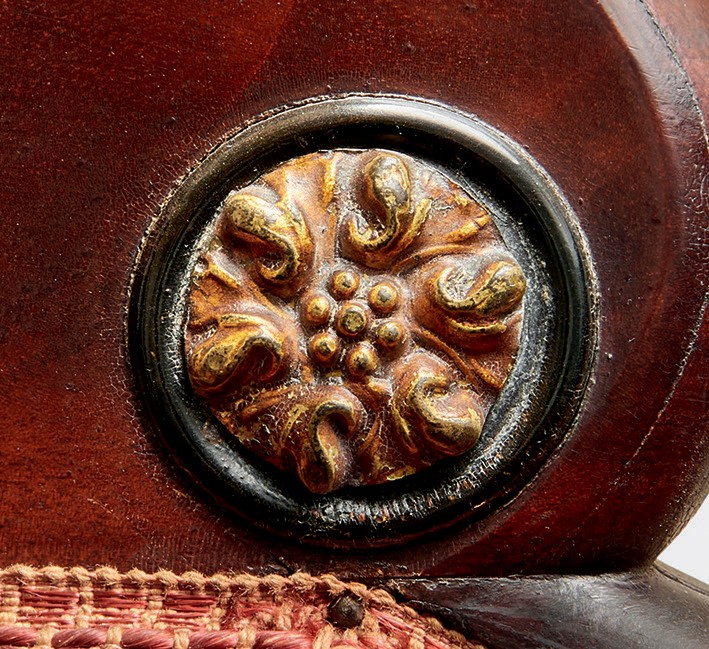
Detail of the brass floral mount on the crest rail of the sofa in fig. 73. (Photo, Michael E. Myers.)
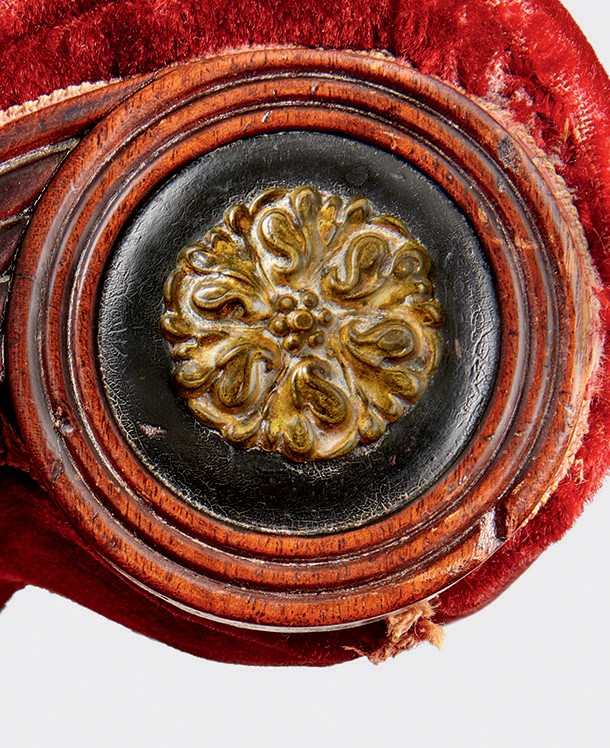
Detail of the brass floral mount on the arm of the sofa in fig. 73. (Photo, Michael E. Myers.)
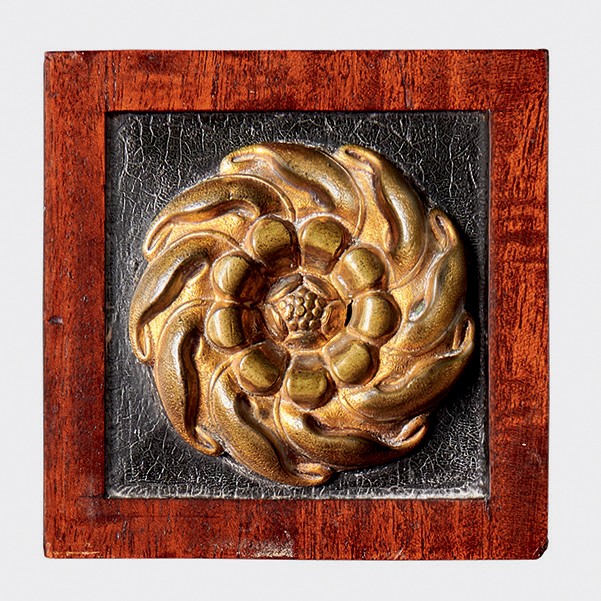
Detail of the brass floral mount on the front seat rail of the sofa in fig. 73. (Photo, Michael E. Myers.)
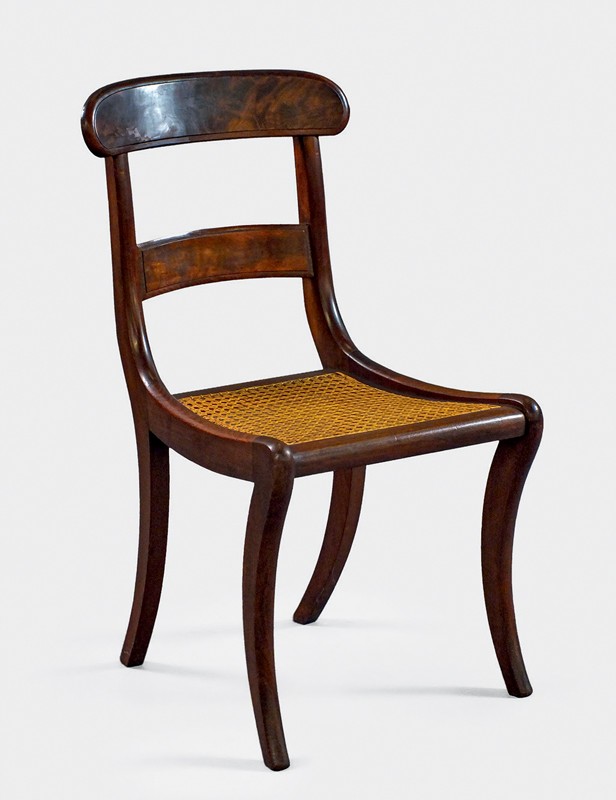
Side chair (from a set of ten) by Mark Pitman, 1817–1818. Mahogany, mahogany veneer, cane. H. 33", W. 17", D. 18". (Courtesy, Peabody Essex Museum, gift of the Trustees of the Ropes Memoral, 1989, R1131.1.)
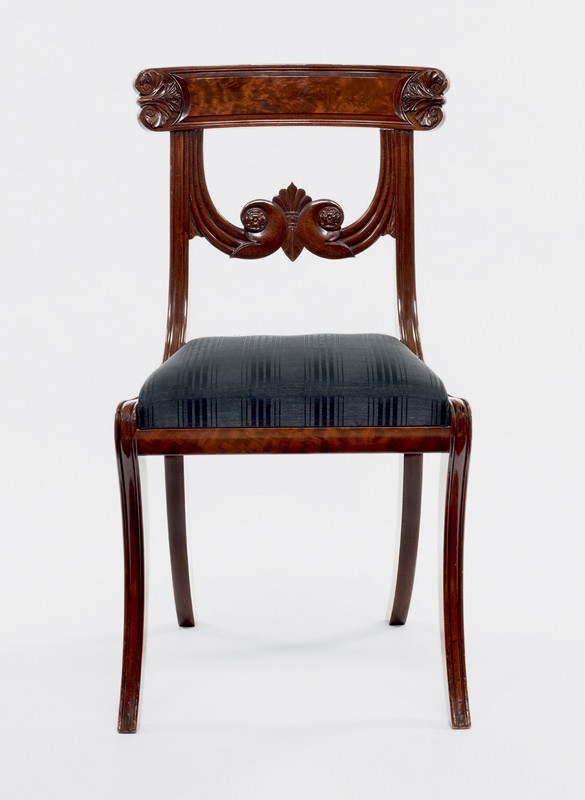
Side chair, attributed to Isaac Vose and Son, Boston, Massachusetts, with Thomas Wightman, carver, 1824–1825. Mahogany, birch, modern upholstery. H. 33", W. 19", D. 17". (Private collection; photo, David Bohl.) This chair is from a set originally owned by Samuel Atkins Eliot and Mary Lyman Eliot.
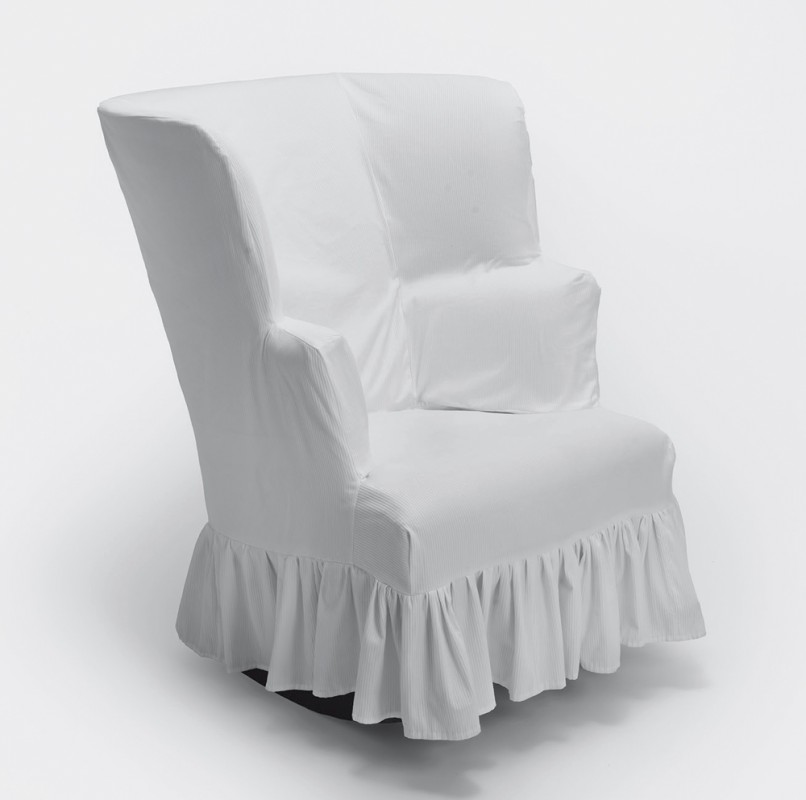
Easy chair by Mark Pitman, 1817–1818. Mahogany, various hardwoods, later upholstery. H. 40 1/2", W. 28 1/2", D. 30". (Courtesy, Peabody Essex Museum, gift of the Trustees of the Ropes Memorial, 1989, R1114; photo, Dennis Helmar.)
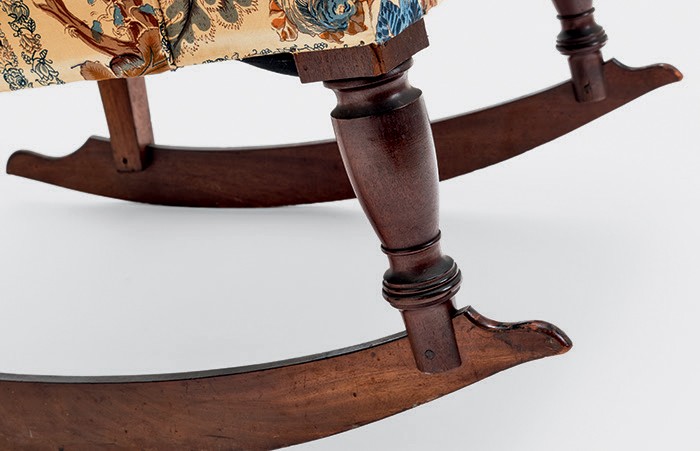
Detail of the front leg and rocker on the easy chair in fig. 84. (Photo, Dennis Helmar.)
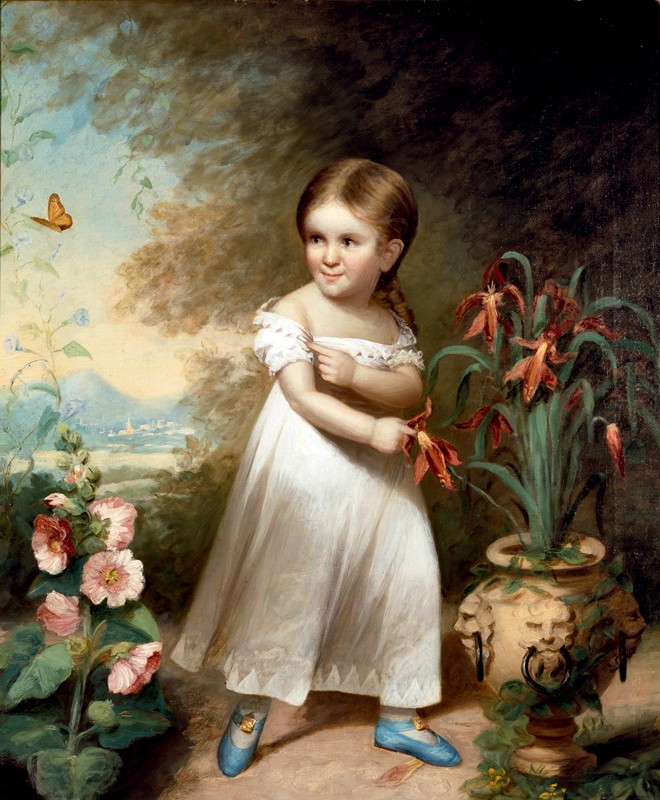
James Frothingham (1786–1864), Elizabeth Ropes Orne, ca. 1822. Oil on canvas. H. 42", W. 35" (Courtesy, Peabody Essex Museum, gift of the Trustees of the Ropes Memorial, 1989, R746.)
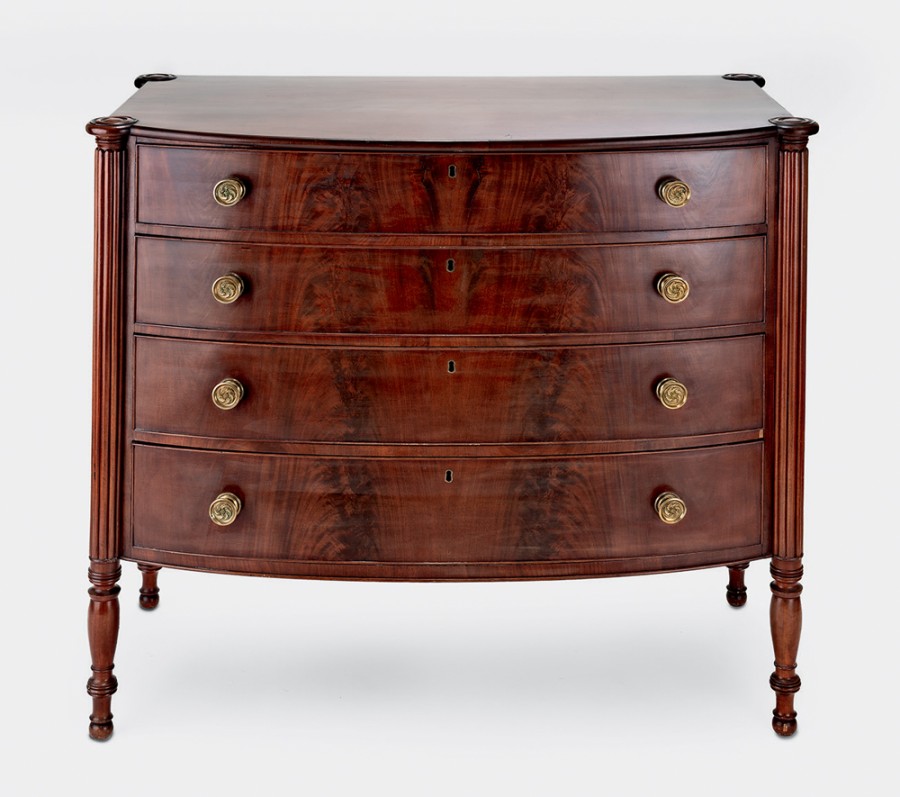
Bow front chest of drawers by Mark Pitman, 1810–1825. Mahogany, mahogany veneer, pine, brass. H. 39 1/2", W. 44 1/4", D. 20 1/2". (Courtesy, Peabody Essex Museum, gift of the Trustees of the Ropes Memorial, 1989, R1113; photo, Dennis Helmar.)
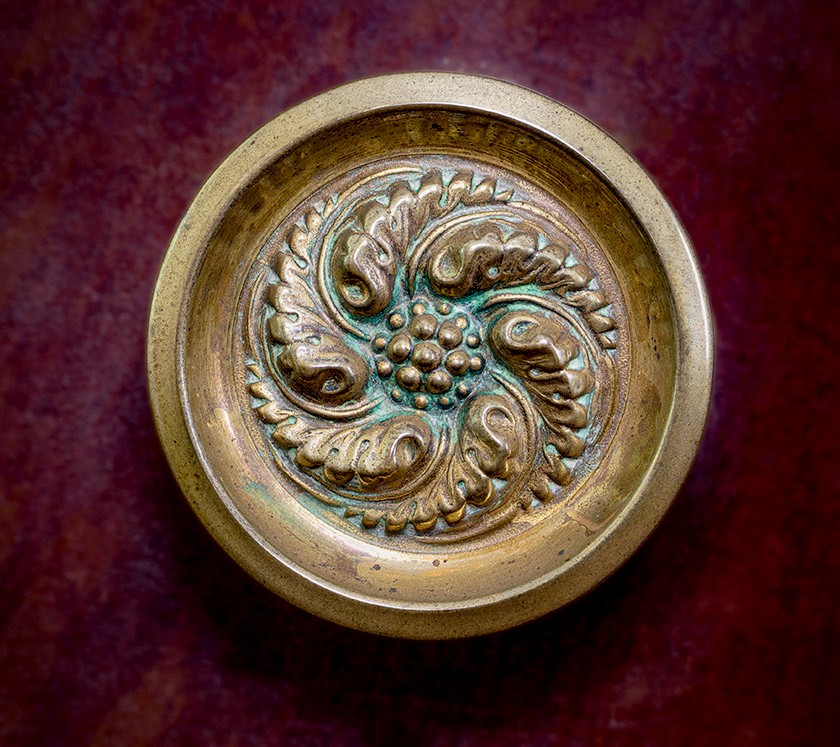
Detail of the brass drawer pull with sea shell motif on the chest of drawers in fig. 87. (Photo, Dennis Helmar.)
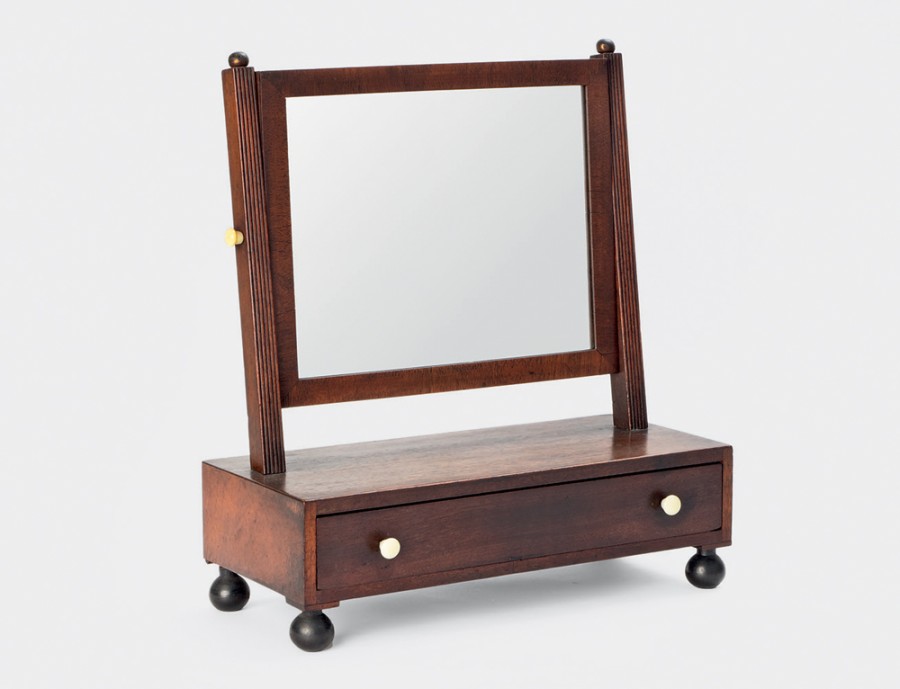
Dressing box with attached looking glass by Mark Pitman, 1817–1825. Mahogany, mahogany veneer, pine, ivory, metal, mirror glass. H. 16 1/2", W. 14 7/8", D. 6 1/2". (Courtesy, Peabody Essex Museum, gift of the Trustees of the Ropes Memorial, 1989, R1103; photo, Dennis Helmar.)
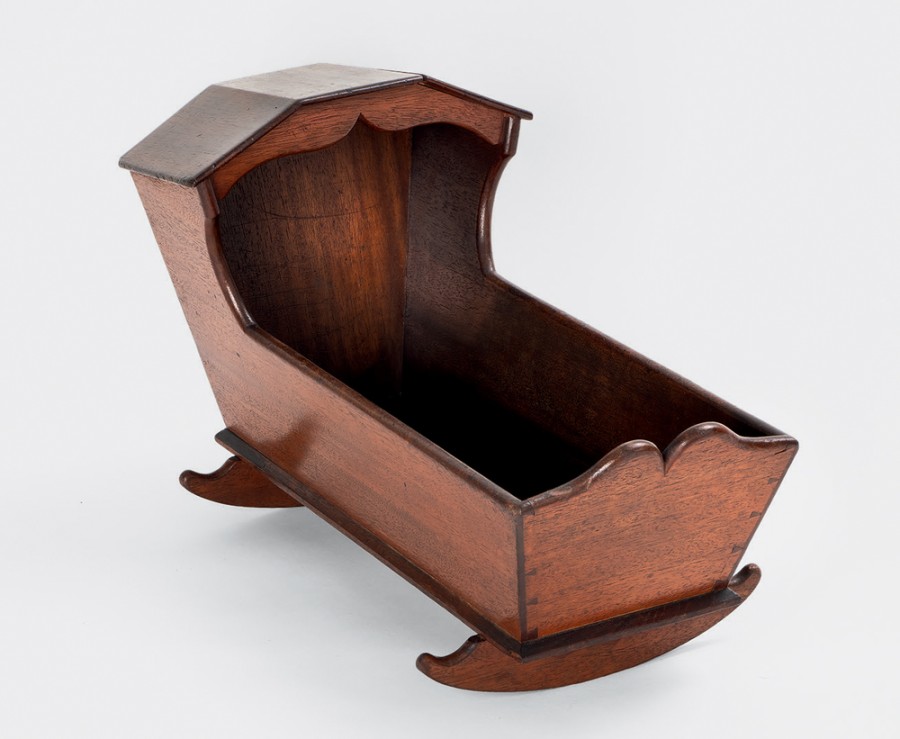
Toy cradle by Mark Pitman, 1820–1830. Mahogany. H. 8 1/2", W. 14", D. 7 1/2". (Courtesy, Peabody Essex Museum, gift of the Trustees of the Ropes Memorial, 1989, R1098; photo, Dennis Helmar.)
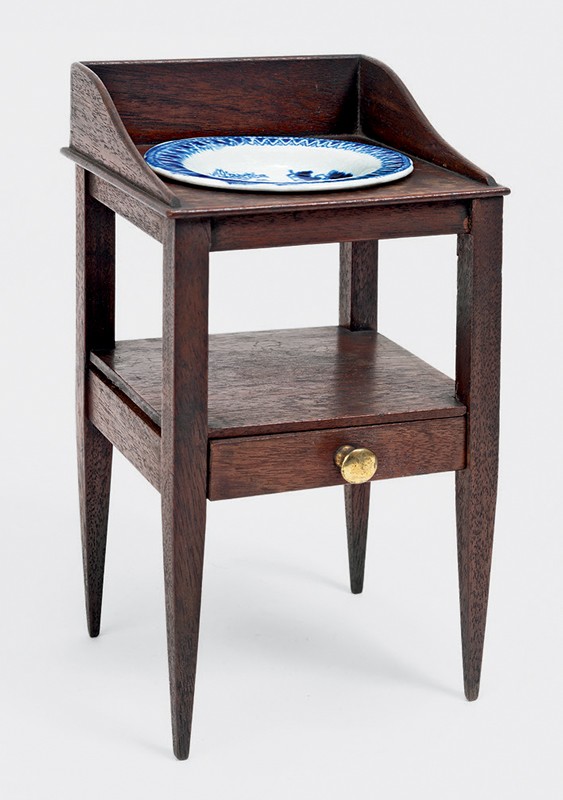
Toy washstand by Mark Pitman, 1820–1830. Mahogany, brass. H. 8 1/4", W. 4 1/2", D. 4 1/2". (Courtesy, Peabody Essex Museum, gift of the Trustees of the Ropes Memorial, 1989, R1099, washstand and R351.2, plate; photo, Dennis Helmar.) Shown with miniature plate, English, ca. 1825.
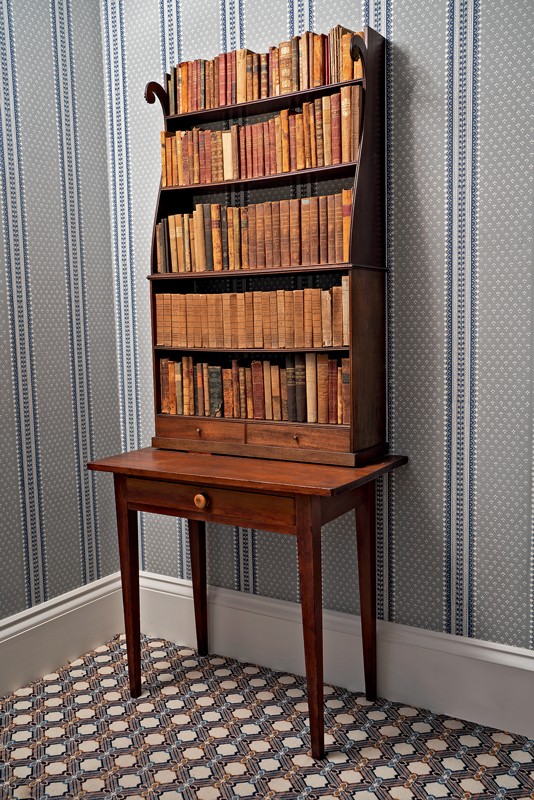
Two-part bookshelf with two drawers by Mark Pitman, 1828. Mahogany, mahogany veneer, pine, brass. H. 45 1/2", W. 28", D. 8 1/2". Shown on top of a single drawer table by Mark Pitman, 1807–1825. Pine, maple. H. 29", W. 32 1/4", D. 17 3/4". (Courtesy, Peabody Essex Museum, gift of the Trustees of the Ropes Memorial, 1989, R1101, R1100; photo, Dennis Helmar.)
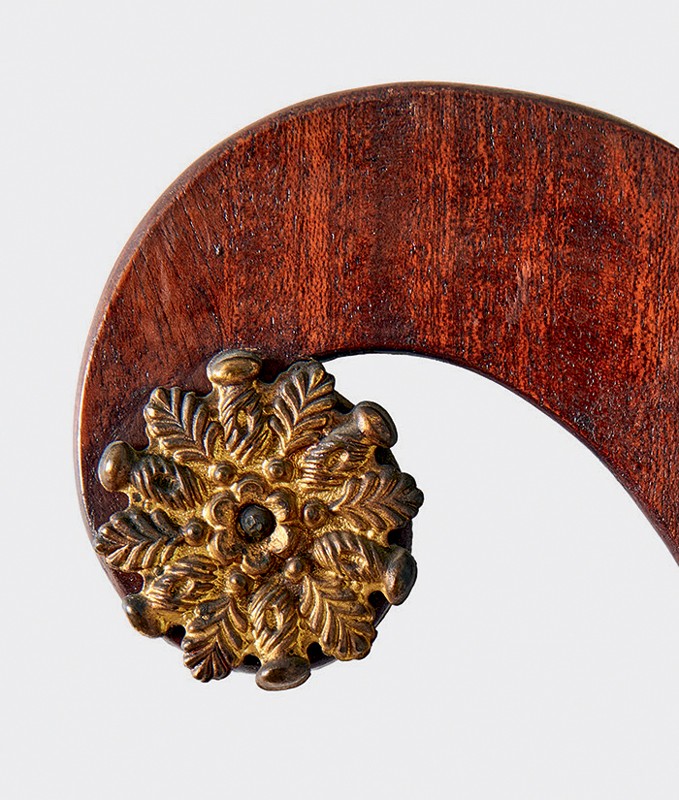
Detail of the gilded medallion on the right scroll of the bookshelf in fig. 92. (Photo, Michael E. Myers.)
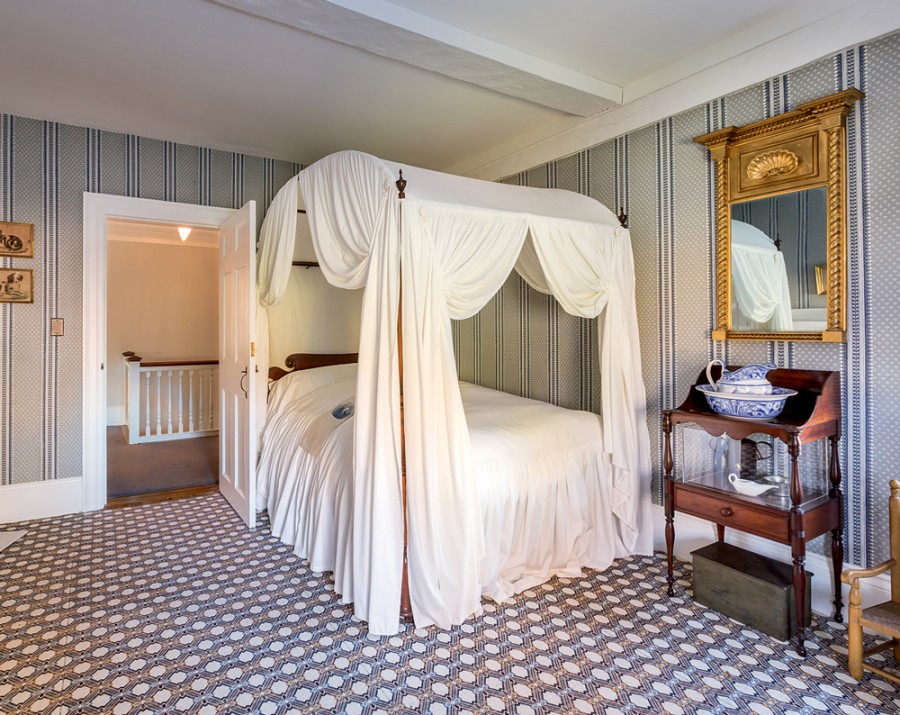
The Elizabeth Ropes Orne bed chamber in the Ropes Mansion, containing the bedstead in fig. 37, washstand in fig. 57, and mirror in fig. 60. (Courtesy, Peabody Essex Museum, gift of the Trustees of the Ropes Memorial, 1989; photo, Allison White.) The room was restored in 2015 using reproductions of period wallpaper, ingrain carpeting, and cotton dimity bed hangings.
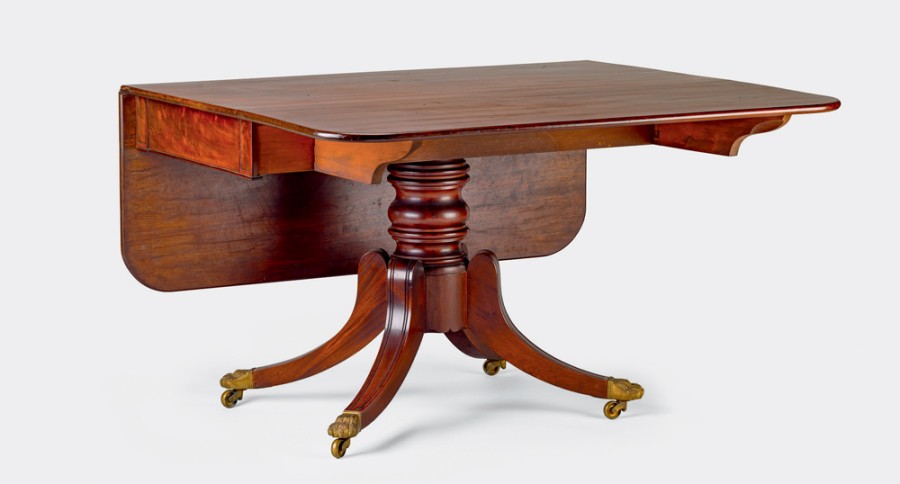
Grecian style Pembroke table by Mark Pitman, 1826. Mahogany, mahogany veneer, pine, unidentified wood, brass, metal. H. 29", W. 46 1/2", D. 24 1/2". (Courtesy, Peabody Essex Museum, gift of the Trustees of the Ropes Memorial, 1989, R1054; photo, Kathy Tarantola.)
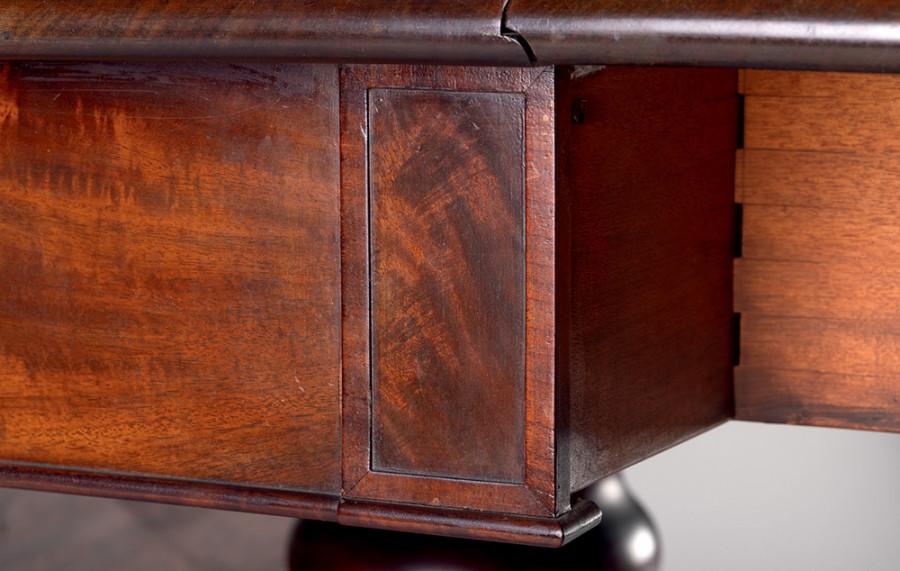
Detail of the mahogany veneered panel with fillet moldings set into the end of the apron rail on the table in fig. 95. (Photo, Kathy Tarantola.)
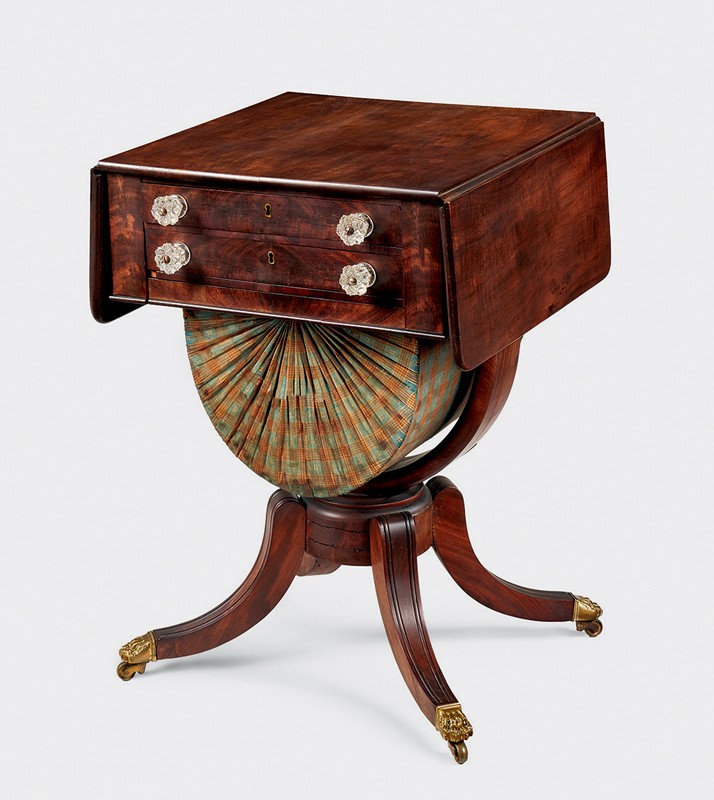
Grecian style work table by Mark Pitman, 1828. Mahogany, mahogany veneer, pine, glass, brass, metal, paper, silk fabric. H. 28", W. 19 1/4", D. 19 1/2". (Courtesy, Peabody Essex Museum, gift of the Trustees of the Ropes Memorial, 1989, R1136; photo, Michael E. Myers.)
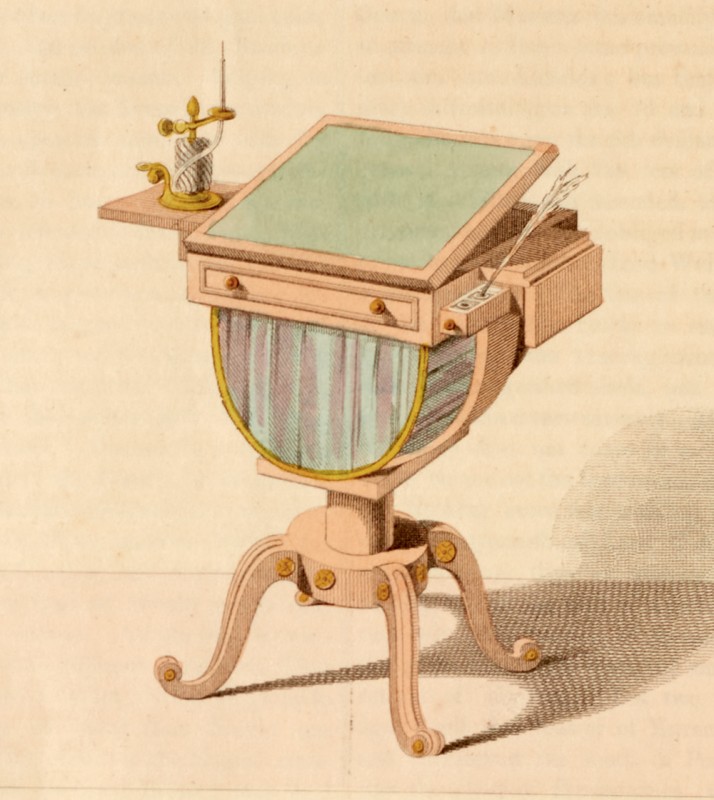
Design for a “Ladies Work Table” (detail), shown on plate 35 of Ackermann’s Repository, no. 30 (June 1811). (Courtesy, Phillips Library, Peabody Essex Museum.)
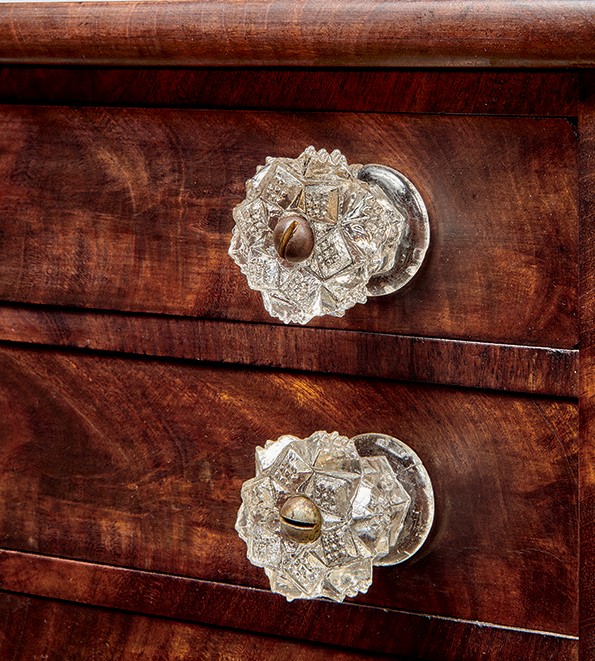
Detail of the original cut-glass drawer pulls on the work table in fig. 97. (Photo, Michael E. Myers.)
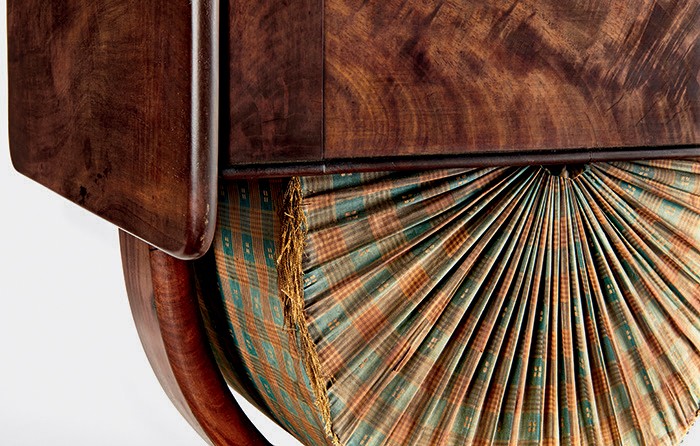
Detail of the original plaid silk fabric, with a fragment of gold fringe, covering the storage drawer on the work table in fig. 97. (Photo, Michael E. Myers.)
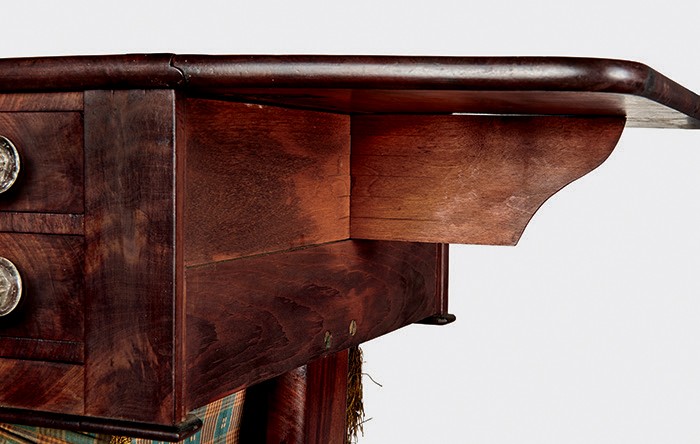
Detail of the swing bracket used to support the raised leaf on the work table in fig. 97. (Photo, Michael E. Myers.)
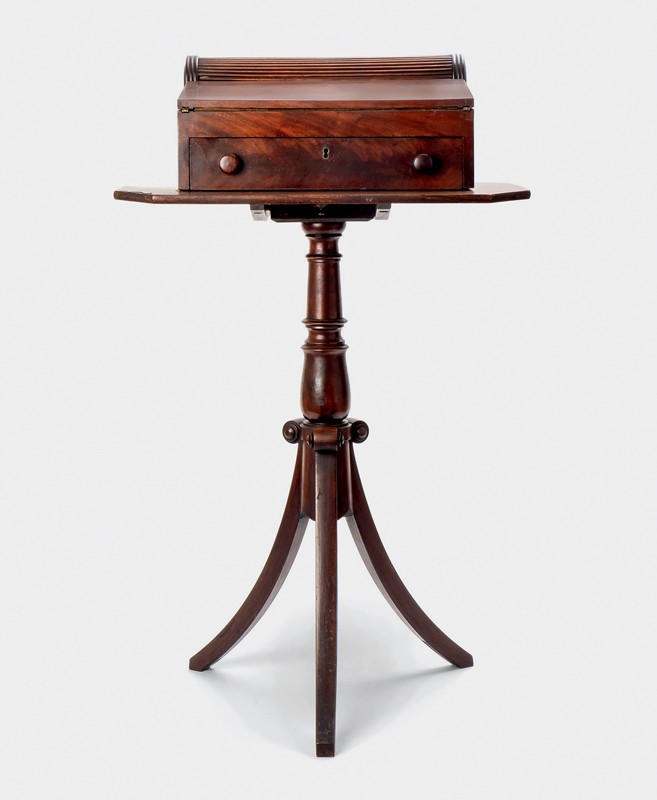
Cylinder desk and stand by Mark Pitman, 1827 or 1828. Desk: mahogany, mahogany veneer, pine, baize fabric, brass, glass bottles with silvered caps, fabric glued to the reeds. H. 7", W. 15 1/2", D. 11 1/2". Stand: mahogany, mahogany veneer, unidentified wood, brass. H. 28 1/2", W. 21 1/4", D. 17 1/2". (Courtesy, Peabody Essex Museum, gift of the Trustees of the Ropes Memorial, 1989. R1109, R1110; photo, Dennis Helmar.)
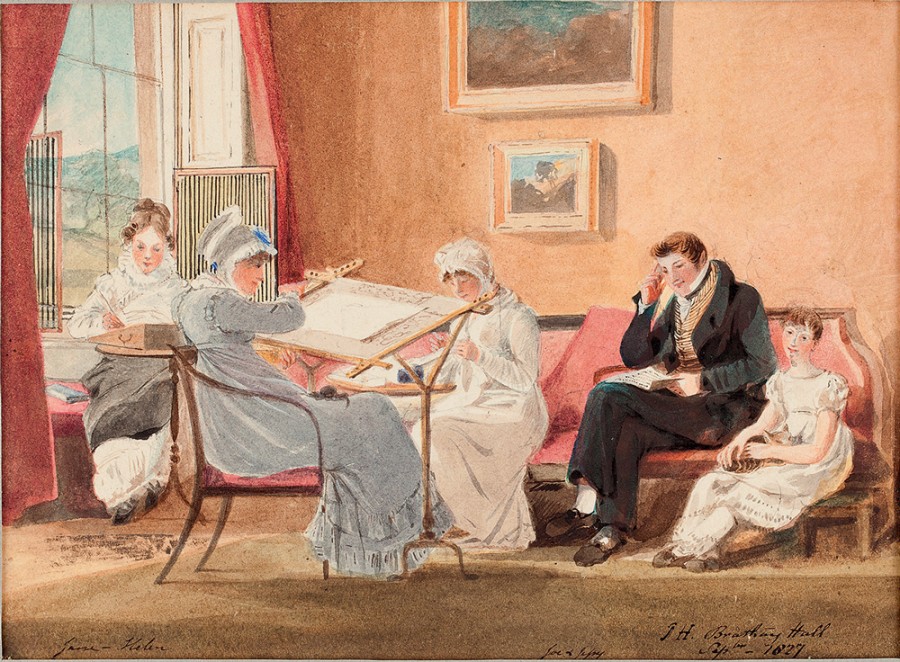
John Harden (1772–1847), Harden Family at Brathay Hall, 1827. Watercolor on paper. Dimensions not recorded. (Courtesy, Abbot Hall, Lakeland Arts Trust, Cumbria, England.) The young woman by the window is using a lap desk on a stand similar to the one in fig. 102.
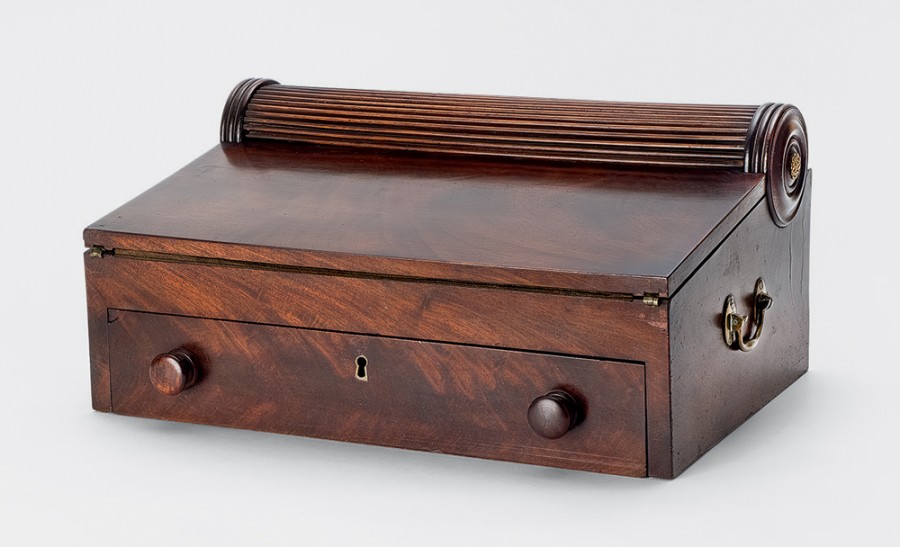
Cylinder desk by Mark Pitman shown in fig. 102. (Photo, Dennis Helmar.)
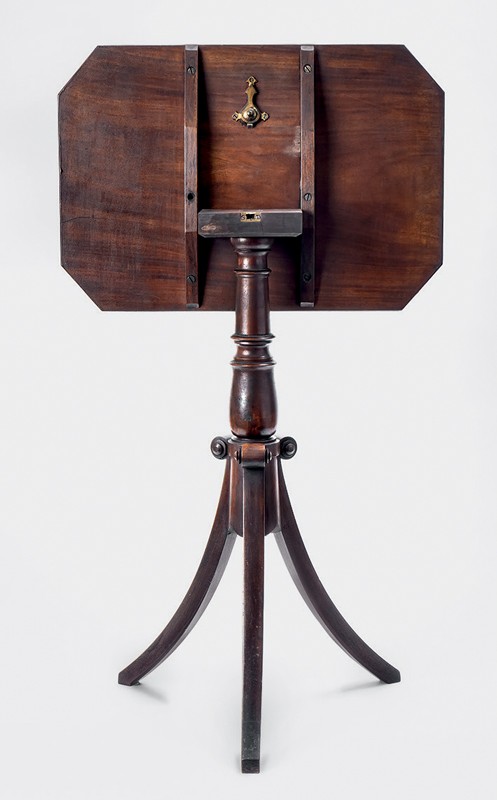
Stand with hinged octagonal top by Mark Pitman shown in fig. 102. (Photo, Dennis Helmar.)
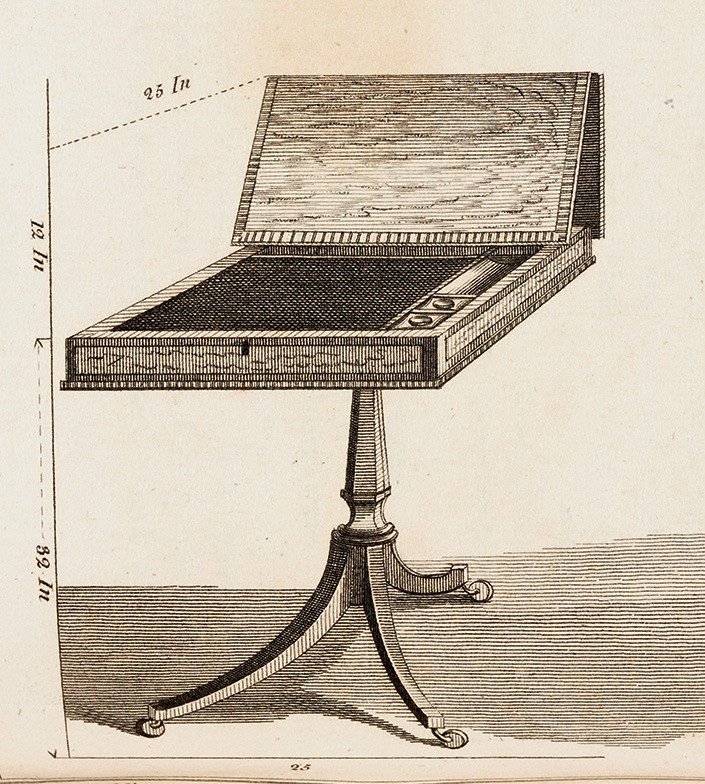
Design for “A Lady’s Writing Table” (detail), shown on plate 71 of Thomas Sheraton’s The Cabinet Dictionary (London, 1803). (Courtesy, Phillips Library, Peabody Essex Museum.)
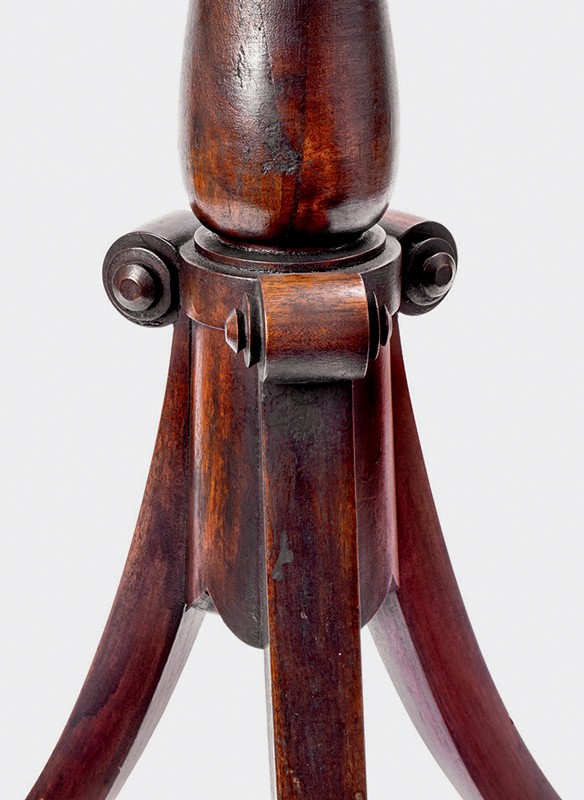
Detail of the carved scrolls on the upper legs on the stand in fig. 102. (Photo, Dennis Helmar.)
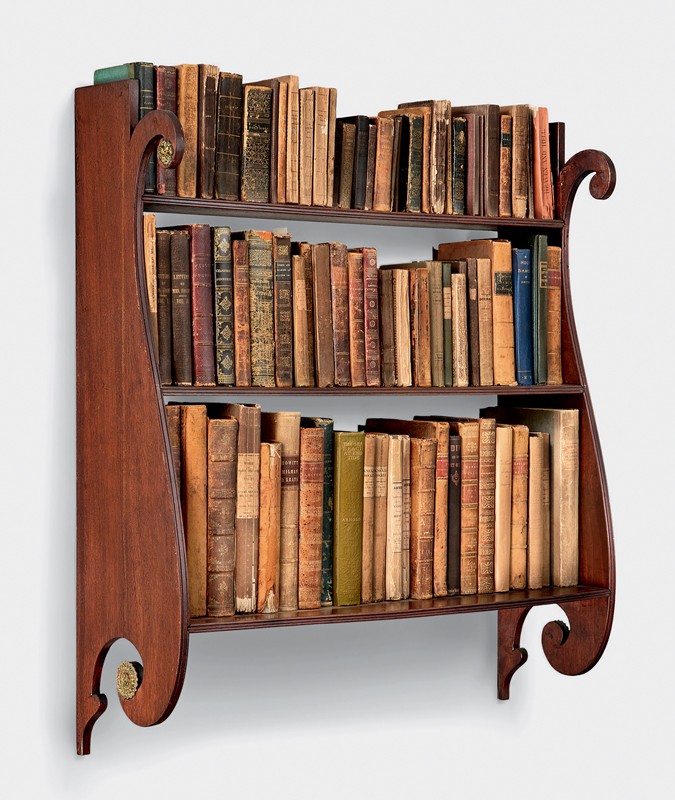
Bookshelf by Mark Pitman,1824–1828. Mahogany, brass mounts. H. 31", W. 27 7/8", D. 8 1/4". (Courtesy, Peabody Essex Museum, gift of the Trustees of the Ropes Memorial, 1989, R1115; photo, Michael E. Myers.)
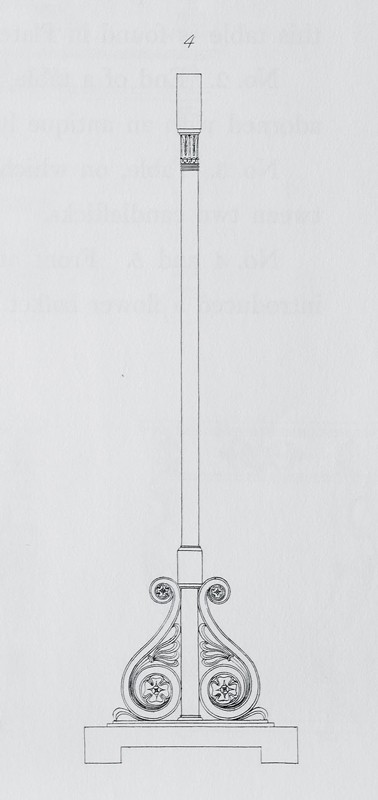
Design for a “Profile of a dressing glass” (detail), shown on plate 14 of Thomas Hope’s Household Furniture and Interior Decoration (London, 1807). (Courtesy, Phillips Library, Peabody Essex Museum.) The scrolled brackets are similar in shape to the sides of the bookshelf in fig. 108, with a similar floral motif on the end of the upper scroll.
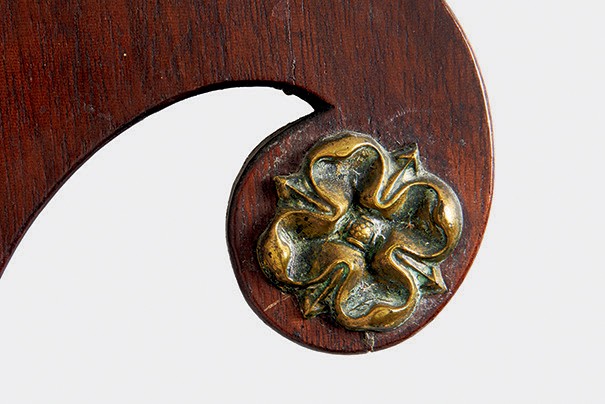
Detail of the brass rosette on the upper scroll of the bookshelf in fig. 108. (Photo, Michael E. Myers.)
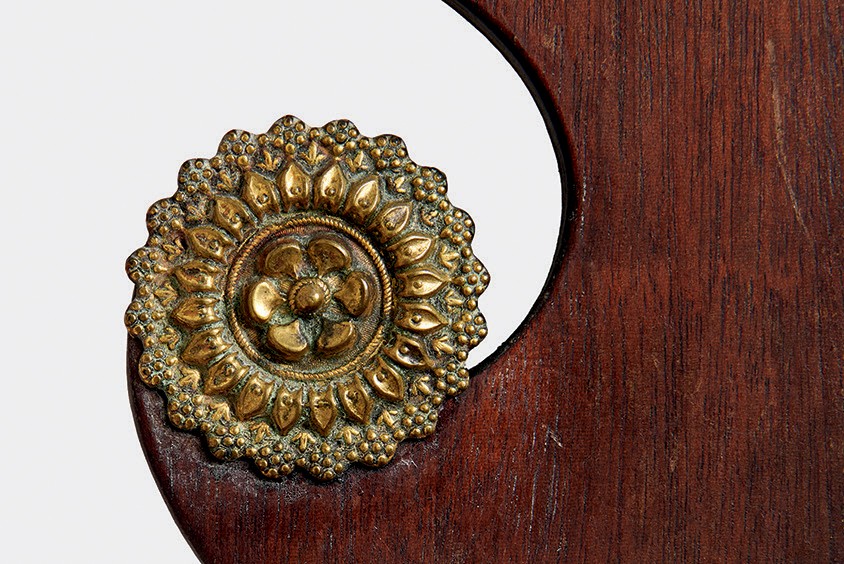
Detail of the brass medallion on the lower scroll of the bookshelf in fig. 108. (Photo, Michael E. Myers.)
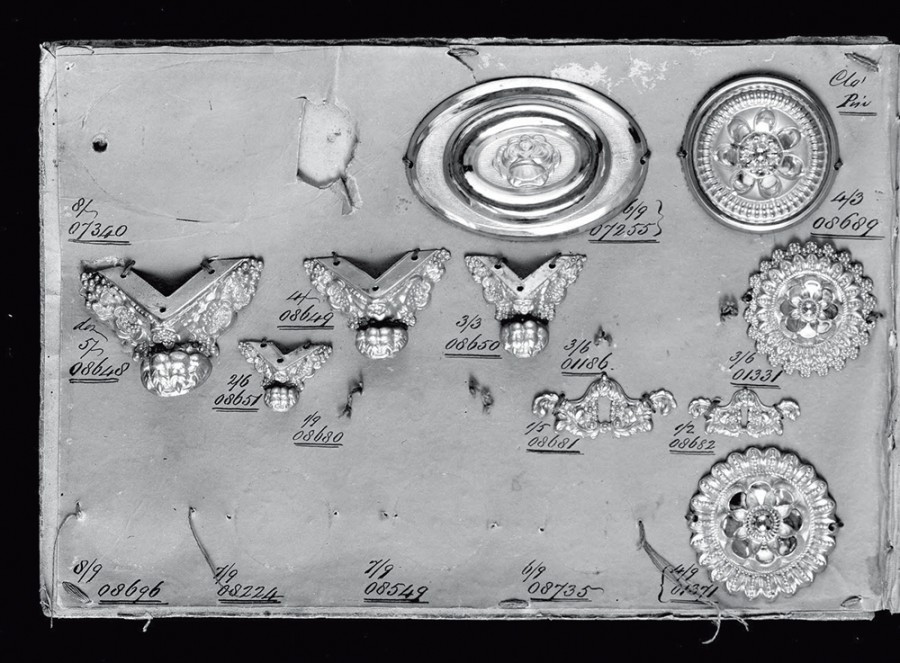
Brass hardware sewn into the trade catalogue issued by Thomas Potts, Designs for Curtain Pins, Curtain Poles, Drawer Handles, Knob Cupboard Turns, Bed Caps, Clock Pins, Doorknobs, etc. (Birmingham, England, 1829–1833). (Courtesy, Rhode Island School of Design Museum.) The medallion marked “01331” is similar to the medallion in fig. 111 used on the bookshelf in fig. 108.
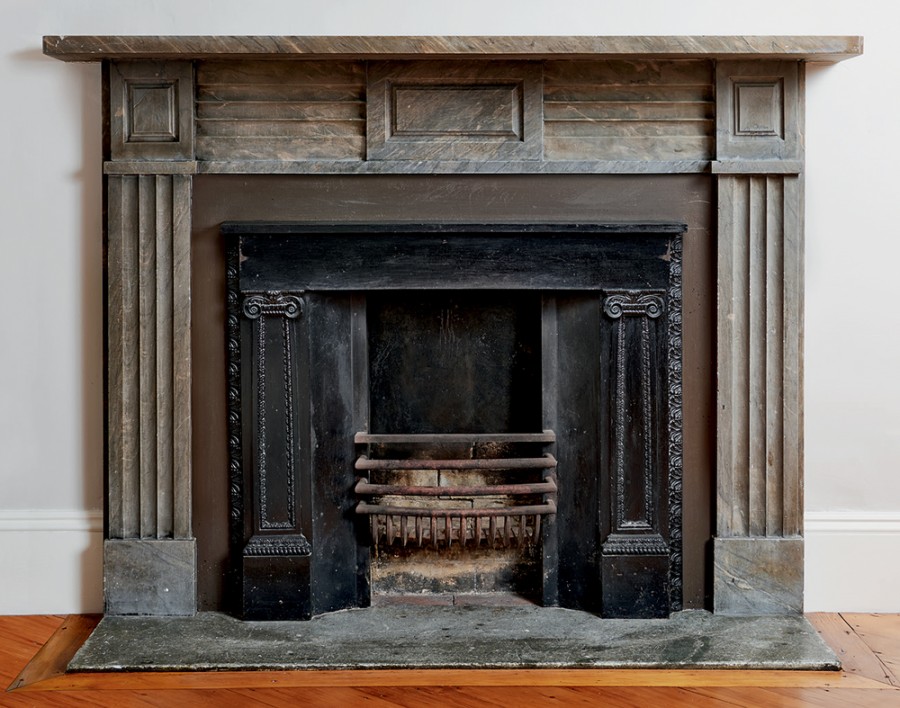
Gray marble chimneypiece made by John Templeton, Boston, Massachusetts, 1835. H. 49 3/4", W. 68 3/4", D. (shelf) 8 1/2". (Courtesy, Peabody Essex Museum, gift of the Trustees of the Ropes Memorial, 1989; photo, Michael E. Myers.) The chimneypiece was purchased by Sally (Ropes) Orne and her sister, Abigail Ropes, for the front parlor of the Ropes Mansion during the 1835–1836 renovation; it was moved to a second-floor bedroom in 1894.
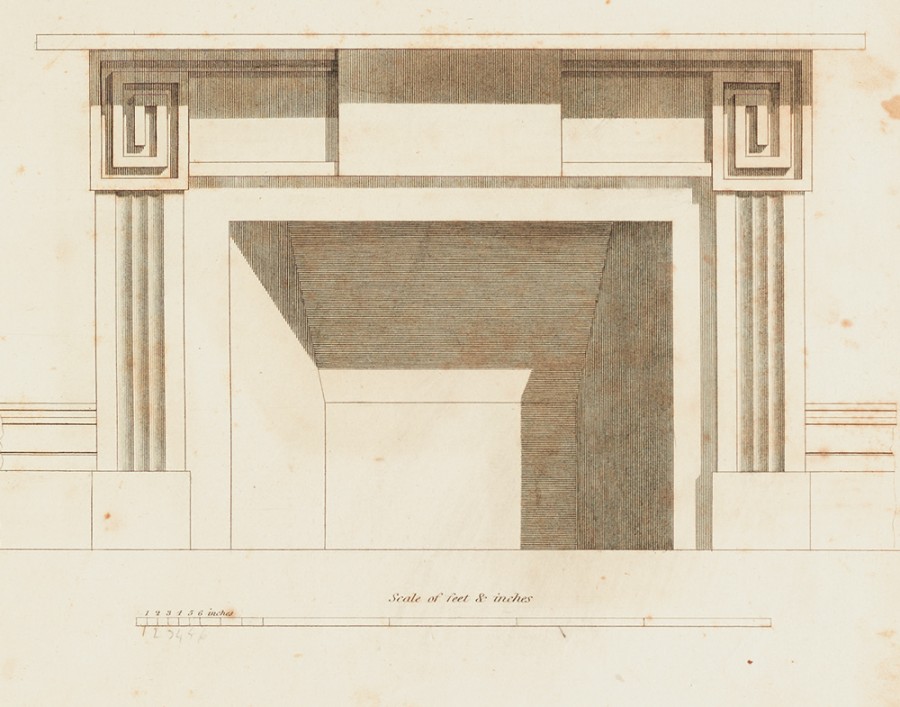
Design for a “Chimney Piece” in the Grecian style, shown on plate 50 of Asher Benjamin’s The Practical House Carpenter (Boston, 1830). (Courtesy, Phillips Library, Peabody Essex Museum.)
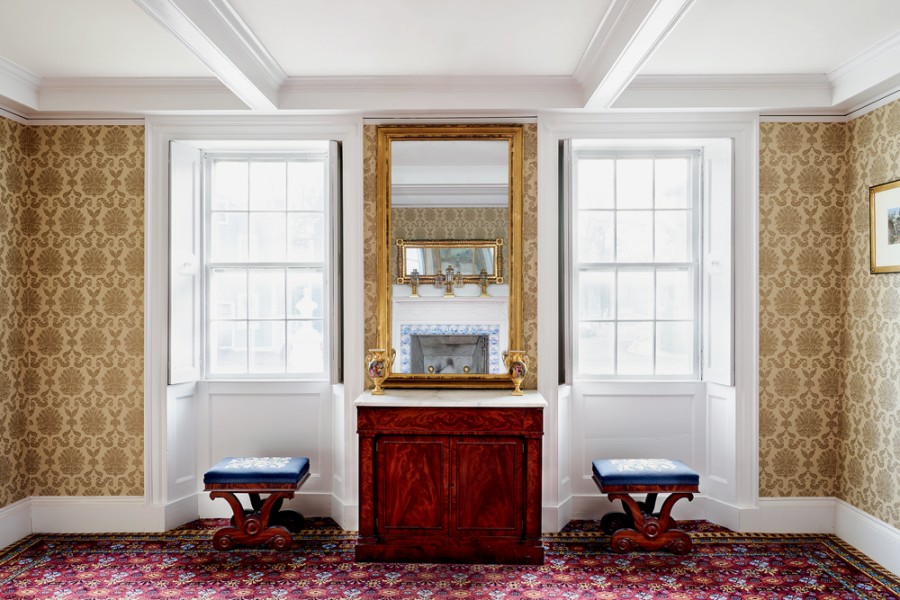
South wall of the front parlor of the Ropes Mansion, showing the commode, pier glass, and tabourets installed as part of the 1835–1836 renovation of the room. (Courtesy, Peabody Essex Museum; photo, Michael E. Myers.)
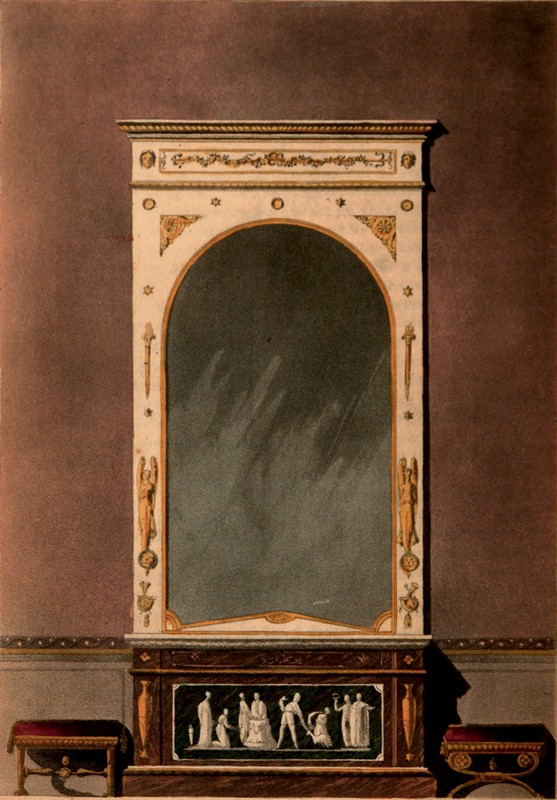
Design for a “Commode, Pier Glass & Tabourets,” shown on plate 26 of Ackermann’s Repository, second series vol. 6, no. 35 (November 1, 1818): opp. p. 307. (Courtesy, Philadelphia Museum of Art Library; photo, Internet Archive, the American Libraries collection.)
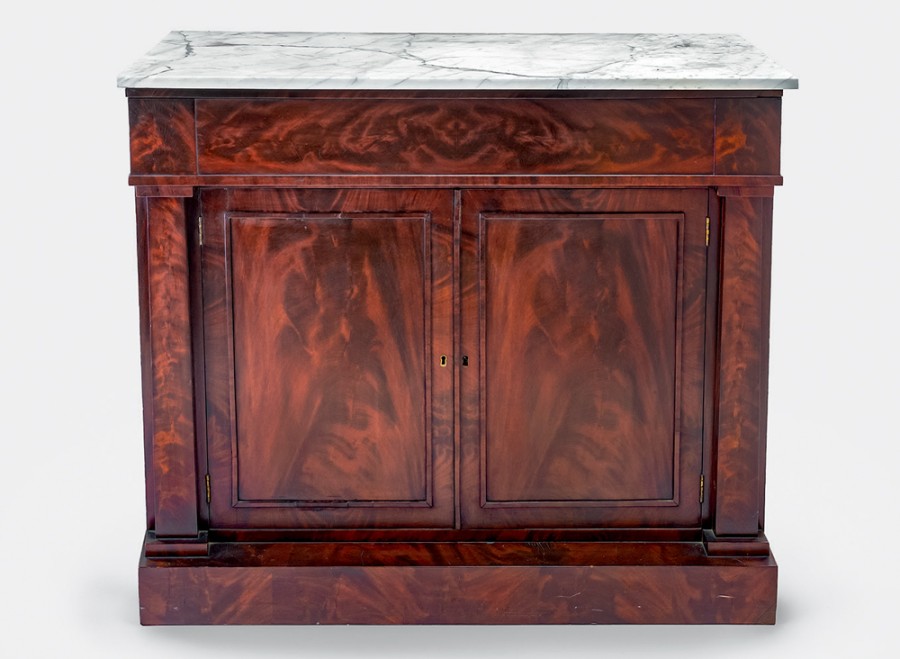
Commode or pier cabinet by Mark Pitman, 1835–1836. Mahogany, mahogany veneer, pine, marble. H. 33 3/4", W. 40 1/4", D. 19 7/8". (Courtesy, Peabody Essex Museum, gift of the Trustees of the Ropes Memorial, 1989, R1038; photo, Dennis Helmar.)
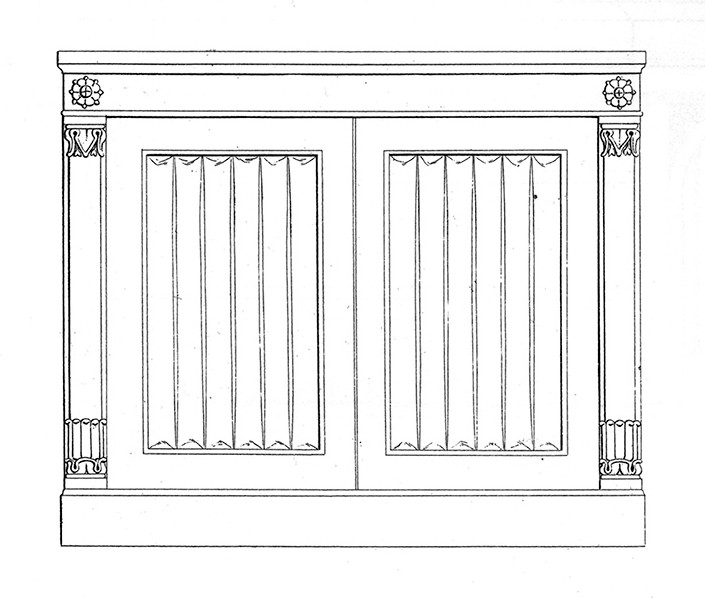
Design for a commode (detail), shown on plate 39 of Thomas King’s The Modern Style of Cabinet Work Exemplified, in New Designs, Practically Arranged (London, 1839). (Photo, HathiTrust Digital Library.)
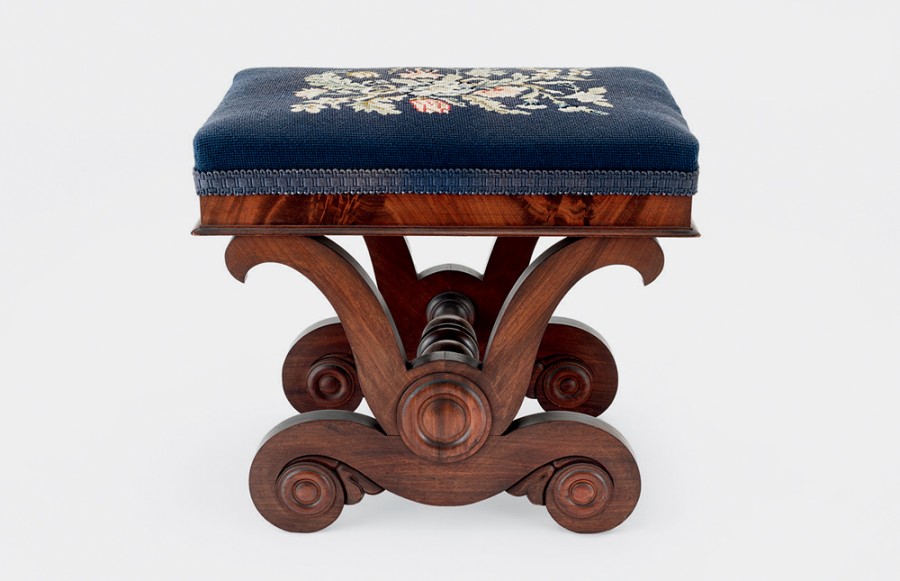
Tabouret (one of a pair), attributed to Kimball and Sargent, Salem, Massachusetts, 1835–1836. Mahogany, mahogany veneer, pine, modern needlework. H. 18", W. 20 3/4", D. 13". (Courtesy, Peabody Essex Museum, gift of the Trustees of the Ropes Memorial, 1989, R1037.1, .2; photo, Dennis Helmar.)
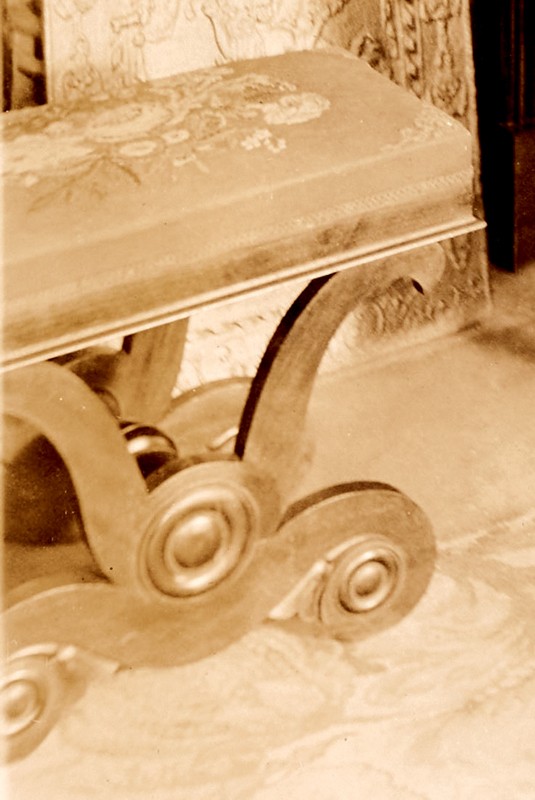
Detail of a 1915 photograph showing the original needlepoint covering attributed to Sally (Ropes) Orne on the tabouret (or its mate) in fig. 119. (Courtesy, Phillips Library, Peabody Essex Museum [Ropes Papers, box 21, folder 3].)
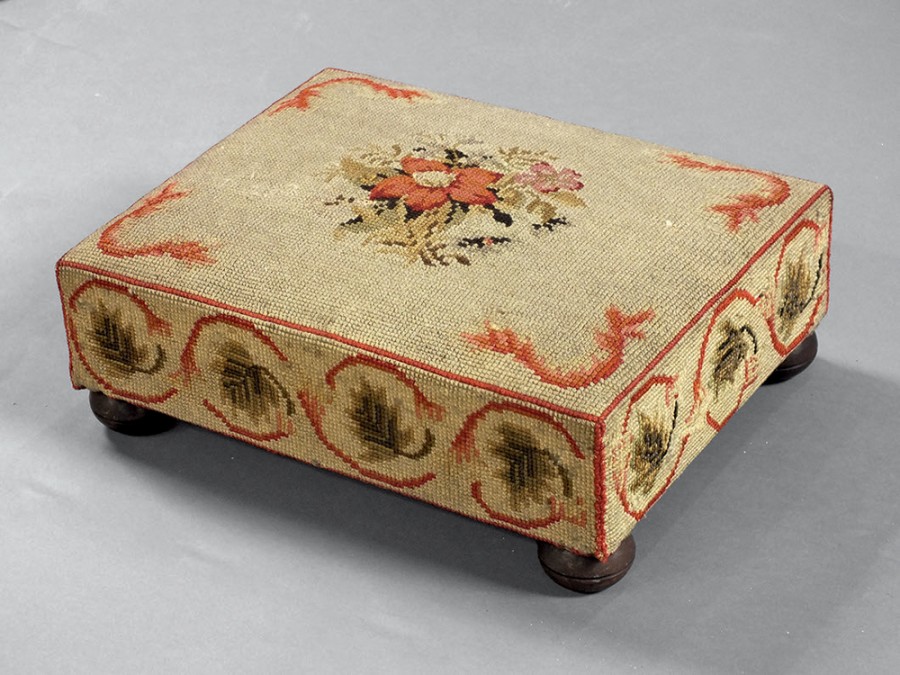
Footstool by Mark Pitman, with needlework covering attributed to Sally (Ropes) Orne, 1830s. Mahogany, pine, wool. H. 4 5/8", W. 13 3/8", D. 10 1/2". (Courtesy, Peabody Essex Museum, gift of the Trustees of the Ropes Memorial, 1989, R1079; photo, Dennis Helmar.)
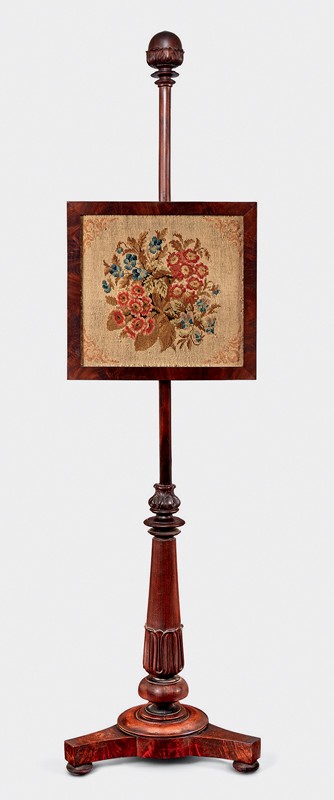
Pole screen by Mark Pitman, with needlework attributed to Sally (Ropes) Orne, 1835–1836. Mahogany, mahogany veneer, pine, wool, silk backing fabric, glass, metal. H. 63 7/8", W. 16 7/8"; screen H. 16 1/2", W. 15 7/8". (Courtesy, Peabody Essex Museum, gift of the Trustees of the Ropes Memorial, 1989, R1055; photo, Dennis Helmar.)
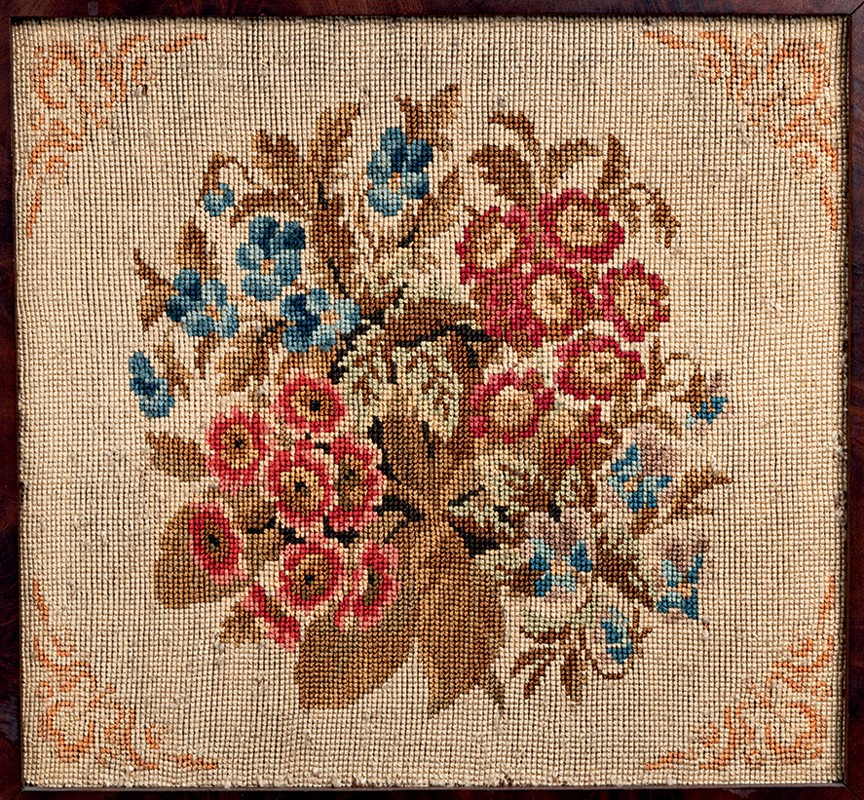
Detail of the needlework panel on the pole screen in fig. 122. (Photo, Dennis Helmar.)
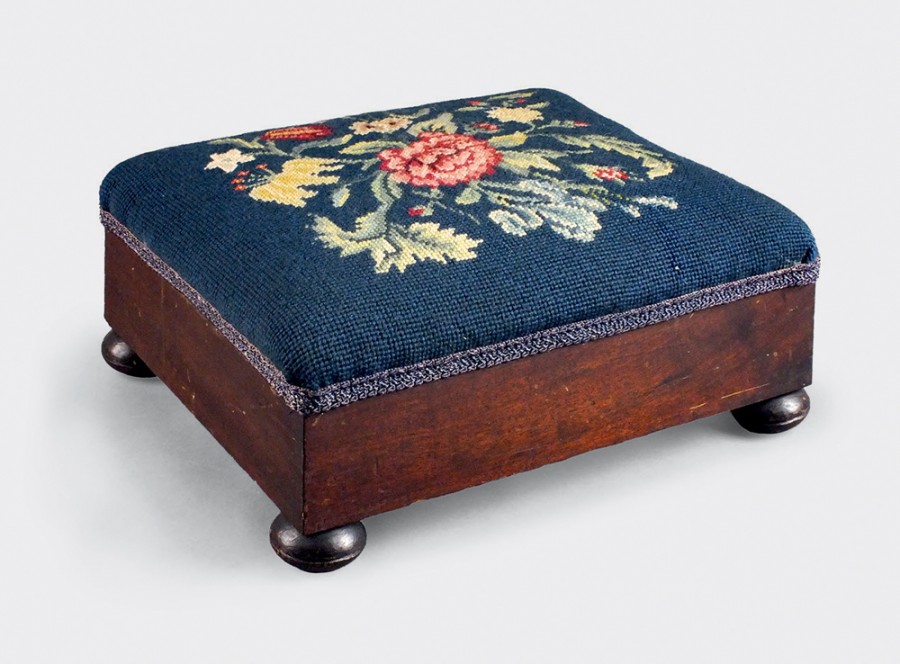
Footstool (one of a pair) attributed to Mark Pitman, 1830s. Mahogany, mahogany veneer, pine, modern needlework. H. 6 1/4", W. 13 1/2", D. 11 1/2". (Courtesy, Peabody Essex Museum, gift of the Trustees of the Ropes Memorial, 1989, R1044.1; photo, Dennis Helmar.)
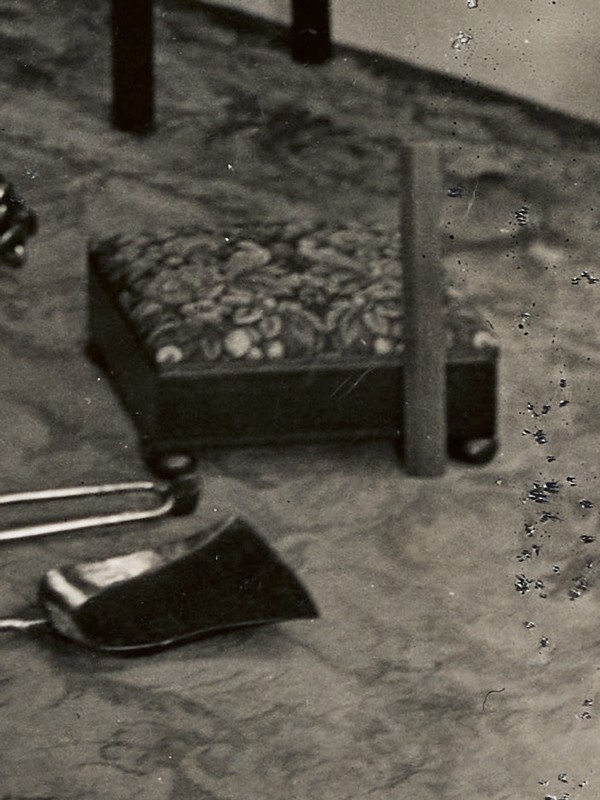
Detail of a 1915 photograph showing the original floral needlework attributed to Sally (Ropes) Orne on the footstool (or its mate) in fig. 124. (Courtesy, Phillips Library, Peabody Essex Museum [Ropes Papers, box 21, folder 3].)
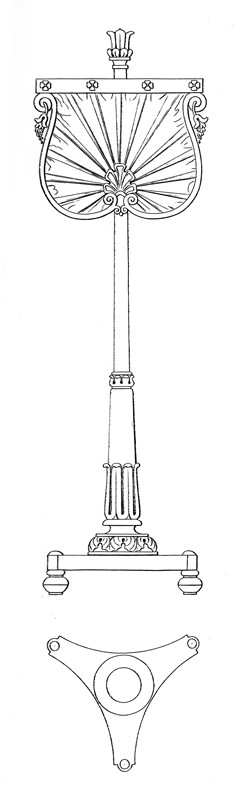
Design for a pole screen (detail), shown on plate 5 of Thomas King’s The Modern Style of Cabinet Work Exemplified, in New Designs, Practically Arranged (London, 1839). (Photo, HathiTrust Digital Library.)
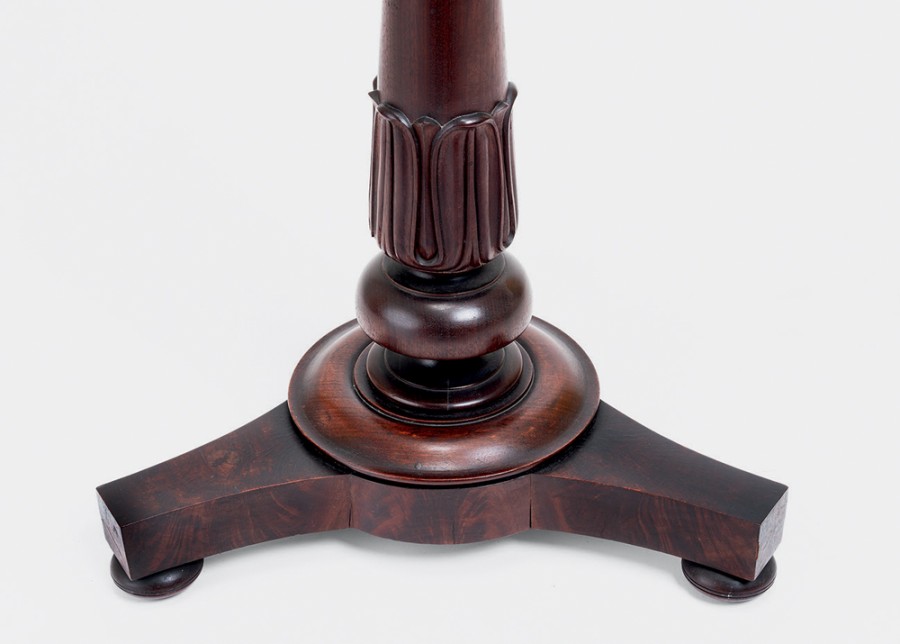
Detail of the leaf carving on the base of the pole screen in fig. 122. (Photo, Dennis Helmar.)
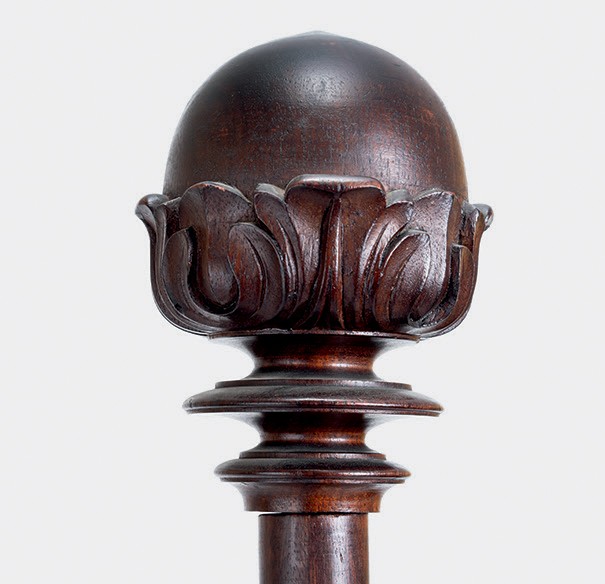
Detail of the finial with leaf carving on the pole screen in fig. 122. (Photo, Dennis Helmar.)
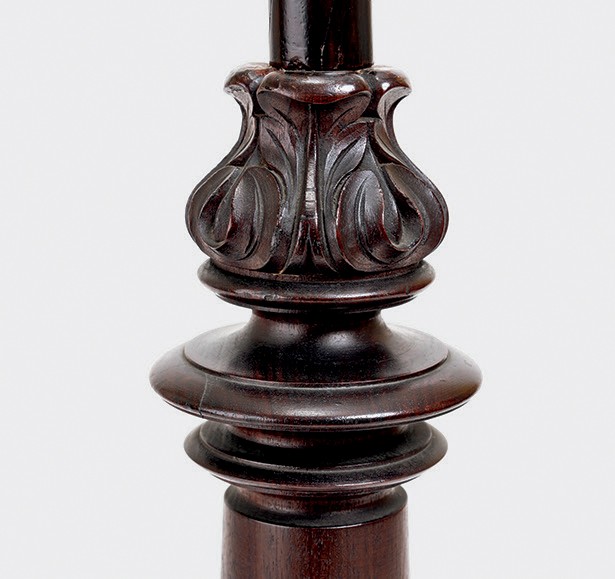
Detail of the leaf carving on the mid-section of the pole screen in fig. 122. (Photo, Dennis Helmar.)
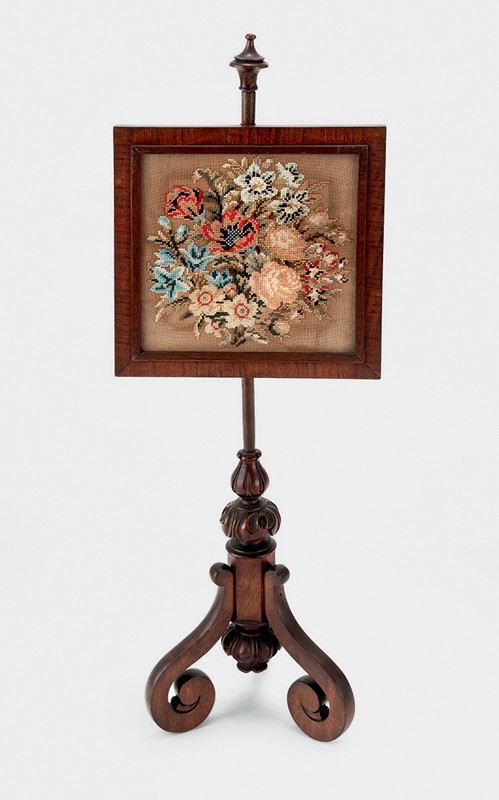
Tabletop fire screen, attributed to Mark Pitman, needlework attributed to Sally (Ropes) Orne or Abigail Ropes, 1830s. Mahogany, pine, wool, silk fabric, metal, glass. H. 27 1/2", W. 8"; screen H. 9 7/8", W. 10 7/8", D. 3/4". (Courtesy, Peabody Essex Museum, gift of the Trustees of the Ropes Memorial, 1989, R1042; photo, Dennis Helmar.)
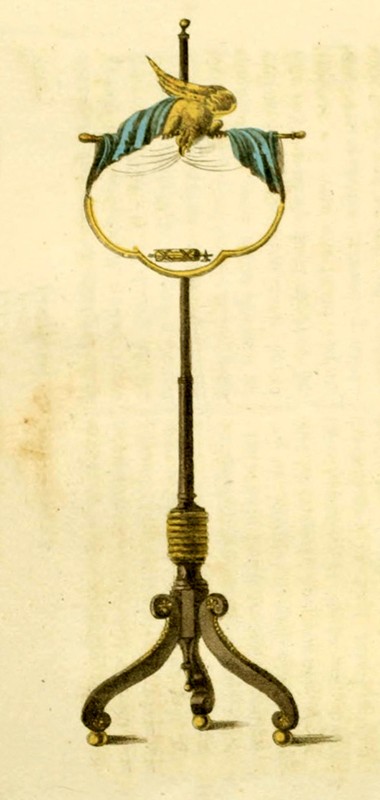
Design for a fire screen (detail), shown on plate 32 of Ackermann’s Repository 14, no. 84 (December 1815): opp. p. 348. (Courtesy, Library of the Philadelphia Museum of Art; scan, Internet Archive.)
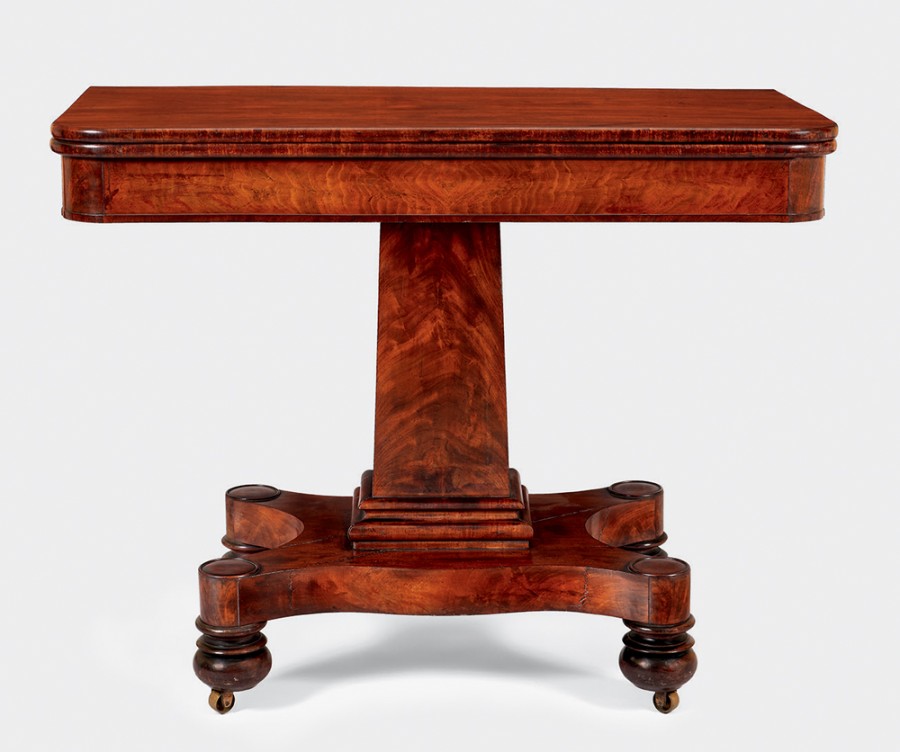
Grecian style card table by Mark Pitman, 1830s. Mahogany, mahogany veneer, pine, metal. H. 28 1/2", W. 36", D. 17 1/2". (Courtesy, Peabody Essex Museum, gift of the Trustees of the Ropes Memorial, 1989, R1085; photo, Michael E. Myers.)
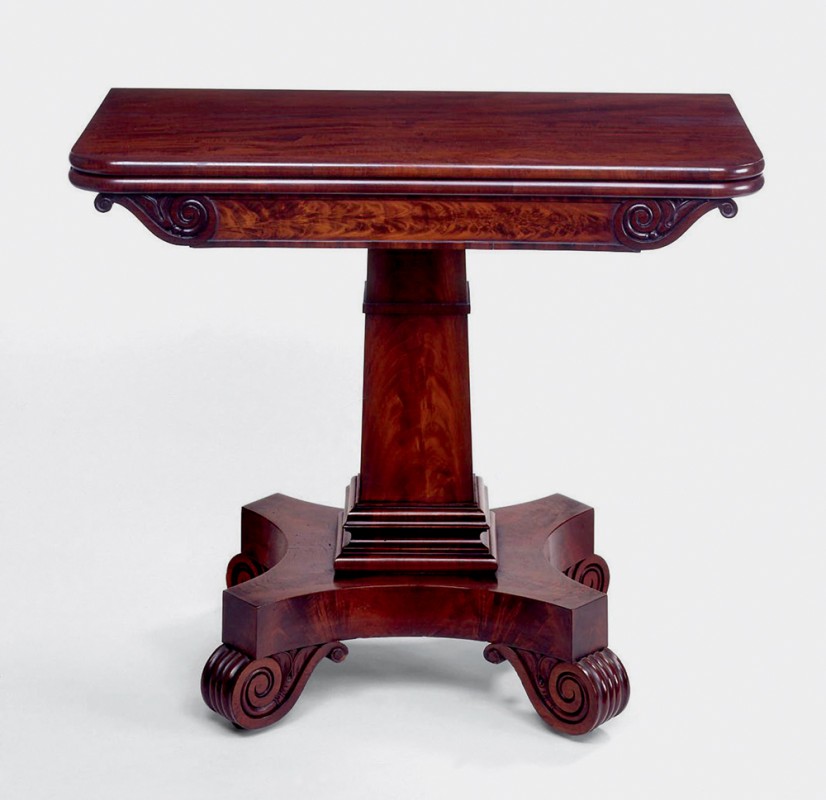
Card table (one of a pair), attributed to Thomas Seymour (1771–1848), Boston, Massachusetts, 1816. Mahogany, various woods. H. 30 7/8", W. 36 1/4", D. 18". (Courtesy, National Park Service, Adams National Historical Park.) The tables were made for Peter Chardon Brooks.
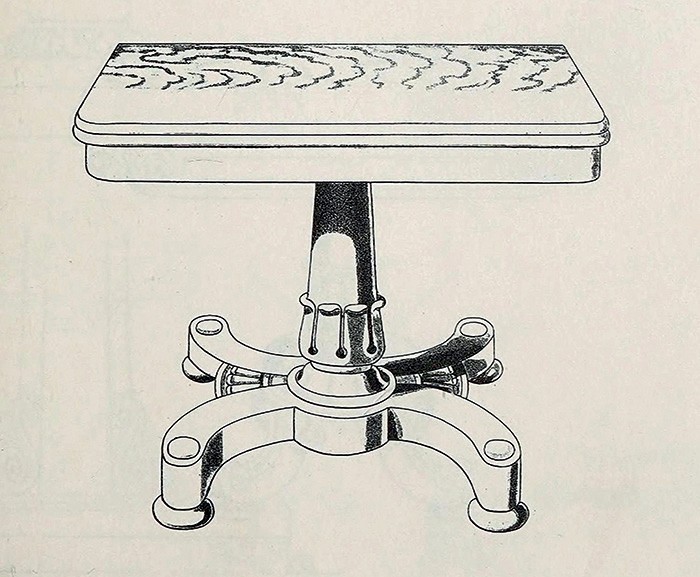
Design for a card table (detail), shown on plate 43 of Thomas King’s The Modern Style of Cabinet Work Exemplified, in New Designs, Practically Arranged (London, 1839). (Photo, HathiTrust Digital Library.)
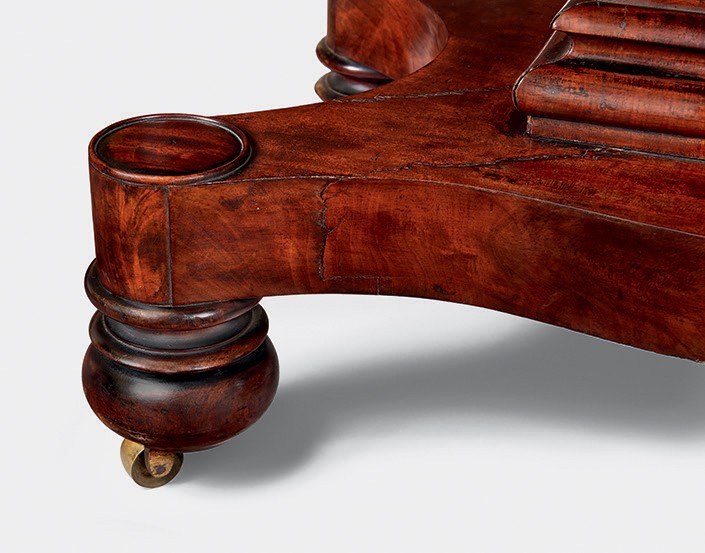
Detail of one of the feet with domed cap and bead edge on the table in fig. 132. (Photo, Michael E. Myers.)
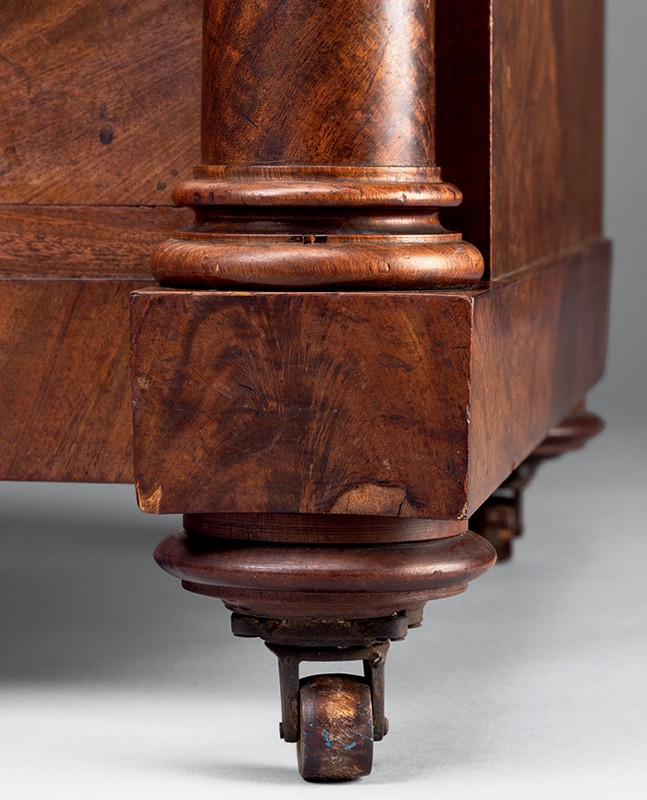
Detail of the turned base on the right front column of the chest of drawers in fig. 137. (Photo, Kathy Tarantola.)
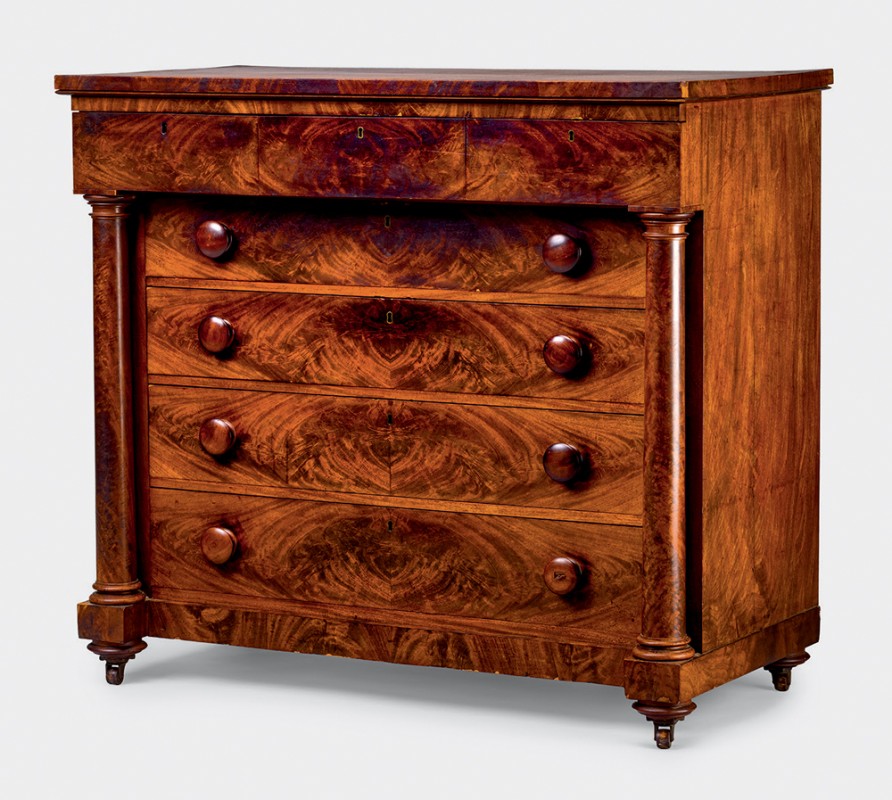
Chest of drawers by Mark Pitman, 1833. Mahogany, mahogany veneer, pine, metal. H. 42", W. 47", D. 22". (Courtesy, Peabody Essex Museum, gift of Mary Osgood Hodges, 1918, 107547; photo, Kathy Tarantola.)
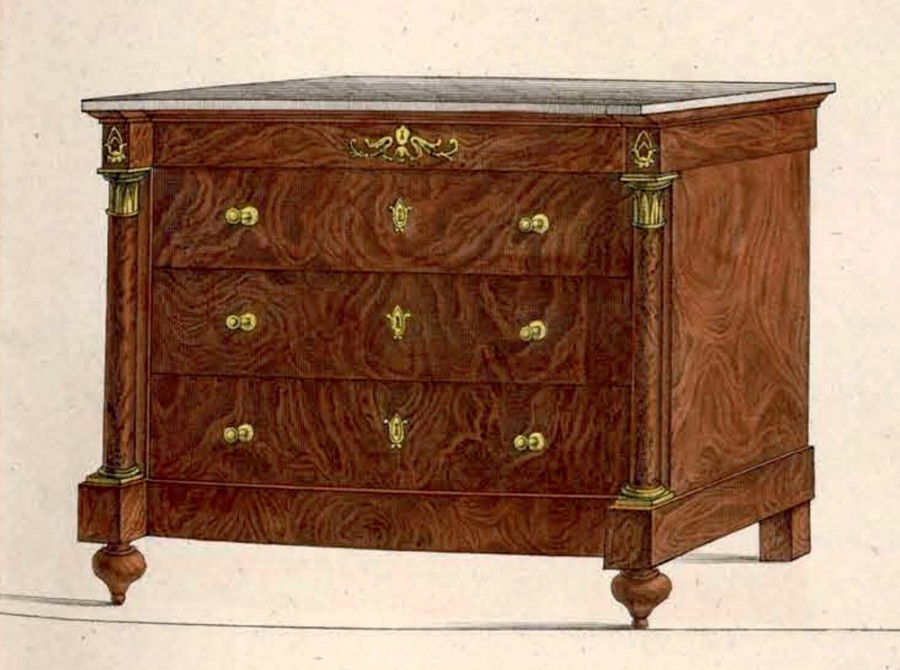
Design for a “Commode en acajou flambé” (chest of drawers with flaming mahogany) (detail), shown on plate 328 of Pierre de La Mésangère’s Collection de meubles et objets de goût (Paris, ca. 1802–1818). (Courtesy, Bibliothèque de l’Institut national d’histoire de l’art, collections Jacques Doucet.)
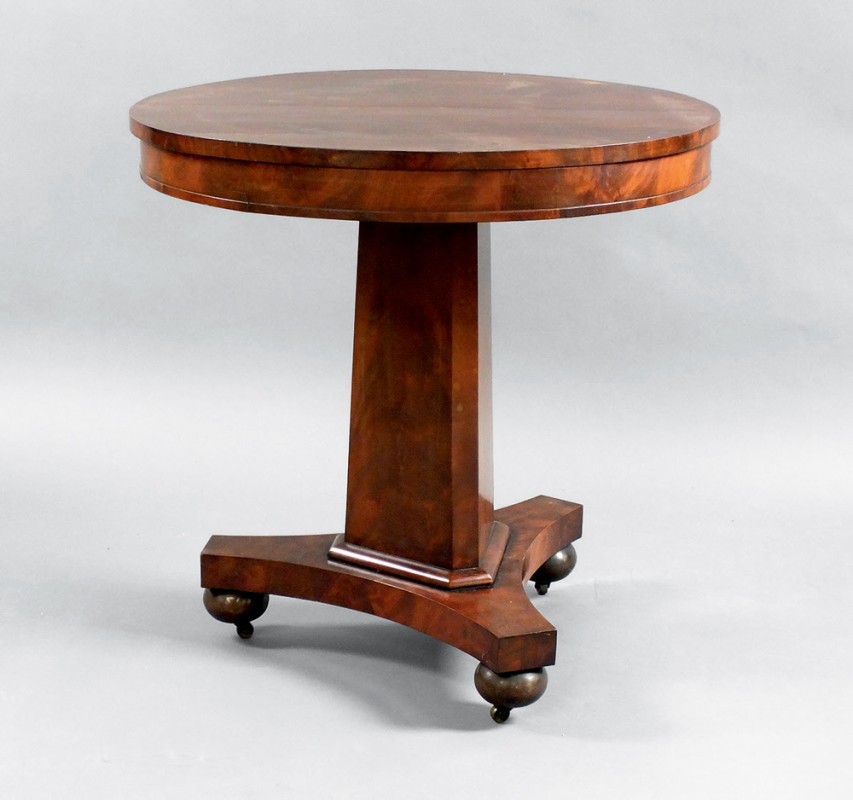
Round-top table attributed to Mark Pitman, 1830s. Mahogany, mahogany veneer, pine, metal. H. 29 1/4", Diam. top 28 1/2". (Courtesy, Peabody Essex Museum, gift of the Trustees of the Ropes Memorial, 1989, R1128; photo, Dennis Helmar.)
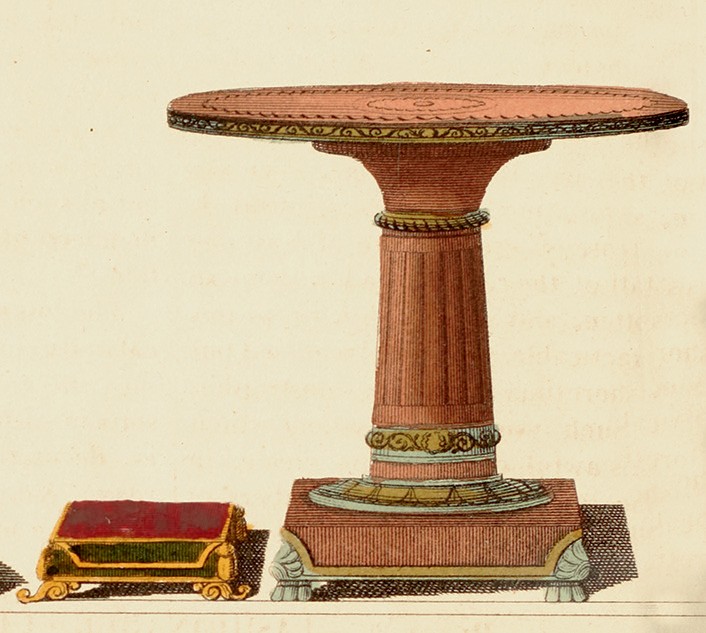
Designs for a “Stool and Reading Table” (detail), shown on plate 30 of Ackermann’s Repository 8, no. 47 (November 1812): opp. p. 289. (Courtesy, Phillips Library, Peabody Essex Museum.)