


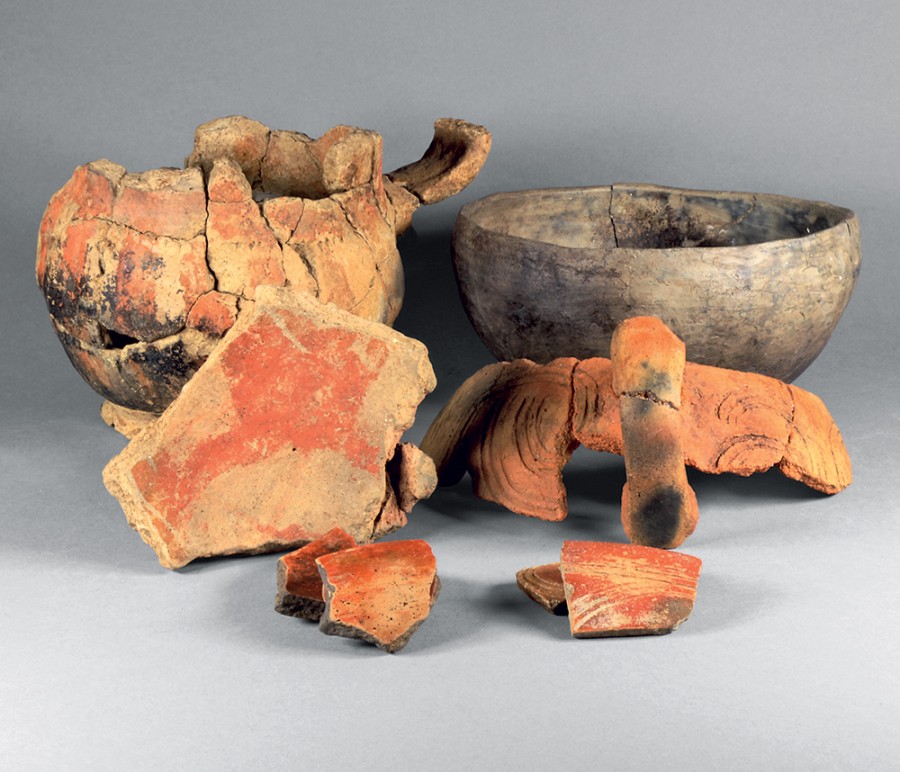
Colonowares of the Gulf South, 1702–1780. Unglazed earthenware. (Courtesy, Center for Archaeological Studies, University of South Alabama; all photos by the author unless otherwise noted.)
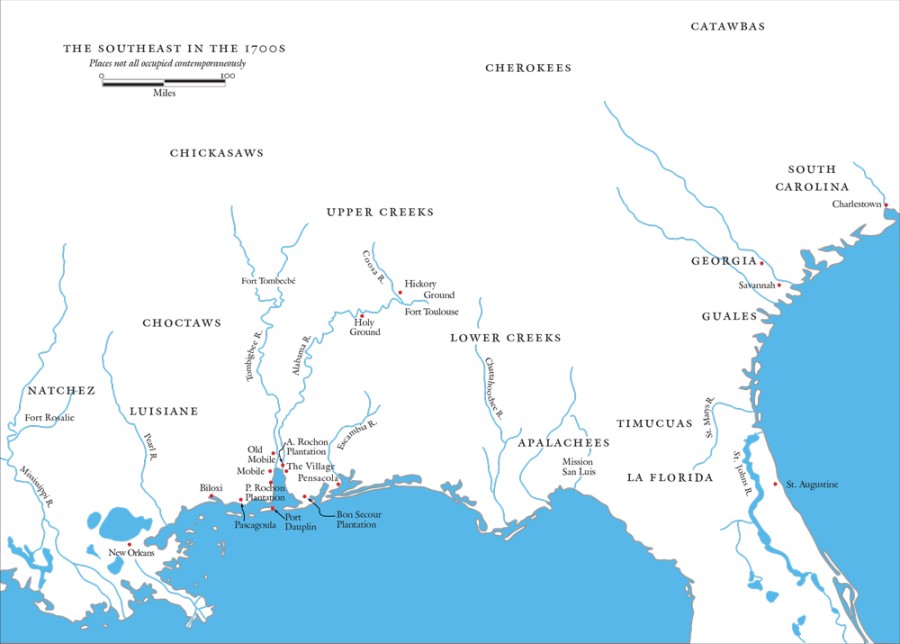
Indigenous and colonial peoples and places of southeastern North America in the late seventeenth and eighteenth centuries.
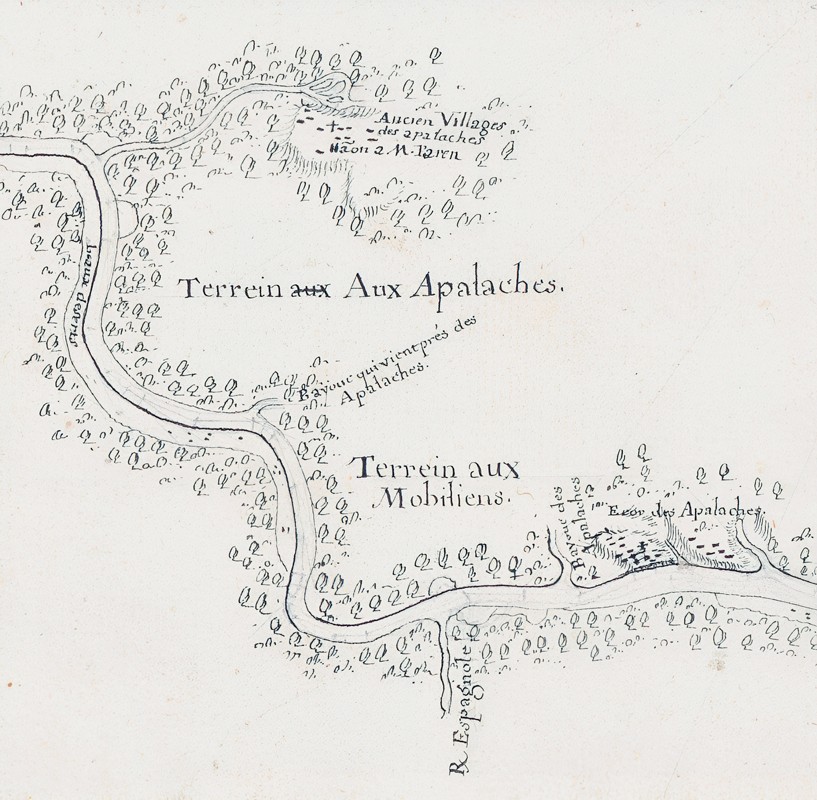
Detail of Carte d’une partie du cours de la riviere de la Mobille et de celle des Chicachas showing two Apalachee town locations, circa 1725. Ink on paper. (Courtesy, Geography and Map Division, G3972.M64 1763.C3, Library of Congress, http://hdl.loc.gov/loc.gmd/g3972m.ar307600)

Mobilian or Tomeh bowl sherd, Alabama, 1702–1711. Earthenware, shell-tempered and red filmed. (Courtesy, 64 Parishes, Louisiana Endowment for the Humanities; photo, Brian Pavlich.) Excavated from a pit feature at Fort Louis, Old Mobile (1MB94), with a replica pot by Tammy Beane.
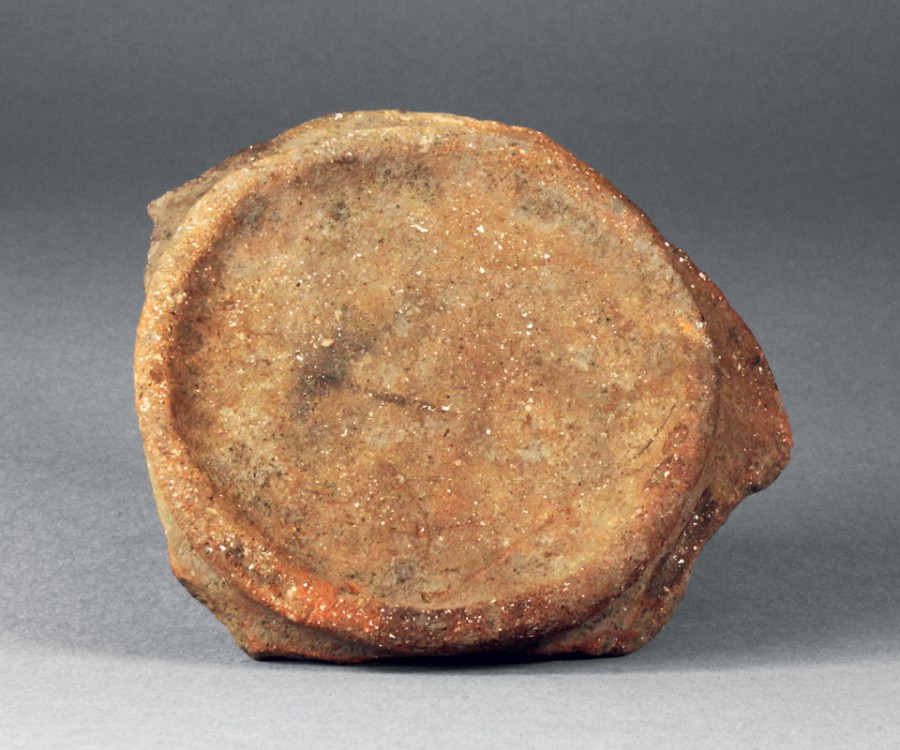
Probable Apalachee brimmed colonoware plate base with footring, Alabama, 1704–1711. Earthenware, grog- and bone-tempered. (Courtesy, Center for Archaeological Studies, University of South Alabama.) Excavated from a house site at Old Mobile (1MB94, Structure 1, Vessel 13).
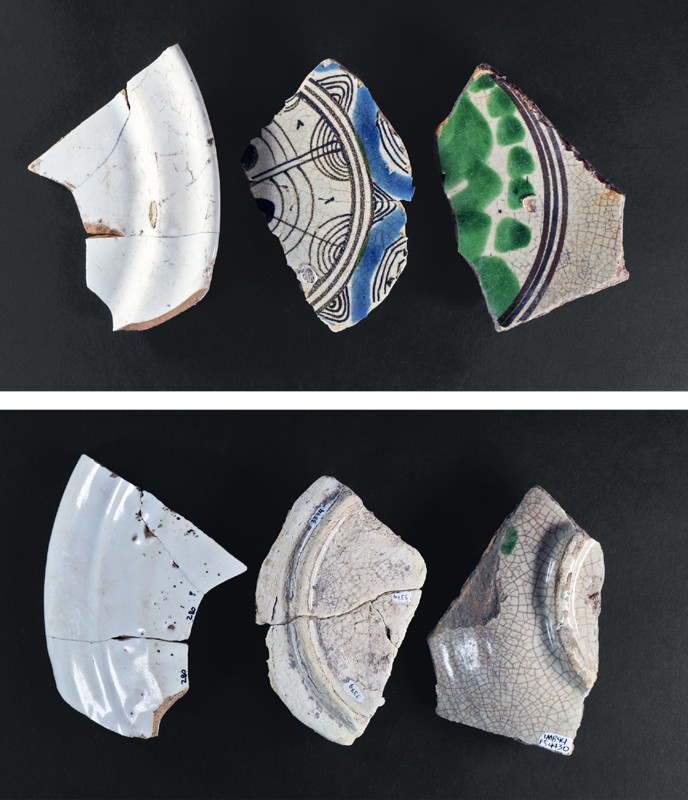
European-style plate bases viewed from top and bottom, French faience (left) and Mexico majolica with footrings (middle and right), ca. 1700. (Courtesy, Center for Archaeological Studies, University of South Alabama.) Excavated at the Old Mobile site (1MB94).
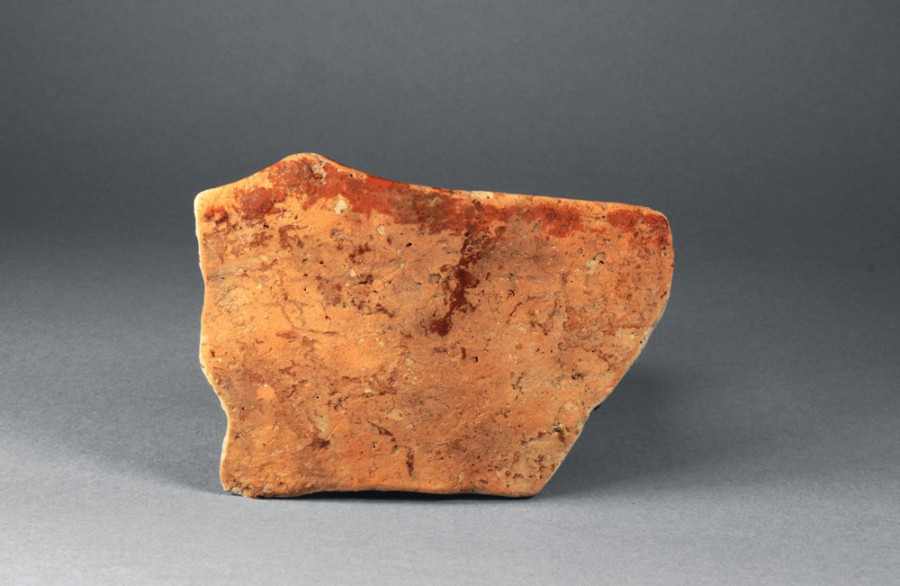
Mobilian colonoware bowl rim sherd with castellation, Alabama, 1702–1711. Earthenware, shell-tempered and red slip decorated. (Courtesy, Center for Archaeological Studies, University of South Alabama.) The bowl possibly was modeled after a copper kettle; excavated from a Native house site (1MB147, Vessel 1) contemporary with Old Mobile.
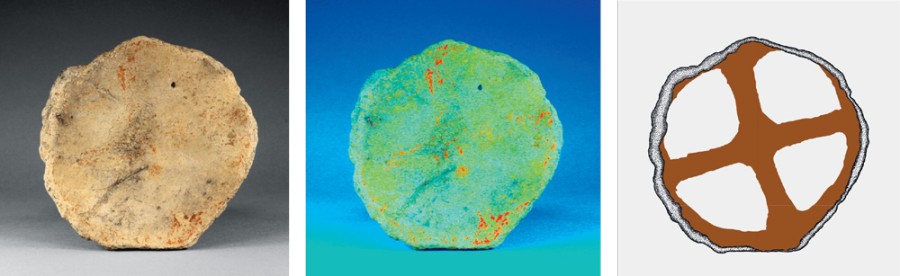
Apalachee colonoware brimmed bowl sherd, Alabama, 1704–1711. Earthenware, grog-tempered, base interior with red slipped cross-in-circle motif, enhanced contrast (middle) to highlight fugitive red paint, and artist’s drawing (right). (Courtesy, Center for Archaeological Studies, University of South Alabama; drawing by Sarah Mattics.) Excavated from a house site at Old Mobile (1MB94, Structure 3, Vessel 46).
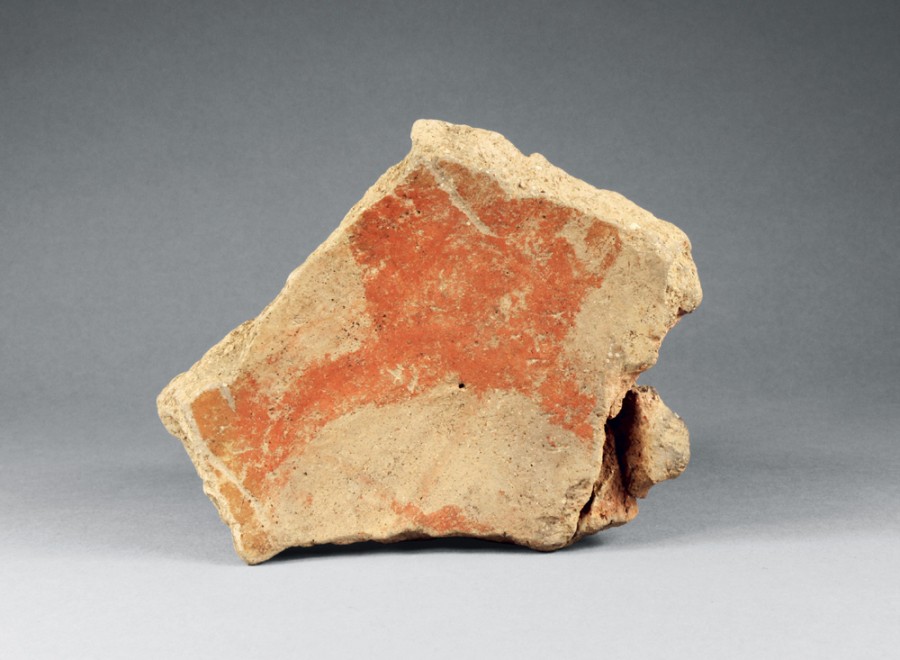
Apalachee colonoware brimmed bowl sherd, Alabama, 1704–1711. Earthenware, grog-tempered, base interior with red slip pendant bar motif. (Courtesy, Center for Archaeological Studies, University of South Alabama.) Excavated from a house site at Old Mobile (1MB94, Structure 5, Vessel 56).
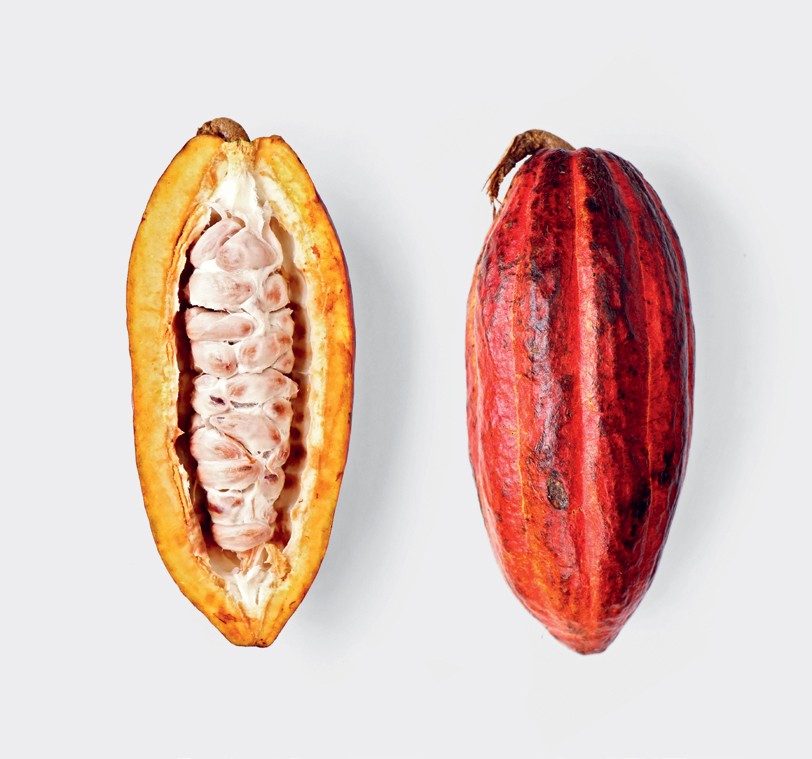
Cacao pods. (Courtesy, Adobe Stock image.)
Luis Egidio Melendez (1716–1780), Still Life with Chocolate Service, 1770. Oil on canvas. 19 1/2" x 14 1/2". (Courtesy, Museo del Prado, Madrid.) Depicted are: a copper chocolatera and wooden molinillo, porcelain pocillo and plate, bread, and chocolate wafers.
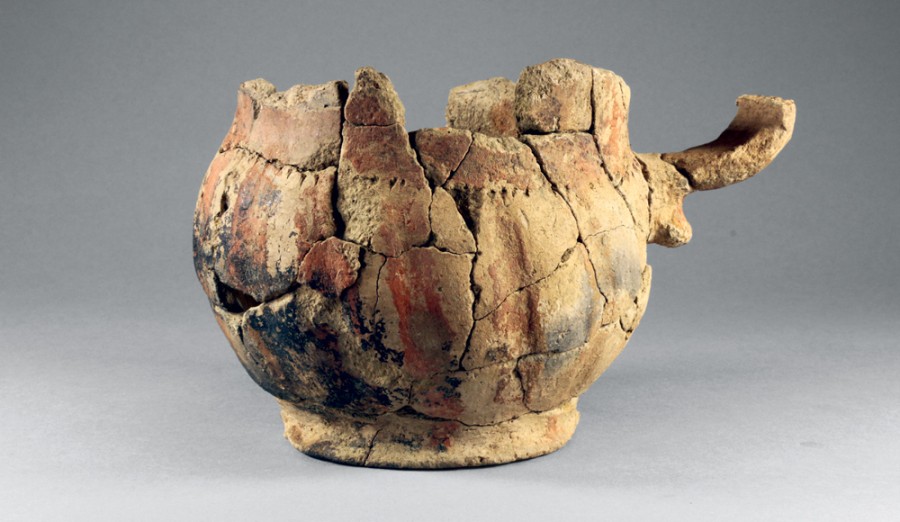
Apalachee colonoware pitcher or chocolatera, Alabama, 1704–1711. Earthenware, grog-tempered. (Courtesy, Center for Archaeological Studies, University of South Alabama.) Excavated from a house site at Old Mobile (1MB94, Structure 5, Vessel 13).
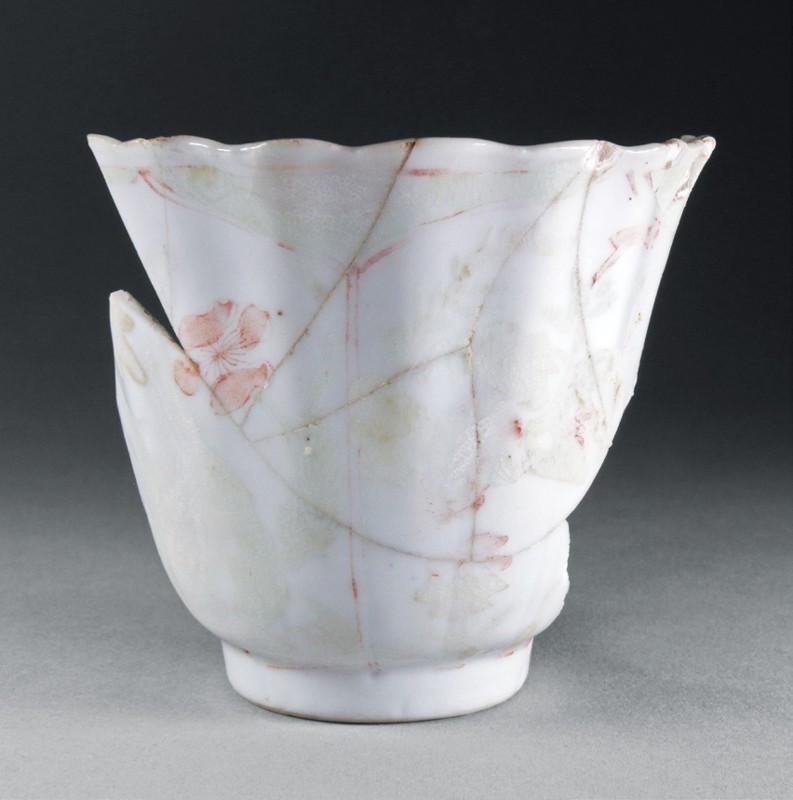
Pocillo with fugitive overglaze red and gold floral motif, Jingdezhen, China, 1702–1711. Hard paste porcelain. (Courtesy, Center for Archaeological Studies, University of South Alabama.) Excavated from a house site at Old Mobile (1MB94, Structure 14, Vessel 14).
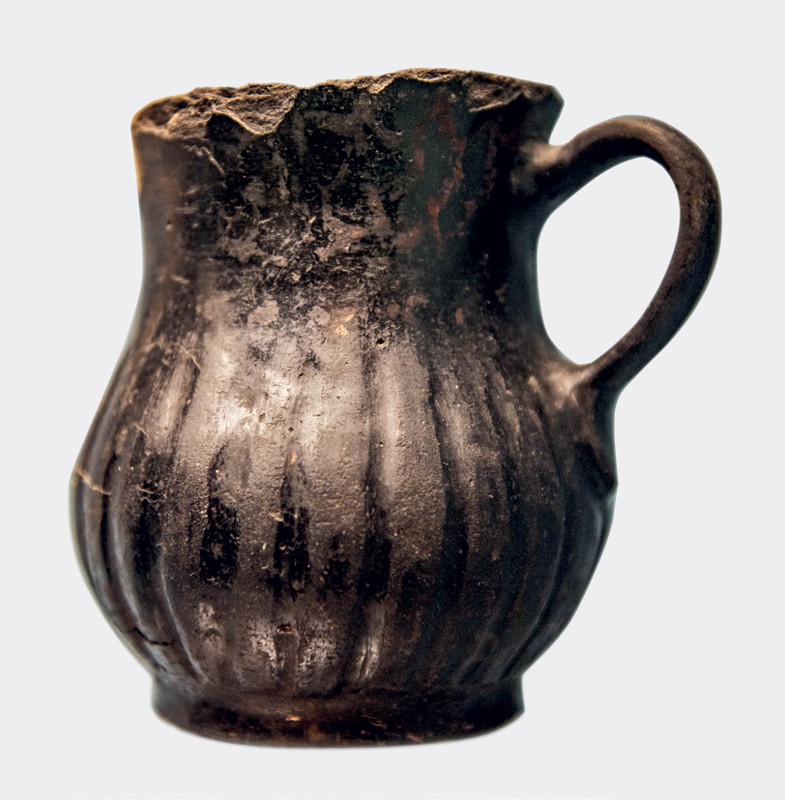
River Burnished colonoware earthenware pitcher bought from Catawba Indians by Dr. Samuel Cordes of Yaughan plantation, Berkeley County, South Carolina, in 1805. (Courtesy, The Charleston Museum, ETN #124, Charleston, South Carolina.)
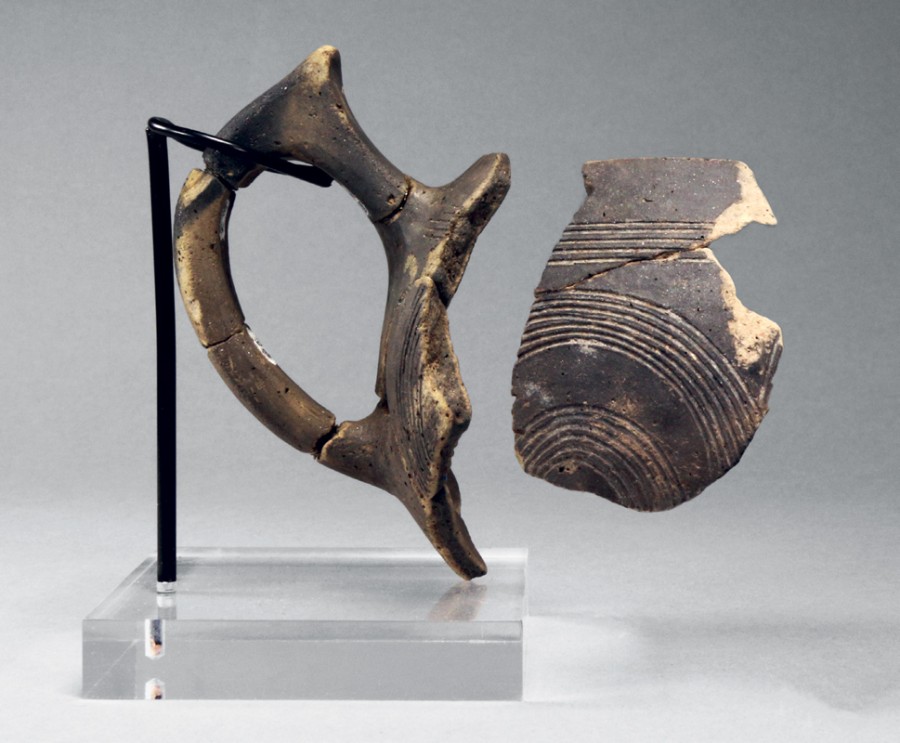
Choctaw colonoware cup, Alabama, circa 1775. Earthenware, fine shell temper, with oversize handle, burnished black slip, and curvilinear comb incised motif. (Courtesy, Center for Archaeological Studies, University of South Alabama.) Excavated at the Pierre Rochon plantation (1MB161, Vessel 90).
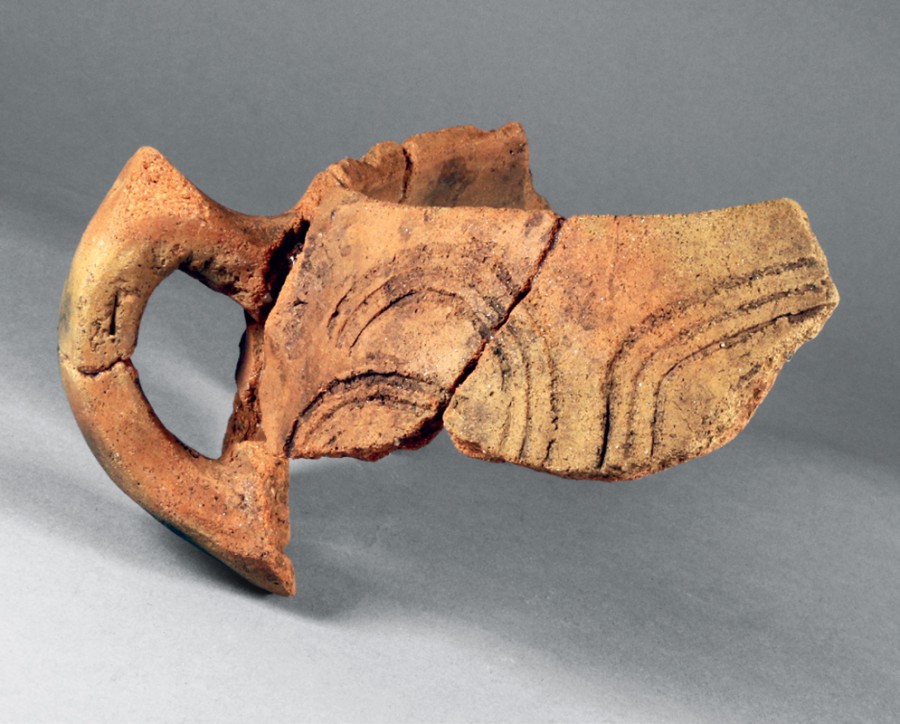
Muscogee Creek colonoware cup, Elmore County, Alabama, circa 1775. Earthenware, sand-tempered, with curvilinear incised motif and riveted handle. (Courtesy, Center for Archaeological Studies, University of South Alabama.) Excavated from a house site at an outlying settlement of Oce Vpofa (Hickory Ground, 1EE639, Vessel 3).
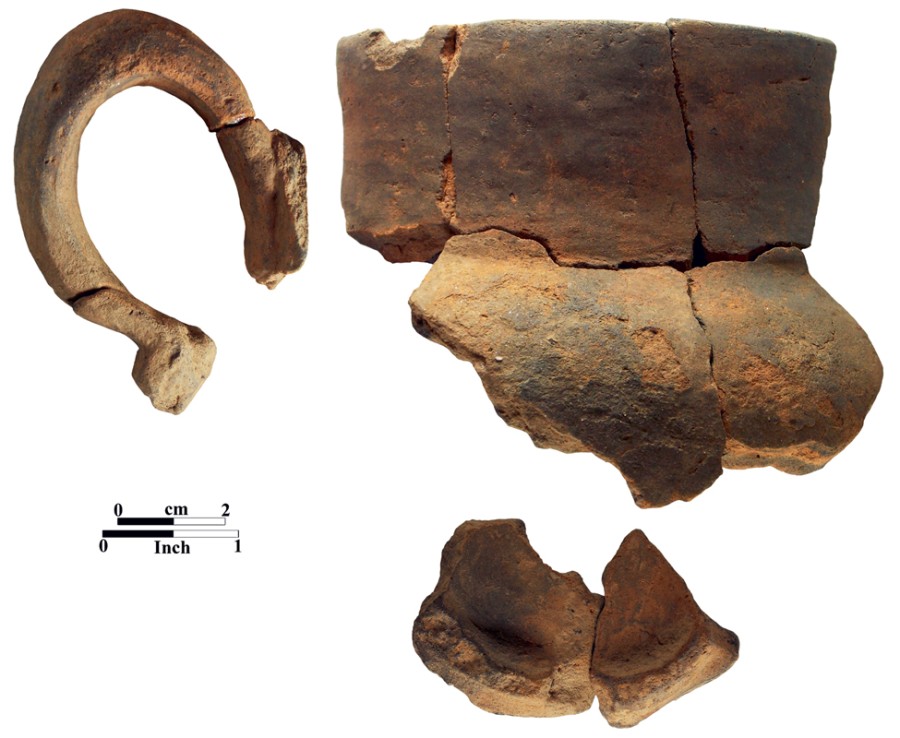
Muscogee (Creek) colonoware mug or pitcher, Lowndes County, Alabama, 1813. Earthenware, sand-tempered, with riveted handle and footring base. (Courtesy, Center for Archaeological Studies, University of South Alabama.) Excavated from a log cabin site at Ekvncakv (Holy Ground, 1LO210, Structure 2, Vessel 10).
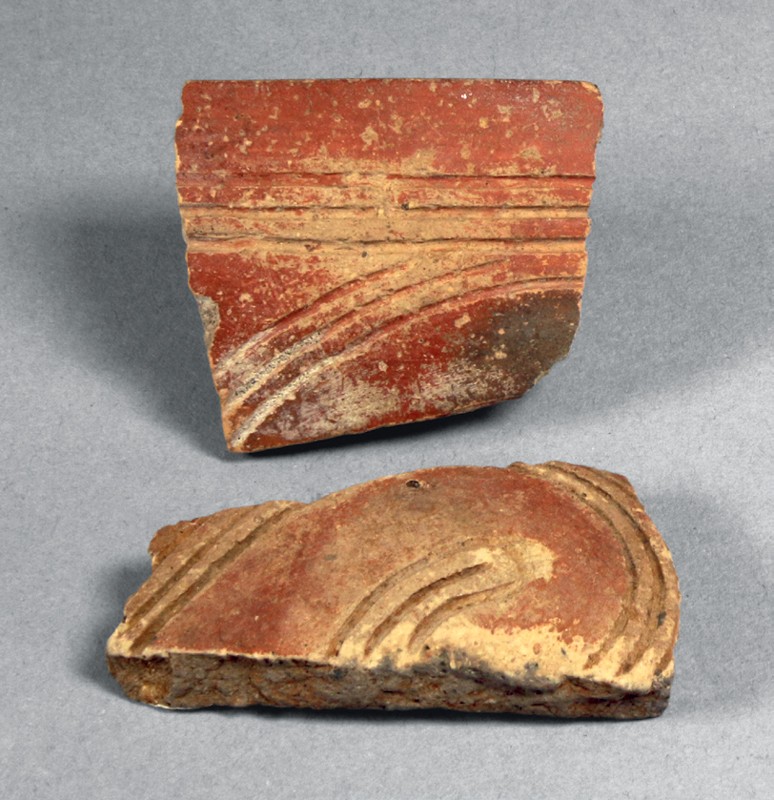
Mobilian bowl rim and body sherds, Alabama, circa 1715–1730. Earthenware, fine shell-tempered, Port Dauphin Incised, with red slip. (Courtesy, Center for Archaeological Studies, University of South Alabama.) Excavated from a house site at Port Dauphin village (1MB221, Area 1, Vessel 1).
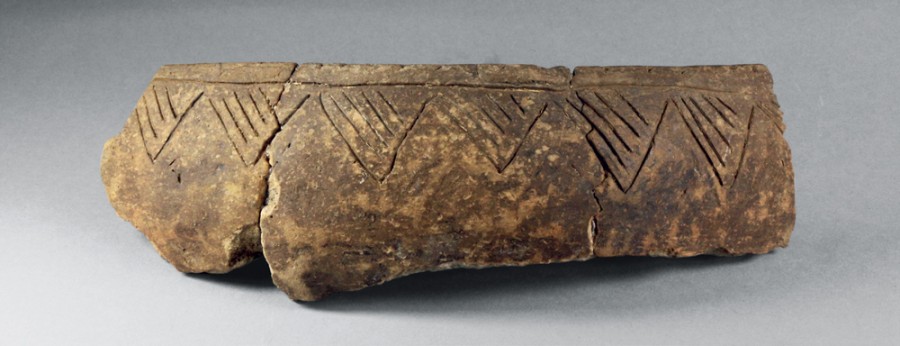
Pascagoula bowl rim, Mississippi, circa 1718–1732. Earthenware, fine shell-tempered, Doctor Lake Incised. (Courtesy, Center for Archaeological Studies, University of South Alabama.) Excavated from a pit feature at the La Pointe-Krebs plantation (22JA526, Vessel 90-35).
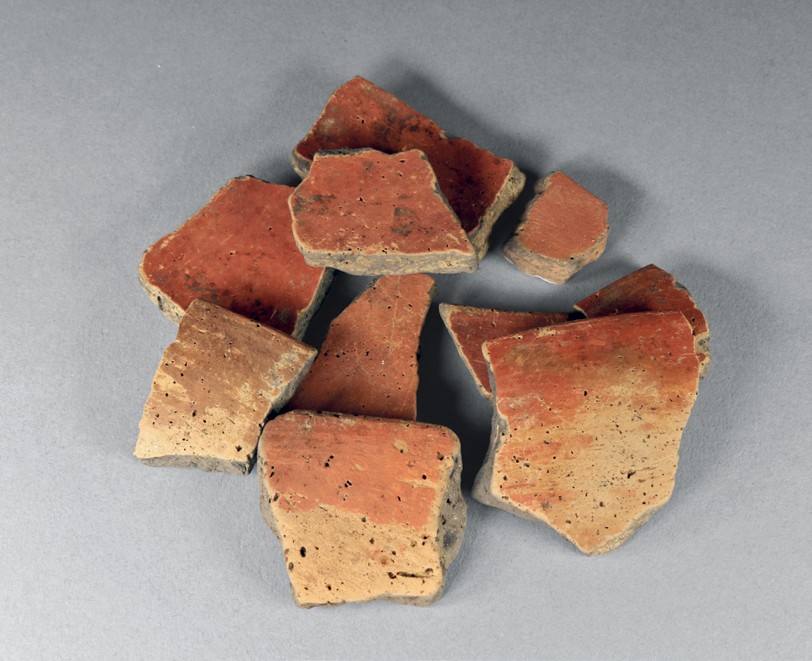
Probable Tomeh/Choctaw colonoware bowl sherds, Alabama, 1760–1780. Earthenware, fine angular shell-tempered, red filmed. (Courtesy, Center for Archaeological Studies, University of South Alabama.) Excavated from a house site at the Augustin Rochon plantation (1BA337, Area 1, Vessel 61).
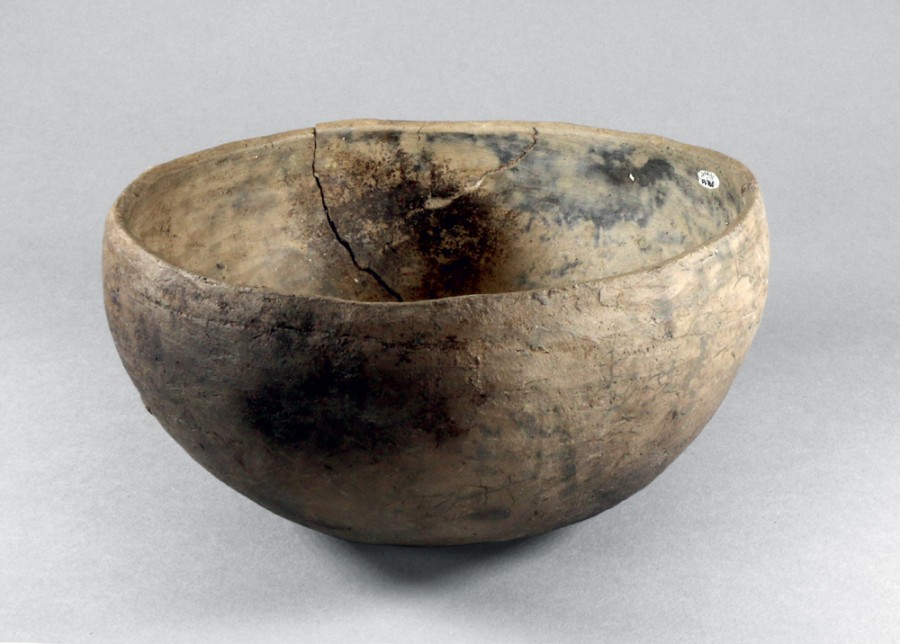
Probable Tomeh/Choctaw colonoware bowl, Alabama, circa 1775. Earthenware, fine angular shell-tempered. (Courtesy, Center for Archaeological Studies, University of South Alabama.) Excavated at the Pierre Rochon plantation (1MB161, Vessel 87).
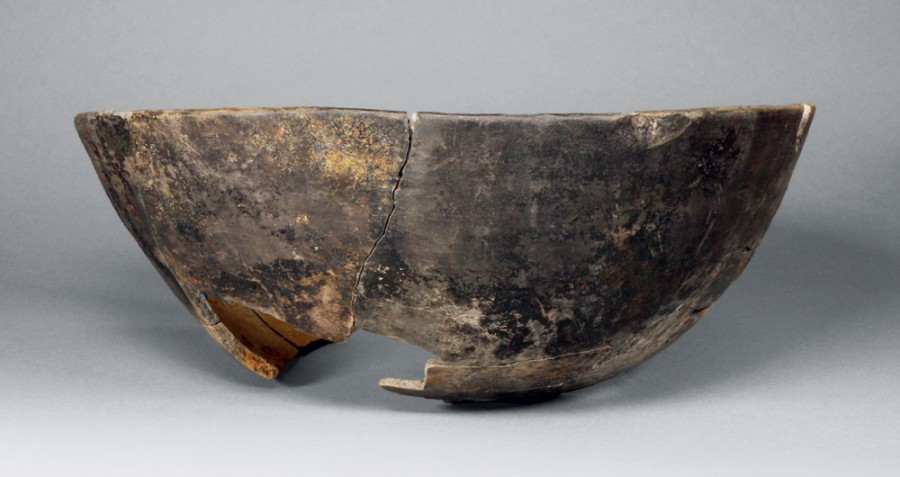
African-American tradition colonoware bowl, Mobile, Alabama, circa 1780. Earthenware, sand-tempered, burnished black slip. (Courtesy, Center for Archaeological Studies, University of South Alabama.) Comparable to Lesesne Lustered or Colonial Burnished wares, this bowl was excavated from the Fort Condé/Charlotte moat (1MB387, Feature 22).
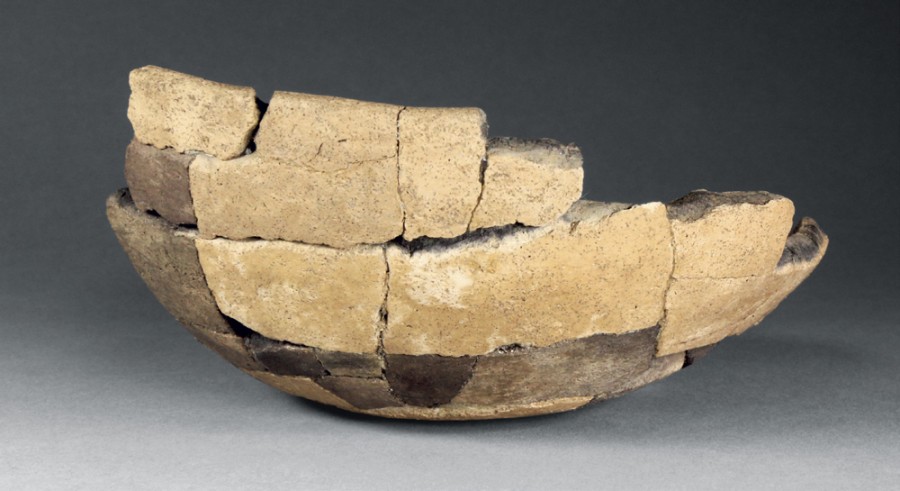
African-American tradition colonoware bowl, Baldwin County, Alabama, circa 1775. Earthenware, sand-tempered. (Courtesy, Center for Archaeological Studies, University of South Alabama.) The object, comparable to Yaughan ware, is broken on coil lines with differential post-depositional burning and was excavated from a house site at the Bon Secour plantation (1BA53).