



1810 Federal Census listing for Thomas Commeraw, with notation “B” (used to denote Blacks).

1800 Federal Census listing for Thomas Commeraw, with notation “a Black.”
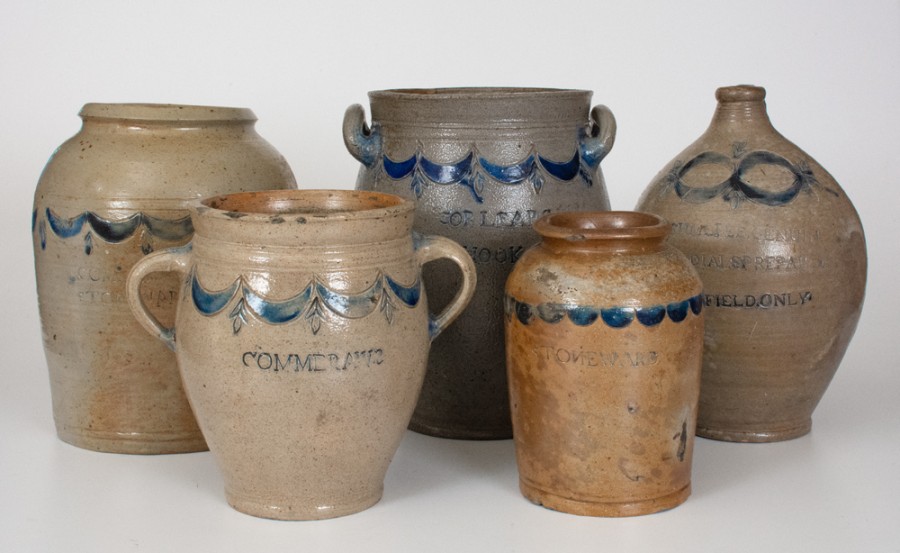
Variety of vessel forms, Thomas W. Commeraw, New York City, early nineteenth century. Salt-glazed stoneware. H. (of jar at center) 12". (Photo, courtesy of the author.)

Trinity Church marriage record of Thomas “Commerau” to Mary Roe on August 5, 1792. (Courtesy, Trinity Church Archives, New York, New York.)
Nicholas Amantea, watercolor of a jug impressed “CORLEARS HOOK,” ca. 1936. Watercolor and graphite on paperboard, 11 3/8" x 9 1/4". (Courtesy, National Gallery of Art, Index of American Design.) While every single vessel impressed with a version of “CORLEARS HOOK” was made by Commeraw, this was never understood to be the case until very recently.
Jar, Thomas W. Commeraw, New York City, ca. 1797. Salt-glazed stoneware. H. 9 1/2". Impressed “COERLEARS HOOK | N · YORK.” (Courtesy, Metropolitan Museum of Art, Rogers Fund, 1918.)
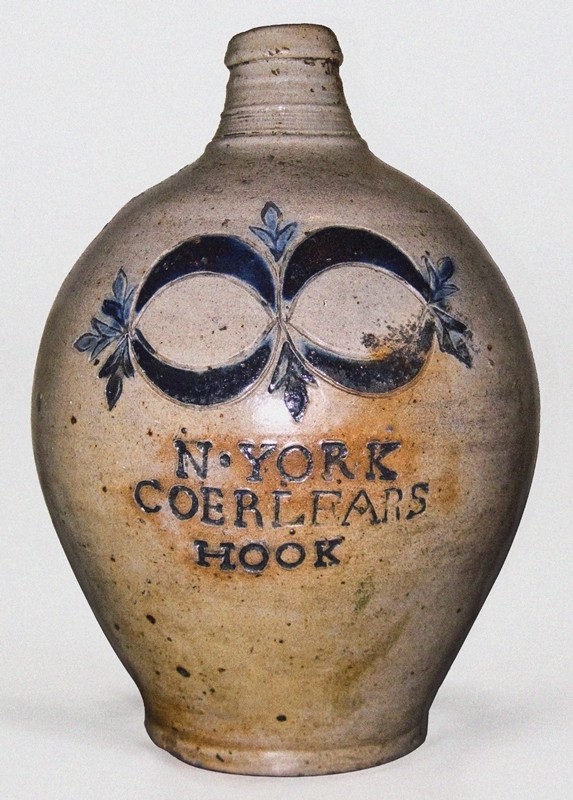
Jug, Thomas W. Commeraw, New York City, late eighteenth century. Salt-glazed stoneware. H. 11". Impressed “N · YORK / COERLEARS HOOK.” (Photo, courtesy of the author.)
Jar, Thomas W. Commeraw, New York City, ca. 1797. Salt-glazed stoneware. H. 11 5/8". Impressed “COERLEARS HOOK | N · YORK.” (Courtesy, Crocker Farm, Inc.)
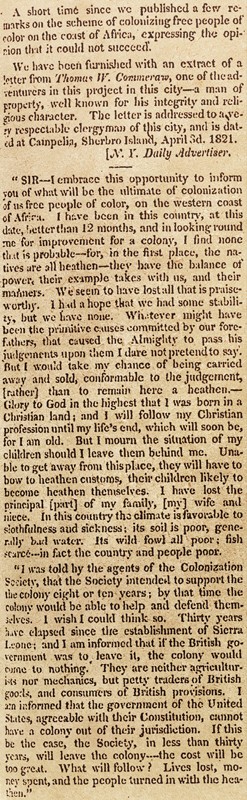
Letter written by Thomas W. Commeraw from Campelar, Sherbro Island, West Africa, published in the December 14, 1821, issue of Poulson’s American Daily Advertiser.
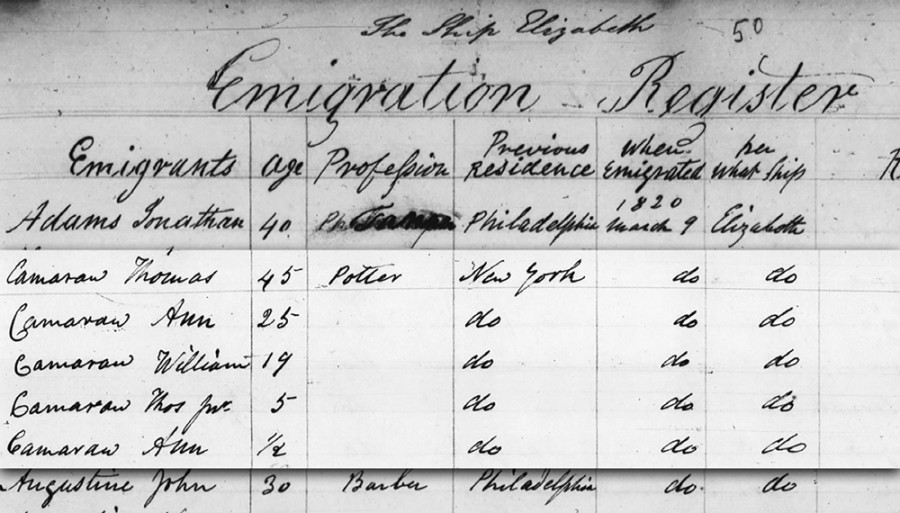
Emigration Register of the American Colonization Society, documenting the Commeraw family’s (here bastardized with a more “African” spelling) embarking upon the Elizabeth. (Courtesy, Library of Congress.)
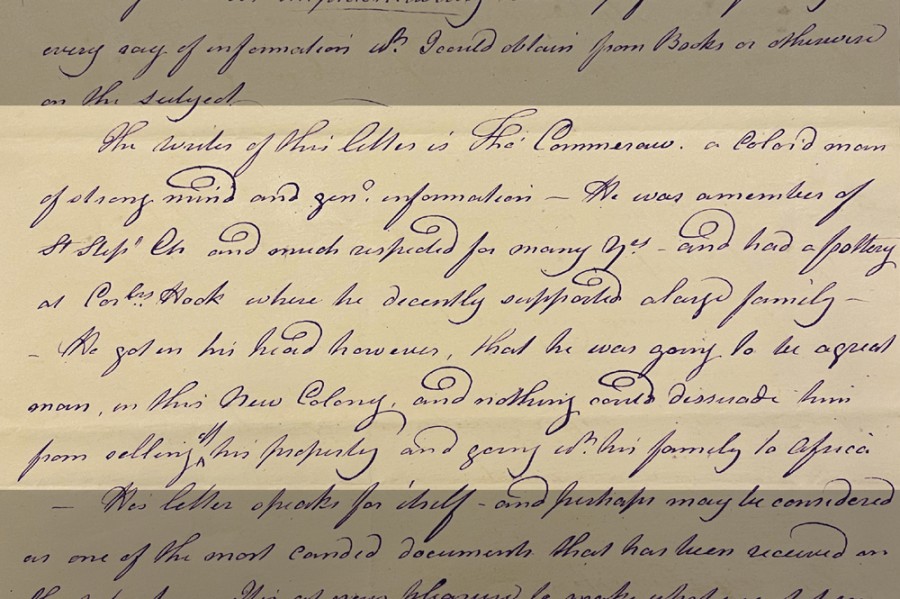
Detail of a letter from Rev. Henry J. Feltus to Peter A. Jay, July 20, 1821. (Courtesy, New-York Historical Society, Peter Augustus Jay Correspondence and Papers.)