


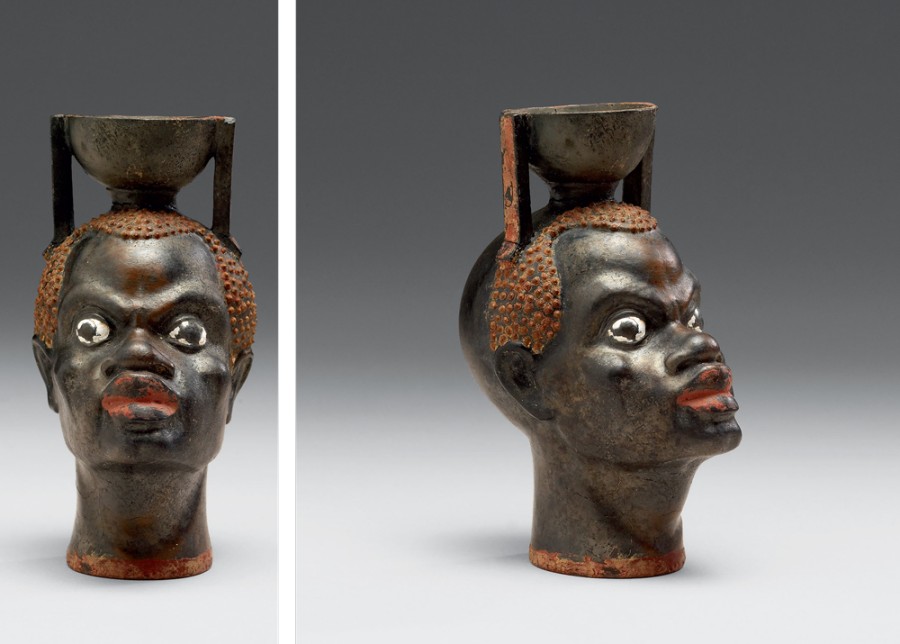
Face vessel, Greek culture, ca. 480–430 BCE. Painted terracotta. H. 3 5/8". (Courtesy, Walters Art Museum.) Aryballos in the form of the head of an African.
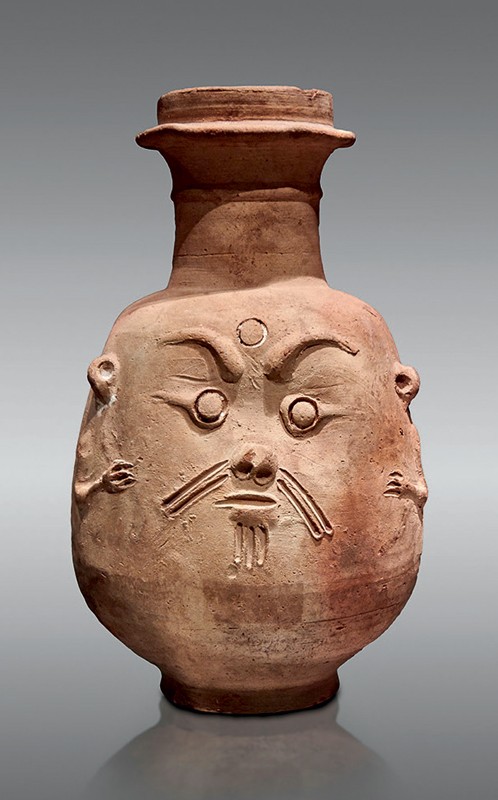
Egyptian god Bes jar, Late Period, 5th century BCE. Painted terracotta. H. 7 1/4". (Courtesy, Egyptian Museum, Turin. Drovetti Collection, cat 2553.)
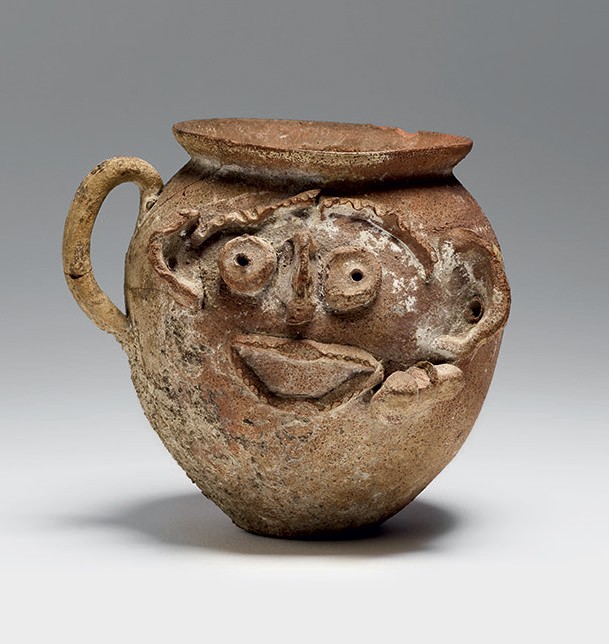
Beaker, Roman culture, Naples, Italy, 1st century CE. Unglazed earthenware. H. 3 3/4". (Courtesy, British Museum, G_1859-0716-1.)
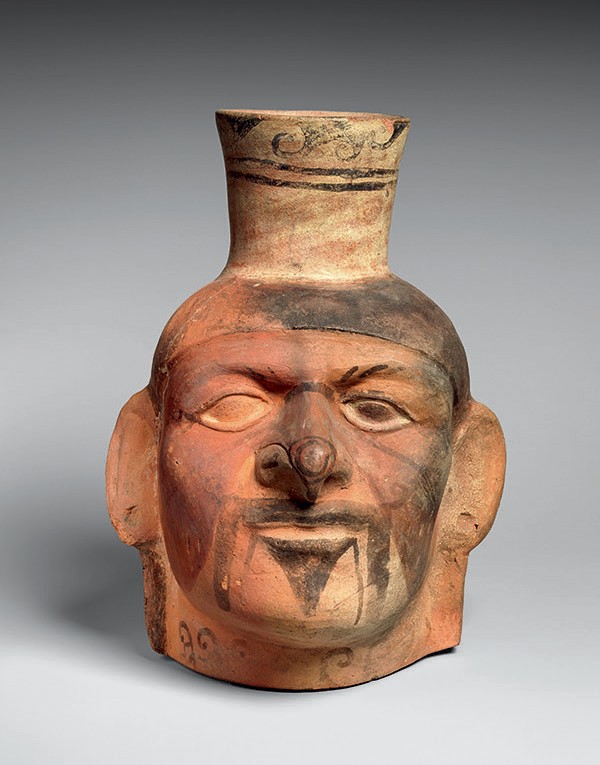
Portrait bottle, Moche culture, Peru, 3rd–6th century. Painted earthenware. H. 8 3/8". (Courtesy, Metropolitan Museum of Art; gift of Nathan Cummings, 1967, Accession Number: 67.167.2.) https://www. metmuseum.org/art/collection/ search/309490.
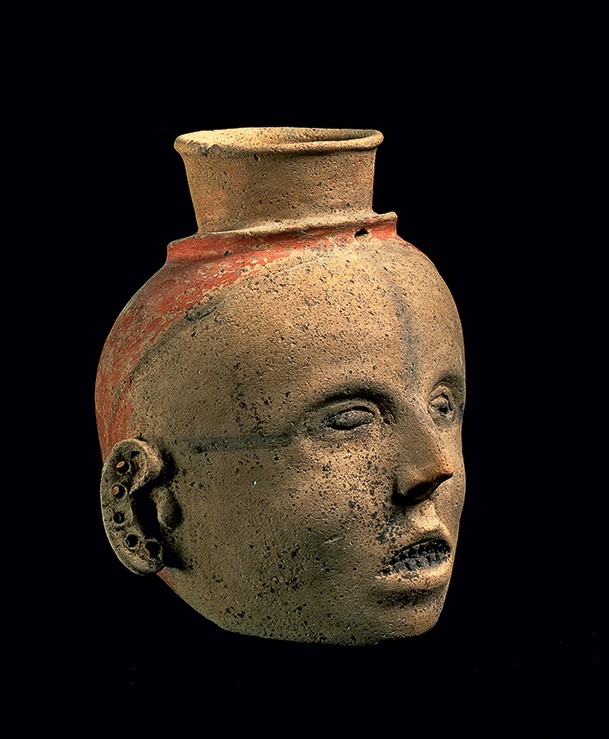
Human head effigy vessel, Oneota culture, Arkansas, 1550–1650. Low-fired earthenware with red and black pigments. H. 7 3/4". (Courtesy, Fenimore Art Museum, gift of Eugene V. and Clare E. Thaw Charitable Trust; photo, John Bigelow Taylor, NYC.)
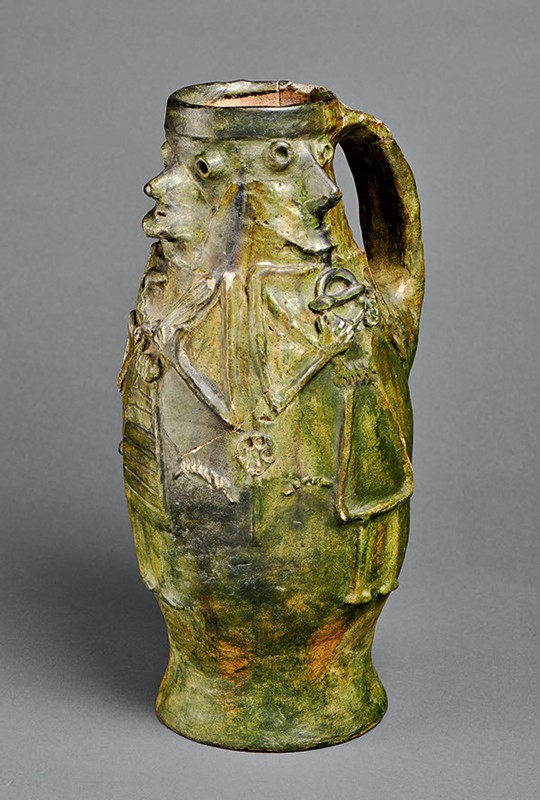
Anthropomorphic vessel, Kingston type, London area, England, 13th century. Green-glazed earthenware. Height not provided. (Courtesy, Herbert Art Gallery and Museum.) https://www. coventrycollections.org/search/details/ collect/93782.
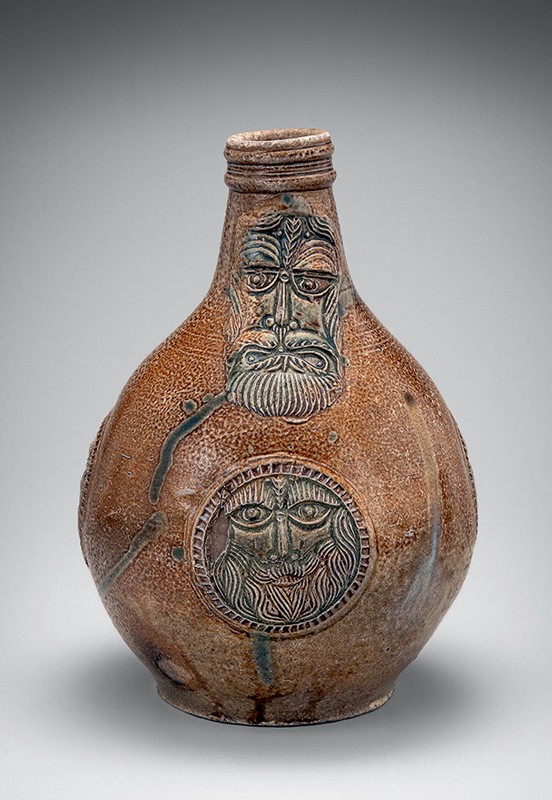
Bartmann bottle, Frechen, Germany, ca. 1620. Salt-glazed stoneware, iron oxide wash and cobalt slip highlights. H. 10 1/4". (Courtesy, Collection of Joseph P. Gromacki; photo, Robert Hunter.)
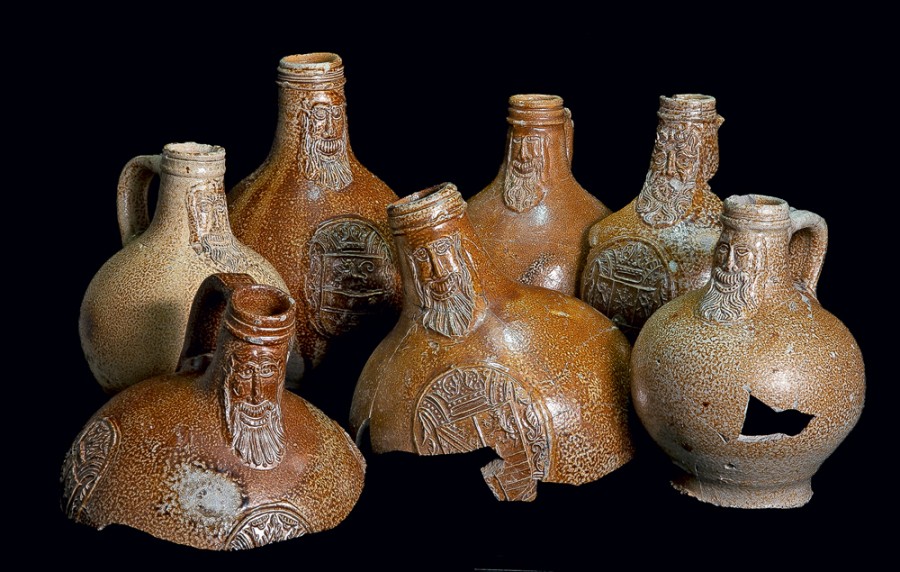
Bartmann bottles, Frechen, Germany, ca. 1600–1610. Saltglazed stoneware, iron oxide wash. (Courtesy, Jamestown Rediscovery Foundation; photo, Robert Hunter.) Archaeologically recovered examples from Jamestown, Virginia.
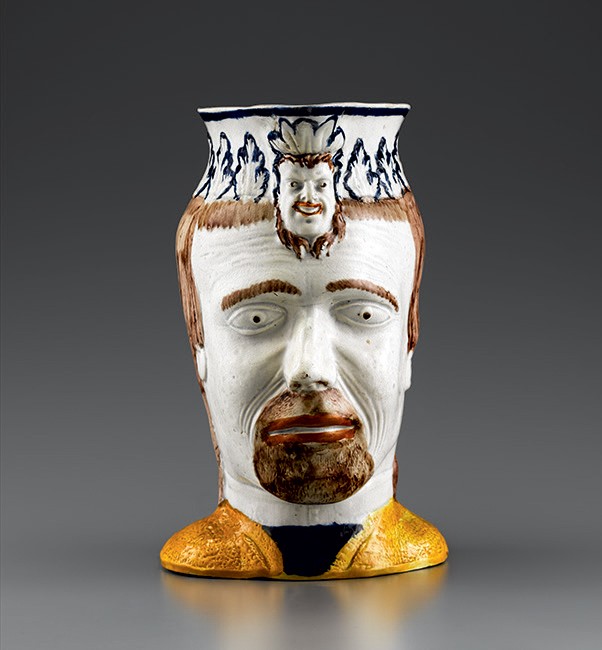
Face pitcher, probably Staffordshire, England, ca. 1795–1810. Lead-glazed earthenware. H. 10 1/8". (Chipstone Foundation; photo, Gavin Ashworth.)
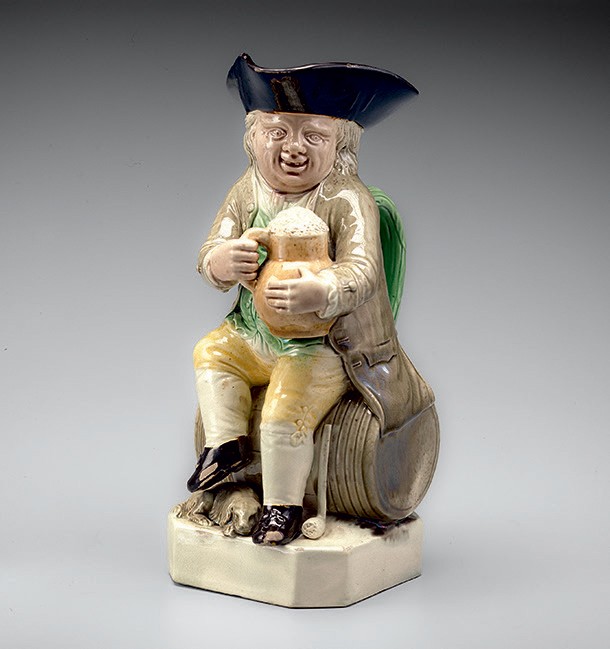
Toby jug, Staffordshire, England, ca. 1785–1810. Lead-glazed earthenware. H. 10". (Chipstone Foundation; photo, Gavin Ashworth.)
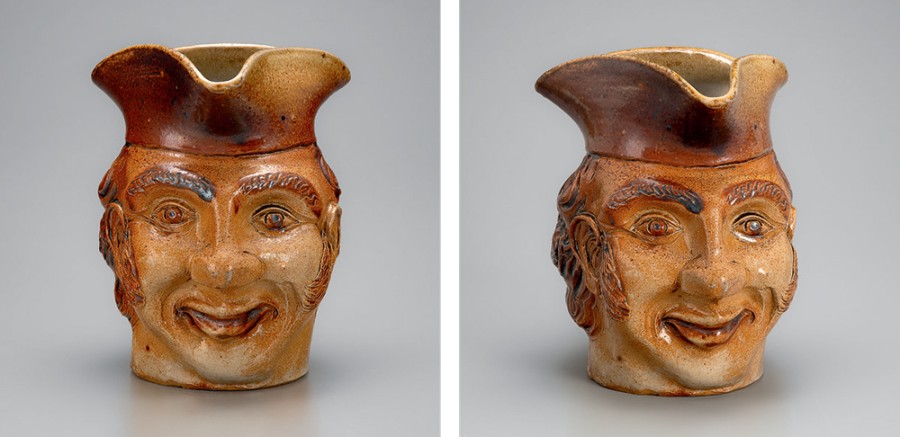
Face pitcher, attributed to Charles Bloodworth, Lambeth Pottery, London, England, ca. 1800. Salt-glazed stoneware with iron oxide wash. H. 7". (Private collection; photo, Robert Hunter.)
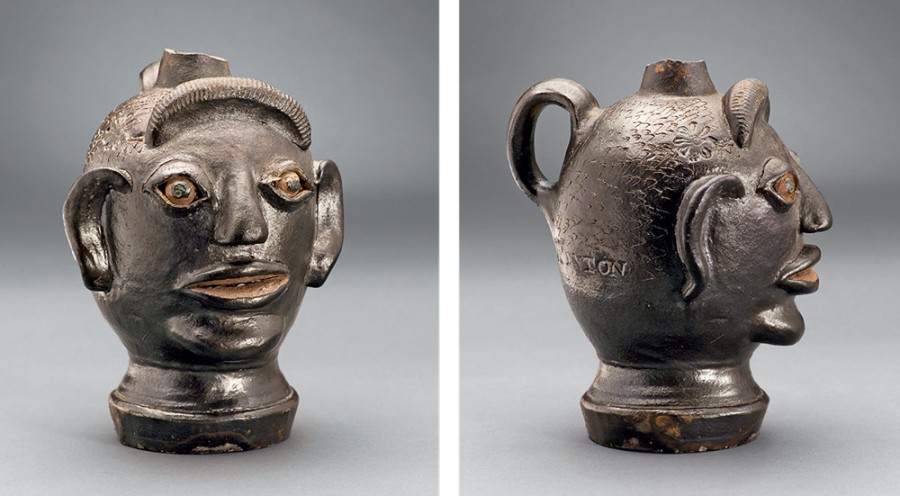
Face vessel, attributed to Jonathan Fenton pottery, Dorset or East Dorset, Vermont, ca. 1810–1827. Slip-glazed stoneware. H. 7 7/8". (Courtesy and © San Diego Museum of Art / Gift of Mrs Leon J. Rose, Jr. / Bridgeman Images.)
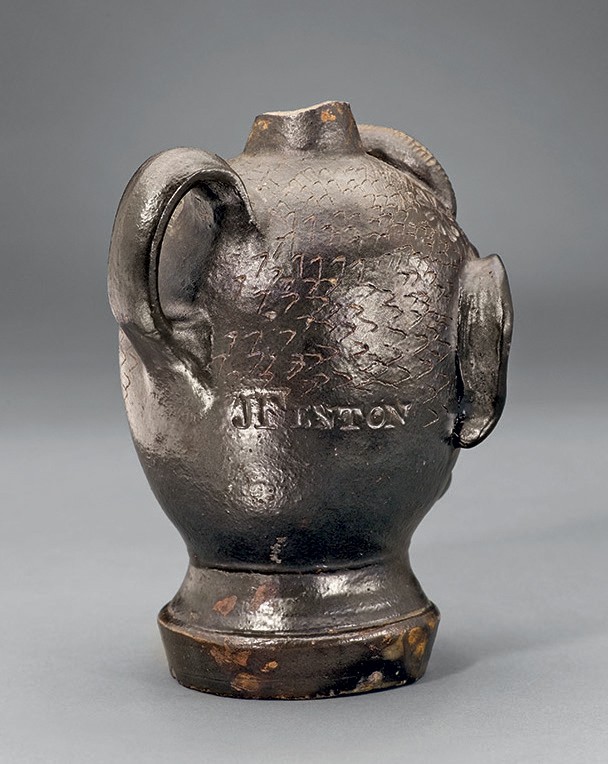
Detail of the “JFenton” mark on the face vessel illustrated in figure 12.
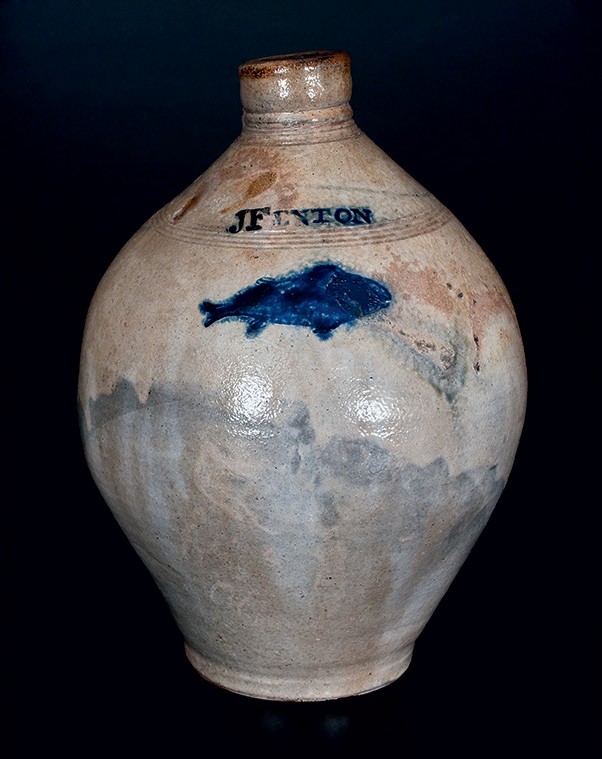
Jug, Jonathan Fenton, Dorset, Vermont, ca. 1800–1810. Salt-glazed stoneware. H. 11 3/4". (Courtesy, Crocker Farm, Inc.)
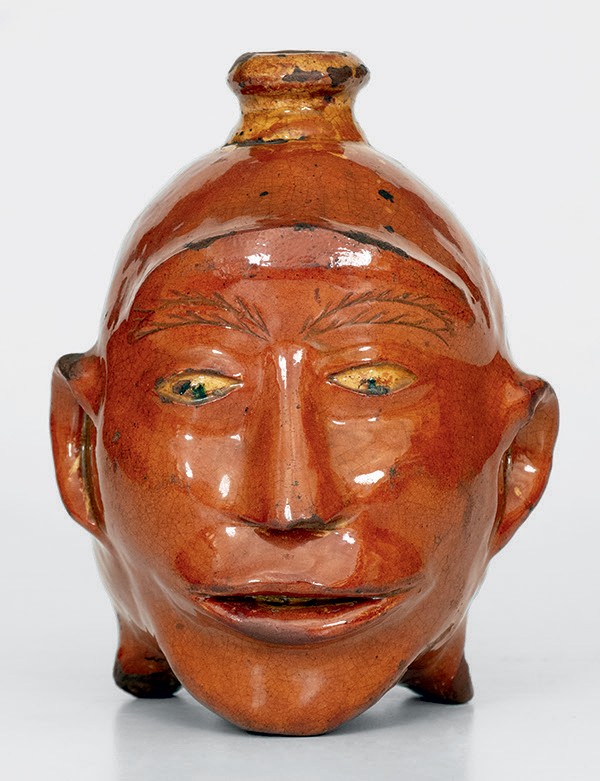
Face jug, unidentified artist, Northeastern U.S., 1820–1850. Lead-glazed earthenware. H. 6". (Courtesy, Crocker Farm, Inc.)
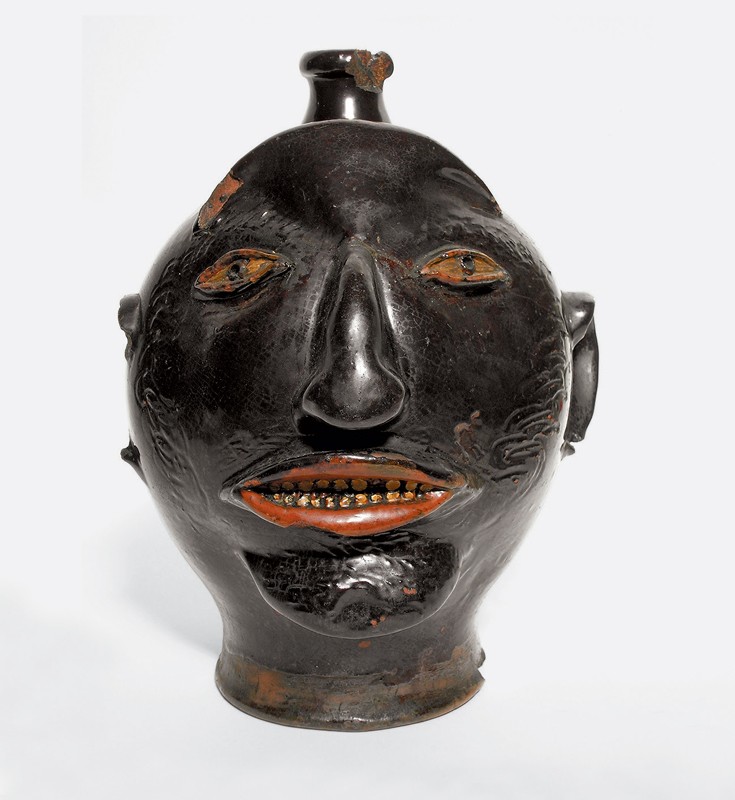
Face jug, Northeastern U.S., ca. 1820–1850. Stoneware with kaolin and manganese glaze. H. 11 3/4". (Courtesy, Fenimore Art Museum, Cooperstown, N.Y., Museum purchase, N0225.1951.)
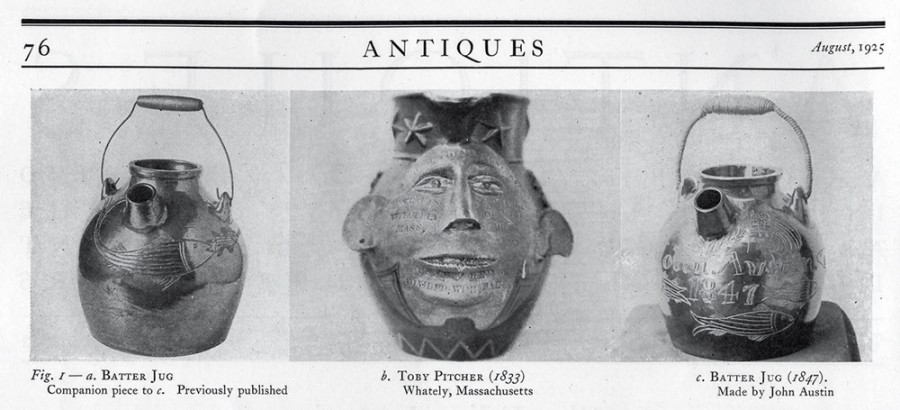
Illustration from “A Strange Face from Whately,” Antiques 8, no. 2 (August 1925): 76.
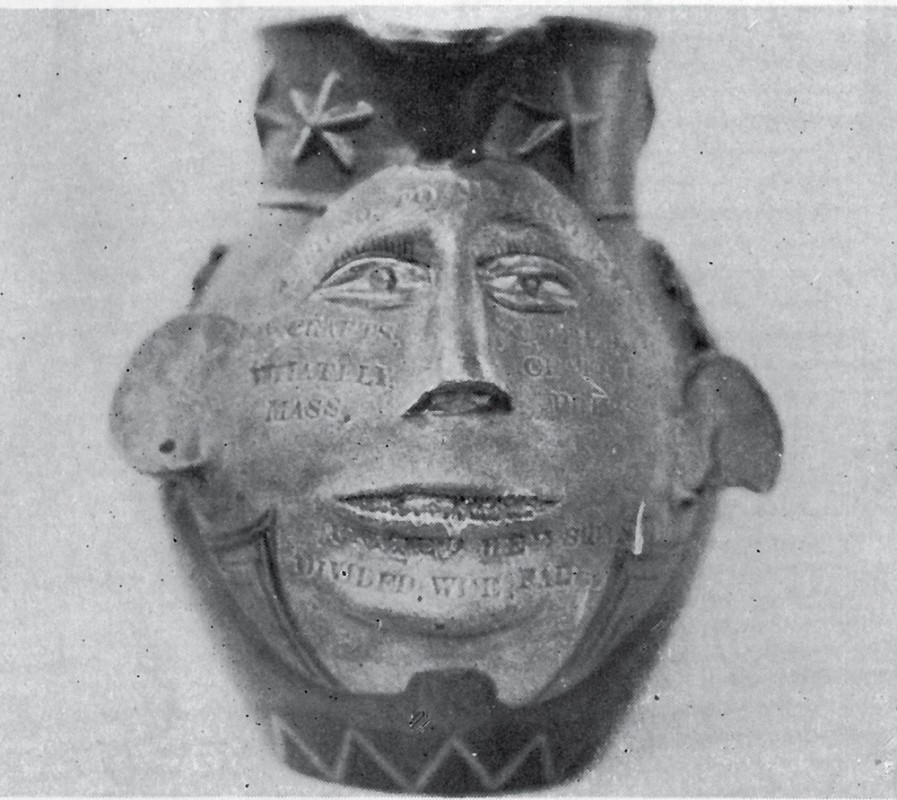
Detail of the “Toby Pitcher” illustrated in figure 17. Across the forehead in impressed printers type runs the legend “A. Friend. ‘to. My. Countrey.” On the left cheek is “E. G. Crafts, Whately Mass”. On the right cheek is “O’ The. Dimocratick. Press.”, and across the lower lip is “United Wee Stand, Divided, Wee, Fall.”
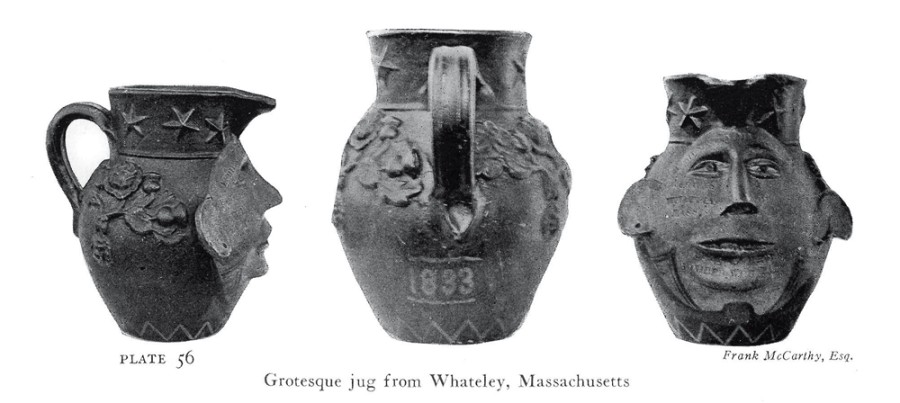
“Grotesque jug from Whately, Massachusetts,” illustrated in John Spargo, Early American Pottery and China (Garden City, N.Y.: Garden City Publishing, 1926), p. 121. These side and back views show the detail of the applied thistle, rose, and shamrocks. The date of 1833 in gilt is on the back below the handle.
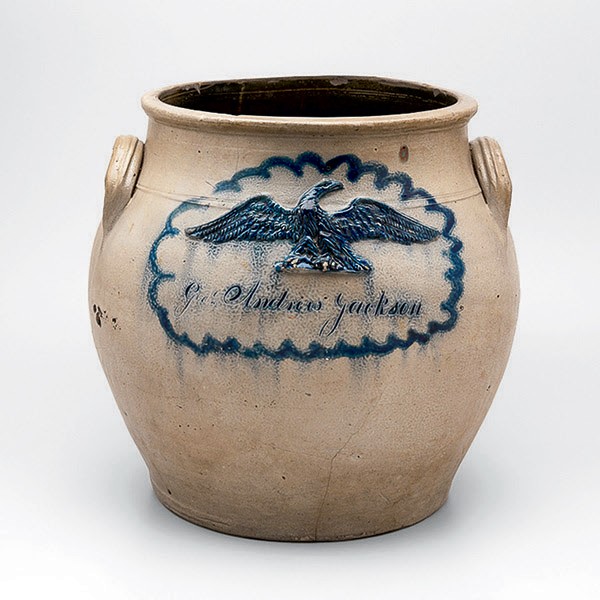
Storage jar, Barnabas Edmands, Charlestown, Massachusetts, 1833. Salt-glazed stoneware. H. 15 1/8". (Courtesy, William C. and Susan S. Mariner Private Foundation; photo, Museum of Early Southern Decorative Arts.) Beneath the applied molded eagle is “Genl Andrew Jackson”; the reverse is inscribed with “17th June 1775,” the date of the Battle of Bunker Hill.
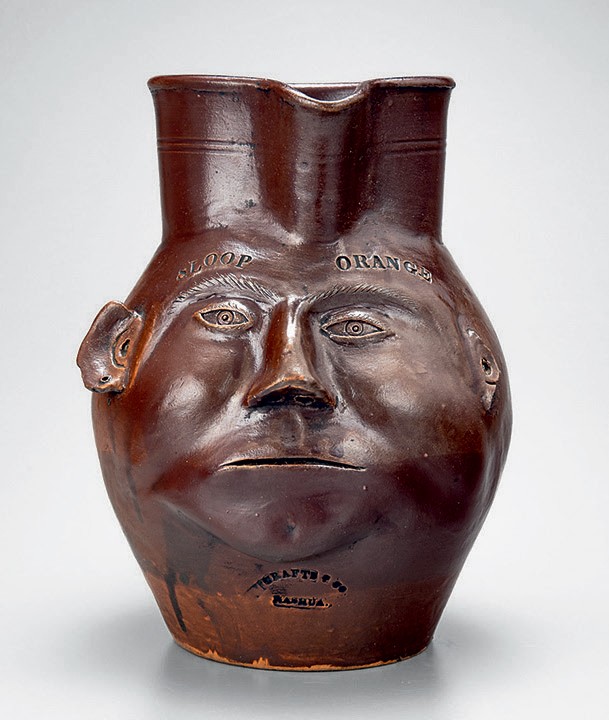
Pitcher, Martin Crafts, Nashua, New Hampshire, ca. 1838. Stoneware with slip glaze. H. 9". (Private collection; photo, Robert Hunter.) Impressed with printers type on the bottom front is “T. CRAFTS & CO. | NASHUA” and above the eyes, “SLOOP ORANGE”.
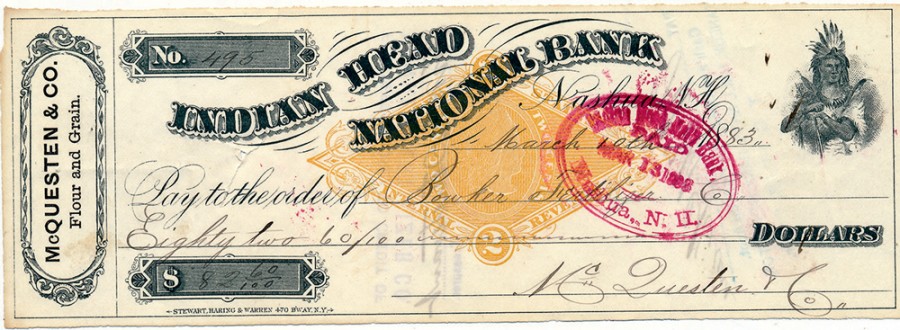
Bank check, Indian Head National Bank, Nashua, New Hampshire, dated March 10, 1883. Printed by Stewart, Haring and Warren of New York. Engraving on paper. L. 8". (Private collection.) Note the inclusion of an image of a Native American Indian.
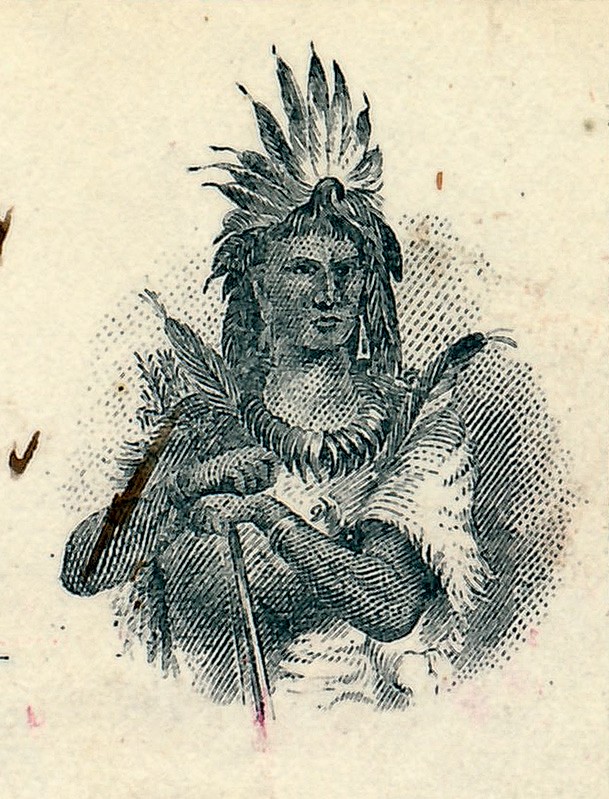
Detail of the engraved Native American pictured on the bank check illustrated in figure 22.
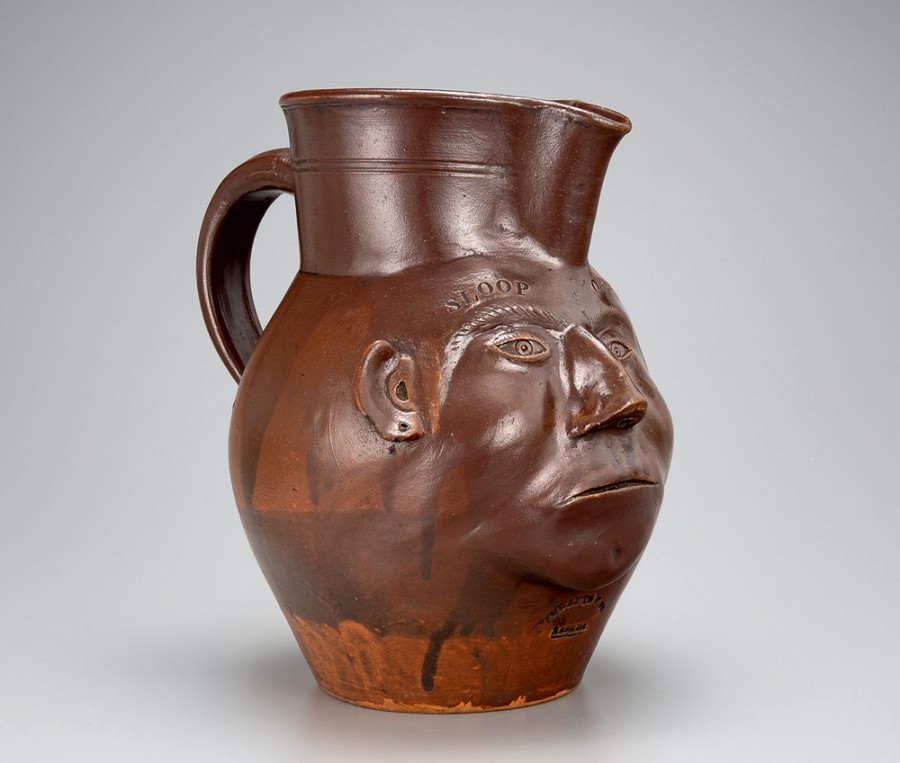
Side view of the pitcher illustrated in figure 21 showing the linear use of slip to create the appearance of Native American face paint decoration.
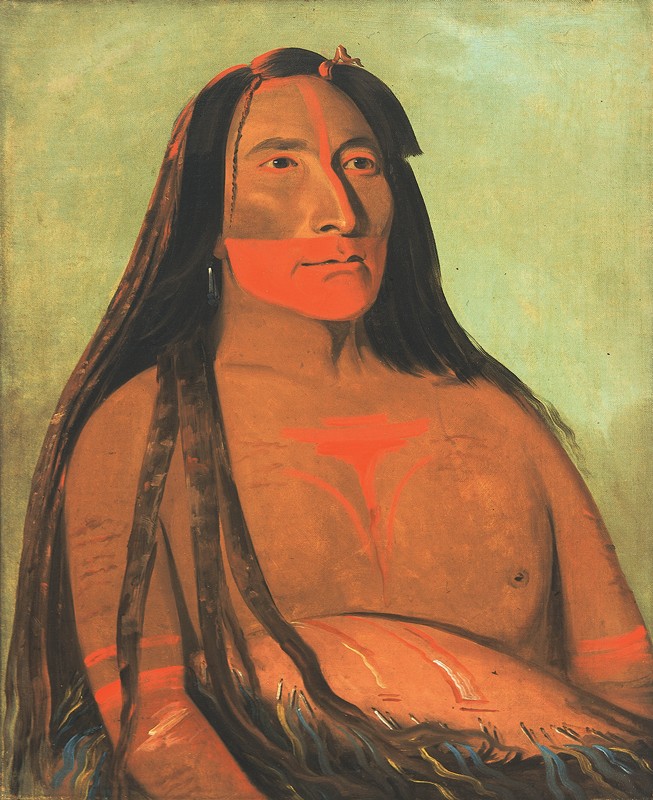
George Catlin, Máh-to-tóh-pa, Four Bears, Second Chief in Mourning, 1832. Oil on canvas. 29 x 24". (Courtesy, Smithsonian American Art Museum, Gift of Mrs. Joseph Harrison, Jr., 1985.66.13.) Note the use of paint around the lower part of the face.
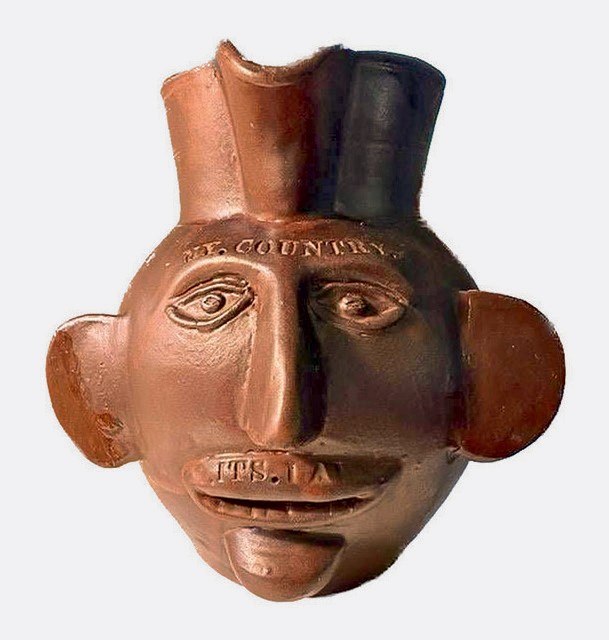
Pitcher, Martin Crafts, Nashua, New Hampshire, ca. 1839. Stoneware with slip glaze. H. 7". (Private collection; photo, George Browning.) Impressed on the forehead: “MY COUNTRY”; on the upper lip: “ITS LAWS”; on the left side of the jug: “CHARLES KEMP”; and on the right side: “NASHUA.”
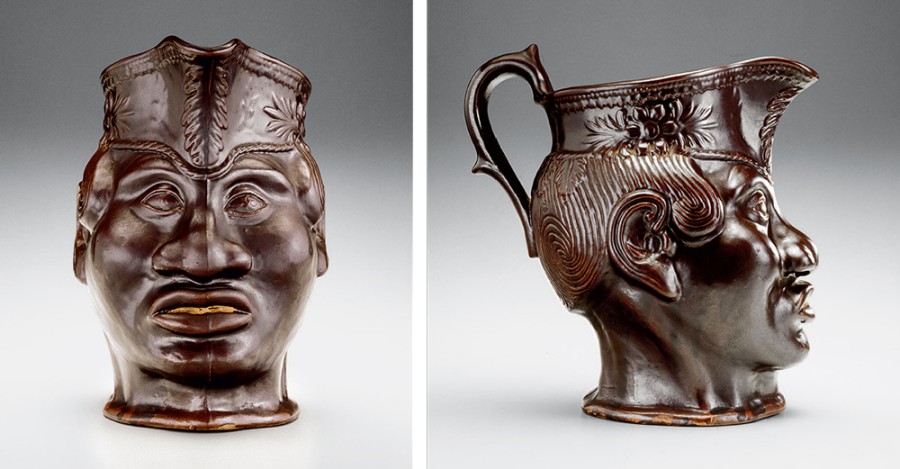
Toussaint Louverture face pitcher, Medford, Massachusetts, ca. 1840. Earthenware with Albany slip glaze. H. 13". (Chipstone Foundation; photo, Gavin Ashworth.)
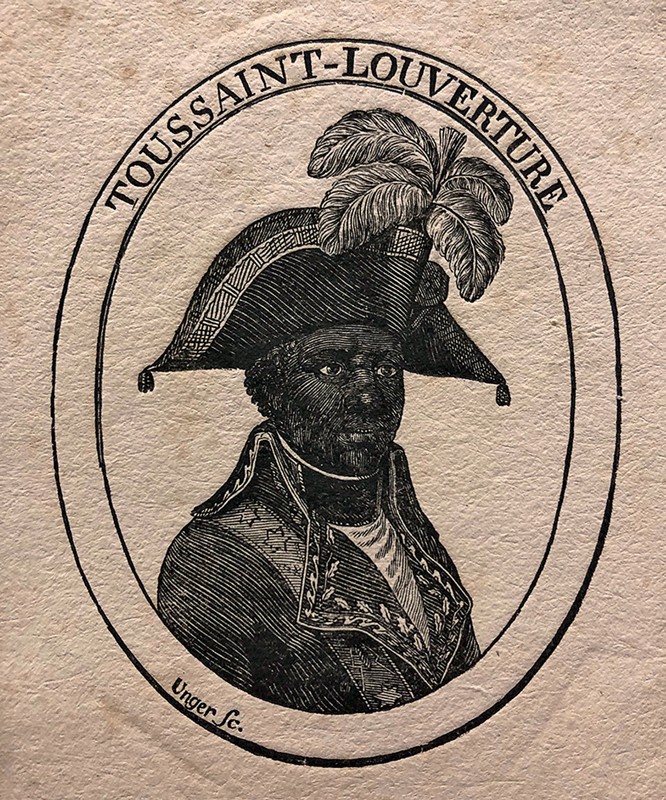
Johann Friedrich Unger, portrait of François-Dominique Toussaint Louverture, 1790–1804. Engraving on wove paper. 3 3/8 x 2 11/16" (plate). (Courtesy, RISD Museum; Gift of Isaac C. Bates.) https://risdmuseum.org/art-design/ collection/portrait-francois-dominiquetoussaint-louverture-9303884#content__ section—use--948621.
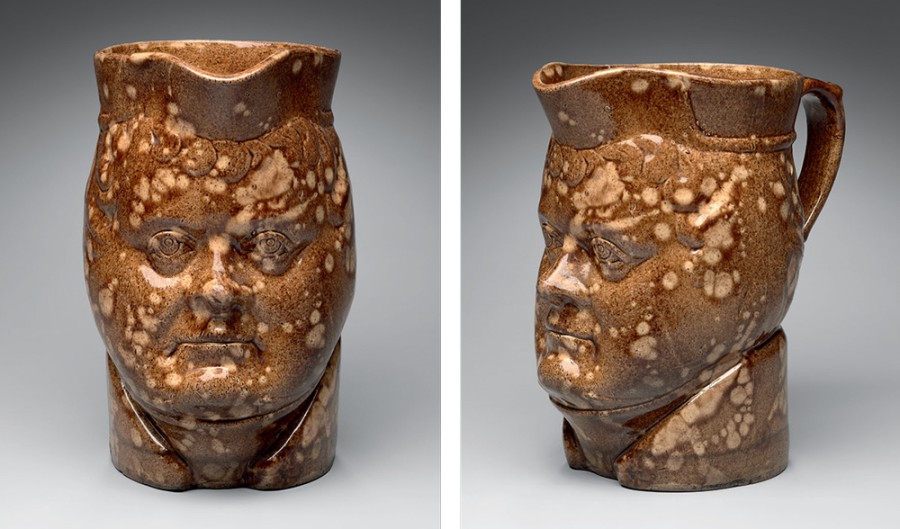
Face pitcher depicting Daniel O’Connell, Ralph Bagnall Beech, Philadelphia, Pennsylvania, ca. 1848. Earthenware with Rockingham glaze. H. 7 1/2". (Courtesy, Yale University Art Gallery, Mabel Brady Garvan Collection, 1931.1816.)
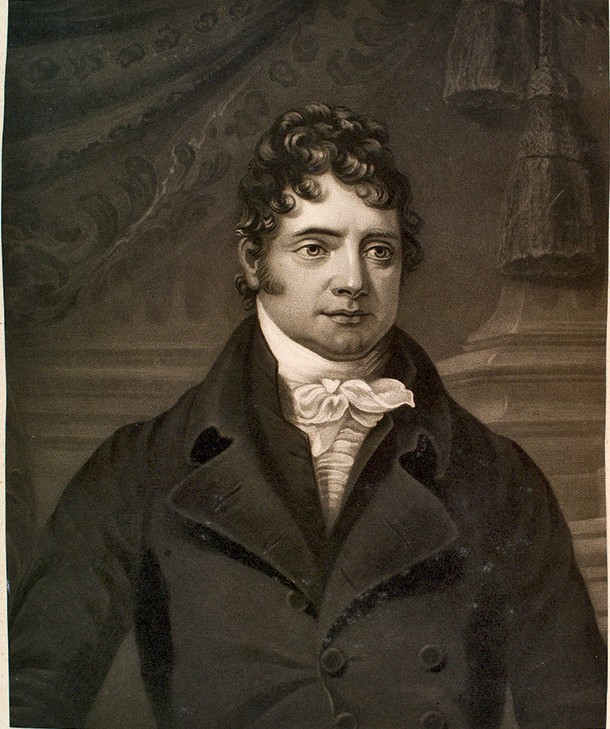
William Say, Daniel O’Connell, probably after James Arthur O’Connor, circa 1803–1834. Mezzotint. 8 3/4 x 7 1/4". (Courtesy and © National Portrait Gallery, London.)
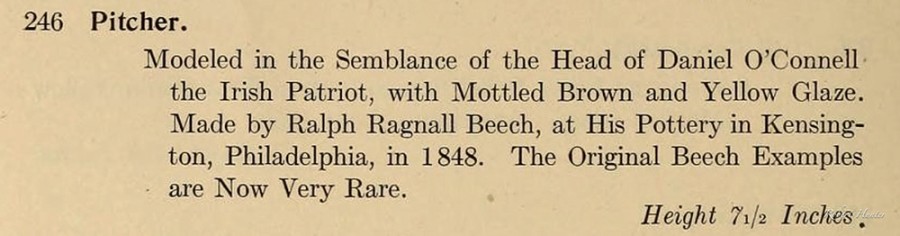
Auction Lot 246 from Edwin Atlee Barber, Illustrated Catalogue of China, Pottery, Porcelains and Glass (Philadelphia: W. H. Pile’s Sons), 1917. (Smithsonian Libraries and Archives Digital Library.)
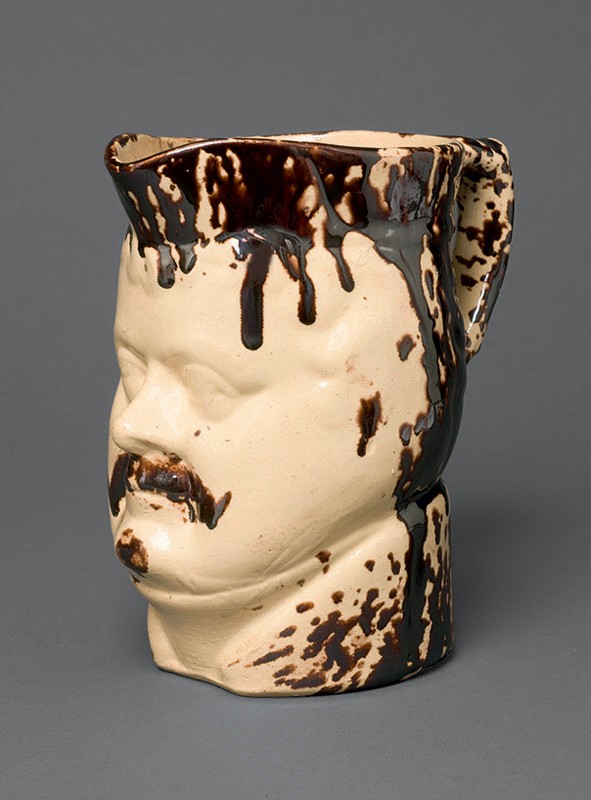
Face pitcher depicting Daniel O’Connell, Thomas Haig’s Pottery, Philadelphia, Pennsylvania, ca. 1891. Rockingham glazed yellow ware. H. 7 1/16". (Courtesy, Philadelphia Museum of Art, Purchased with Museum funds, 1896.)
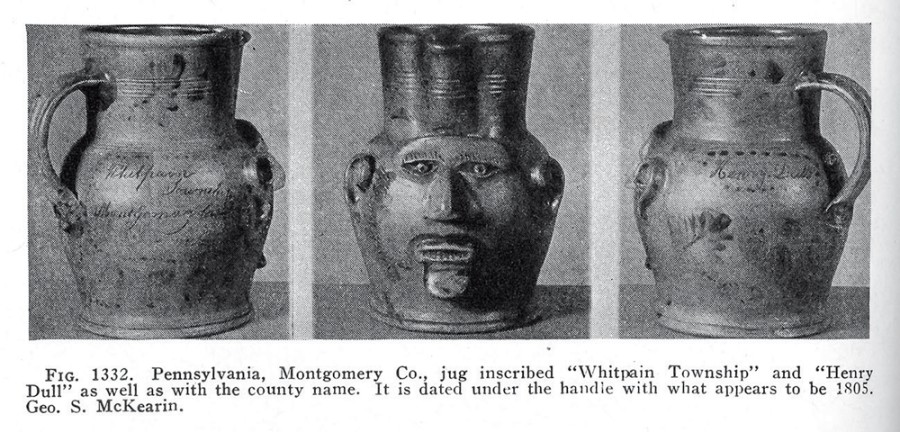
Illustration of a Remmey face pitcher published in Warren E. Cox, The Book of Pottery and Porcelain, 2 vols. (New York: Crown Publishers, 1970), 2: 986.
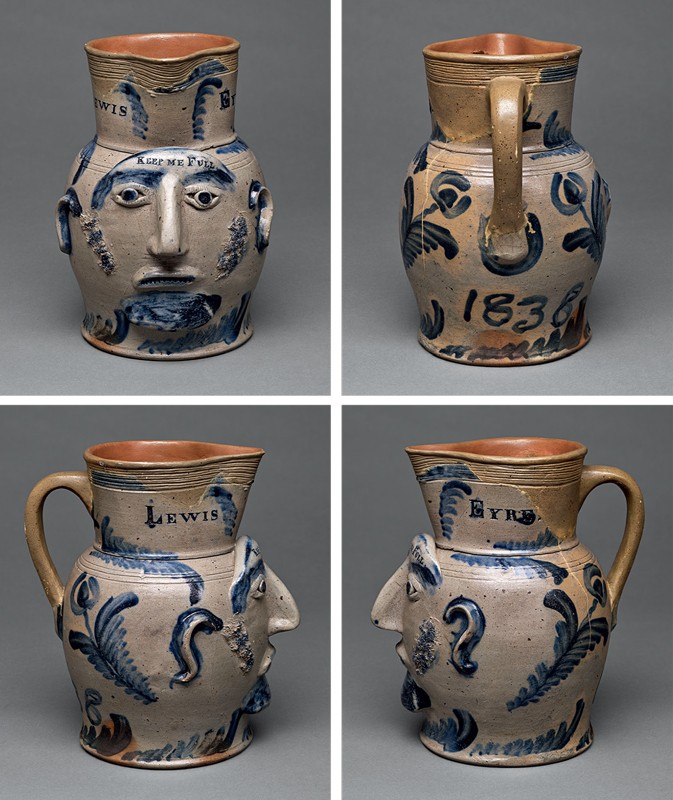
Pitcher, attributed to Henry Remmey Jr. and Richard C. Remmey, Philadelphia, Pennsylvania, dated 1838. Salt-glazed stoneware with cobalt oxide. H. 8 1/2". (Courtesy, National Museum of American History, Smithsonian Institution, Gift of Mrs. Arnold Miles of Washington, DC, 1952.) Marked with impressed printers type reading “LEWIS EYRE”, “KEEP ME FULL”, and “1838”. The accession record for this pitcher states: “Found in old house on Schooley Mill property, Tucker Lane, near Ashton, Howard County, Maryland. Lewis Eyre owned the adjacent property, was also a resident of Philadelphia.”
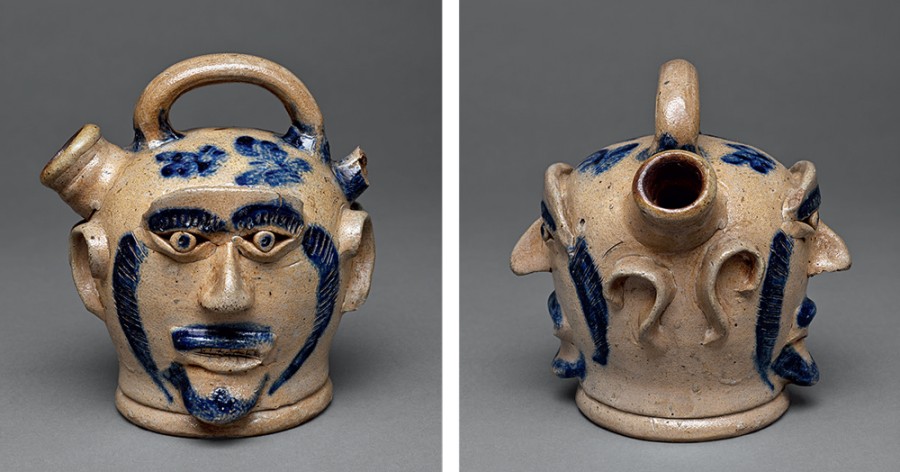
Face vessel, attributed to Henry Remmey Jr. and Richard C. Remmey, Philadelphia, Pennsylvania, ca. 1840–1850. Salt-glazed stoneware with cobalt oxide. H. 6 13/16“. (Courtesy, National Museum of American History, Smithsonian Institution, Gift of Preston R. Bassett from Ridgefield, Conn., 1979.)
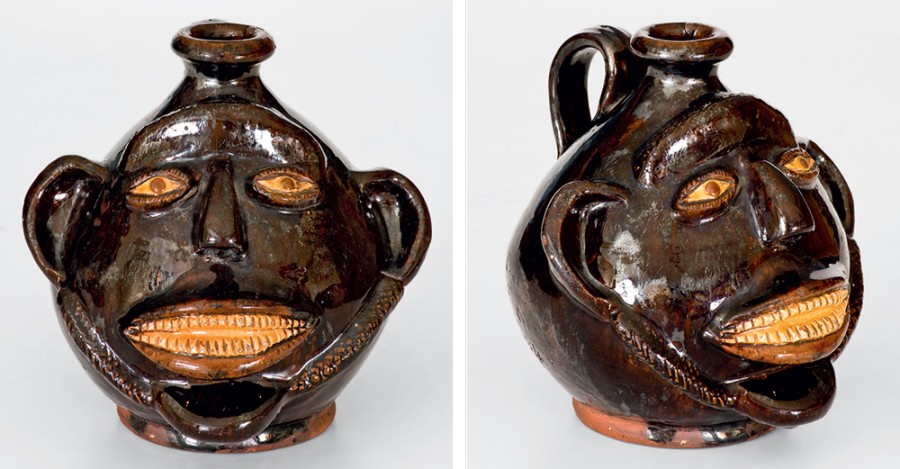
Face jug, attributed to the Thorn Pottery, Crosswicks, New Jersey, dated 1844. Lead-glazed earthenware with manganese oxides. H. 6 1/2". Incised with the date: Oct. 5 | 1844. (Courtesy, Crocker Farm, Inc.) Kaolin has been applied in a thin veneer or as a slip to create the contrasting color of the eyes and teeth.
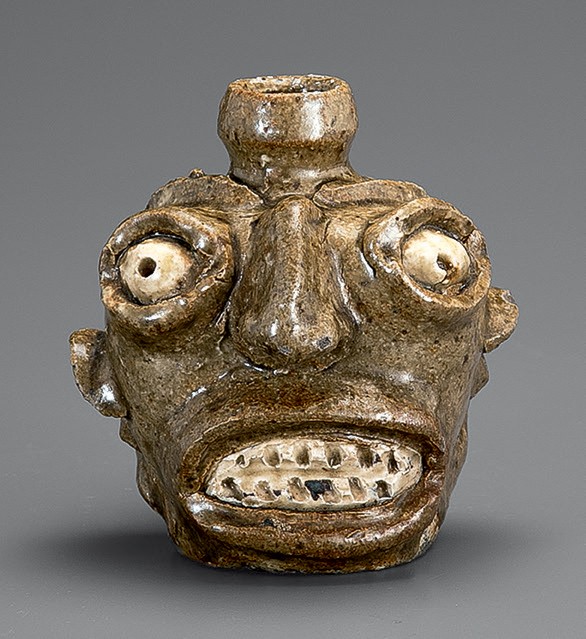
Face cup, Edgefield, South Carolina, ca. 1850–1860. Alkalineglazed stoneware with kaolin details. H. 4 7/8". (Courtesy, Collection of William C. and Susan S. Mariner Private Foundation; photo, Robert Hunter.)
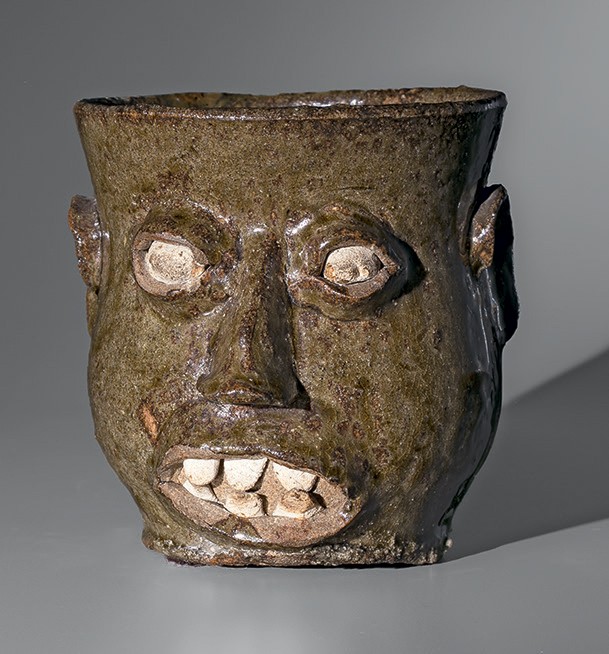
Face cup, possibly Thomas Davies Factory, Bath, South Carolina, ca. 1861–1864. Alkaline-glazed stoneware with kaolin details. H. 4 7/8". (Courtesy, Collection of Joseph P. Gromacki; photo, Robert Hunter.)
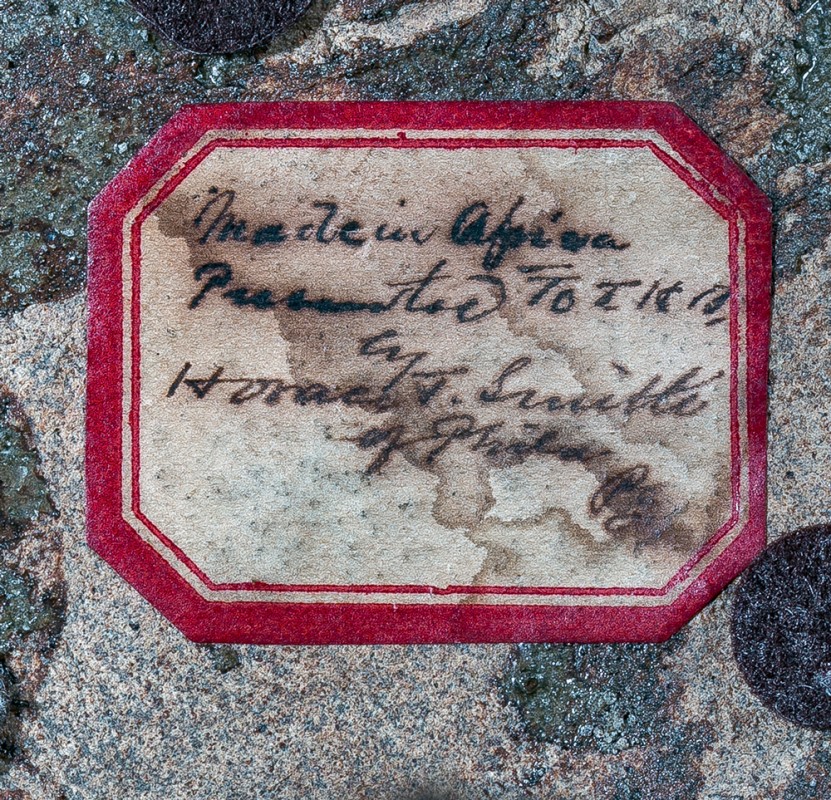
Detail of the collector’s label on the bottom of the face cup illustrated in figure 38. “Made in Africa | Presented to T H B. | by | Horace J. Smith | of Phila | Pa.”
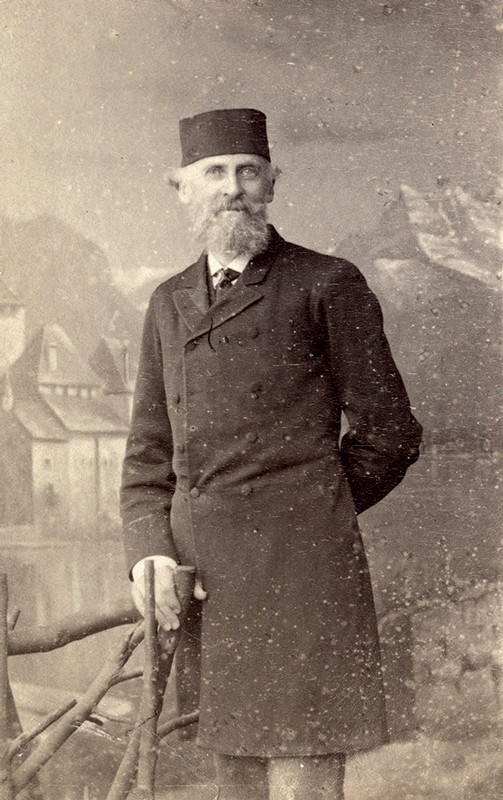
Portrait of Horace J. Smith by an unknown photographer, London, England, 1889. Albumen print on card. 3 5/8 x 2 1/4". (Courtesy and © National Portrait Gallery, London.)
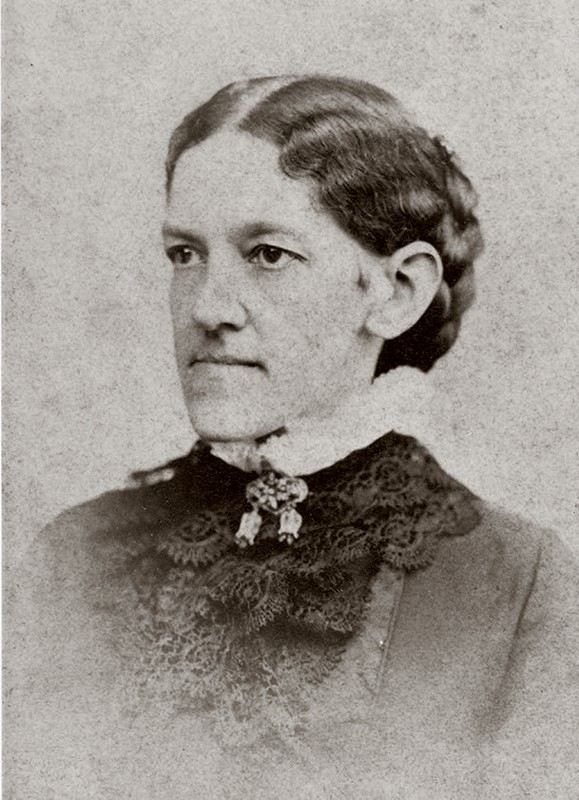
Portrait of Martha Schofield by an unknown photographer. Back of photograph reads: Martha Schofield 1883. 7 x 5" (Courtesy, Martha Schofield Papers, Martha Schofield photograph collection, SFHL-PA-143, Friends Historical Library of Swarthmore College, A00183921.) https://digitalcollections.tricolib. brynmawr.edu/object/sc178831
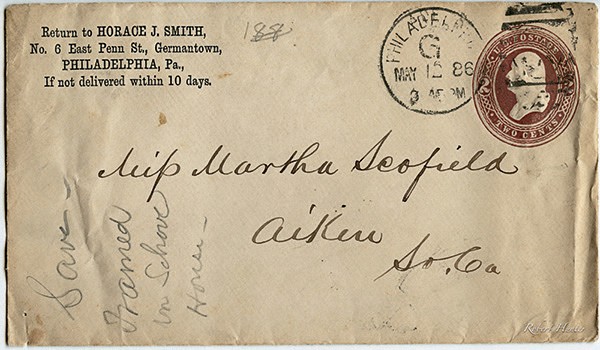
Envelope sent to “Miss Martha Scofield [sic]” by Horace J. Smith, May 18, 1886. (Courtesy, Martha Schofield Papers, SFHL-RG5-134, Friends Historical Library of Swarthmore College, A00183217.)
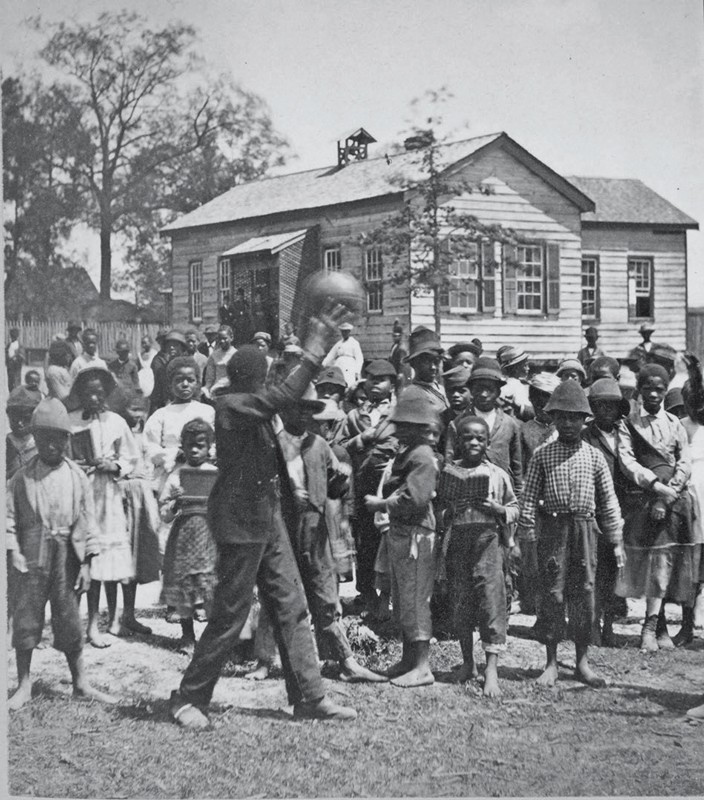
James. A. Palmer, Colored School; from the series: Aiken and Vicinity, 1882. Stereopticon photographic print. 3 1/2 x 7". (Courtesy, Schomburg Center for Research in Black Culture, Photographs and Prints Division, The New York Public Library. “Colored School,” New York Public Library Digital Collections.)
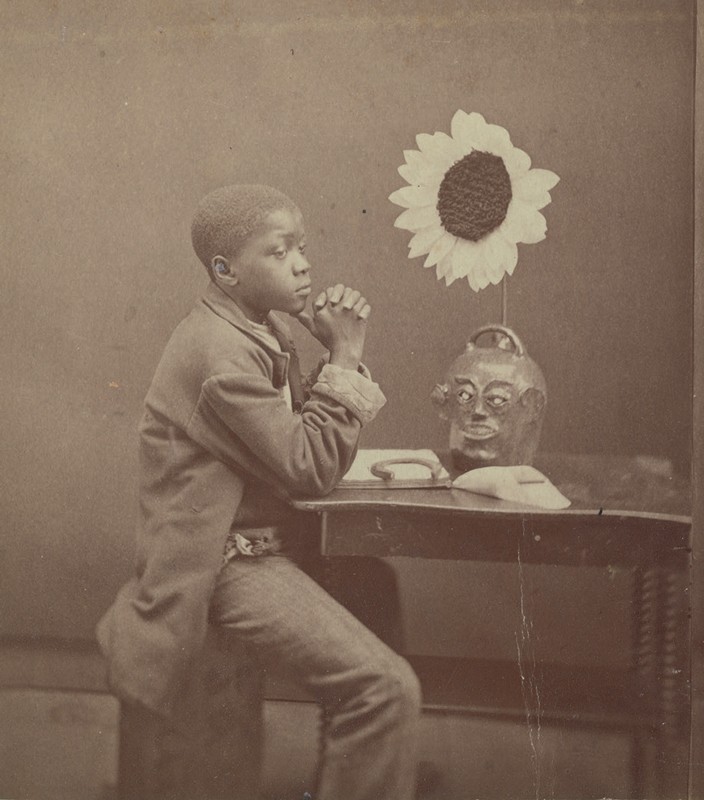
James A. Palmer, An Aesthetic Darkey; from the series: Aiken and Vicinity, 1882. Stereopticon photographic print. 3 1/2 x 7". (Courtesy, Metropolitan Museum of Art, Purchase, Nancy Dunn Revocable Trust Gift, 2017, 2017.311.)
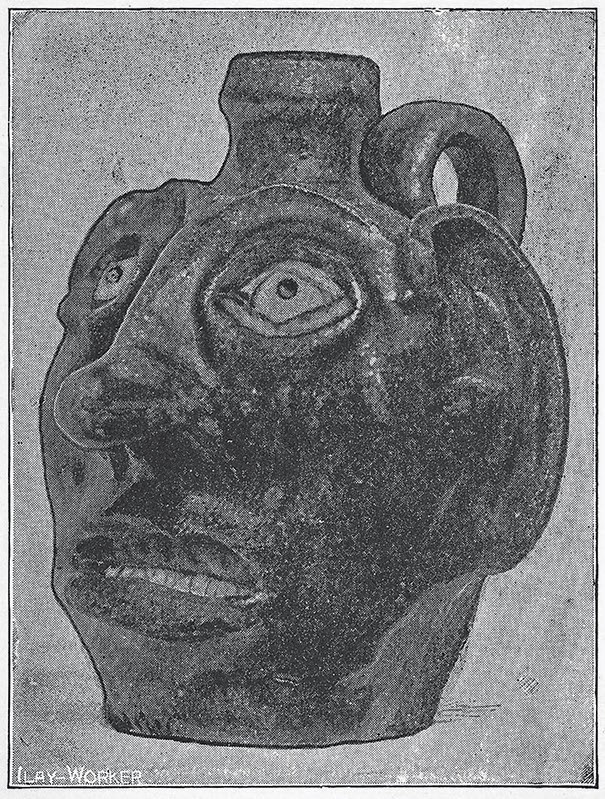
Photograph of a “Monkey Jug” published in Edwin Atlee Barber, The Pottery and Porcelain of the United States (New York: G. P. Putnam’s Sons, 1909), p. 466. The image was first published in “Some Curious Old Water Coolers Made in America,” Clay-Worker 33, no. 5 (1900): 353.
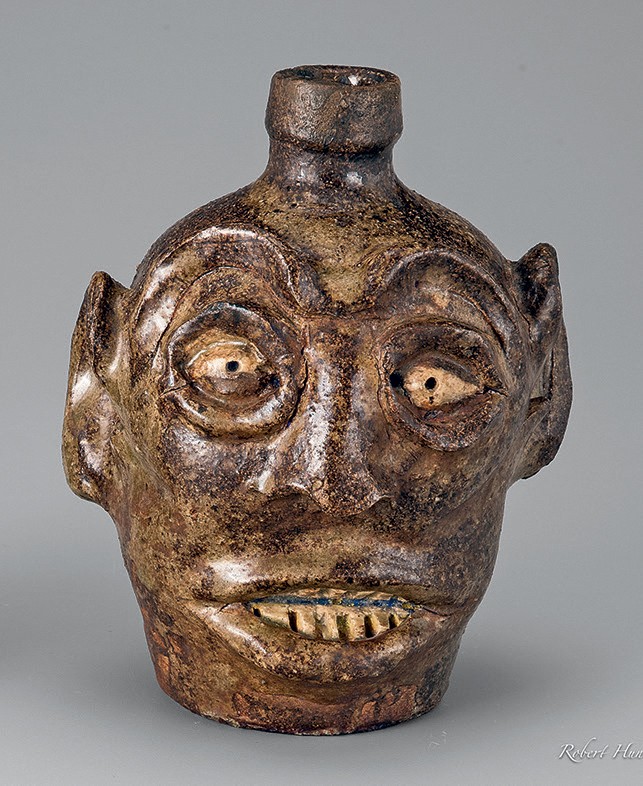
Face jug, Edgefield, South Carolina, ca. 1850–1860. Alkaline-glazed stoneware with kaolin inserts. H. 6 1/2". (Courtesy, William C. and Susan S. Mariner Private Foundation; photo, Robert Hunter.) This example is virtually identical to the one illustrated by Barber in figure 45.
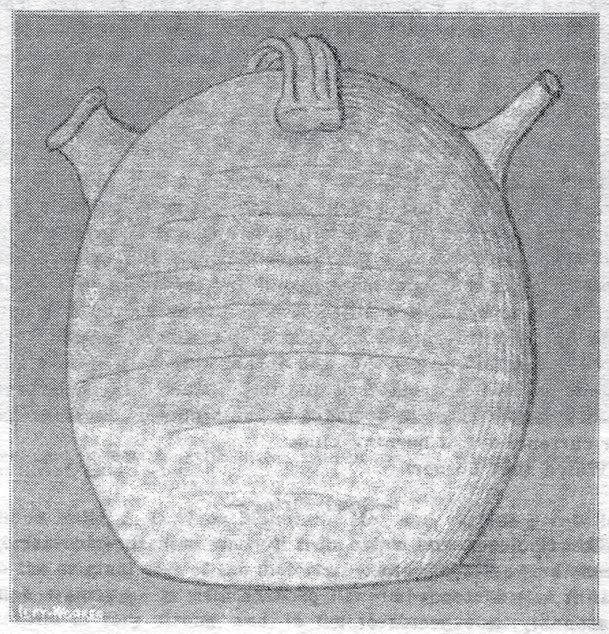
Illustration of an “Earthen ‘Water Monkey’” published in Edwin Atlee Barber, “Some Curious Old Water Coolers Made in America,” Clay-Worker 33, no. 5 (1900): 353.
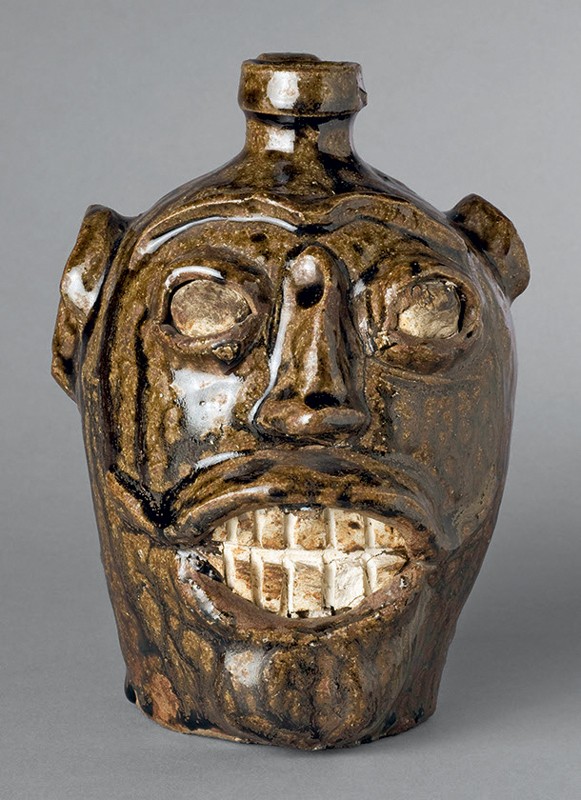
Face jug, Edgefield, South Carolina, ca. 1850–1860. Alkaline-glazed stoneware with kaolin inserts. H. 7". (Courtesy, Philadelphia Museum of Art, gift of Frank Samuel, 1917–196.)
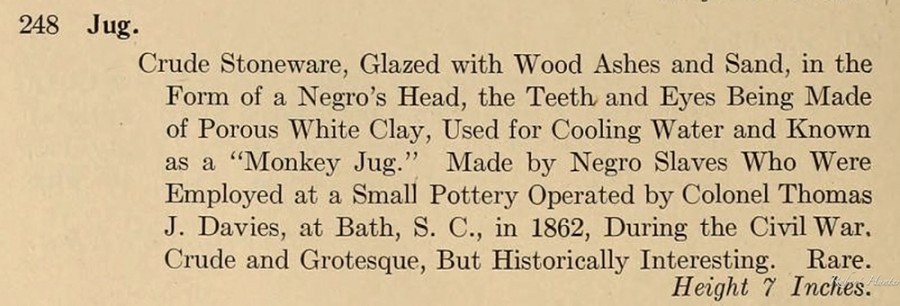
Auction Lot 248 from Edwin Atlee Barber, Illustrated Catalogue of China, Pottery, Porcelain and Glass (Philadelphia: W. H. Pile’s Sons), 1917. (Smithsonian Libraries and Archives Digital Library.) This entry describes the jug illustrated in figure 48 as a “Monkey Jug.” Note the use of the descriptive terms “Crude and Grotesque” as well.
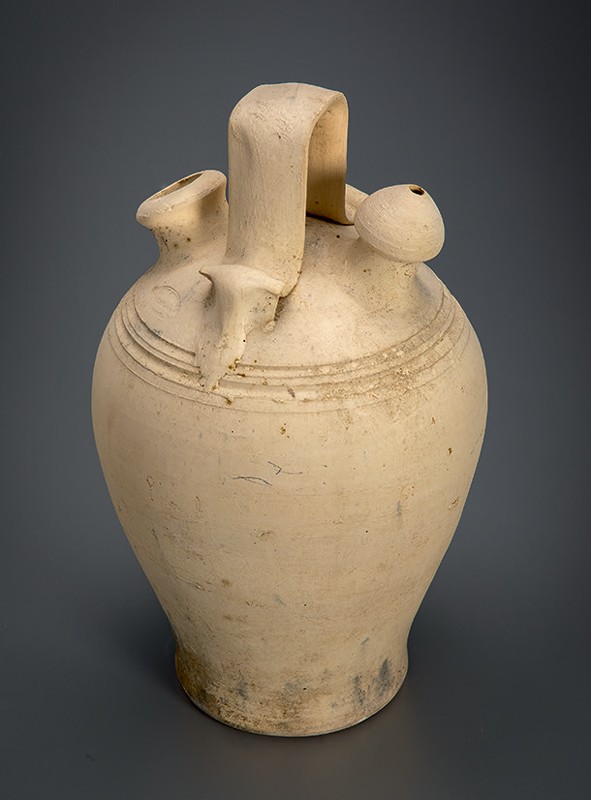
Botijo, Spain, 20th century. Unglazed earthenware. H. 13 1/4". (Private collection; photo, Robert Hunter.)
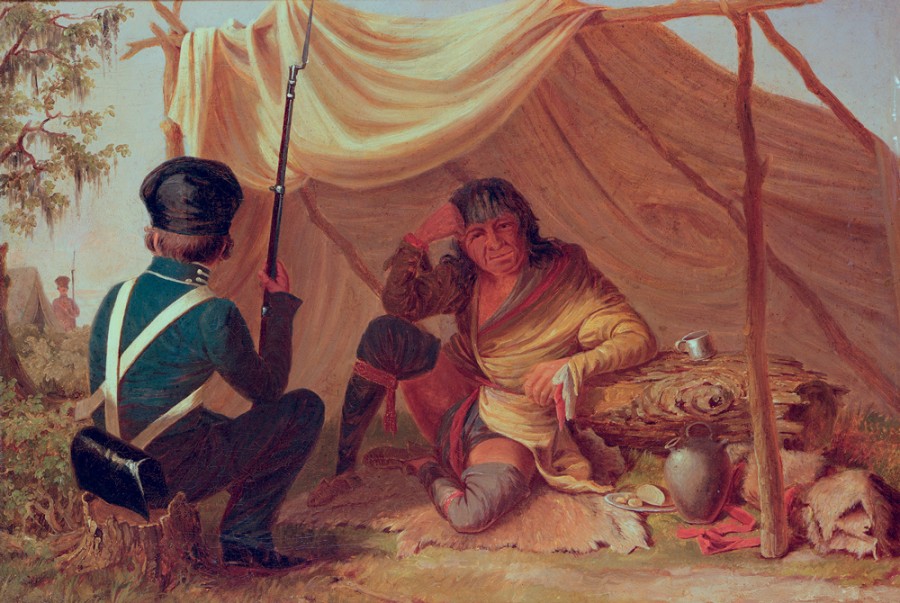
Seth Eastman, Osceola in Captivity, Florida, ca. 1837. Oil on canvas. Dimensions unknown. (Bridgeman Images/private collection.)
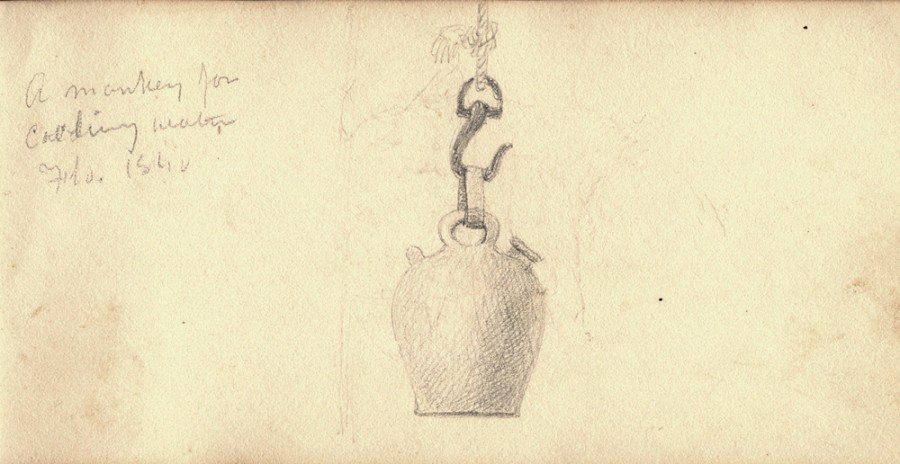
Seth Eastman, “A monkey for cooling water Feb, 1840.” Pencil on paper. 3 3/8" x 6 3/4". (Courtesy, Hennepin County Library Special Collections, Minneapolis Central Library.)
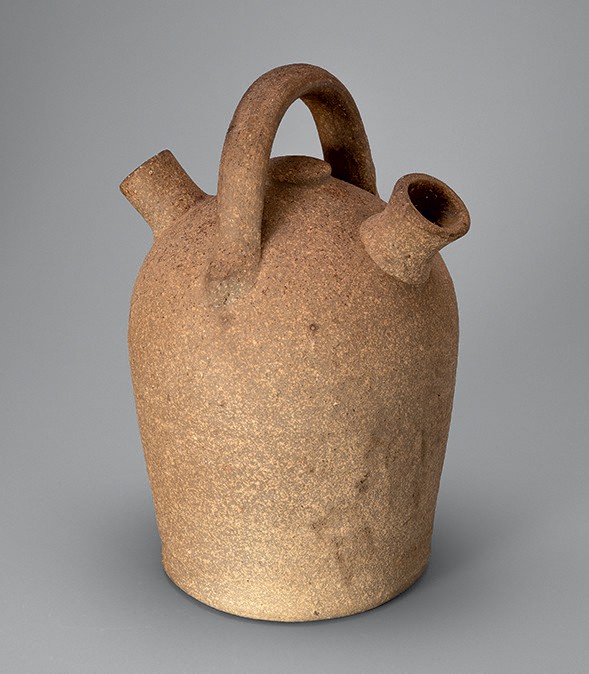
“Monkey jug,” attributed to Washington County or Crawford County, Georgia, ca. 1860. Stoneware H. 10". (Private collection; photo, Robert Hunter.) The jug has the classic two spouts and a strap handle over the top, with a finial that is seen on early examples.
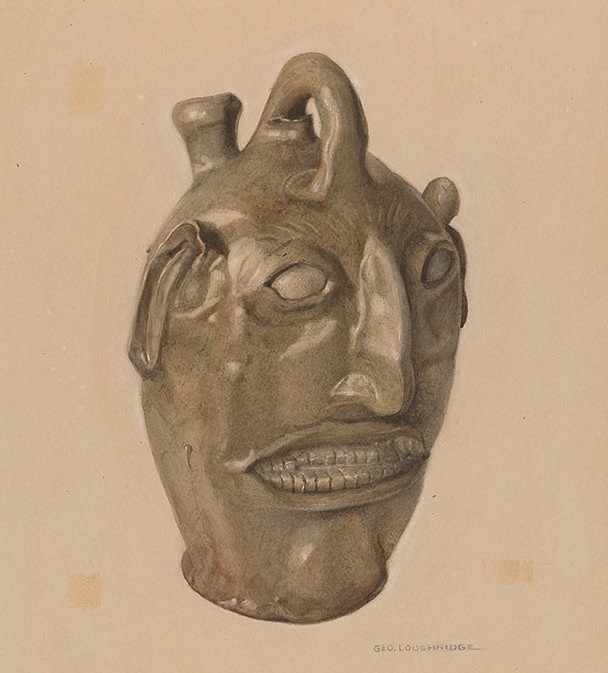
George Loughridge, Grotesque Jug, ca. 1938. Watercolor, graphite, and colored pencil on paperboard. 17 x 14 15/16“ (original IAD Object: H. 8 3/4"). (Courtesy, National Gallery of Art Index of American Design, 1943.8.7451.)
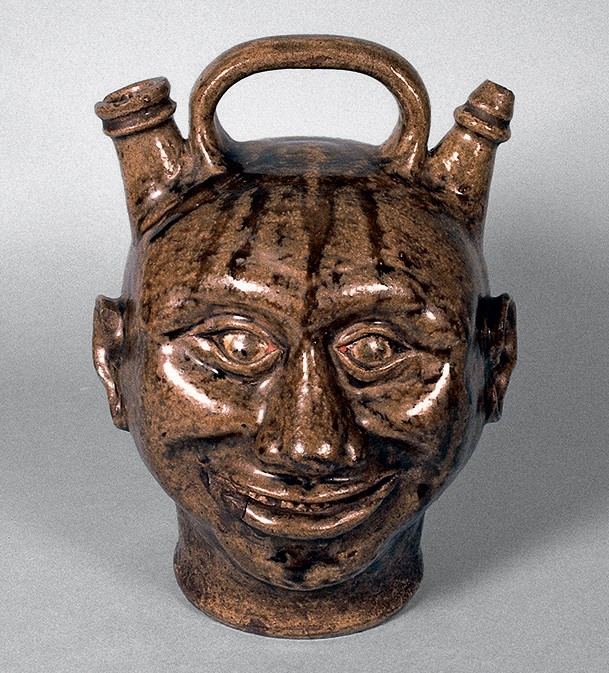
Face jug, Thomas Chandler, Edgefield District, South Carolina, ca. 1850. Ash-glazed stoneware. H. 11". (Private collection; photo, McKissick Museum, University of South Carolina.)
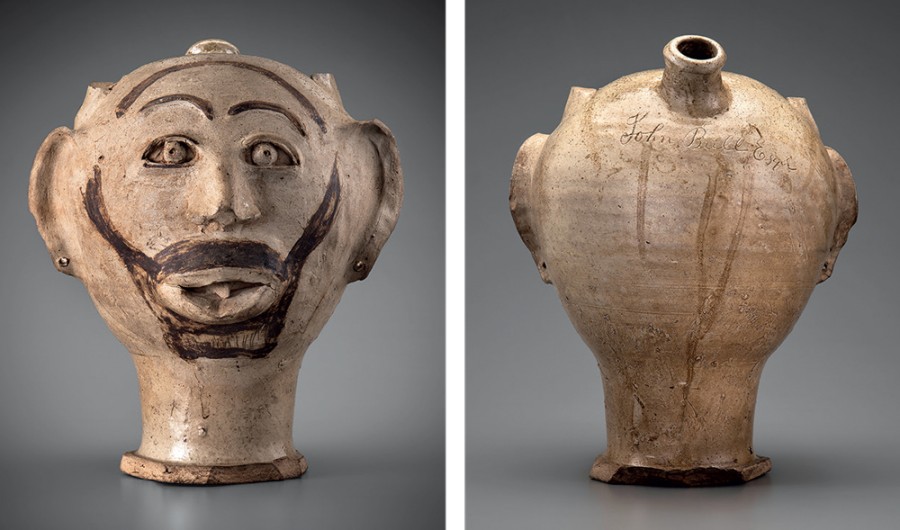
Face vessel, possibly Thomas Chandler, Edgefield County, South Carolina, ca. 1840–1845. Alkaline-glazed stoneware with iron oxide slip. H. 11 1/2". (Courtesy, William C. and Susan S. Mariner Private Foundation; photo, Gavin Ashworth.) Inscribed: “John Bull, Esqr” and “Long” on the reverse. The stirrup handle has been broken off.
Face jug, Edgefield, South Carolina, ca. 1850–1860. Alkaline-glazed stoneware with kaolin details. H. 11". (Courtesy, Collection of Joseph P. Gromacki; photo, Robert Hunter.) A somewhat unique and visually distinctive example of the Southern face vessel.
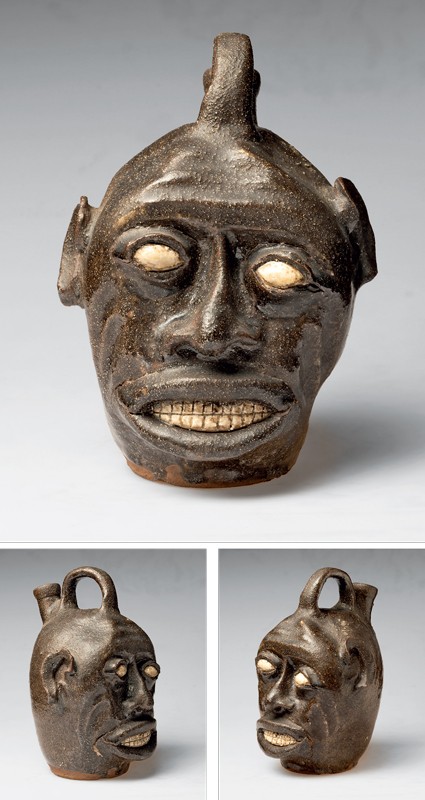
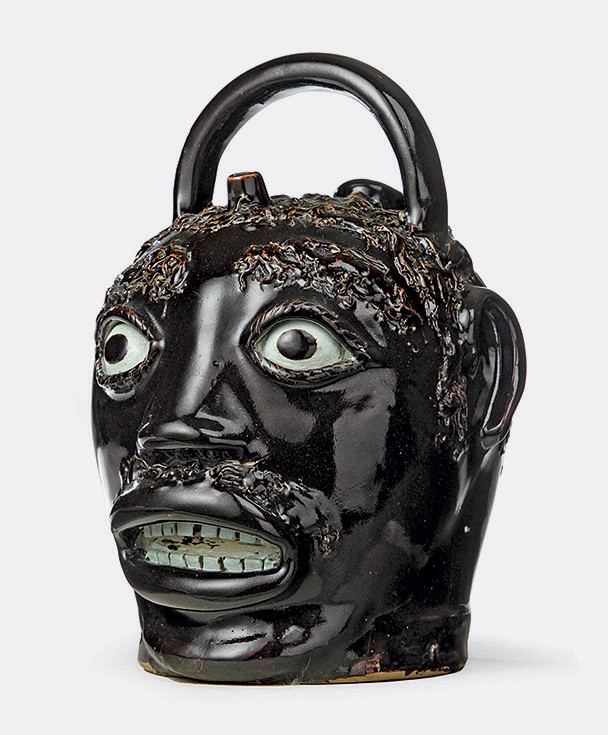
Face jug, Edgefield, South Carolina, ca. 1850–1860. Alkaline-glazed stoneware with kaolin details. H. 11". (Private collection; photos, Joe Wittkop.) Marked with incised script on back: “Dick Abney”. This may be the most powerfully sculpted of all the Edgefield face vessels, featuring dark brown glaze with stark kaolin eyes.
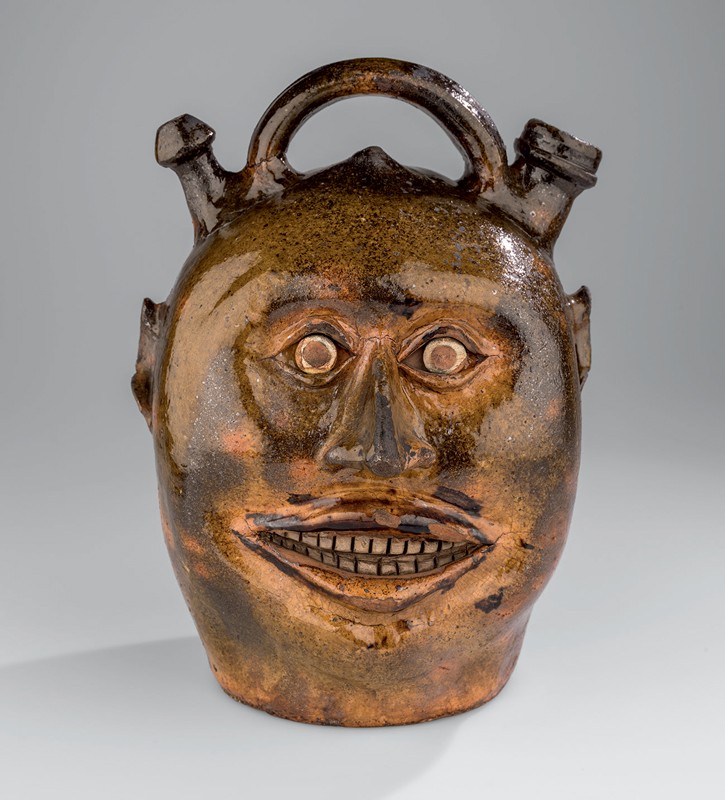
Face vessel, attributed to John Wesley, Columbia, Pennsylvania, ca. 1870. Lead-glazed earthenware. H. 10 1/8". (Courtesy, The Colonial Williamsburg Foundation.) Note the use of kaolin as a slip to create a veneer for the eyes, and possibly the teeth.
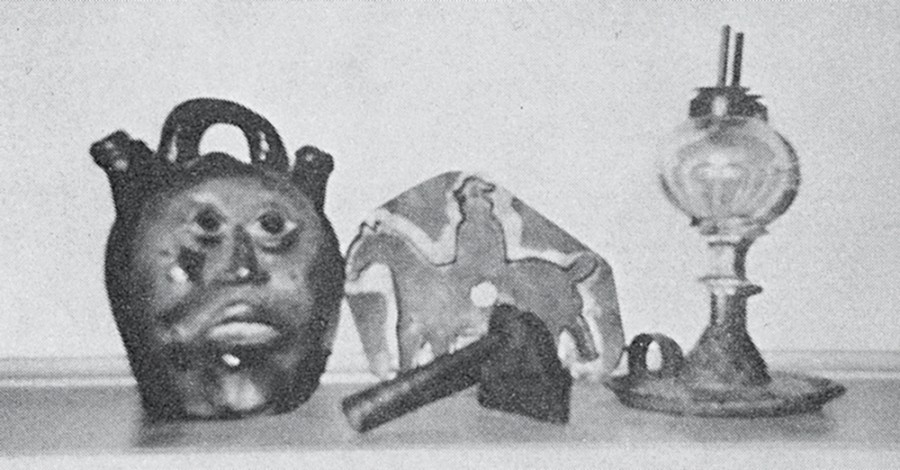
Photograph in Pennypacker’s auctioneering brochure, The Private Collection of Robert R. & Joanne Dreibelbis, Monday, May 17th, 1993 (Courtesy, The Colonial Williamsburg Foundation.) Shown is a face jug listed as a “Rare double spout face jug signed John Westley, 1870.”
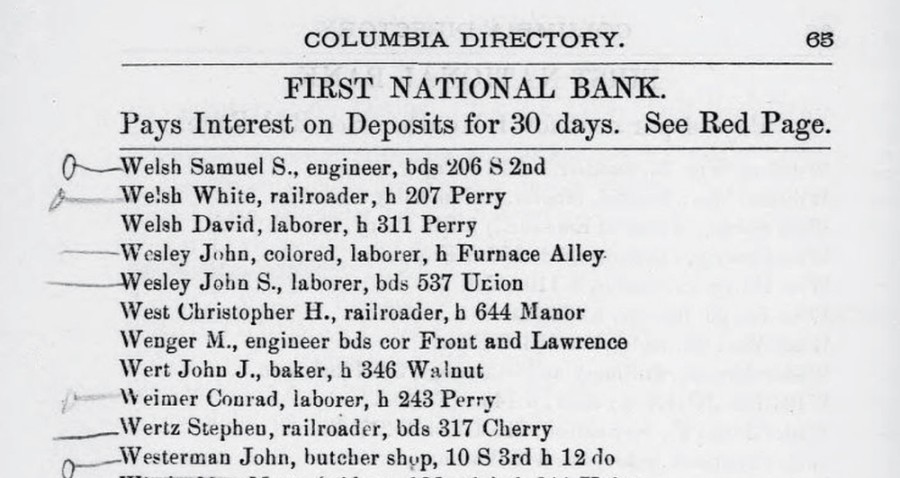
Young’s Directory of Columbia (Columbia, Pa.: Grier and Moderwell, 1874), p. 65. John Wesley is listed as a “colored, laborer” residing in Furnace Alley.
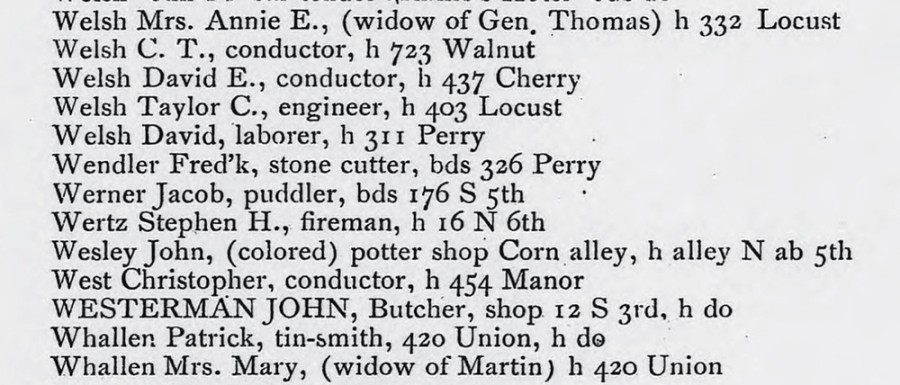
Young’s Directory of Columbia (Columbia, Pa.: Young and Hook Publishers, 1878), p. 53. “Wesley, John, (colored) potter shop Corn alley, h alley N ab 5th.”
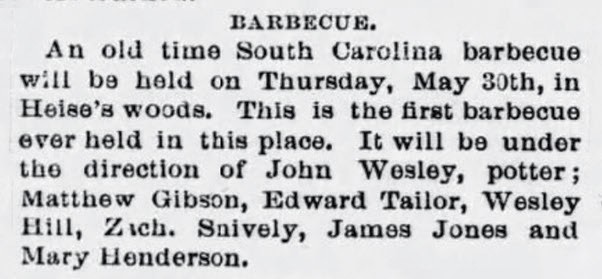
“Barbeque,” Intelligencer Journal (Lancaster, Pa.), May 10, May 1878, page 3.

1880 U.S. Federal Census, Lancaster, Columbia, Pennsylvania, p. 24, enumeration district (ED) 128, sheet 10B, dwelling 236, family 250, entry for John Wesley, Columbia, Pennsylvania, as a Black male, age 45, occupation potter, and listing his birthplace and that of his parents as South Carolina.
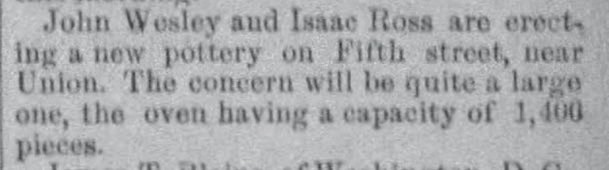
Excerpt from “Notes,” Lancaster New Era (Lancaster, Pennsylvania), April 14, 1892, p. 1.
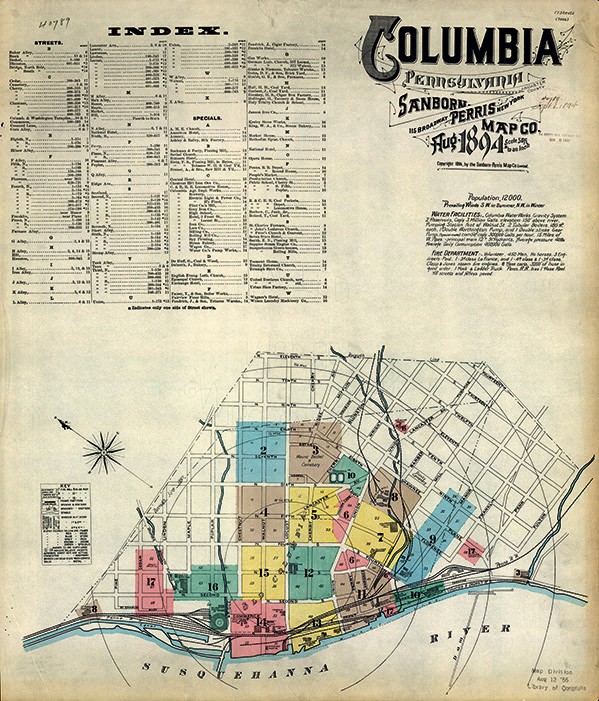
“Columbia, Pennsylvania,” Insurance Maps of Columbia, Lancaster County, Pennsylvania (New York: Sanborn Map Company, November 1904), Sheet 1. 25 5/8 x 21 1/4".
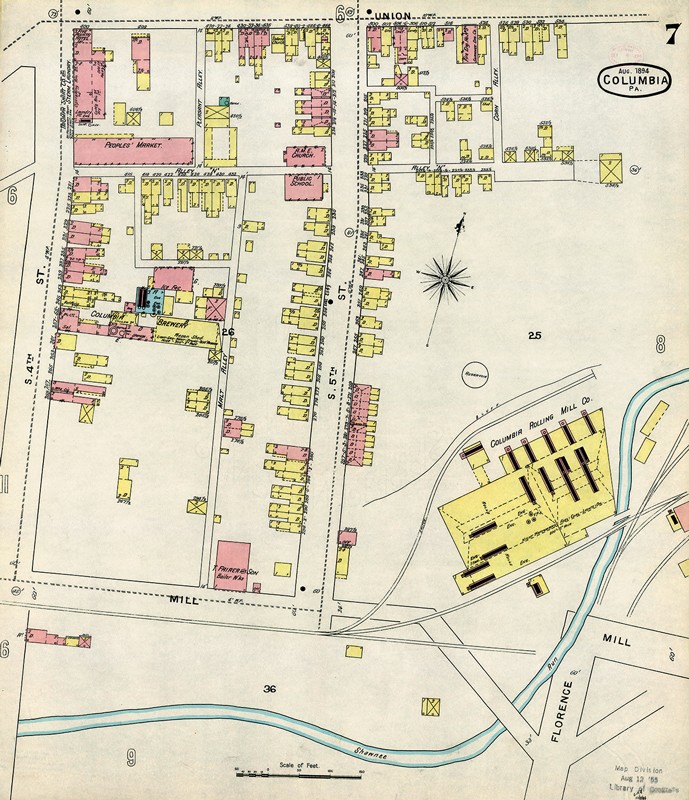
Detail of Sheet 6 from the map in figure 66 showing the intersection of Union and Fifth Streets. The pottery of John Wesley, and later of the Isaac Ross and Wesley partnership, is on the southwest corner. The well established Mt. Zion Methodist Episcopal Church is also on the same block. This church was a focal point for the Underground Railroad in Central Pennsylvania.
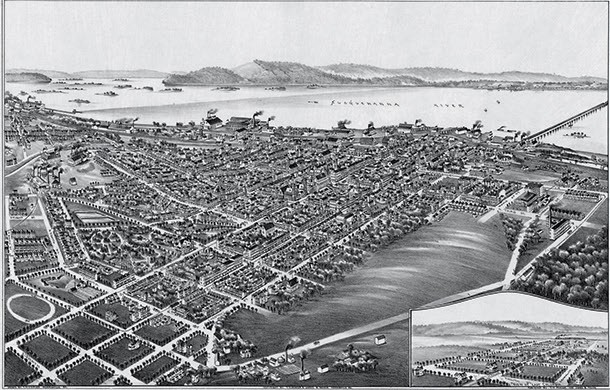
Thaddeus Mortimer Fowler and James B. Moyer, Columbia, Pennsylvania [map] (Morrisville, Pa.: T. M. and James B. Moyer, 1894). 17¾ x 27 1/8". https://www.loc.gov/ item/76695288/.
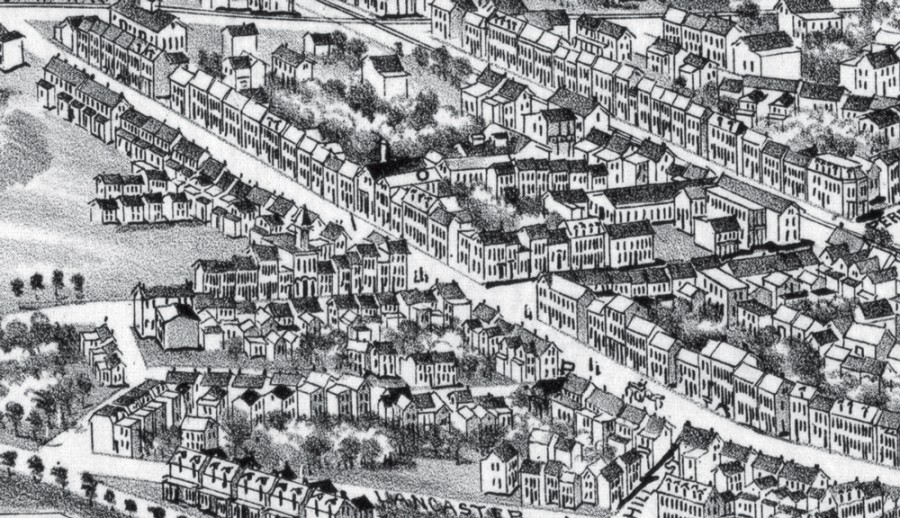
Detail of the view of Columbia, Pennsylvania, shown in figure 68. The location of John Wesley’s pottery is highlighted in red.
Face jug, John Dollings, White Cottage, Muskingum County, Ohio, ca. 1860–1870. Stoneware with Albany slip glaze. H. 12 1/4". (Courtesy, Ohio History Connection, H 53891; photo, Manko Photography.)
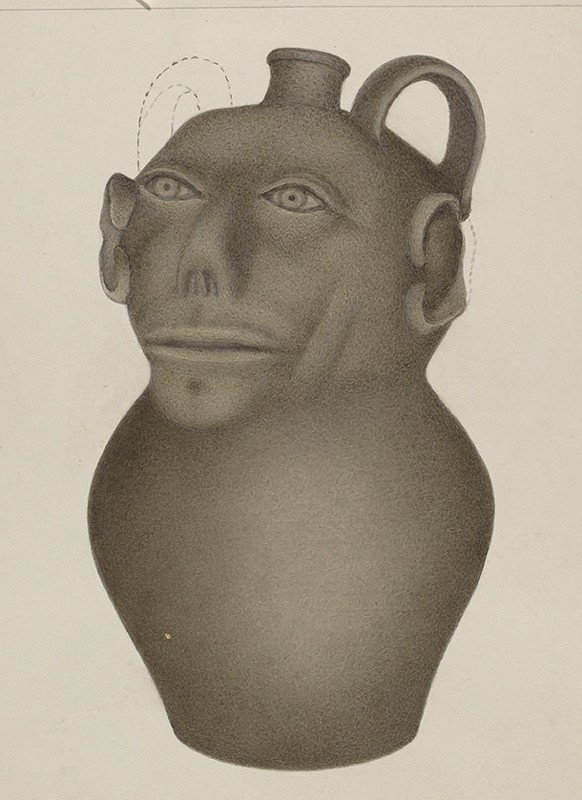
Annie B. Johnston, Stoneware Jug, ca. 1937, in Index of American Design. National Gallery of Art, Washington, D.C. Watercolor, colored pencil, graphite, and pen and ink on paper. 11 15/16 x 9 1/8". Information in the Index of American Design indicates the object was 12" in height. The drawing shows that the jug was doubled-handled, a trait not seen in other American face vessels. The overall anthropomorphic shape seems to foreshadow later Alabama folk pottery examples.
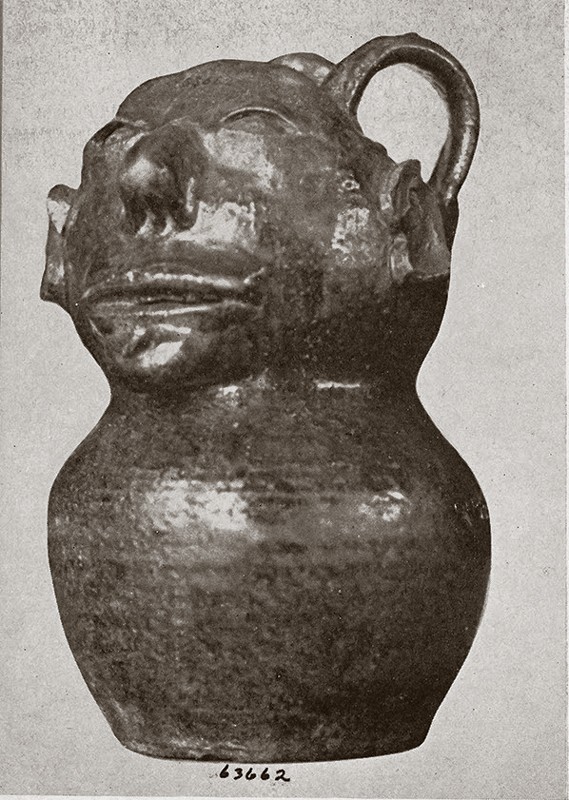
Photograph of “Stoneware ‘Voodoo’ head jug” in John Ramsay, American Potters and Pottery (New York: Tudor Publishing, 1947), fig. 75. Comparison of this photograph with the drawing illustrated in figure 71 shows that the artist took considerable liberties in her rendering.
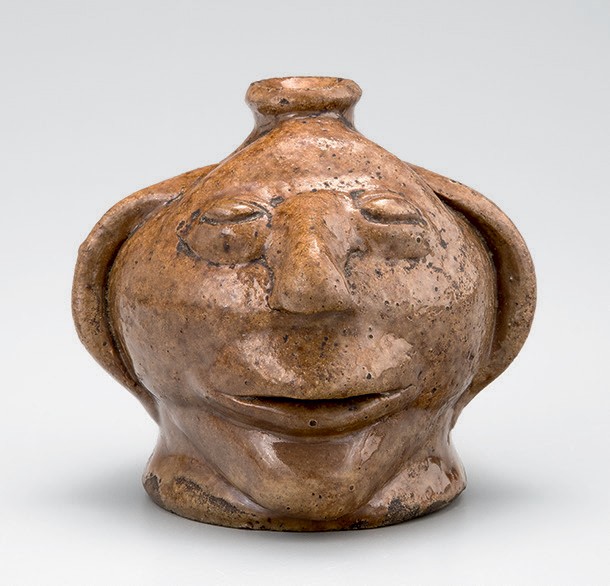
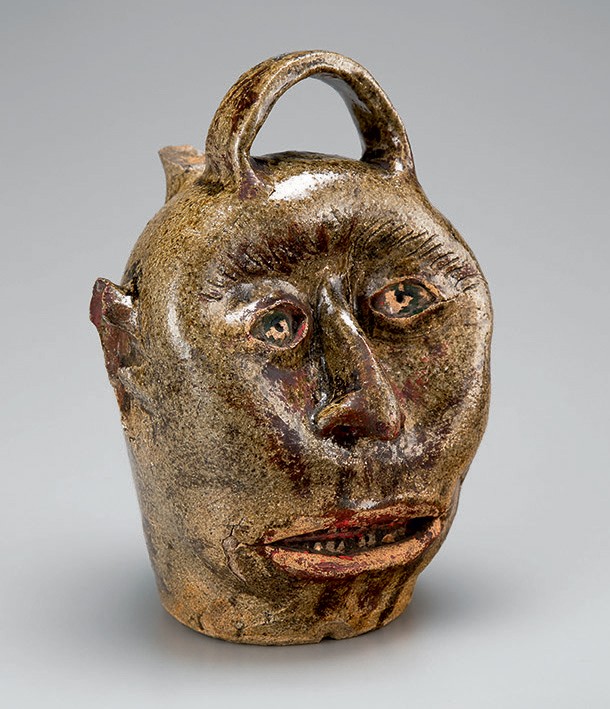
Face vessel, attributed to Thomas Bennet Odam, Knoxville, Florida, or Pollard, Alabama, 1859–1867. Ash-glazed stoneware. H. 11 1/2". (Courtesy, William C. and Susan S. Mariner Private Foundation; photo, Robert Hunter.)
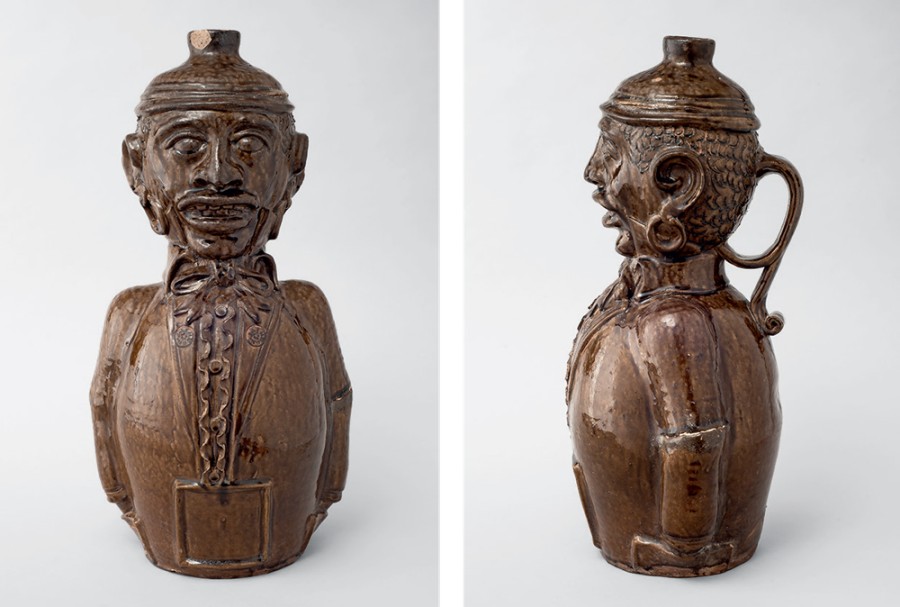
Figural jug, John Fredrick Lehman, Randolph County, Alabama, ca. 1860. Ash-glazed stoneware. H. 23 3/4". (Courtesy, High Museum, Purchase with funds from the Decorative Arts Acquisition Endowment, Accession #1994.19.)
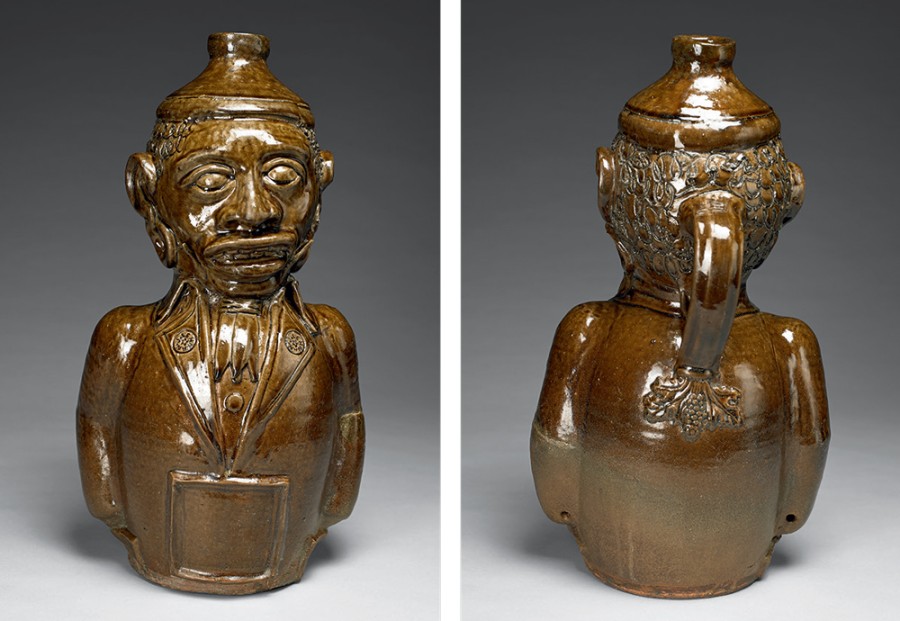
Figural jug, John Fredrick Lehman, Randolph County, Alabama, ca. 1860. Ash glazed stoneware. H. 20 1/4". (Courtesy, Birmingham Museum of Art; photo, Sean Pathasema.)
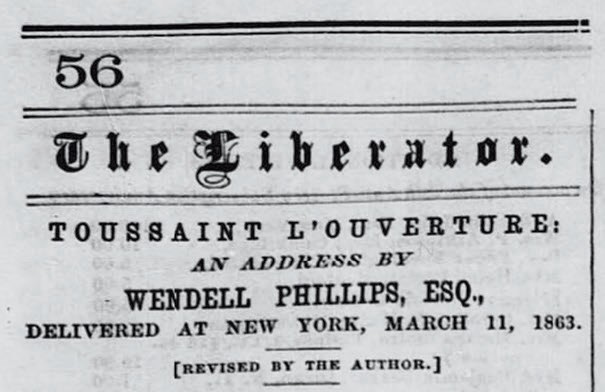
Announcement in The Liberator (Boston, Massachusetts), April 3, 1863, p. 4.
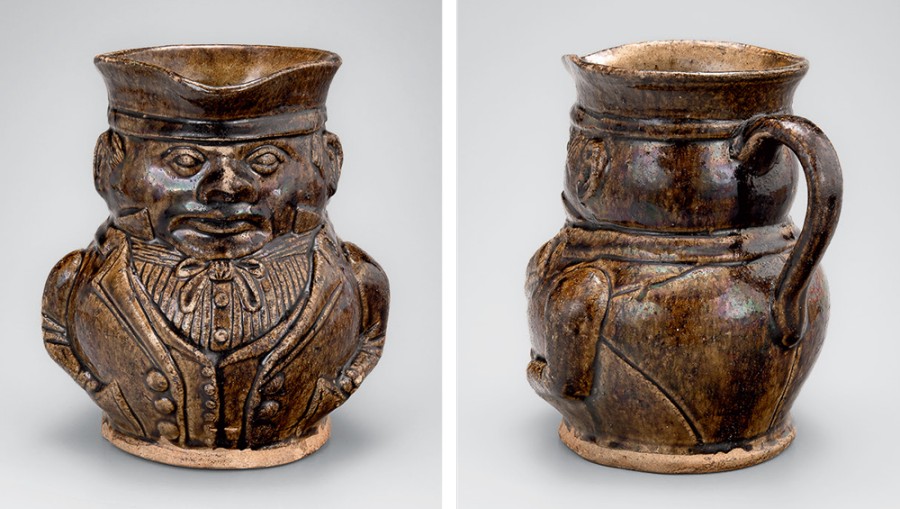
Toby jug or pitcher, attributed to John Lehman, Randolph County, Alabama, ca. 1850–1870. Ash-glazed stoneware. H. 8 3/4". (Courtesy, William C. and Susan S. Mariner Private Foundation; photo, Robert Hunter.)
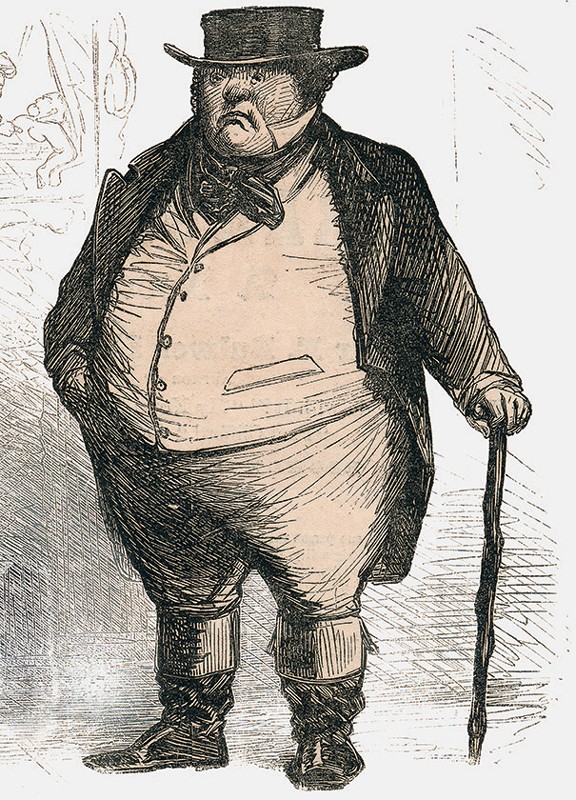
Detail of John Bull from “The Grand Deception,” Harper’s Weekly, February 22, 1862, p. 128. (Private collection.)
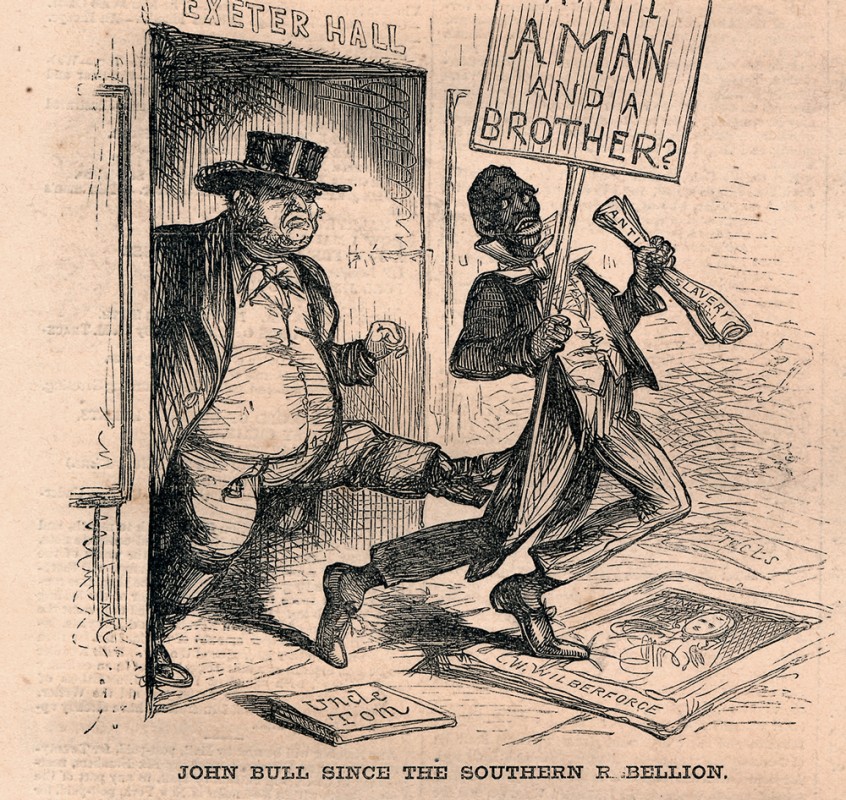
“John Bull since the Southern Rebellion,” Harper’s Weekly, September 28, 1861, p. 622. (Private collection.) The cartoon implies that England, needing the South’s cotton, kicks out an abolitionist from Exeter Hall, a site of anti-slavery meetings in London.
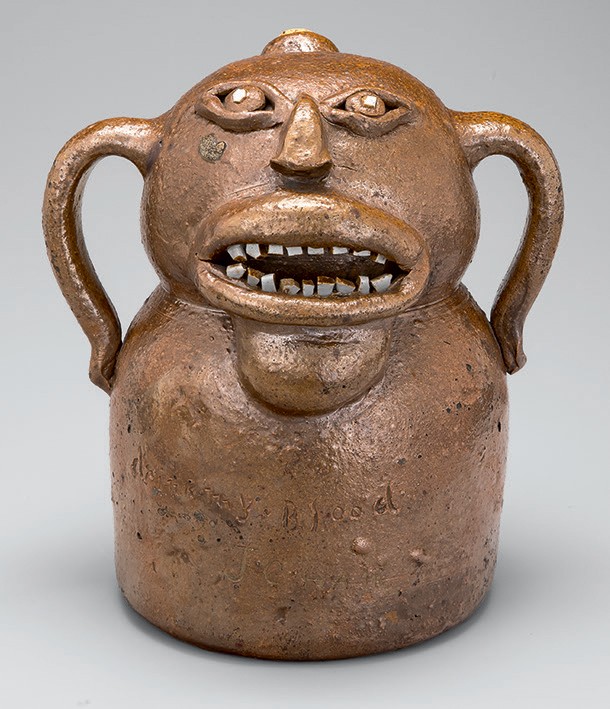
Face jug, Jesse Calvin Ham, Perry County, Alabama, ca. 1890–1900. Salt-glazed stoneware. H. 10". (Courtesy, William C. and Susan S. Mariner Private Foundation; photo, Robert Hunter.) Marked “Drink My Blood | J.C. Ham”.
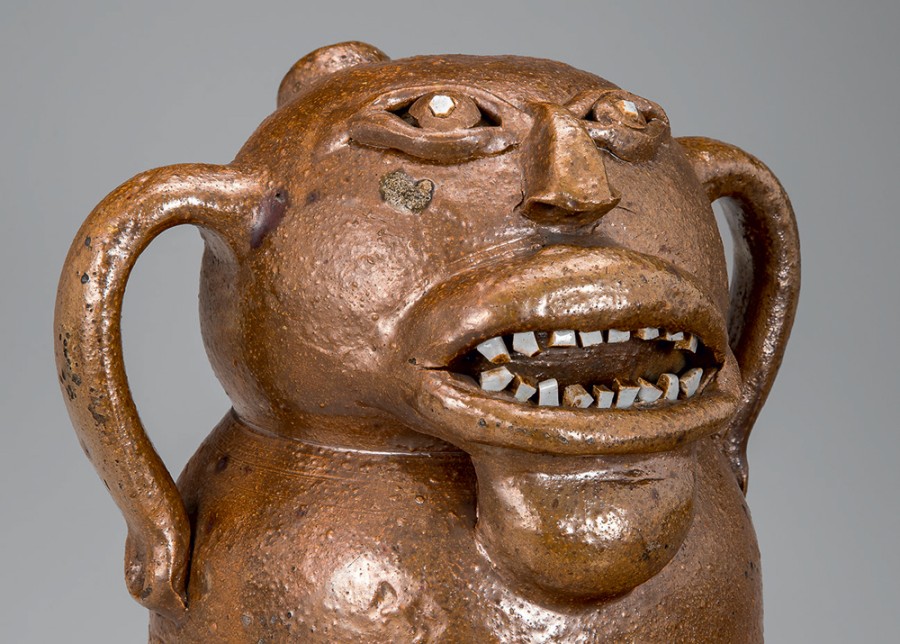
Detail of the “Drink My Blood” face vessel.
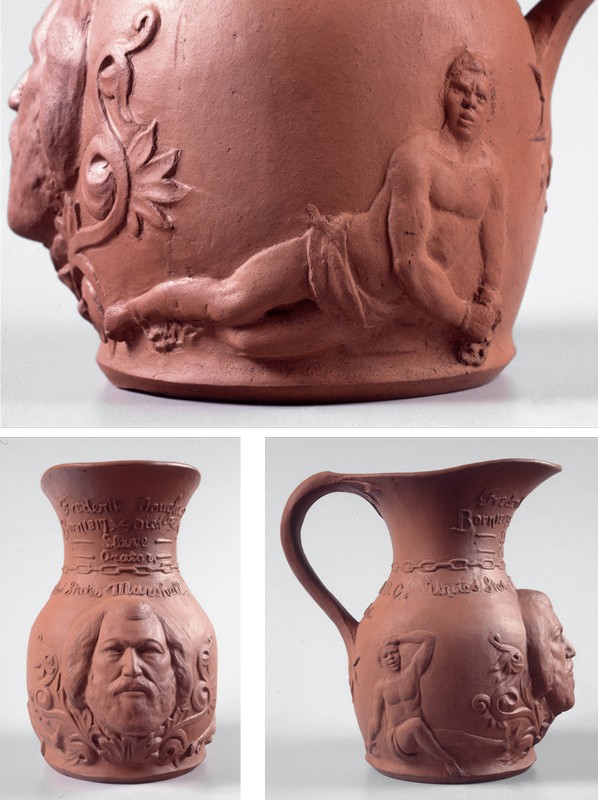
Frederick Douglass face pitcher, designed and copyrighted by J. E. Bruce, Albany, New York, 1896. Unglazed red earthenware. H. 10 1/4". (Courtesy, National Museum of American History, Smithsonian Institution, 1981.0353.01; photo, Gavin Ashworth.) The molded inscription reads “Frederick Douglass | Born 1817 | Died Feby 20 1895 | Slave Orator | United States Marshall, Recorder of Deeds D.C. | Diplomat.”
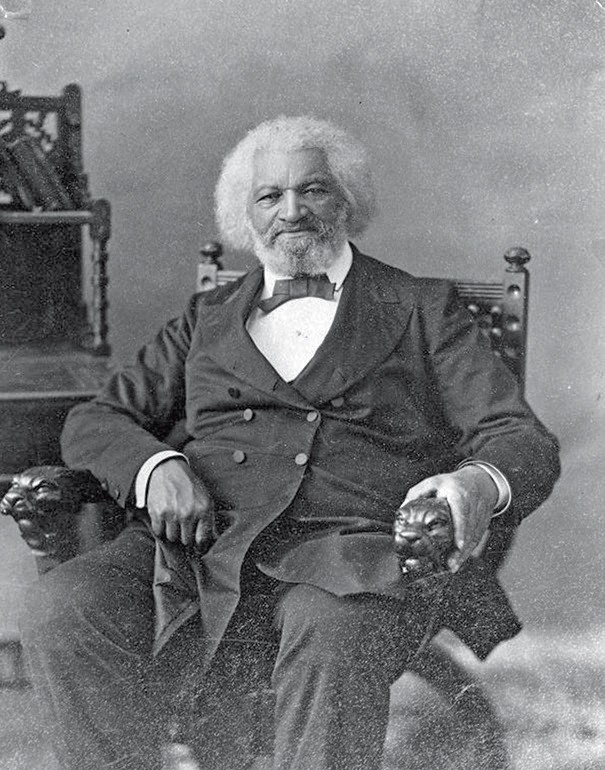
“Portrait of Frederick Douglass, abolitionist, journalist, and social reformer.” (Courtesy, Schomburg Center for Research in Black Culture, Photographs and Prints Division, The New York Public Library. New York Public Library Digital Collections.) https://digitalcollections.nypl.org/ items/6e4b45d3-4aae-6652-e040e00a1806645c.
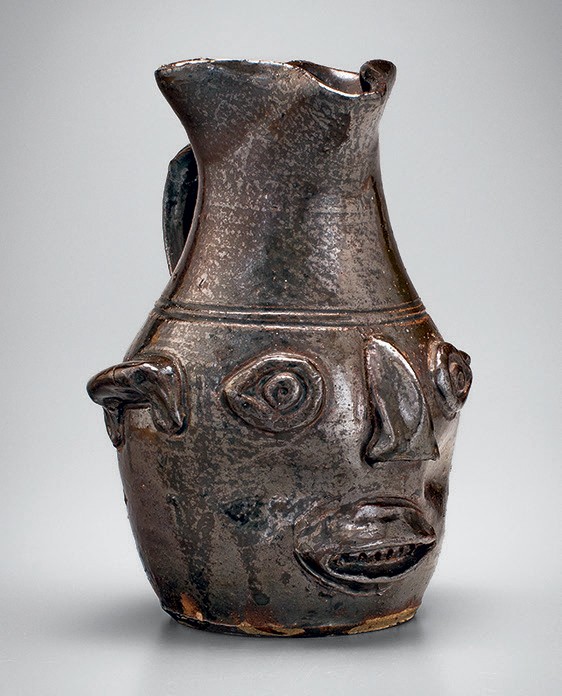
Face pitcher, J. G. Baynham, Trenton, Edgefield District, South Carolina, ca. 1890. Stoneware with Albany slip glaze H. 7 1/4". (Private collection; photo, Robert Hunter.)
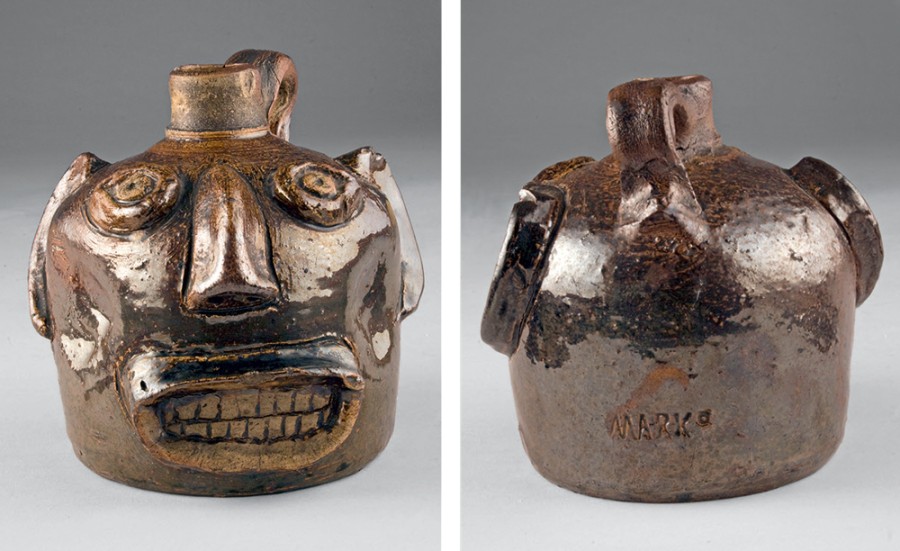
Face jug, Mark Baynham, Trenton, South Carolina, ca. 1890. Stoneware with Albany slip glaze. H. 5". (Courtesy, Art Museums of Colonial Williamsburg.) Impressed: “MARK”.
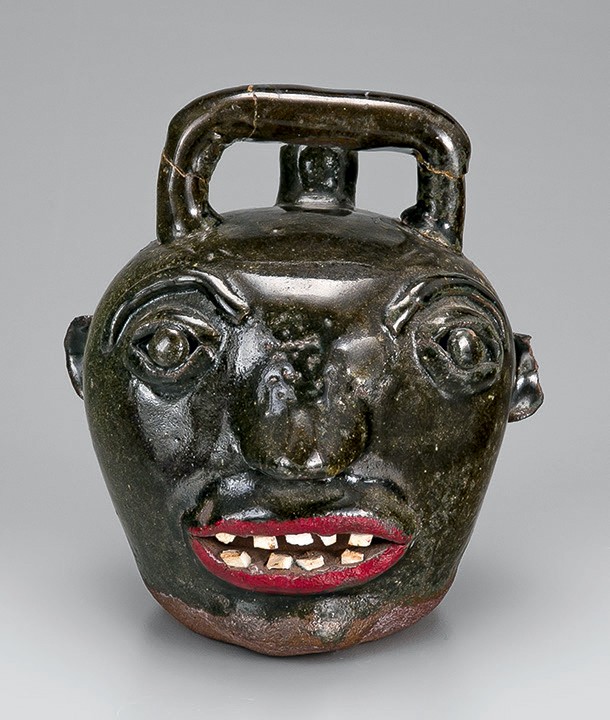
Face jug, attributed to John Leonard Atkins, Jug Factory Road, Greenville County, South Carolina, ca. 1900. Stoneware and porcelain with dark brown feldspar glaze. H. 5 1/2". (Courtesy, William C. and Susan S. Mariner Private Foundation; photo, Robert Hunter.)
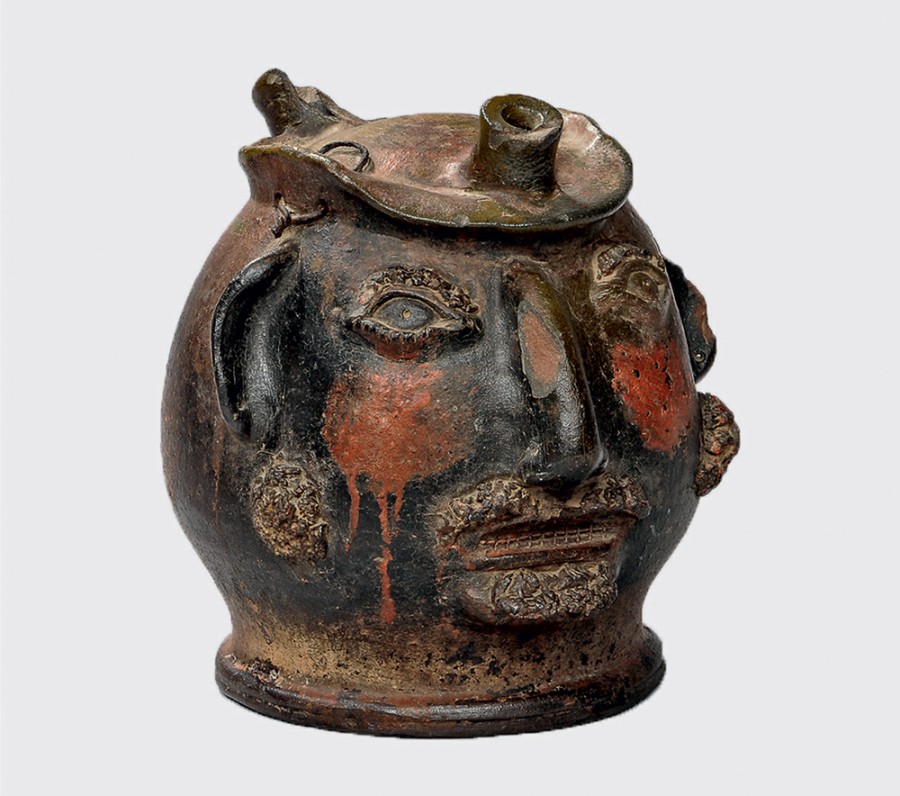
Face vessel, William Decker, Keystone Pottery, Chucky Valley, Tennessee, 1892. Salt-glazed stoneware with paint. H. 8". (Courtesy, Bonhams, Skinner.) Incised on the bottom: “Made by Wm Decker | July 9th 1892” and “L.W. Berry.” This vessel appears to have had a wire bail handle.
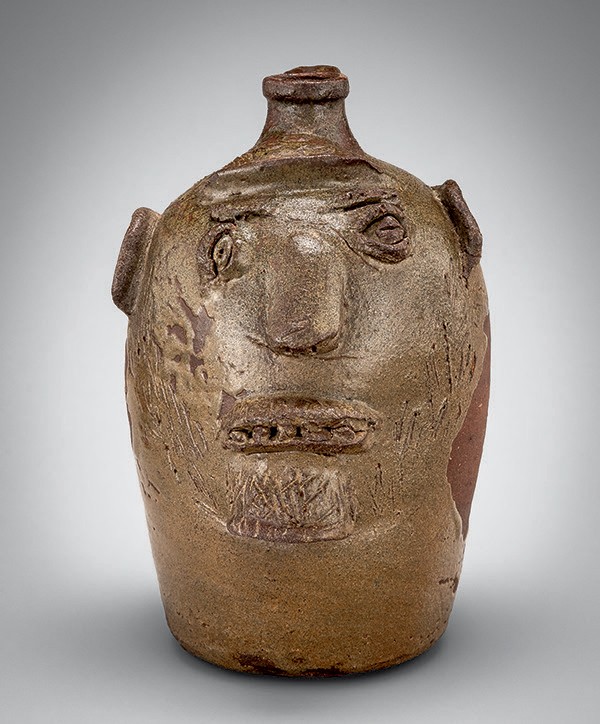
Face jug, attributed to Wiley C. Meaders, Mossy Creek, White County, Georgia, ca. 1910–1930. Alkaline-glazed stoneware. H. 10 1/4". (Courtesy, William C. and Susan S. Mariner Private Foundation; photo, Robert Hunter.)
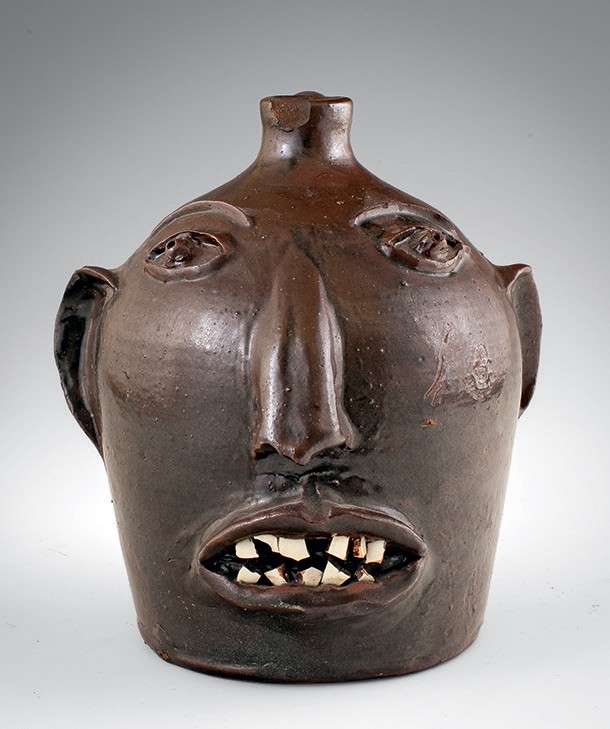
Face jug, attributed to Otto Brown, Bethune, South Carolina, mid-20th century. Albany slip glazed stoneware. H. 8 1/2". (Private collection; photo, Robert Hunter.) The object bears china teeth.
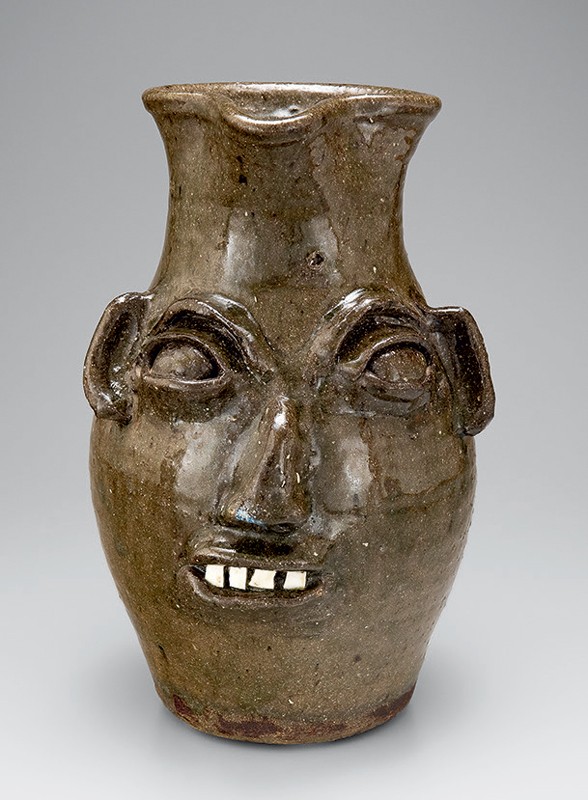
Face jug, Lanier Meaders, Mossy Creek, White County, Georgia, 1974. Alkaline-glazed stoneware. H. 8". (Author’s collection; photo, Robert Hunter.)
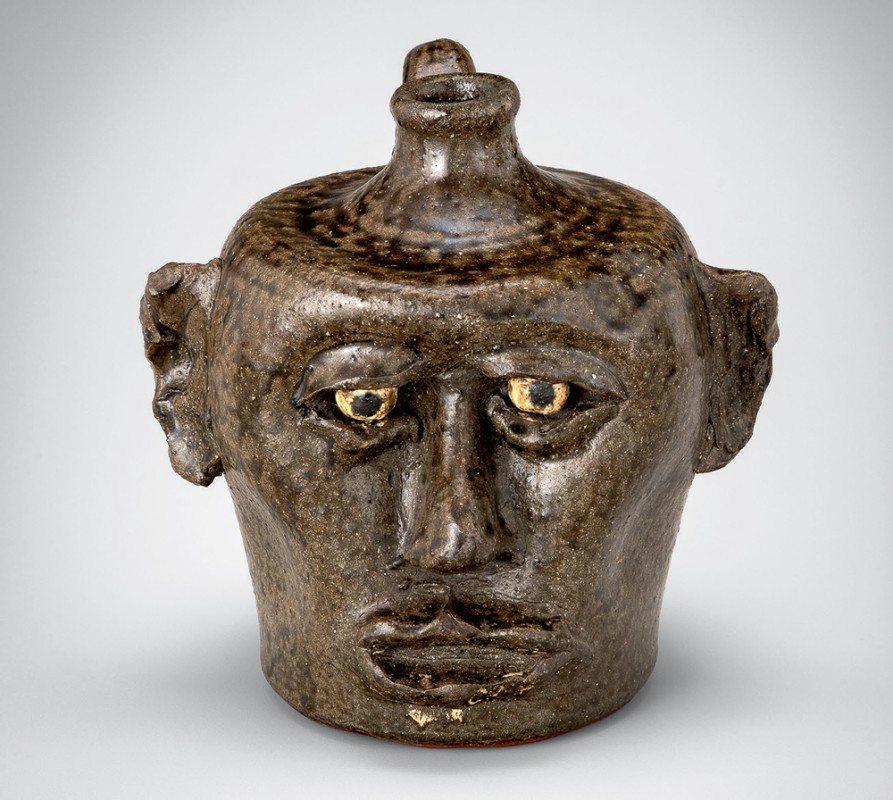
Face pitcher, Burlon Craig (1914–2002), Vale, North Carolina, ca. 1990. Alkaline-glazed stoneware. H. 12 1/4". (Private collection; photo, Robert Hunter.)
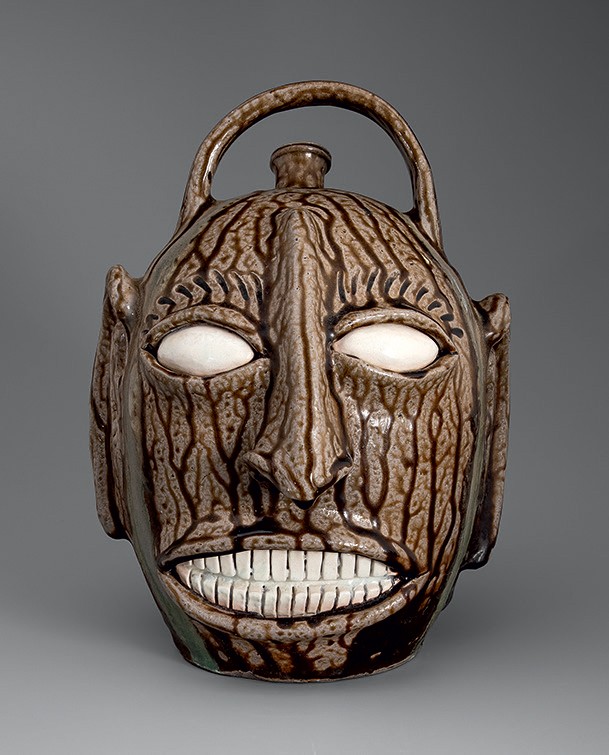
Face jug, Billy Ray Hussey, Bennet, North Carolina, ca. 2000. Alkaline-glazed stoneware. H. 12 3/4". (Courtesy, William C. and Susan S. Mariner Private Foundation; photo, Robert Hunter.)
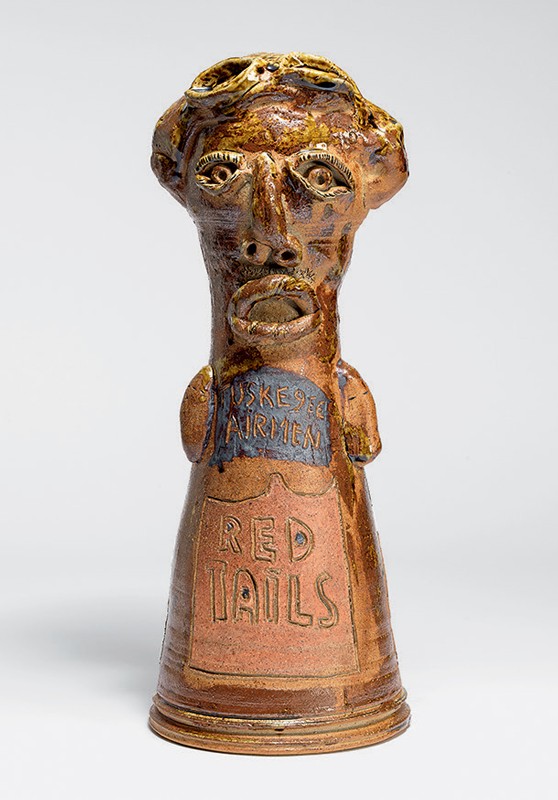
Red Tails, Jim McDowell, Weaverville, North Carolina, 2022. Stoneware with Wertz Shino glaze. H. 16". (Courtesy, Nasher Museum of Art at Duke University, purchased with funds provided by Susan Brill Hershfield and Michael Hershfield.) https://www. artsvilleusa.com/jim-mcdowell-nashermuseum-part-three/.
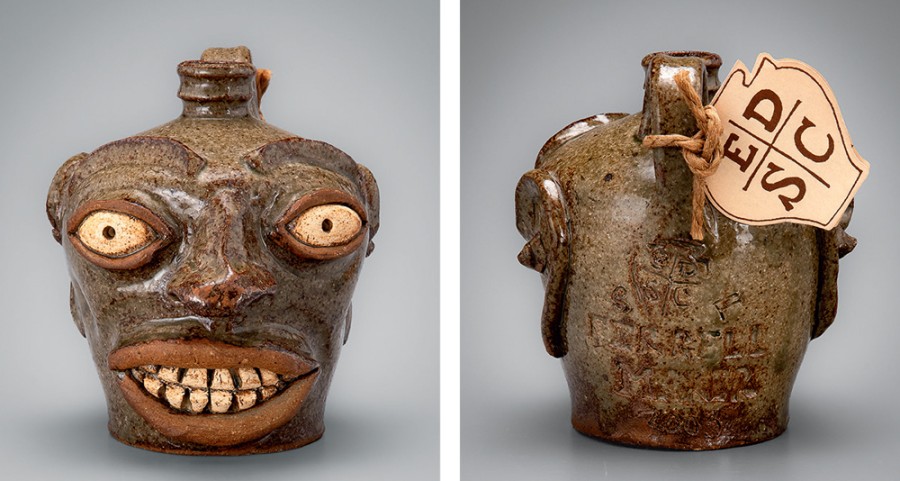
Face jug, Stephen Ferrell, Edgefield, South Carolina, 2003. Alkaline-glazed stoneware. H. 5 1/2". (Author’s collection; photo, Robert Hunter.) Inscribed: “FERRELL | MAKER | 2003.”
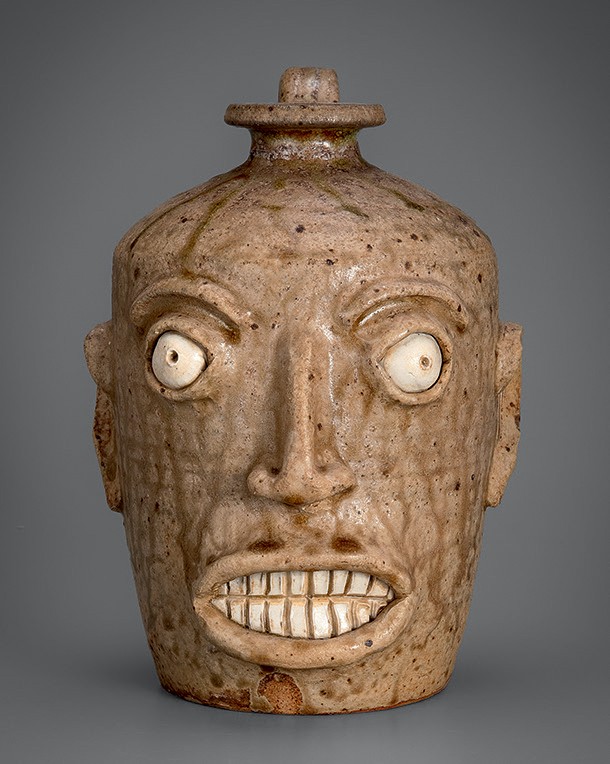
Face jug, Peter Lenzo, Columbia, South Carolina, 2004. Alkaline-glazed stoneware. H. 8". (Author’s collection; photo, Robert Hunter.)
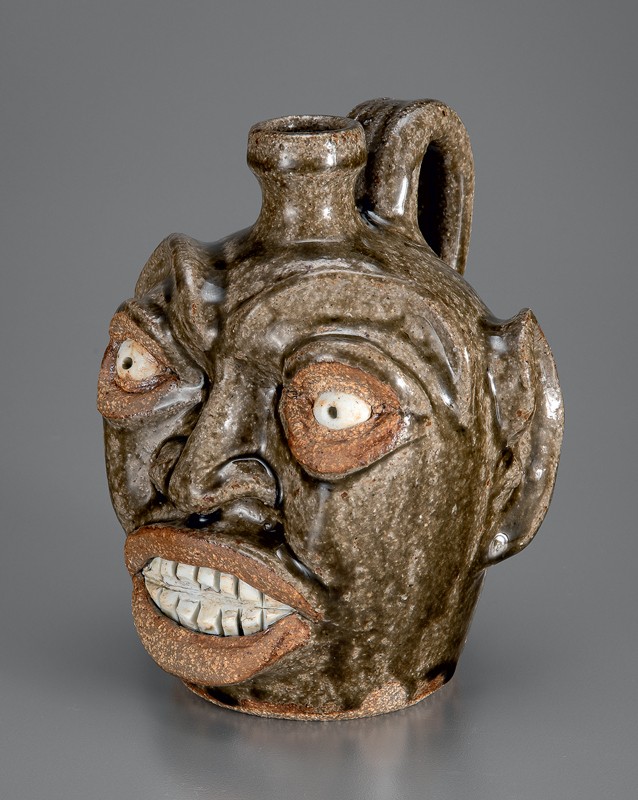
Face jug, Michel Bayne, Lincolnton, North Carolina, 2004. Alkaline-glazed stoneware. H. 6 1/4”. (Author’s collection; photo, Robert Hunter.) Inscribed: “Bayne | Marker | Tigerville | SC.”