


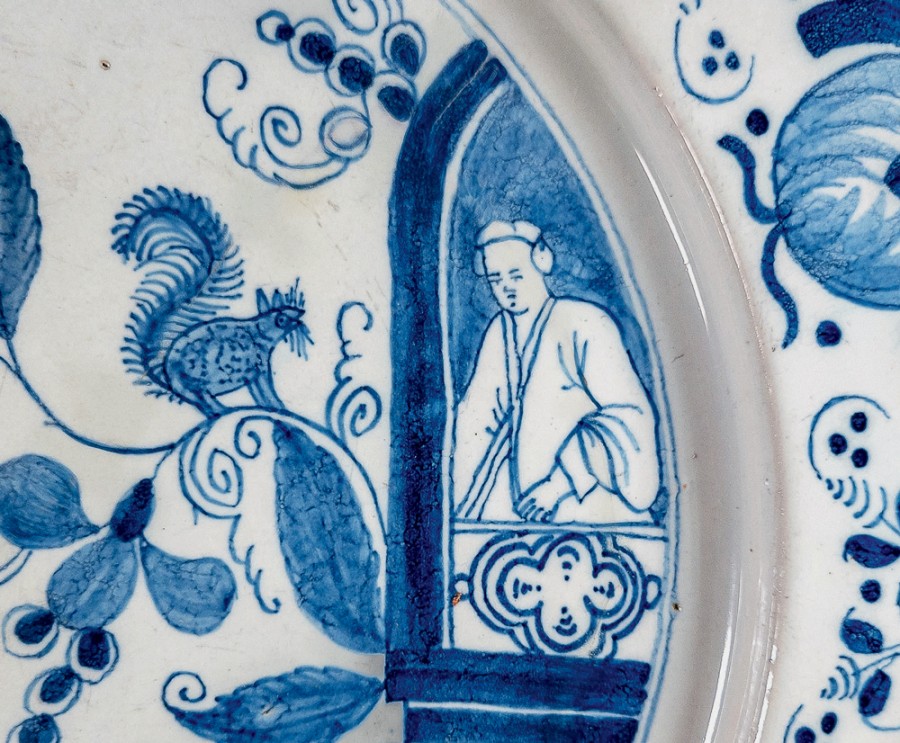
Detail of the charger depicted in figure 17.
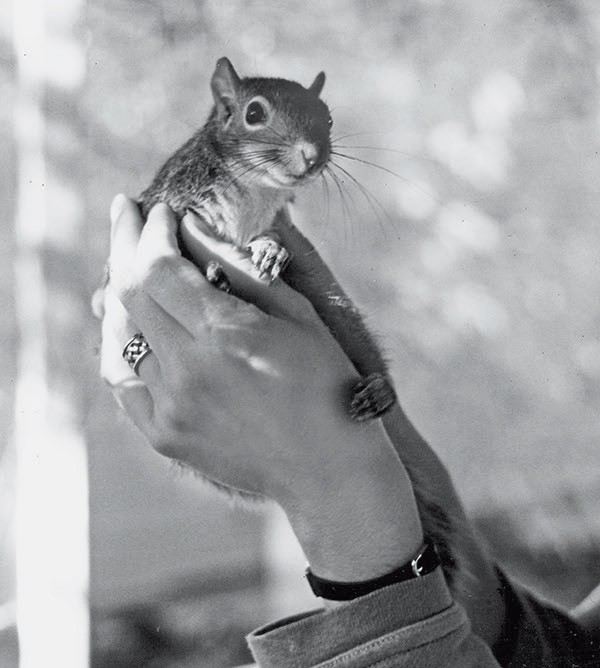
Robert Burle Esq. (Photo, the author.)
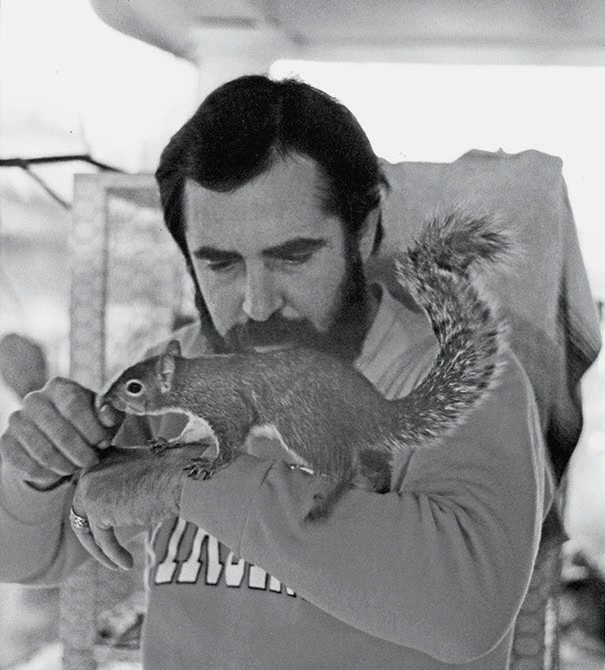
The author with Burle. (Photo, Donna Ware.)
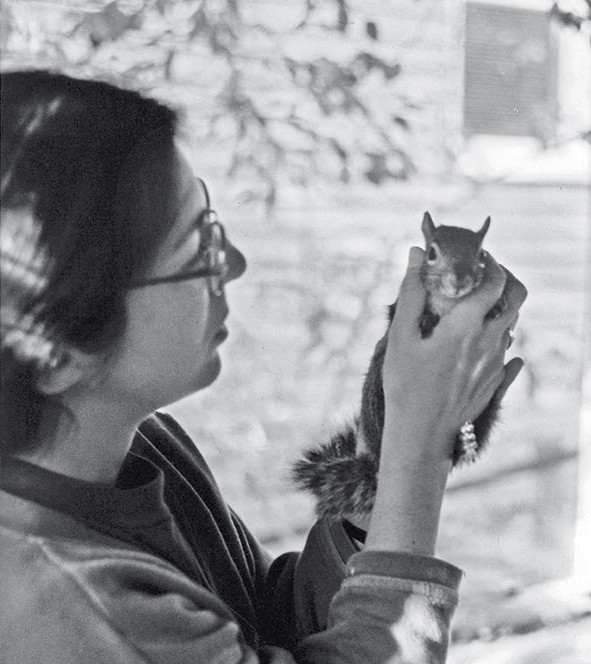
Donna Ware holds Burle. (Photo, the author.)

Joseph Badger (1707 or 1708–1765), Portrait of Rebecca Orne, 1757. Oil on canvas. 25 3/4" x 20 3/4". (Courtesy, Worcester Art Museum.)
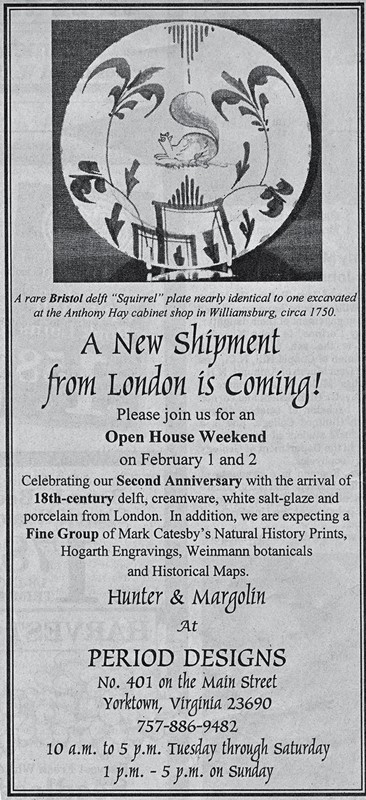
Advertisement, Hunter and Margolin, in Maine Antique Digest, 1996. (Courtesy, Rob Hunter.)
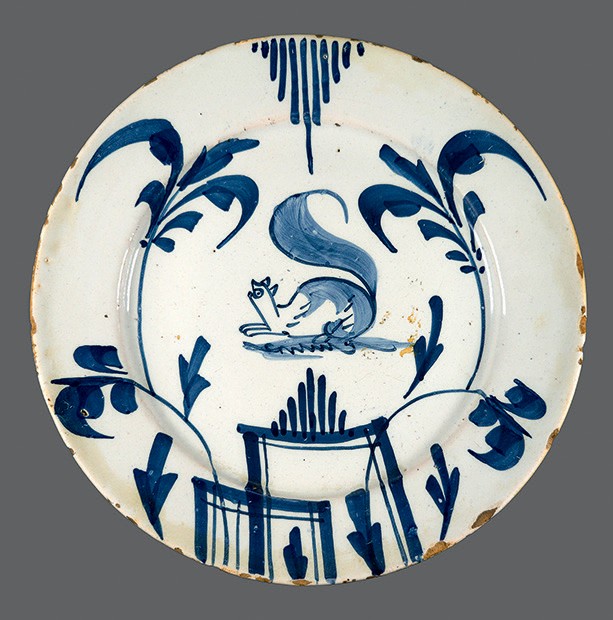
Plate, Bristol, England, ca. 1700–1730. Tin-glazed earthenware. D. 7 5/8". (Author’s collection and photograph.) This is the original squirrel plate, obtained from Rob Hunter in 1996. Given its small size and profile, it may be the earliest vessel among the plates and chargers in the collection (possibly late seventeenth century). Once described as depicting gates with a foliate design, this can now be seen as an abstract depiction of a grape trellis and vines.
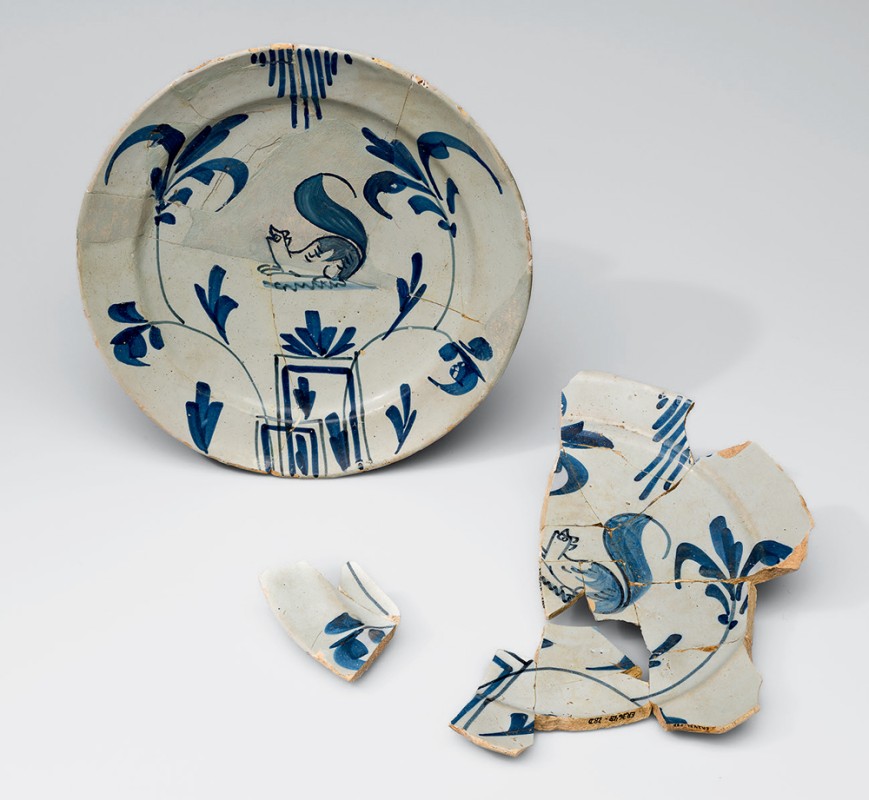
Two plates, Bristol, England, ca. 1720–1740. Tin-glazed earthenware. D. 8 1/4". (Courtesy, Colonial Williamsburg Foundation; photo, Jason B. Copes.) These two plates (the one on the left is partially reconstructed) were recovered from the site of Anthony Hay’s house and workshop on Nicholson Street in Williamsburg, Virginia. The plates were probably broken and thrown away in the 1760s or 1770s.
Lost Towns Project T-shirt. (Author’s collection and photograph.)
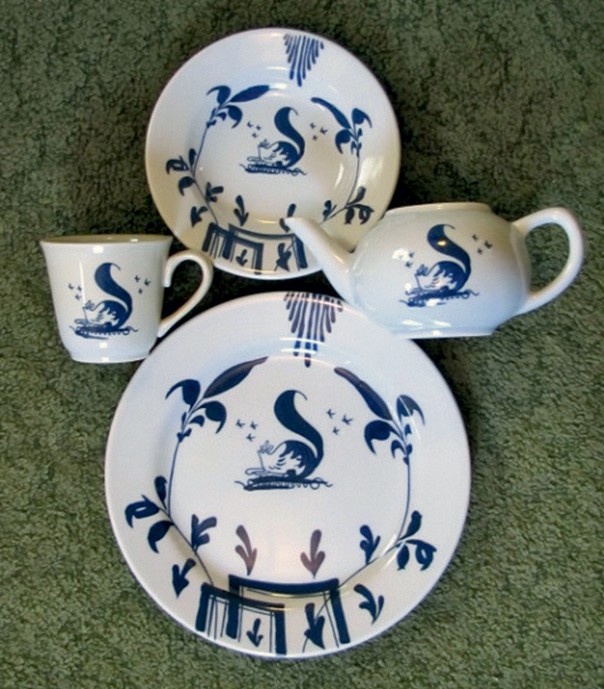
Teapot, cup, saucer, and plate, Syracuse China, Syracuse, New York, ca. 2000. Glazed earthenware. D. 9 3/4" (plate). (Author’s collection and photograph.)
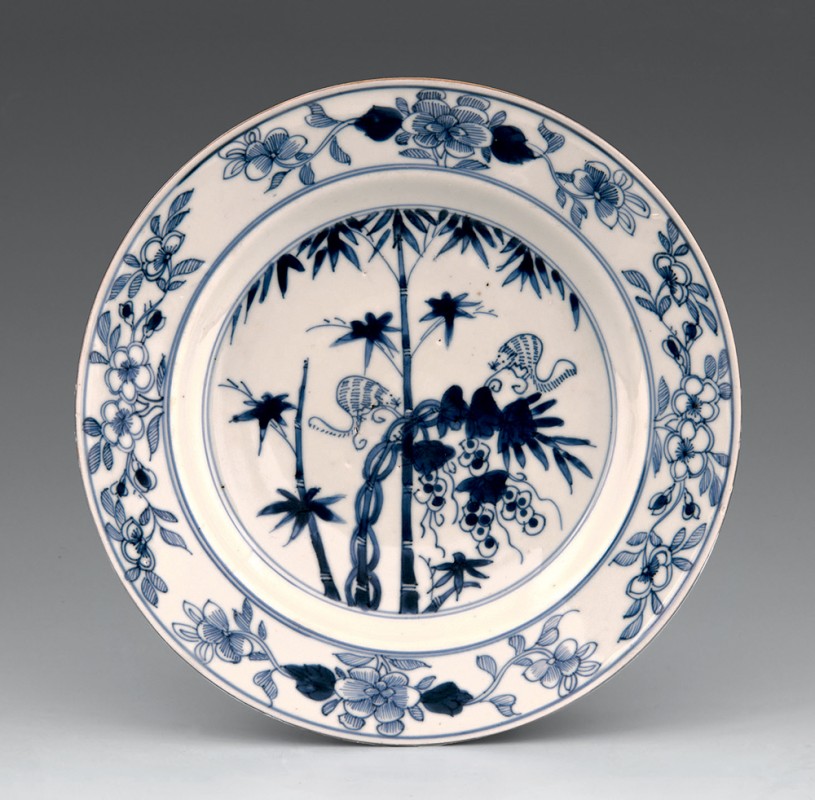
Plate, Jingdezhen, China, ca. 1740. Hard-paste porcelain. D. 9 1/4". (Courtesy, Colonial Williamsburg, Gift of Mr. and Mrs. John C. Austin, 1988–495.)
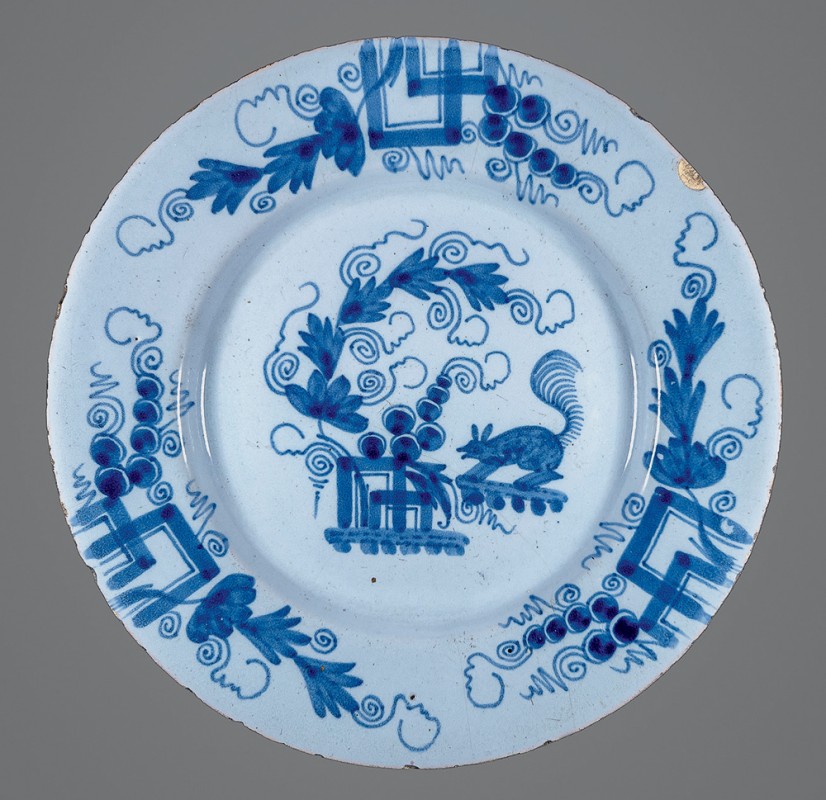
Plate, Bristol, 1720–1740. Tinglazed earthenware. D. 8 3/4". (Author’s collection and photograph.) The gatelike trellis with grapes and vines is made obvious on this piece.
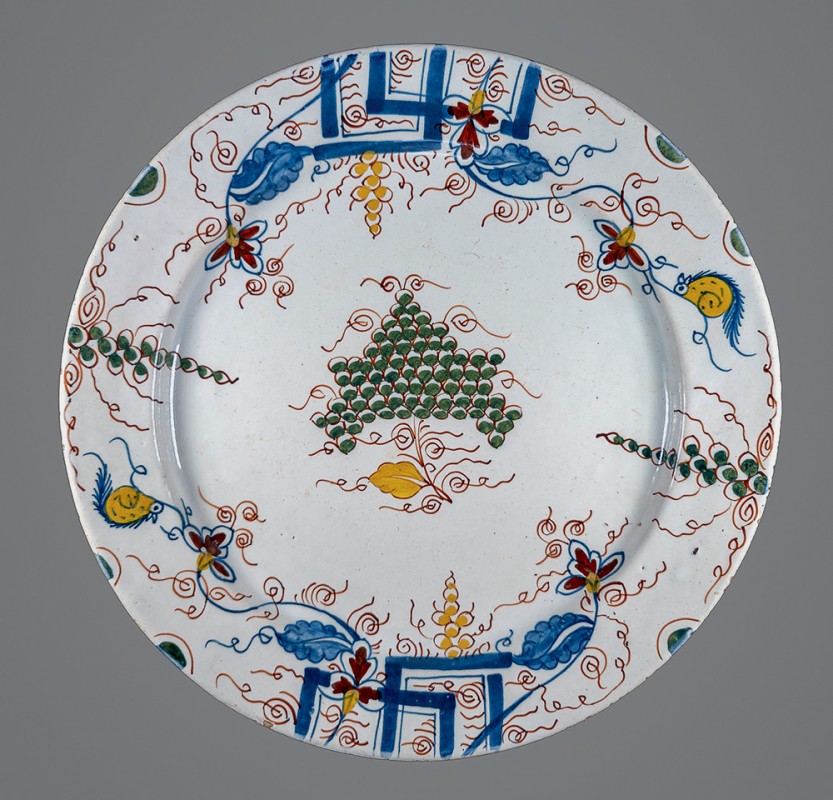
Charger, Bristol, England, 1740–1760. Tin-glazed earthenware. D. 13". (Author’s collection and photograph.) Perhaps the most overt in the depiction of grapes is this charger. Its polychrome blue, yellow, red, and green palatte, along with the trellis “gates,” indicate it was manufactured in Bristol. Two rather odd and simplistic yellow and blue-spotted squirrels constitute a minor addition to the rim decoration. They cling to a vine that is undoubtedly based on the Chinese grapevine motif.
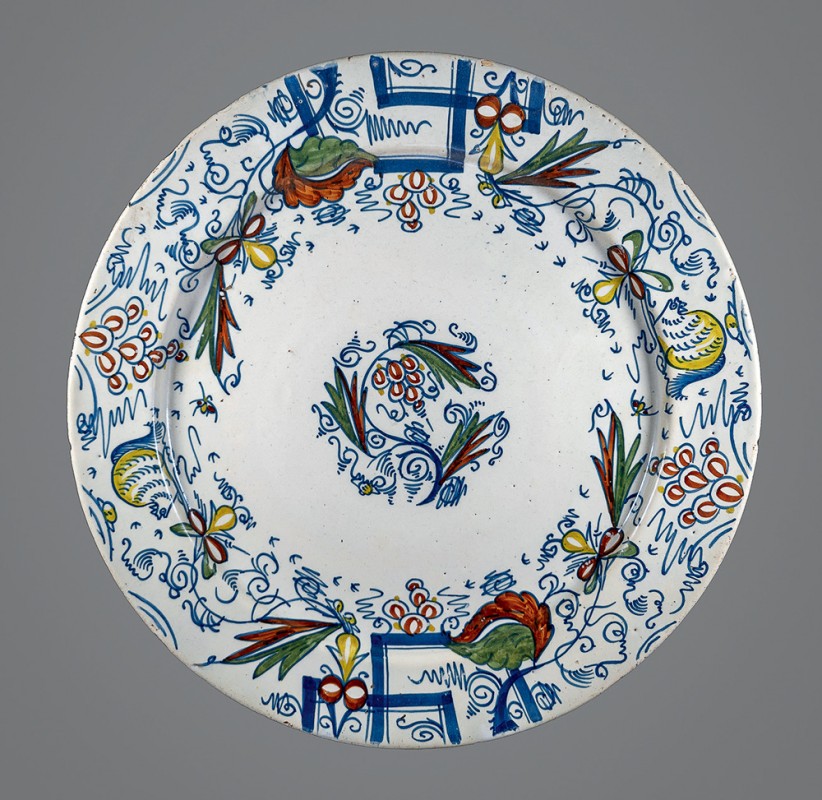
Charger, Bristol, England, 1740–1760. Tin-glazed earthenware. D. 13 1/8". (Author’s collection and photograph.) Grapes are the central motif, but with a more restrained depiction of the vine and grapes than those on the charger in figure 9. Here the squirrels are again minor components of the rim decoration. In this instance they are striped and rendered in yellow and blue. Grapevine trellises are also a part of the rim motifs, and again a Bristol attribution is warranted.
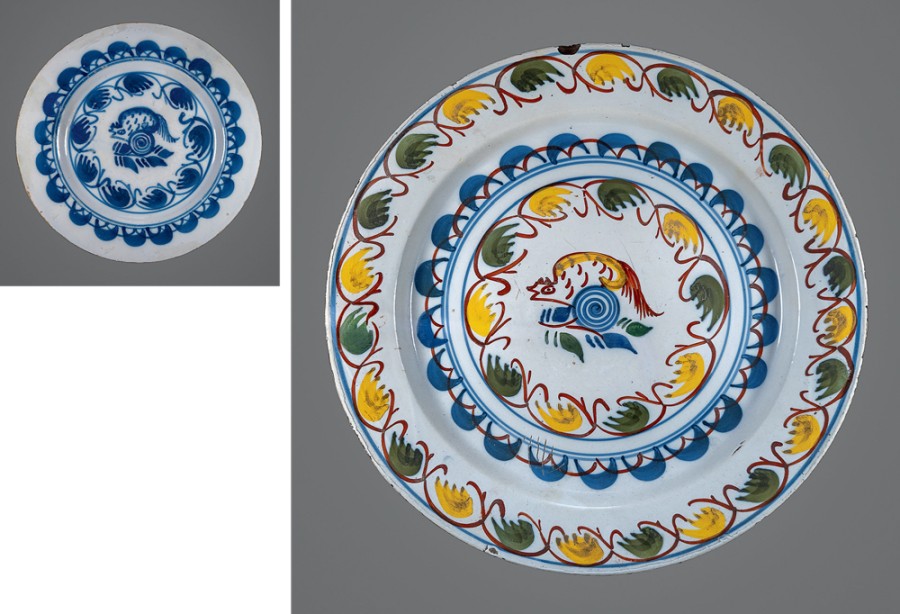
Plate and charger, London, England, 1720–1740. Tin-glazed earthenware. D. 8 3/4" and 13 1/4". (Author’s collection and photograph.) Here the squirrel is the central motif—it appears to be vaguely spotted and sits on a pinwheel-shaped flower. The design was available in blue-and-white and polychrome, and in at least two sizes: individual plates and larger chargers. The polychrome charger was formerly in the collection of Sir Gilbert Mellor and Sir Frederick Warner and was obtained from dealer, John Howard, who at one time also had a nearly identical nine-inch polychrome plate.
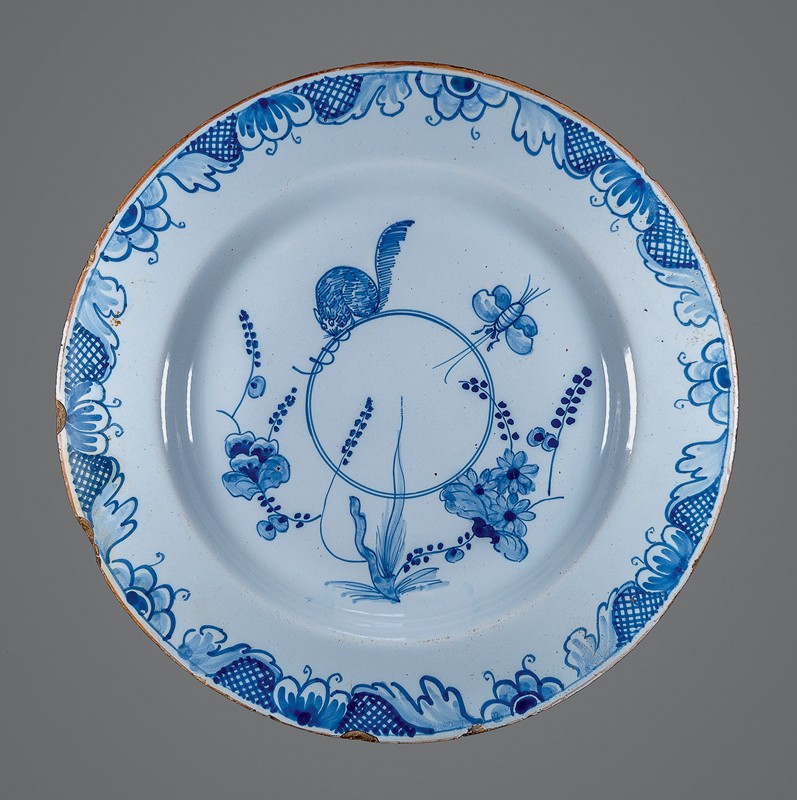
Charger, England or Netherlands, 1740–1750. Tin-glazed earthenware. D. 12". (Author’s collection and photograph.) Here a comparatively accurate depiction of a squirrel sits on a ring with associated grapevines and a butterfly. A restrained floral motif decorates the border.
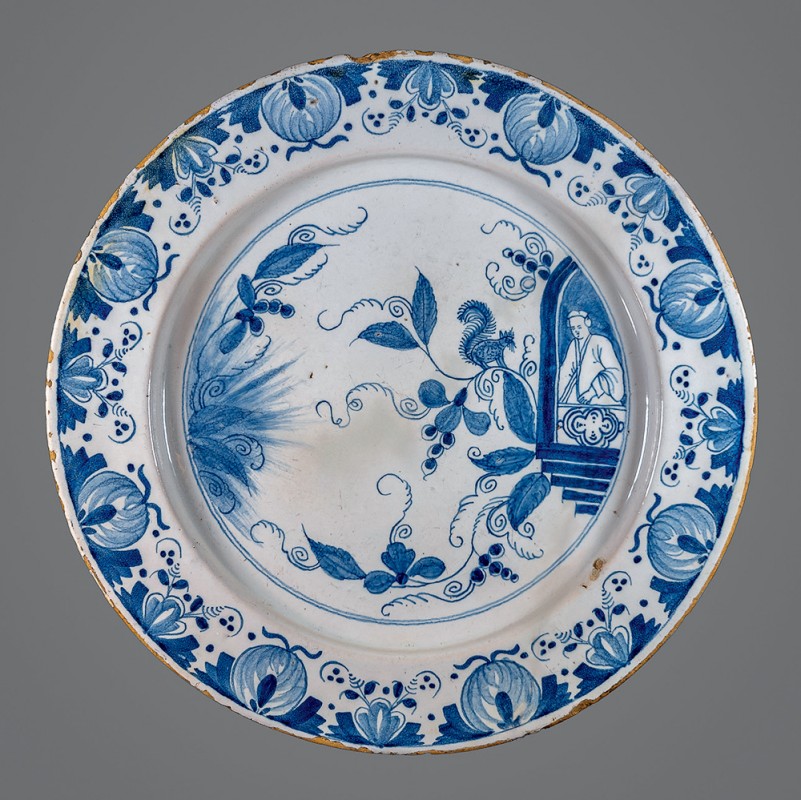
Charger, England, 1740–1760. Tin-glazed earthenware. D. 13 1/4". (Author’s collection and photograph.) This charger displays a relatively realistic scene of a man looking out his window at a well-rendered squirrel. The associated grapevine implies the original Chinese fertility association.
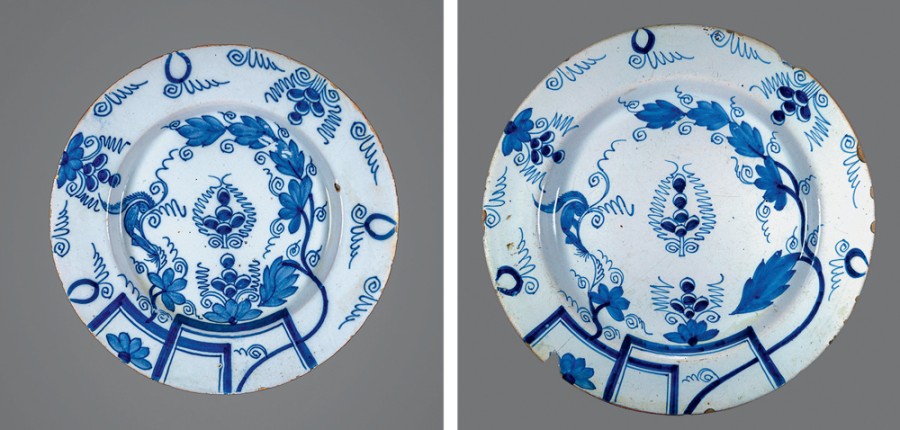
Plate and charger, Bristol, England, 1730–1760. Tin-glazed earthenware. D. 8 3/4" and 10". (Author’s collection and photograph.) This plate and charger depict a very stylized squirreland-grapevine motif along with a trellis; the pieces are undoubtedly a Bristol product. Although both pieces share the same overall design, the plate compresses the iconography in a significant fashion and is rendered in a more intense blue.
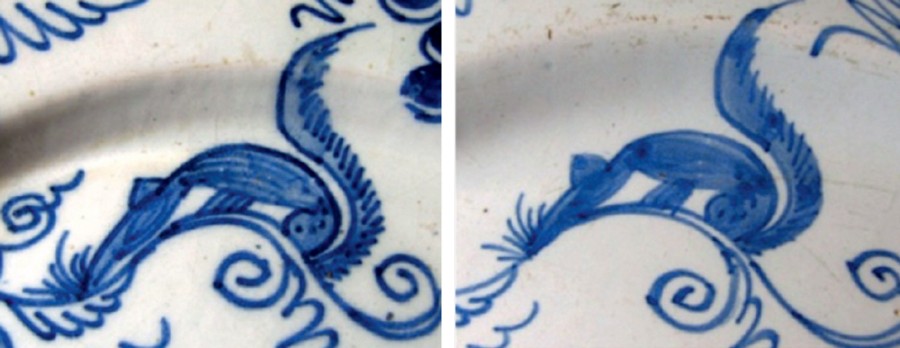
Details of the squirrel on the plate and on the charger illustrated in figure 18. The squirrels shown on both pieces are virtually identical and suggest a single artist.
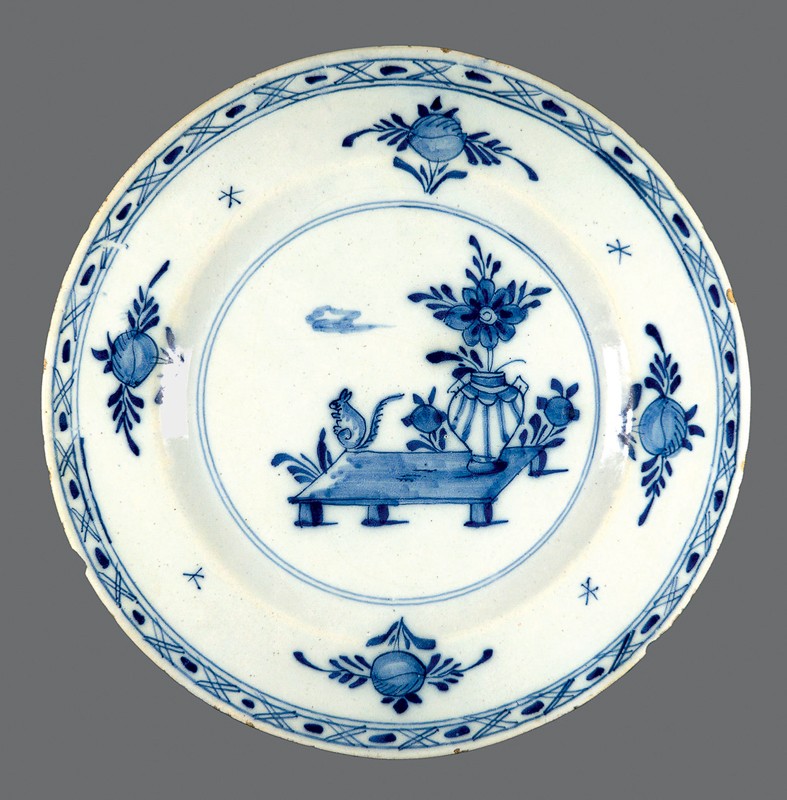
Plate, Bristol, England, ca. 1760. Tin-glazed earthenware. D. 8 3/4". (Author’s collection and photograph.) On this vessel a relatively lifelike squirrel is shown sitting on a low table with a flowerpot. The lack of grapevines implies a more literal, realistic iconographic source.
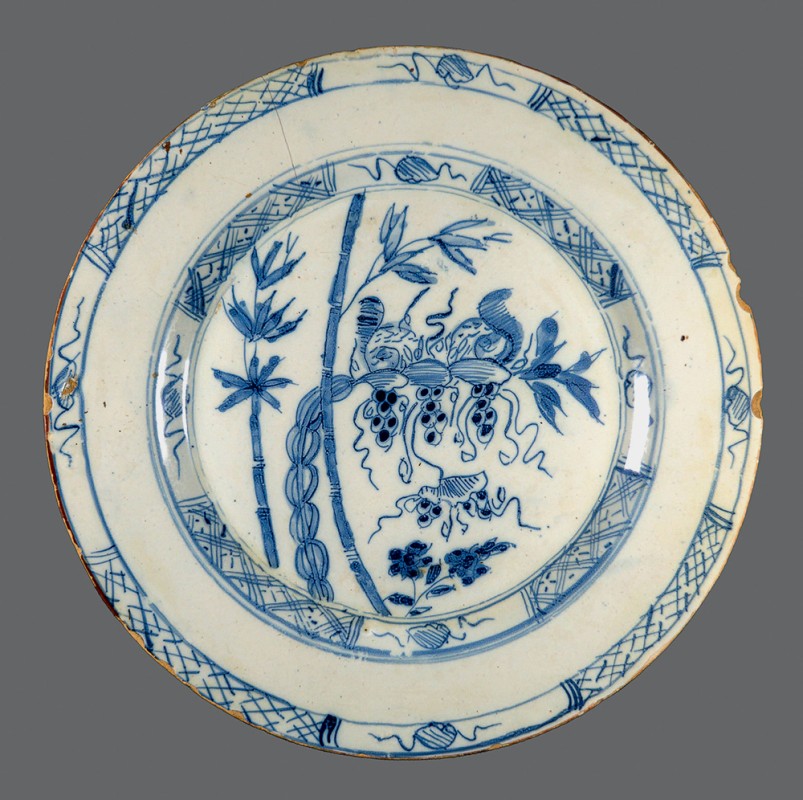
Plate, probably Liverpool, England, 1740–1760. Tin-glazed earthenware. D. 8 3/4". (Author’s collection and photograph.) The plate depicts two squirrels on a grapevine and bamboo as a central motif, with diapering around the rim. This is very similar to designs seen on Chinese porcelain antecedents. Two nearly identical plates are in the collection of Colonial Williamsburg.
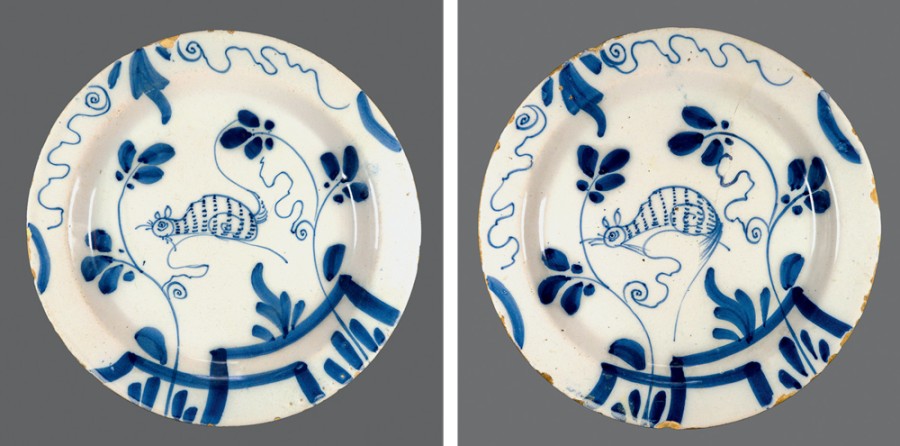
Two plates, London, England, or Dublin, Ireland, ca. 1750. Tin-glazed earthenware. D. 8 5/8" (both). (Author’s collection and photograph.) These two plates are nearly identical, the only obvious difference being that the left squirrel’s tail curls upwards while the other is rendered with its tail in an even more abstract downward position. These plates seem to demonstrate variability of the same design elements seen in London versus Bristol products. The trellis and vines are rendered in a far more simplistic manner, and the squirrel is far less naturalistic—to the point of being striped.
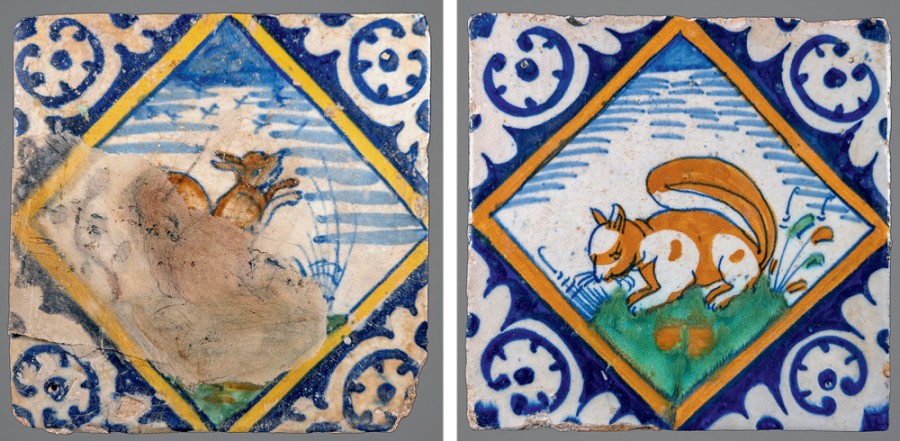
Two tiles, Netherlands, 1590– 1630. Tin-glazed earthenware. H. 5 1/8", W. 5 1/8", D. 1/2". (Author’s collection and photograph.) These two tiles are probably the oldest (and perhaps the most realistic) squirrel depictions in the collection. Their thickness and tan body would indicate dates from the late sixteenth to the early seventeenth centuries. Other examples with similar diamond-shaped frames suggest that these would have been part of a group of tiles depicting different animals.
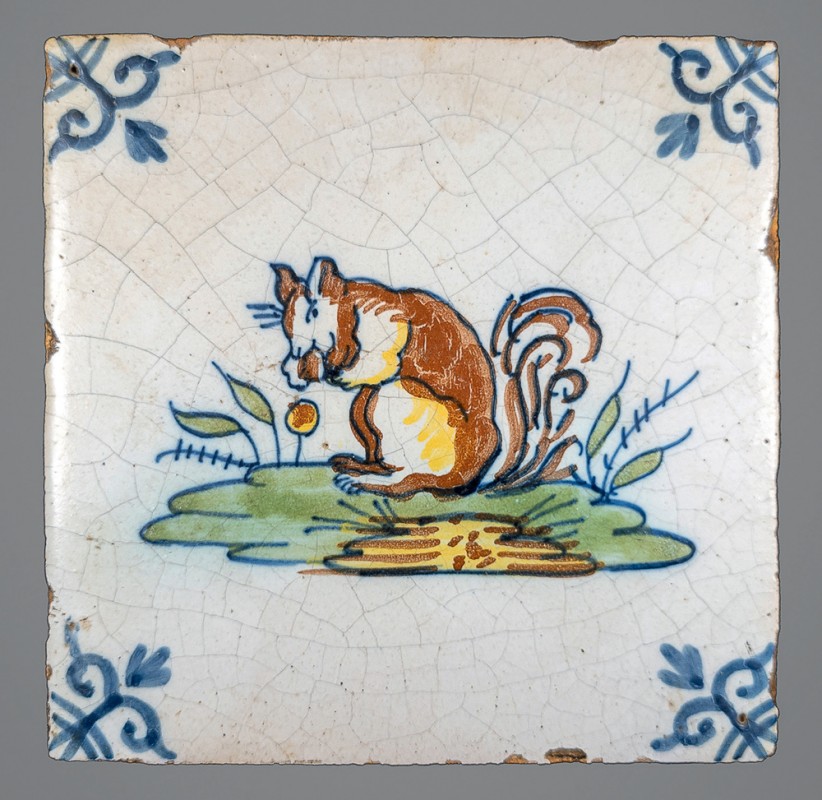
Tile, Netherlands, 1625–1650. Tin-glazed earthenware. H. 5 3/8", W. 5 3/8", D. 1/2". (Author’s collection and photograph.)
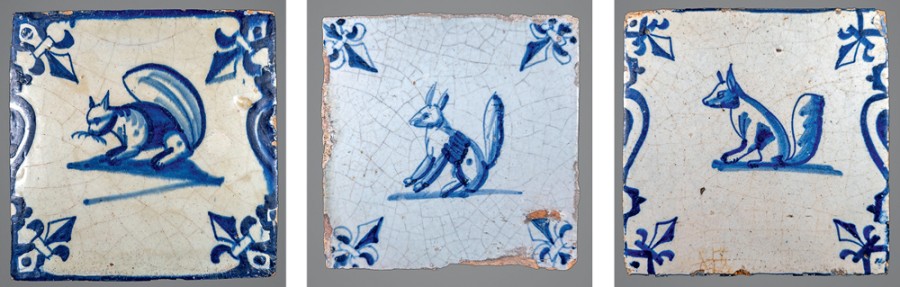
Three tiles, Netherlands, 1620–1650. Tin-glazed earthenware. H. 5 1/4", W. 5 1/4", D. 1/2" (left); H. 5 1/8", W. 5 1/8", D. 3/8" (middle); H. 5 1/4", W. 5 1/4", D. 1/2" (right). (Author’s collection and photograph.) These tiles, with their fleurde-lis and balusters, are probably midseventeenth century Dutch products. They are thick, but unlike the previous three have white ceramic bodies.
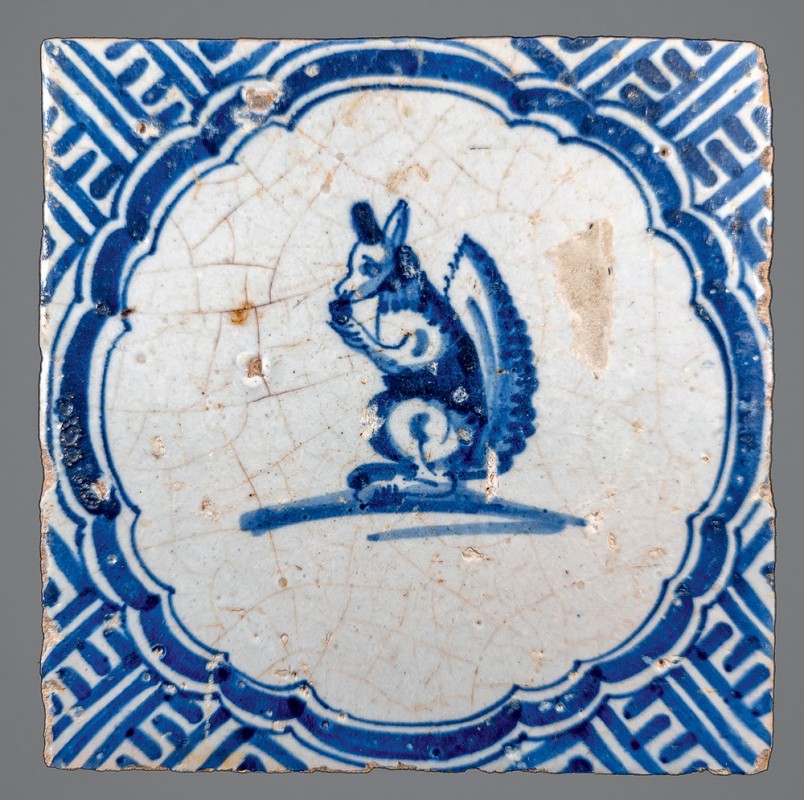
Tile, Netherlands, 1625–1670. Tin-glazed earthenware. H. 5 1/8", W. 5 1/8", D. 3/8". (Author’s collection and photograph.) The fretwork frame on this tile was inspired by decoration found on Chinese kraak-style porcelain from the late sixteenth and early seventeenth centuries.
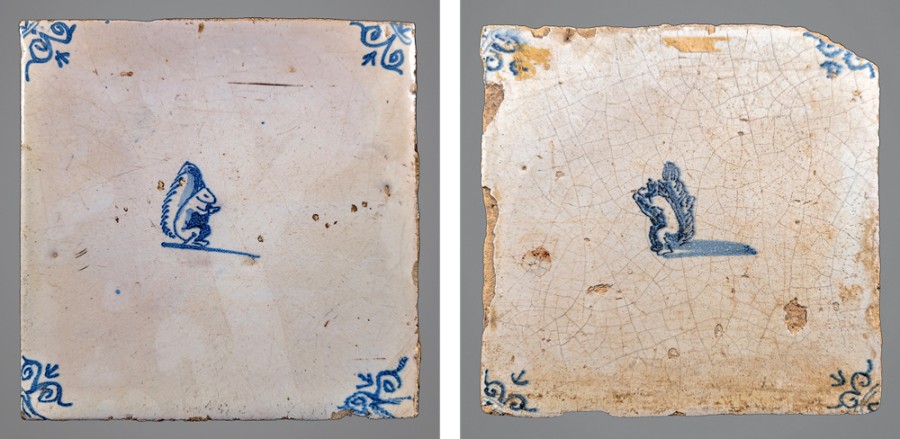
Two tiles, Netherlands, 1750–1790. Tin-glazed earthenware. H. 5 1/4", W. 5 1/4", D. 7/16". (Author’s collection and photograph.) These two tiles display small “ox head” borders and render rather realistic squirrels in a small center motif.
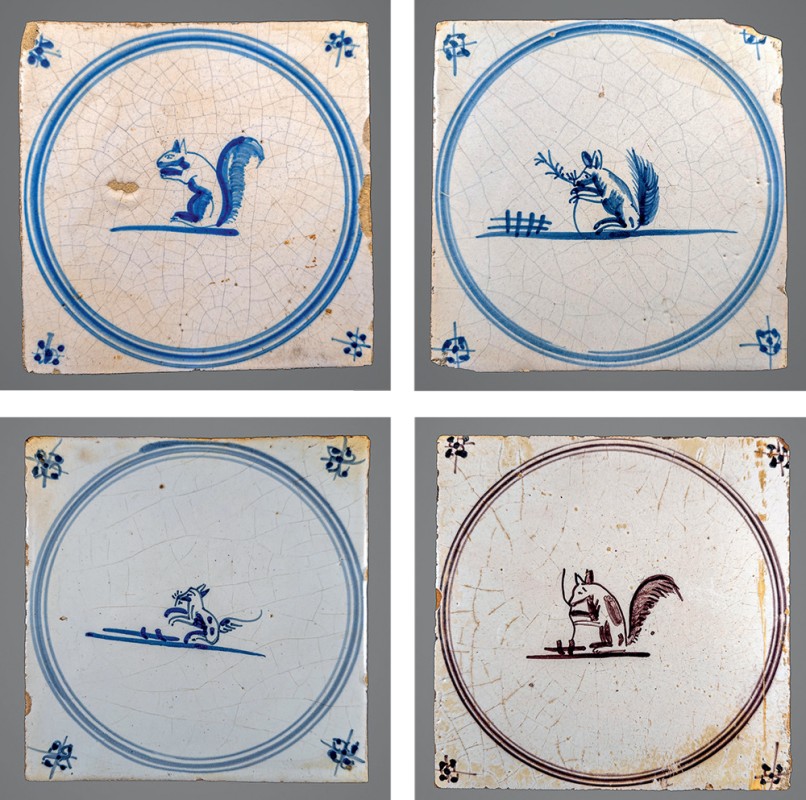
Four tiles, Netherlands, 1760–1800. Tin-glazed earthenware. H. 5 1/4", W. 5 1/4", D. 7/16". (Author’s collection and photograph.) These four tiles, three painted in cobalt blue and one in manganese purple, all depict squirrels in roundels. They probably date to the late eighteenth or early nineteenth century and seem to depict squirrels in an increasingly simple fashion.
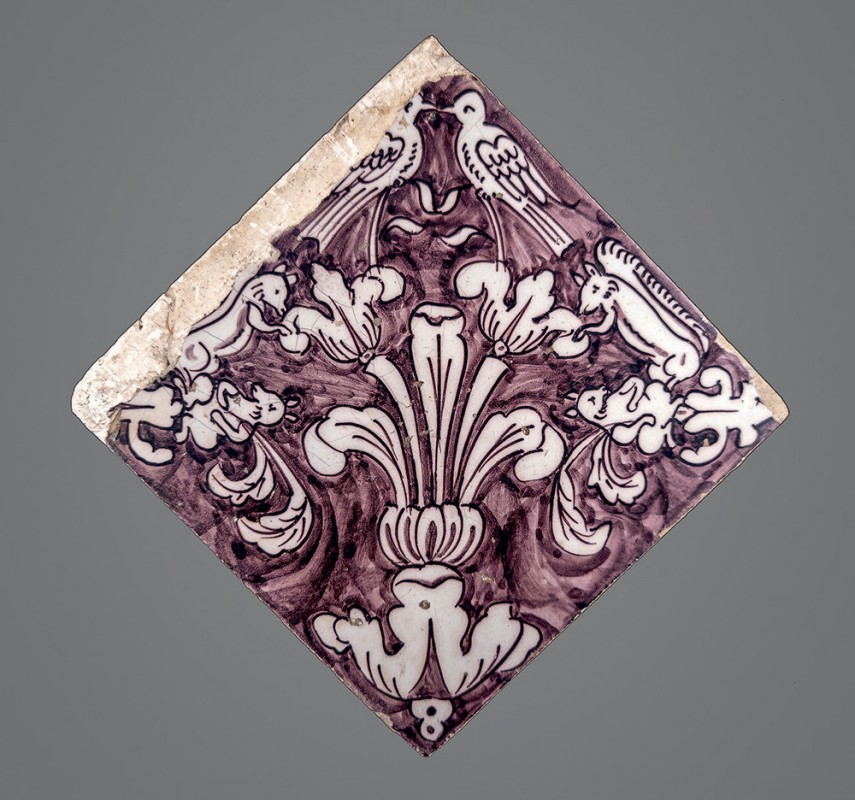
Tile, Netherlands, 1750–1800. Tin-glazed earthenware. H. 5 1/4", W. 5 1/4", D. 7/16". (Author’s collection and photograph.) This tile depicts a strangely elongated squirrel on the right with two other squirrels perched on fleur-de-lis.
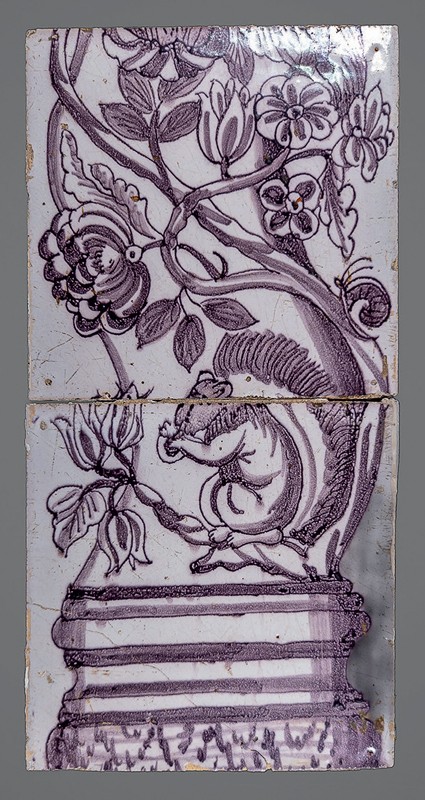
Two tiles, Netherlands, 1750– 1800. Tin-glazed earthenware. H. 5 1/2", W. 5 1/2", D. 3/8". (Author’s collection and photograph.) Part of a larger delftware panel, these two tiles were originally part of a group that would have formed a pilaster.
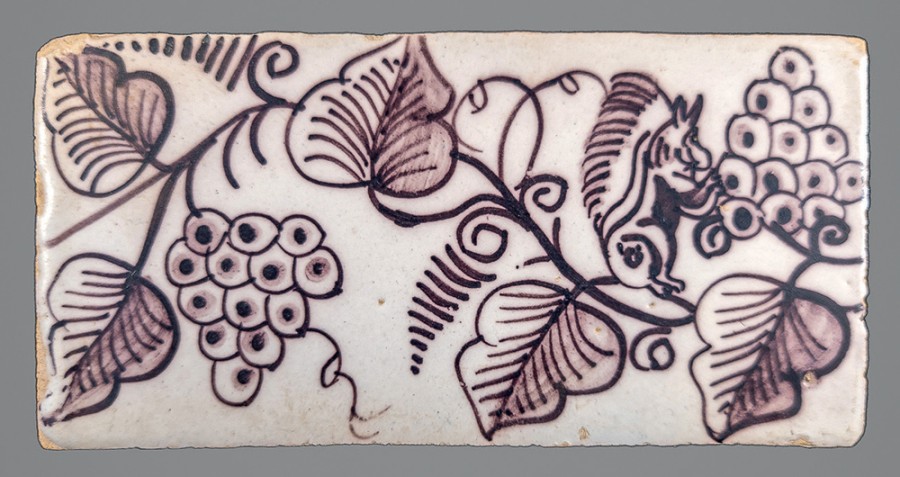
Border tile, England, ca. 1750–1800. Tin-glazed earthenware. H. 2 7/8”, W. 5 1/4“, D.1/4“. (Author’s collection and photograph.) This tile appears to be reflecting the Chinese squirrelgrape iconography.
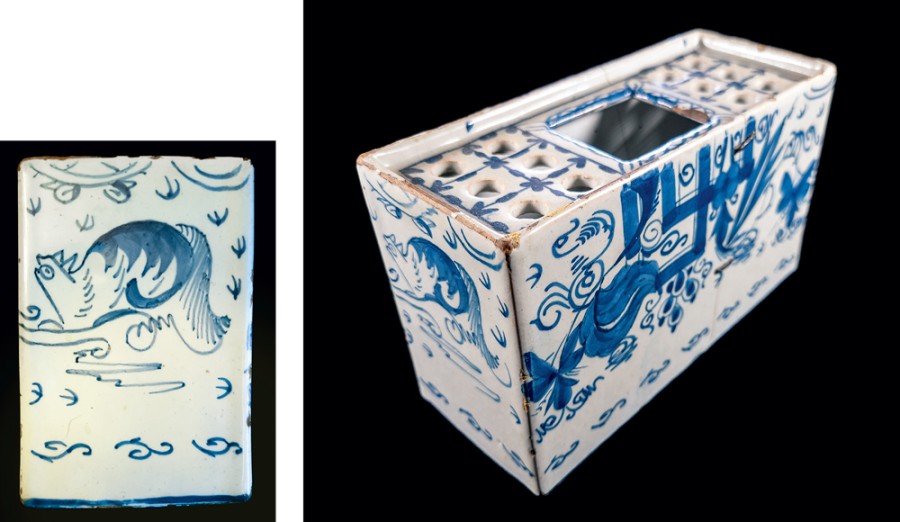
Flower brick and detail, Bristol, England, 1730–1750. Tin-glazed earthenware. H. 3 1/2“, W. 6", D. 2”. (Author’s collection and photograph.)